In the AI era, discover a better Procter & Gamble.
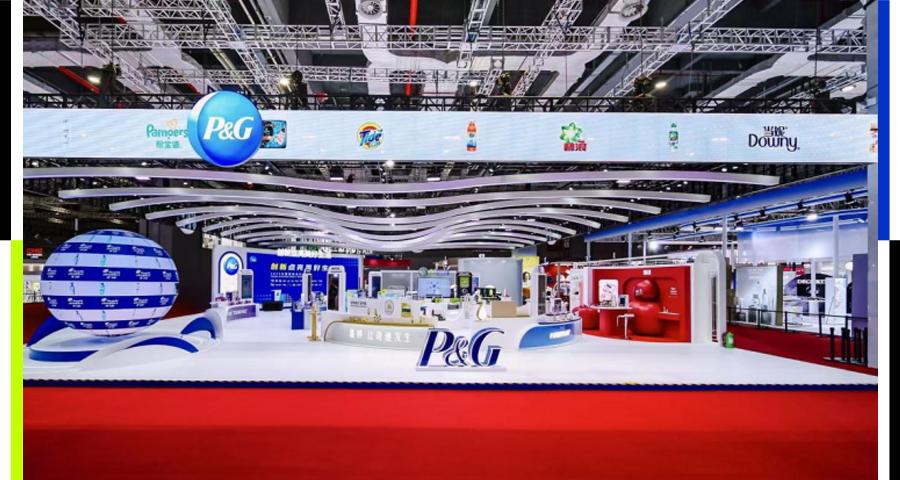
Amid the bustling crowd in the consumer goods exhibition hall of the China International Import Expo (CIIE) in 2025, a bottle of golden Pantene shampoo caught everyone's attention.
This shampoo retains the cylindrical bottle and the classic platinum - gold color scheme. As one of the new products presented by Procter & Gamble (P&G) China at this year's CIIE, its core highlight lies in its "inner self" - it is Pantene's new peptide bubble bomb hair care product. The formula is added with highly absorbable, high - performance, and high - purity 3A peptide essence, which enables damaged hair to absorb nutrients more quickly and fully.
Peptides are common active ingredients in skin care products. Their core function is to penetrate the skin's surface and promote collagen production. However, there are tens of thousands of types of peptides, and not every type is suitable for human absorption.
But this Pantene peptide bubble bomb dares to make "good absorption" its core selling point.
P&G China introduced that to verify that the peptide formula can penetrate deep into the hair core, Pantene applied the fluorescence lifetime imaging microscopy (FLIM) technology to hair care research for the first time. By analyzing the changes in fluorescence lifetime, it was confirmed that the 3A peptide in the formula can effectively remove the reactive oxygen species (ROS), the oxidative damage factors in the hair core, and reshape the hair core protein, laying a solid foundation for subsequent nutrient absorption.
Behind this amazing effect is the support of AI technology.
The 3A peptide essence used in this product is a formula finally determined after layers of screening and testing from tens of thousands of peptides and process prediction through AI.
Without the assistance of AI, researchers might need several times more time to develop a suitable peptide formula.
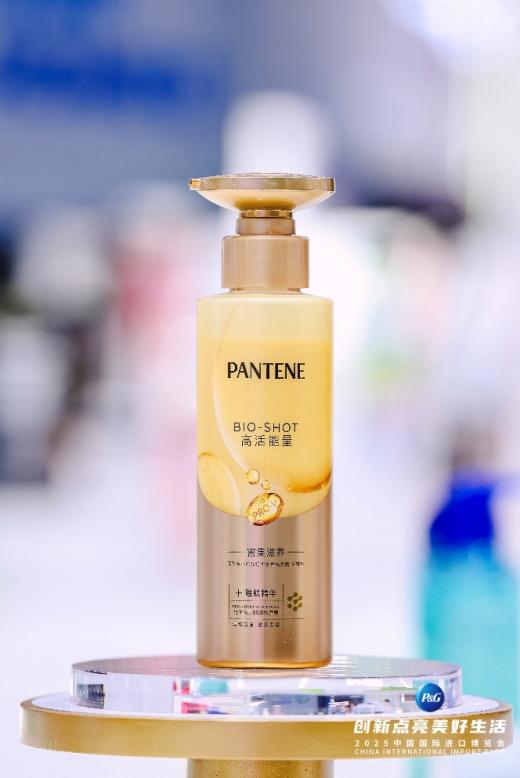
The new Pantene peptide bubble bomb shampoo
It's not just the Pantene peptide bubble bomb. At this year's CIIE, digital technologies represented by AI have fully penetrated all business links of P&G China - from customer insight, product/packaging R & D, to supply chain, marketing, customer service and other aspects, all have completed the "intelligent armament".
This means that the business of this global leading consumer goods company in China has been completely reconstructed by AI.
From digitalization to intelligence: P&G's decade - long deep cultivation and heavy investment
"More than 5,000 employees in P&G China are using generative AI, and the average AI penetration rate in functional departments has exceeded 84%." At the beginning of November, the person - in - charge of the AI team in P&G China's Information Technology Department showed solid data, indicating that almost all P&G employees are now actively embracing AI in their positions.
This figure is quite large - as 36Kr learned, currently, the internal AI penetration rate of some large non - Internet enterprises in China is only about 40% - 60%.
P&G's rapid acceptance of AI stems from its deeply rooted digital genes.
"As early as 2015, P&G China launched its digital and AI layout, with the core goal of better serving consumers in the Chinese market." Xu Min, the Chairman and CEO of P&G Greater China, revealed to 36Kr; before the upsurge of large - scale models, P&G China's IT team in the AI field already had dozens of full - time employees.
By the end of 2022, when a new generation of AI technology centered on large - scale models emerged, P&G naturally became one of the first enterprises in the industry to actively explore and heavily invest.
This investment is not a superficial attempt but covers a complete layout from underlying technology, application implementation to all business links.
From last year to this year, P&G China has completed a four - layer AI infrastructure construction internally: not only has it built a unified data lake and created a dedicated platform integrating various large - scale models, but also developed a No - Code platform that allows the construction of intelligent agents without coding and a dedicated library integrating various prompts.
It's easy to imagine the amount of work behind this - just the data lake alone requires a large amount of energy for a large enterprise with a decade - long digital process and business covering dozens of brands.
For a consumer goods company, what are the considerations behind such a heavy - handed AI layout?
In fact, affected by macro - trends in the past two years, many industries have fallen into growth dilemmas, and the consumer goods industry is no exception. Facing this challenge, Xu Min said that P&G China's strategy is to avoid low - price competition and frequent promotions, and instead, launch more high - quality products through innovation, optimize the consumer experience in R & D, packaging design and other aspects, and promote the development of the company and the industry.
To achieve this goal, digital means represented by AI are powerful tools to improve internal operation efficiency and optimize consumer services.
"AI is not the ultimate goal but an important means for us to serve consumers and create value for employees. This priority is always clear." Xu Min's words pointed out the core - for P&G, AI is an effective tool to serve consumers.
Under this principle, based on AI infrastructure construction, P&G China has reconstructed the entire process of serving consumers around the complete chain of user insight - product R & D - marketing and sales - user service - supply chain.
AI reconstruction of the entire chain: experience upgrade from insight to delivery
At P&G, all product innovations stem from insights into consumers' real needs, and the chain of serving consumers also starts from here.
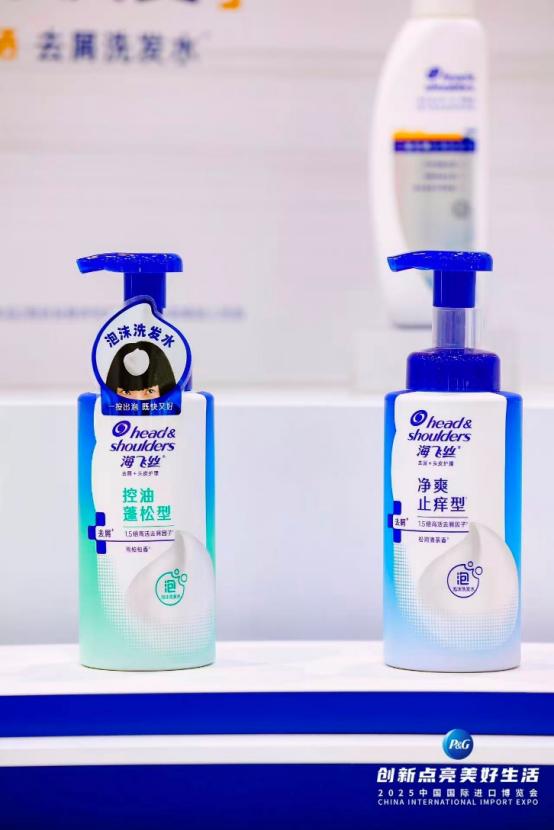
For example, the Head & Shoulders foam shampoo launched at this year's CIIE was developed because P&G China found that many consumers only want to quickly wash their bangs, but it is time - consuming and labor - intensive to lather with ordinary shampoo. To address this pain point, they developed a foam shampoo that can produce foam with a single press, achieving efficient dandruff removal and oil control.
Behind these insights, digital products have become key tools for P&G's user research team for many years.
The most typical one is the CHR "Connected Home Research". This method is mainly based on multi - dimensional intelligent real - time observation for consumer behavior research. After obtaining users' permission, devices such as cameras and sensors are installed to obtain their real behaviors and data during product use, so as to dig out pain points and potential needs.
This method has yielded very significant consumer insights and product results.
For example, in the connected research of many product categories, P&G found that many consumers don't know the appropriate product dosage and usage methods, which greatly affects the product experience. Based on this, P&G improved the product packaging to make it more ergonomic and easy to use, launched content about product usage, and further innovated the product formula to make consumers willing to use, use correctly, and use well.
Another example is in the behavioral research on consumers' brushing habits. The team used sensors in toothbrushes to sense and collect data such as brushing time, applied pressure, and covered areas, and found that there is a "discrepancy between words and deeds" in consumers' actual brushing behavior. For example, many people think they brush their teeth for 2 minutes, but the actual timing is less, with an average of 47 seconds. Based on these insights, the R & D team added functions such as "time reminder", "back - tooth cleaning reminder", and "pressure warning" to the product to help consumers easily develop correct brushing habits.
Now, the new generation of AI technology is further enhancing P&G's user insight effect.
After obtaining user insights, P&G China's R & D department will develop new products based on this information. Digitalization and the new generation of AI technology have also become the "capable colleagues" of R & D personnel.
In the traditional process, it often takes more than three years for the development of a skin care product's ingredients from concept to market launch. Now, with the help of AI for Science capabilities, P&G China has shortened this cycle to one year or even several months.
In skin care product ingredient development, researchers can now quickly screen P&G's own ingredient library to find potential combinations and conduct a round of prediction experiments through AI first, reducing the testing time in the early stage of R & D.
That is to say, the traditional linear process of "making samples - laboratory testing - obtaining results" has now been adjusted to let AI make predictions first, find potential preferred formulas, and then conduct targeted experiments.
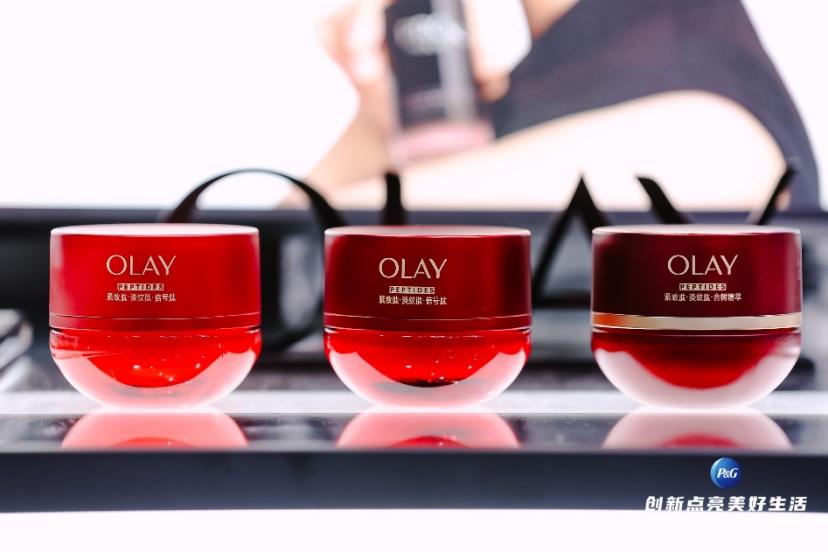
The highlight new product at this year's CIIE, the fifth - generation OLAY Super Red Bottle, is based on research on Chinese women's skin. Three texture formulas were carefully selected from an intelligent skin - feel database containing more than 8,500 formulas to meet the skin - feel needs of different skin types.
The AI prediction method can also be used for product performance testing.
Researchers at P&G China told 36Kr that in many products, performance indicators such as touch, fragrance, and foam richness greatly affect consumers' experience. R & D personnel need to spend a lot of time optimizing and testing these product dimensions layer by layer before they can be launched into the market.
But now, if R & D personnel use AI models to test and iterate these performances, they can significantly save the early - stage experimental time and promote the products to enter the consumer evaluation stage more quickly.
P&G also widely applies digital tools in product packaging design.
In the past, when designing a new - shaped shampoo bottle (such as changing from a straight - barrel to a round one), the R & D team needed to spend several months and hundreds of thousands of yuan to make small - batch experimental molds, and repeatedly adjust details such as the bottle wall thickness through trial - and - error, and only after ensuring that the bottle had no design defects could mass production begin.
Now, almost all of this has been replaced by digital simulation.
Engineers at P&G China introduced that now they only need to convert the designed CAD bottle shape into a detailed digital model. By inputting this model into P&G's dedicated R & I simulation system, the system will calculate according to the set indicators such as compressive strength and stability, and point out where the bottle wall needs to be thickened or thinned. After one or two rounds of adjustment, engineers can optimize a feasible solution in just 2 - 3 weeks.
In the past two years, P&G China has almost stopped "manual" mold - testing. The latest redesigned bottle shapes and new - specification packaging of brands such as Rejoice, Head & Shoulders, and Pantene have all completed early - stage verification through digital modeling.
Next, the consumer service system is being reconstructed by AI.
After a product is launched, the service experience directly affects consumers' satisfaction and loyalty. P&G China understands this well. Therefore, the Customer Experience and Communication Team has introduced AI throughout the entire process, hoping to bring a better service experience to consumers.
In P&G's strategy, the positioning of customer service staff is gradually being upgraded - they need to grow from "service staff" who answer questions passively to "excellent service officers" who assist consumers in decision - making, "conversion officers" who create value, and finally become "experience operation officers" throughout the entire consumer lifecycle.
Training is the key to achieving this transformation. For this reason, P&G has developed an intelligent training system called "GenCoach", which allows new customer service staff to face different consumers simulated by AI and handle various requests and emotional customer questions. After the training, the system will also use AI to score the performance of new employees and give improvement suggestions.
The person - in - charge of P&G's Customer Experience and Communication Team told 36Kr that GenCoach was put into large - scale use before this year's 618 and Double Eleven. About 2,000 customer service staff have been trained through AI, making GenCoach one of the most widely used AI systems in P&G so far.
In terms of effectiveness, in the past, it usually took new customer service staff 6 weeks to reach a business level of 90 points. After AI training, new employees can reach this goal in just 1 - 2 weeks. At the same time, compared with before using AI training, consumer satisfaction has increased by 2 percentage points, and the pre - sales consultation conversion rate has increased by 3 percentage points.
In addition to training, P&G China also carefully applies AI directly to front - line customer service scenarios.
In practice, many simple questions, such as inquiring about logistics or asking for invoices, are now often answered directly by P&G's AI robots. However, once the conversation involves scenarios such as emotional comfort or complex decision - making, or as long as consumers request human assistance, P&G's system will immediately transfer the call to a human customer service to ensure that consumers receive a more human - touch response.
Currently, P&G's customer service team is also cooperating with e - commerce platforms such as Alibaba and Douyin to develop more suitable communication forms for each platform.
The supply chain is the "last mile" of delivering products to consumers. In this complex and crucial link, P&G is also becoming more agile through AI.
Taking P&G's B2B orders for dealers and large - scale retail customers as an example, in the past, it was very time - consuming for customer service representatives (CSRs) to process a single order. When customers placed orders, they often repeatedly inquired about credit limits and inventory, wanting to know if their credit limits were sufficient, if popular products would exceed the quota, if the ordered products were in stock in the regional warehouse, and if cross - regional inventory transfer was needed.
For each of these questions, CSRs needed to log in to different internal systems, switch back and forth between more than a dozen interfaces, and communicate and confirm with customers and internal colleagues in multiple rounds. On average, it took about 1.5 hours of communication and searching to finally generate each order.
For this reason, P&G launched an AI agent called "Ask Order". This AI agent is equivalent to a well - trained virtual CSR and has access to multiple systems through SSO authorization. When customers ask questions such as "How much more can I order?" or "Is a certain product out of stock?", CSRs no longer need to manually query each system, and the AI will directly answer by retrieving relevant data in real - time.
36Kr learned that since Ask Order was launched two years ago, it has reduced the original manual workload by 80%, and only prompts human intervention when encountering abnormal or out - of - rule questions.
Moreover, the value of AI to P&G's supply chain is not limited to the order - receiving link. It also plays an important role in logistics scheduling.
Xu Min told 36Kr that P&G serves one billion Chinese consumers, and millions of packages are shipped to various places every day. Therefore, it is crucial for both P&G and consumers to improve efficiency through AI combined with transportation links.
A specific scenario is that the logistics department needs to arrange truck transportation according to orders from various places every day. The full - load rate and route optimization will directly affect transportation costs and timeliness.
In the past, this work required employees to download the day's orders, manually calculate the number of vehicles needed and how to configure vehicle models, and then contact carriers to arrange vehicles, which was equivalent to "making decisions after reading countless reports" and was very