An Oxford postdoctoral fellow ventures into embodied intelligence. "Zizili Control" secures tens of millions of yuan in seed round financing | Exclusive from Yingke
Hard Kr exclusively learned that "Sophon Force", a provider of multi-dimensional force perception solutions, recently completed a seed round of financing of tens of millions of RMB. The leading investor is Cloud Angel Fund, and Plug & Play China and other investors followed. Shanyun Capital served as the financial advisor for this round of financing. The funds will be used for product R & D, business expansion, and talent recruitment to accelerate the company's layout and growth in the field of embodied intelligence.

Sophon Force focuses on the "whole - body force self - perception system" and the whole - machine force control solution. For a long time, the "choke point" in the industry has been the six - dimensional force sensor: the high - end market is monopolized by a few overseas brands. The high unit price, long delivery time, and high maintenance cost make it difficult to popularize in consumer - grade and large - scale robot manufacturing. Some domestic alternatives still have gaps in accuracy, durability, and working condition stability, making it difficult for whole - machine manufacturers to directly introduce them on a large scale. At the same time, the practice of only installing a six - dimensional force sensor at the end of the robotic arm can meet the needs in typical industrial processes such as auto parts grinding. However, when applied to collaborative robots and humanoid robots that interact with humans, to achieve high - precision, compliant, and safe operations like "threading a needle", the applicability and coverage of single - point end force control are insufficient.
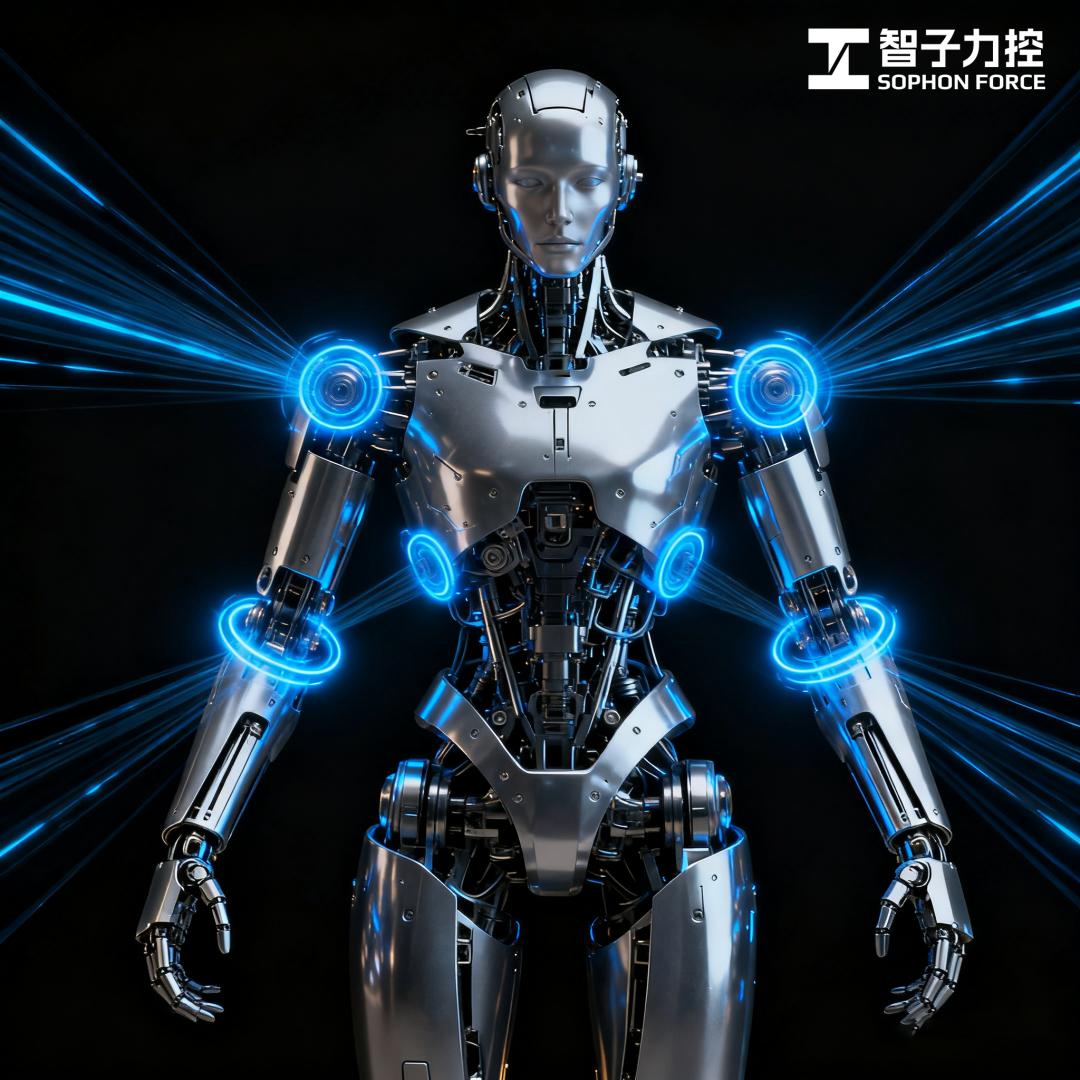
The consensus demand from end - customers is rising: the need for "whole - machine force control". Its core lies in two points. First, make up for the "torque insensitivity" at the joint and structural component levels, so that the robot not only knows "where to go" but also knows "how much force to use and when to stop". Second, break through the ceiling of traditional "rigid position control". Position control can only move along a trajectory and cannot call environmental force feedback in real - time, revealing its shortcomings in scenarios such as assembly, grinding, polishing, grabbing brittle objects, and collaborating with humans. The high - precision and highly stable force control technology provides a closed - loop of "perception - decision - execution". Like a human twisting a bottle cap, the robot will adaptively increase or decrease the force and speed based on the "feel" to avoid damaging the workpiece or causing safety risks. Therefore, force control is not just a bonus but the key foundation for robots to move from "rigid automation" to "flexible intelligence", and it is jointly forming multi - modal input with vision, tactile skin, acoustics, etc., significantly improving the robot's "perceivability - usability - controllability" in the real world. Sophon Force judges that 2025 will become the first year of the "force - position integrated control" industry.
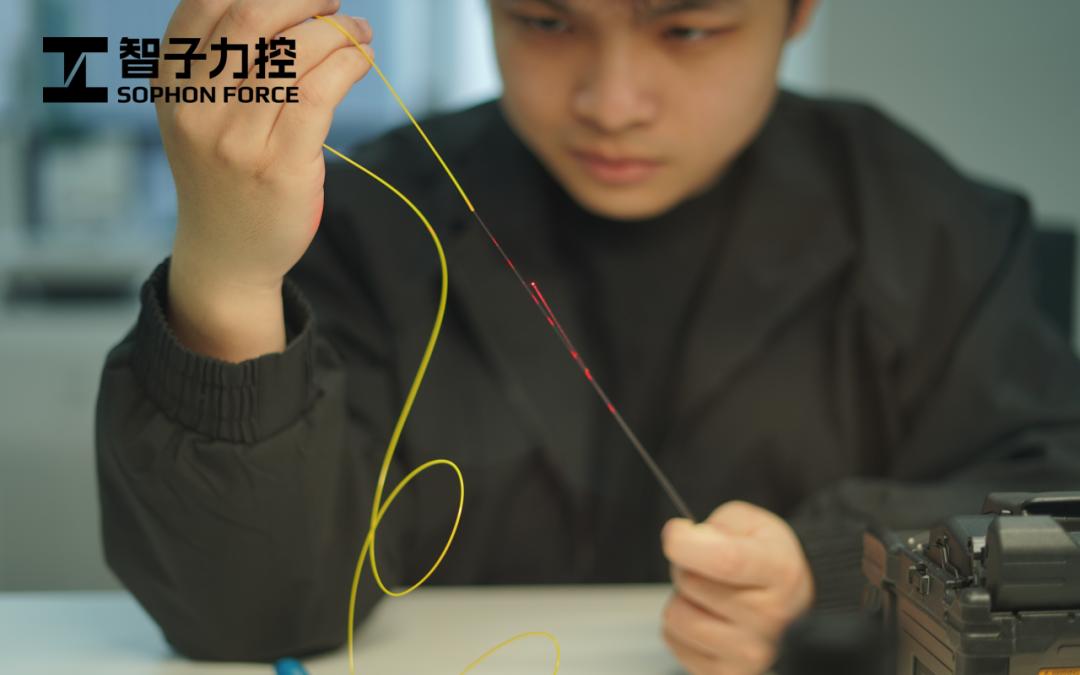
In terms of route selection, to achieve the goal of "whole - machine force control", in addition to the end six - dimensional force sensor, the common practice in the industry is to install an electrical single - dimensional torque sensor on each joint to approximate "whole - body force perception". This path is mature in engineering but has bottlenecks: complex assembly, large calibration workload, difficult non - linear and crosstalk processing, and high maintenance cost in a large temperature drift and strong electromagnetic environment. Sophon Force proposes another "mechanical neural architecture" path: using optics as the perception medium and combining self - developed calibration and decoupling algorithms, embedding force perception units in key structural components such as "fingertips - joints - bones - end - effectors" to form a cascaded distributed perception network. This solution emphasizes systematic benefits in four directions:
1. Coverage: Upgrade from end - point perception to multi - part and multi - scale distributed perception, enabling earlier and more fine - grained capture of contact forces, small disturbances, and complex contact events;
2. Engineering: The modular and miniaturized design reduces the threshold for whole - machine transformation, allowing for an "incremental embedding" upgrade for existing platforms and shortening the introduction cycle;
3. Robustness: The optical medium has the potential to resist interference at the physical layer under complex working conditions such as strong electromagnetic fields, oil and dust, and temperature and humidity fluctuations. Combined with algorithm compensation, it can reduce drift and crosstalk;
4. Computing power and cost: Through feature extraction and decoupling compression on the edge side, it reduces the occupation of upper - layer computing power and bandwidth, releasing cost space for mass - production and consumer - grade scenarios.
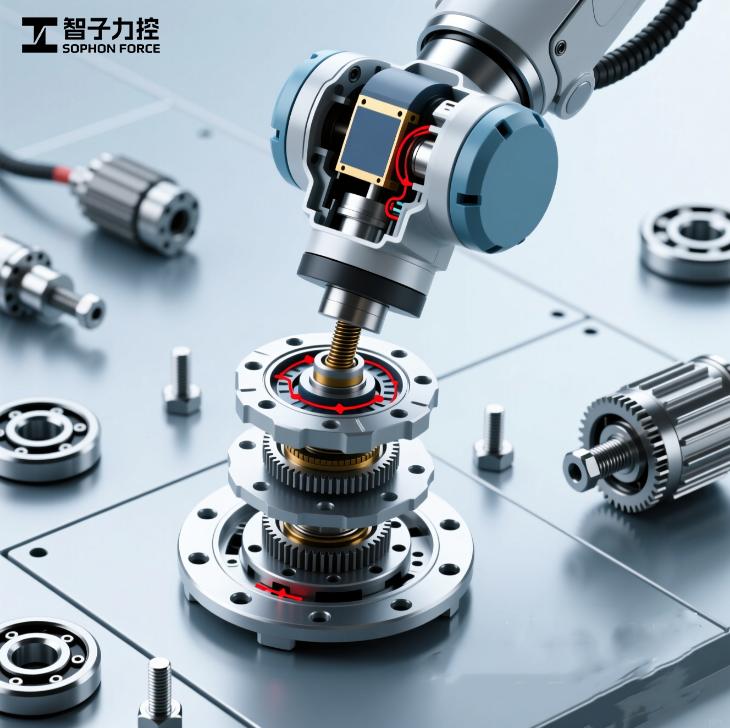
This solution is expected to eventually become the force control foundation for the whole - machine world of robots, robotic arms, etc. It can improve stability and consistency in complex contact, high - precision, and flexible operations and release cost and system integration advantages for large - scale manufacturing and consumer - grade applications. Its ultimate goal is to make "whole - machine force control" a new - generation robot platform - level infrastructure.
In terms of industrialization, Sophon Force has four major capabilities: algorithm development, high - precision process control, product calibration and debugging, and full - process quality control. Currently, the first - phase production line with an annual output of over ten thousand sensors has been built and put into production. The technology and products of Sophon Force have passed the sampling tests of several leading companies and have entered the mass - production stage. In addition to humanoid robots, six - dimensional force and multi - dimensional torque sensors are also in wide demand in scenarios such as the end of collaborative arms, medical surgical robots, and automobile crash tests. The growth of these scenarios will further increase the market scale of multi - dimensional force sensors.
Dr. Song Geyang, the founder and CEO is one of the representative young scientists in the current "force perception" field, with both a profound academic background and excellent technological innovation ability. He obtained a first - class honors bachelor's degree from the University of Sheffield in the UK, a master's degree from Imperial College London, completed his doctoral research at the University of Nottingham, and then conducted post - doctoral research at the University of Oxford. Thirteen years of interdisciplinary scientific research accumulation have enabled him to form a systematic research system in the directions of structural health monitoring, geotechnical engineering, flexible mechanical structures, and force control perception systems.
During his post - doctoral period, Song Geyang participated in the Royal academic research fellowship project of Professor Brian Sheil at the University of Oxford in the UK, dedicated to solving the application of optical - based mechanical sensors in complex and harsh environments. He combined optical technology with AI algorithms to innovatively achieve real - time decoupling and dynamic perception of high - dimensional force signals. On this basis, he founded Joltsynsor Limited in the UK through Cambridge enterprise in 2023 to commercialize the high - degree - of - freedom six - dimensional force perception technology, promoting the field from the laboratory to industrialization and achieving actual deployment in major infrastructure projects in Ireland, Italy, etc. The "caisson real - time monitoring project" combined real - time six - dimensional force measurement with structural displacement perception, obtaining millions of RMB in commercial orders within a year. Now, under the leadership of Dr. Song Geyang, the team is promoting domestic force control sensing technology to the international forefront and accelerating its large - scale implementation and industrialization process in the fields of robots and industrial automation.
Qian Jin, the co - founder and Chief Operating Officer (COO) graduated from Johns Hopkins University, with a cross - border background and systematic thinking, and is mainly responsible for the process of transforming the team's technology from scientific research results to commercial implementation. Qian Jin worked in well - known international financial institutions (including CICC, GLP Capital, Bank of China, etc.) in the early years, deeply involved in the fields of capital operation, equity investment, and corporate financing for a long time, and has rich experience in connecting industrial funds with international capital. With excellent strategic judgment and execution ability, Qian Jin has played a key role in the company's structural design, capital planning, and international cooperation, establishing an efficient connection channel from technology to the market for Sophon Force.
Yang Canjie, the co - founder and Chief Project Officer (CPO) graduated from the University of Sheffield in the UK, obtaining a master's degree in control systems. With a solid engineering and technical background and systematic project management experience, he is one of the key figures in promoting Sophon Force's core products from "R & D prototypes" to "industrial implementation". Yang Canjie has cross - field system integration ability and a deep understanding of the whole - process management of intelligent manufacturing systems. Before joining Sophon Force, Yang Canjie served as the project director of ZTE Corporation, leading the full - life - cycle management and delivery of multiple key projects, responsible for cross - departmental collaboration, progress control, and quality supervision. During his tenure, with excellent execution ability and systematic management ability, he ensured the high - quality implementation of multiple national and international projects on schedule, accumulating rich experience in team management and resource coordination.
Investors' views:
Wang Huanlong, a partner of Cloud Angel Fund, the leading investor in this round, said: The fiber - grating force sensor originating from the construction industry entering the robot field across industries needs to overcome many challenges such as algorithm accuracy, device miniaturization, and cost comparability. The Sophon Force team comprehensively uses breakthrough innovations in technology and engineering, bringing a fresh product idea to the robot industry. We look forward to the products of Sophon Force spreading throughout the bodies of humanoid robots and industrial robotic arms like nerve tissues in the future, giving them more comprehensive and refined force control perception capabilities.
Zhu Xiaowen, a partner of Plug & Play China Fund, an investor in this round, said: Six - dimensional force sensing is a crucial part of the embodied perception link. Sophon Force is the first domestic start - up company to achieve self - perception of humanoid robot structural components through the "optical" path, achieving breakthroughs in high precision, multi - point positions, and stability. Plug & Play is very glad to support Dr. Song Geyang's team in the seed round to promote the application and implementation of this innovative technology and achieve a leapfrog over traditional six - dimensional force sensor solutions.