From "automotive use" to full-scenario applications, Yibin explores new blue oceans in power batteries.
On November 12, the 2025 World Power Battery Conference will kick off in Yibin, Sichuan. This is the fourth consecutive year that this western Chinese city, known as "the first city along the Yangtze River for thousands of miles," has hosted this world-class industry event. As the global power battery industry chain once again focuses its attention here, people can't help but wonder: Why Yibin?
Different from the explosive growth phase of the previous years, the global power battery industry has collectively entered a more complex and challenging second half. At this stage, simple capacity expansion is no longer the only competitive edge. The focus of industry competition is rapidly shifting from "scale competition" to "ecosystem competition," "cost competition," "application competition," and "technology competition." The theme of this year's conference, "New Horizons, New Ecosystems, New Opportunities," precisely points to the next stage of industrial evolution.
Yibin is the core industrial high - ground for global power batteries. Du Haiyang, the mayor of Yibin, once said, "For every 10 power batteries produced in the world, one is made in Yibin." Today, the value of this city goes far beyond supporting the production volume of power batteries. As the industry starts to be vigilant about homogeneous competition, where should the future of the industry go? As a model, Yibin will provide an answer for China's power battery industry in the "new decade" to "survive the cycle."
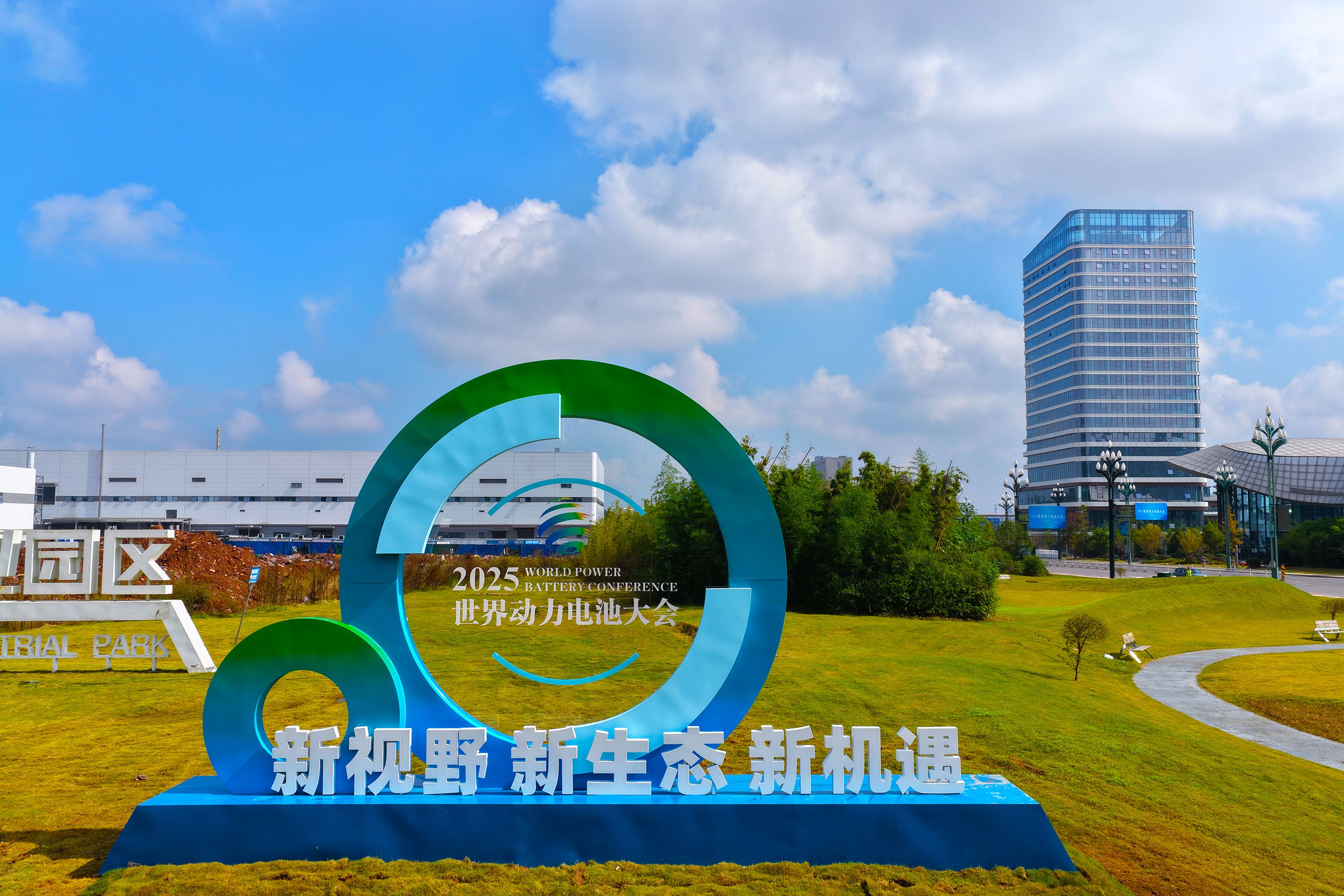
The 2025 World Power Battery Conference is about to open (Photo by Lan Feng)
"New Ecosystem" Builds a Moat
As the power battery industry enters the second half, homogeneous competition intensifies. Yibin's way out is to build an "anti - fragile" industrial ecosystem, providing rare certainty for enterprises.
When entrepreneur Luo Wei moved his factory from Dongguan to Yibin, he brought with him 20 years of production and manufacturing experience from the highly competitive consumer electronics industry. As a native of Sichuan, he initially noticed Yibin because downstream mobile phone factories were moving southwest. But he soon discovered that in this city famous for Wuliangye and filled with the rich smell of fermentation, a more powerful industrial wave was coming.
In the Sanjiang New Area outside Yibin, silver - colored power battery factories stretch as far as the eye can see in the mist. Luo Wei's company, "Liangya New Materials," was later founded here. When he first arrived in Yibin, he found that the heat - insulating and flame - retardant materials required for power battery packs mostly relied on imports before. For example, the silicon foam material cost as much as 300 to 400 yuan per square meter. However, this kind of material is not difficult to produce in the consumer electronics industry. So, using the R & D connections and cost - control experience accumulated in the consumer electronics industry, Luo Wei's team developed a domestic alternative with the same function in just two years, and the price was significantly reduced, only about 100 yuan per square meter.
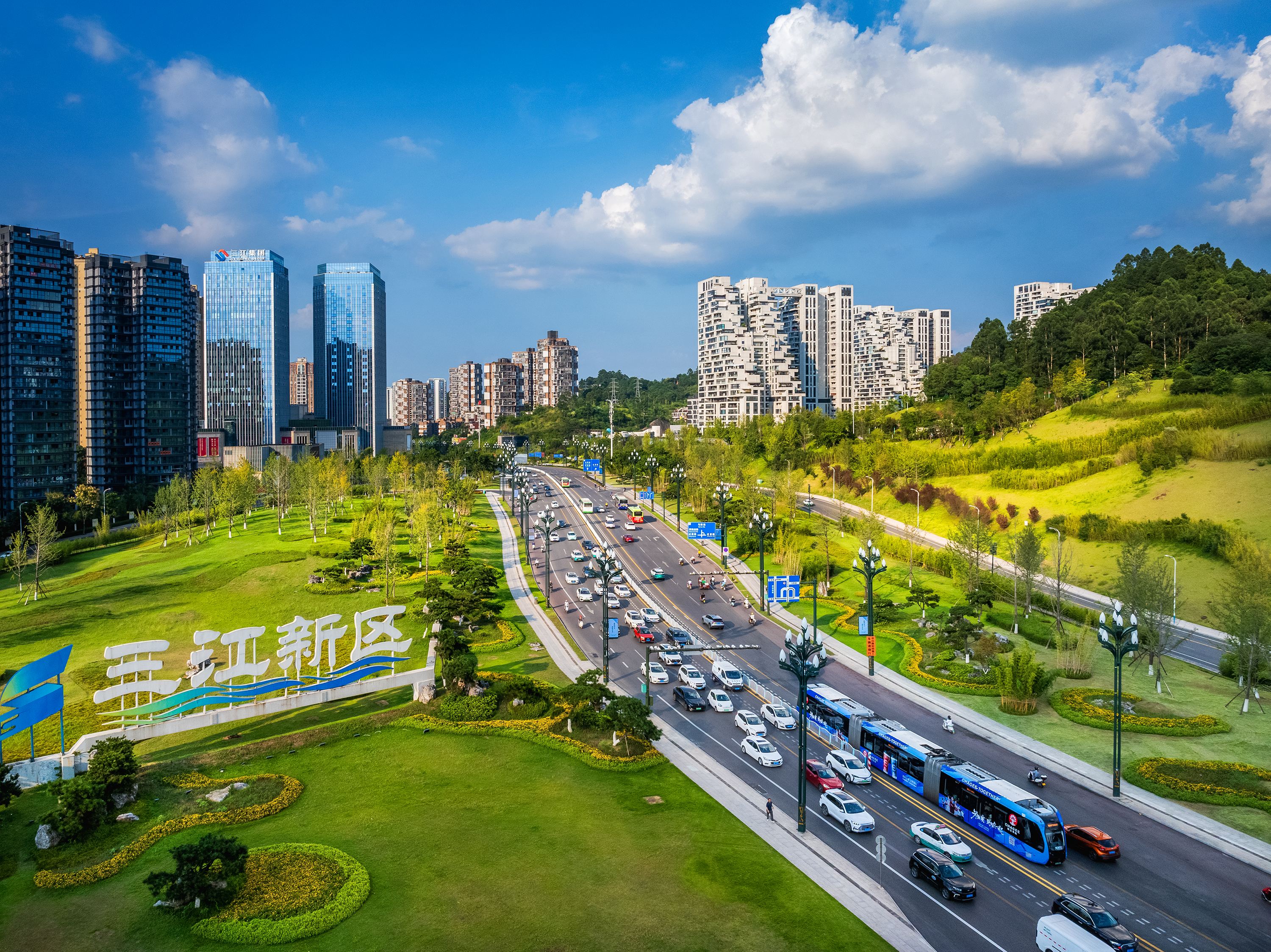
Sanjiang New Area in Yibin
With a good product, but as a newcomer in the industry, how could Luo Wei knock on the door of the "chain leader"? "No matter how good our samples were, we couldn't get in touch with the procurement manager of CATL," Luo Wei recalled. At this time, the "soft services" of Yibin's industrial ecosystem played a crucial role. In addition to investment promotion, the local government attaches great importance to providing services to enterprises. After the government staff in charge of the industrial park visited and learned about the situation, they actively facilitated the connection and helped Luo Wei successfully send the samples to CATL's testing laboratory.
Luo Wei's entrepreneurial story is a microcosm of Yibin's vibrant new industrial ecosystem. When observing this ecosystem, one cannot bypass the world's largest single - body power battery industrial base project - the CATL Yibin Factory.
In 2019, before CATL decided to invest in Yibin, Yibin was competing with many cities across the country, including Beijing. To successfully secure this project, everyone from city leaders to front - line investment promotion personnel took action and gradually established contact with CATL. After nearly two years of negotiation and investment promotion, Yibin defeated many competitors and successfully introduced CATL, becoming an important strategic layout for CATL in the southwest region.
In December 2019, the power battery project of CATL in Yibin officially started construction. It only took about one and a half years for Yibin to complete the first - phase construction and put it into production. The amazing "Yibin efficiency" impressed CATL, and CATL subsequently increased its investment all the way to the tenth phase. The Eastern Industrial Park and the Yangtze River Industrial Park where the factory is located have become modern industrial parks in just two or three years, with complete production and living facilities, attracting tens of thousands of industrial workers, white - collar workers, and entrepreneurs from all over the country.
Of course, a company's decision to stay in a city ultimately depends on rational business calculations. Yibin offers two irresistible aces to CATL and the entire industrial ecosystem: extreme cost control and extreme efficiency synergy.
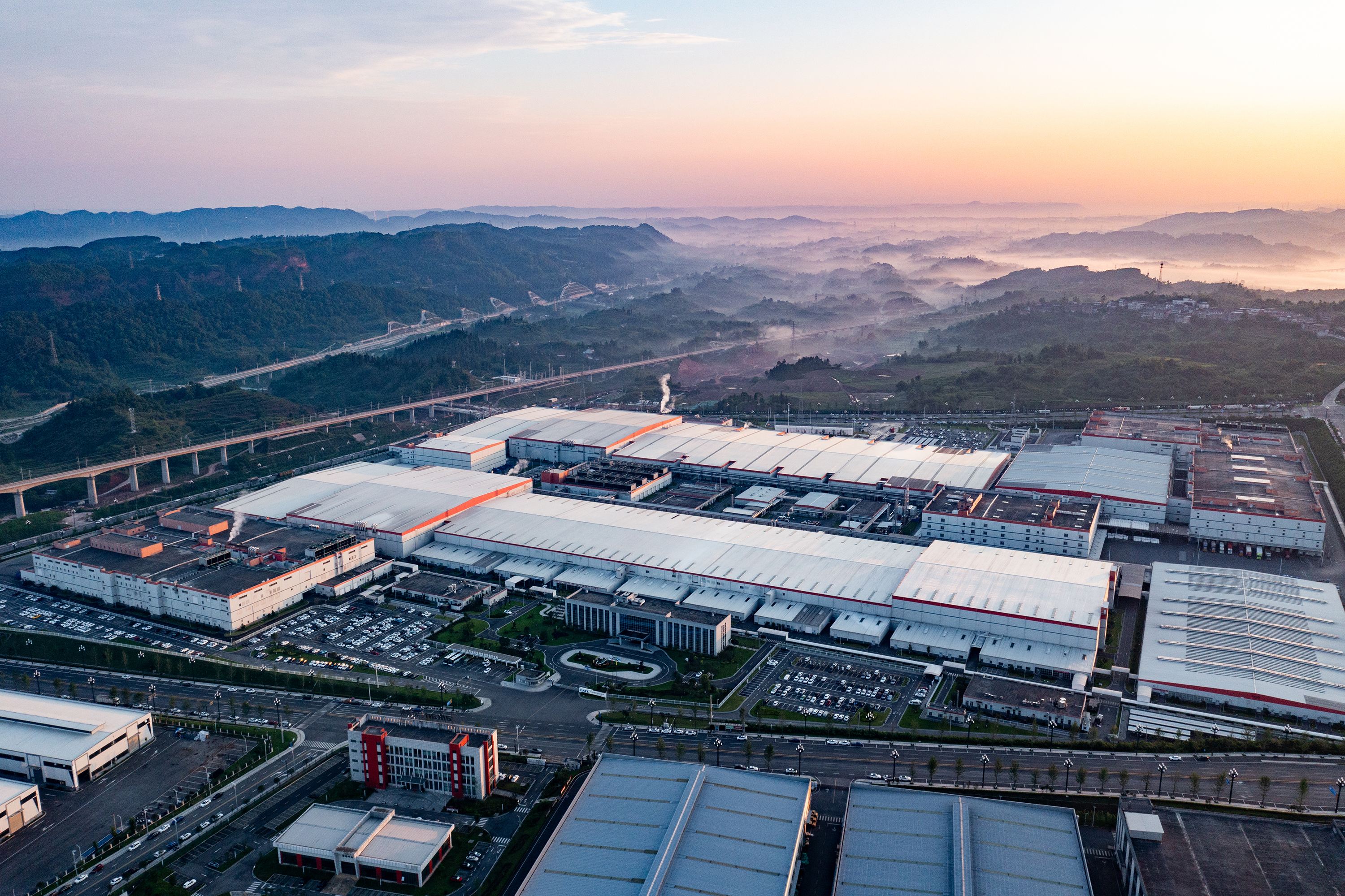
Sichuan Times Production Base (Photo by Yuting)
The first ace is "green electricity."
In fact, power battery enterprises have always been "big electricity consumers." Currently, 80% of Yibin's electricity comes from hydropower, and it enjoys the national policy for hydropower consumption demonstration areas. The industrial electricity price here is as low as 0.35 yuan per kilowatt - hour, while the industrial electricity price in a certain city in Jiangsu is about 0.6 yuan per kilowatt - hour. The cost advantage of Yibin is obvious.
What does a price difference of more than 0.3 yuan per kilowatt - hour mean for "big electricity consumers"? Someone has simply calculated: A production enterprise in Yibin uses about 2 billion kilowatt - hours of electricity per year. Saving more than 0.3 yuan per kilowatt - hour adds up to a savings of six or seven hundred million yuan, which is equivalent to an increase in profit of six or seven hundred million yuan.
In 2025, the advantage of green electricity is far more than just saving money for enterprises. As the EU's requirements for "battery passports" and carbon footprints officially came into effect this year and will set mandatory carbon footprint thresholds in 2028, batteries produced with thermal power will face strict "green barriers." Yibin's "green electricity" has helped Sichuan Times (a subsidiary of CATL in Yibin) become the world's first zero - carbon battery factory. Now, this is no longer an added bonus but a necessity for product exports. Yibin is building the first green micro - grid in China with full - traceability of green electricity, which will fundamentally help some Chinese enterprises break through green barriers.
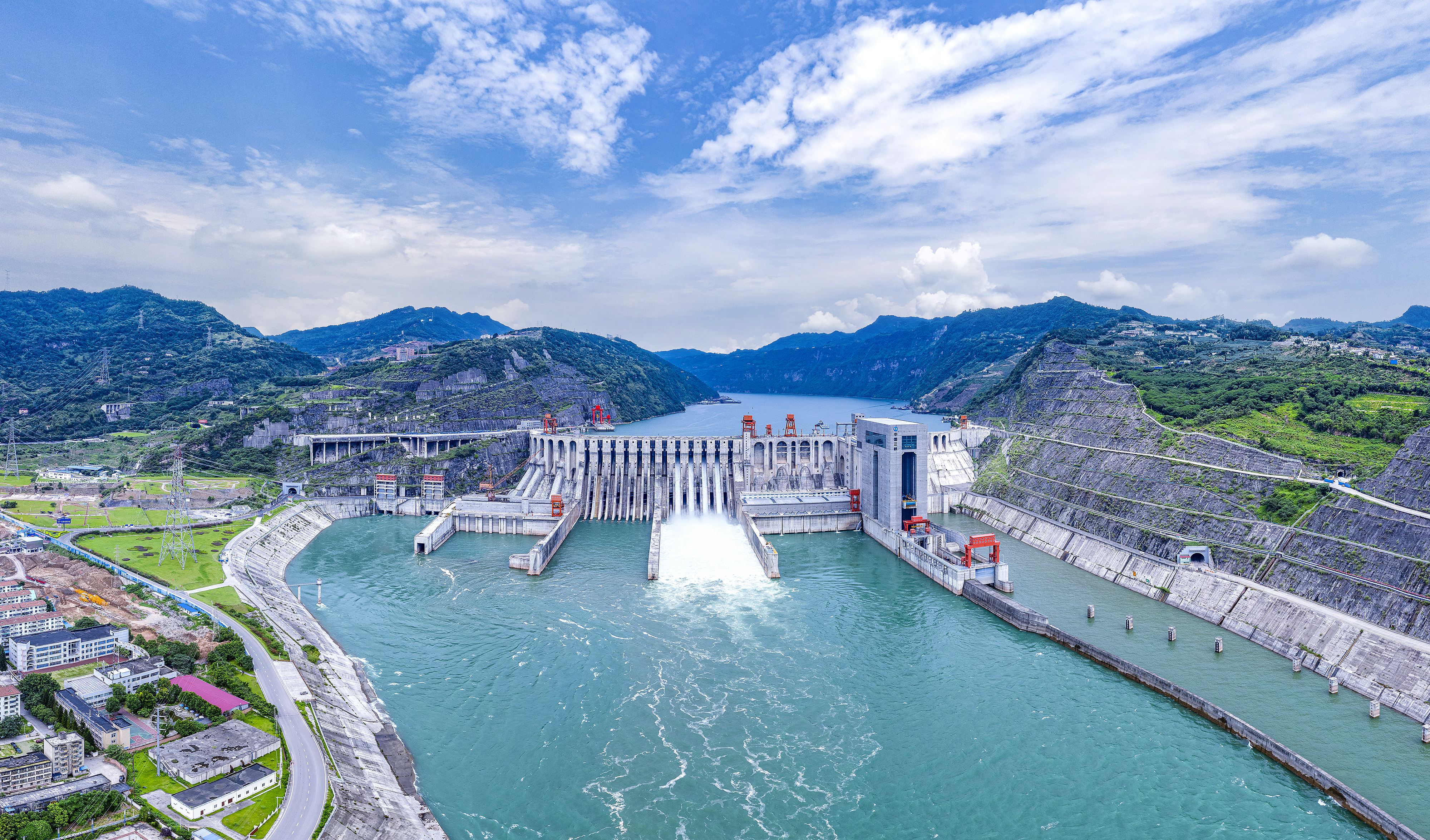
Yibin is rich in hydropower resources
The second ace is "efficiency."
Yibin has now built a green closed - loop full industrial chain ecosystem for power batteries. From basic raw materials to battery cells, new - energy vehicles, and then to battery recycling and reuse, more than 90% of battery structural components can be efficiently matched locally in Yibin.
The industry calls this phenomenon the "next - door factory." KDL is one of the largest structural component suppliers for CATL, and its factory is built next to the CATL Yibin Factory. This "next - door supply" greatly reduces high logistics costs, increases the supply chain response speed by 40%, and enables enterprises to save more than 20% of costs. At the same time, it also maximizes the safety and stability of the supply chain.
Some people may wonder how such a large - scale ecosystem was built in just a few years. The answer is capital. The Yibin government plays the role of an industrial venture capitalist. The traditional government investment promotion model is to provide land and subsidies, but Yibin has adopted an innovative model: funds + industrial chain.
After CATL settled in Yibin, in 2021, the Yibin Emerging Industry Investment Group quickly cooperated with CATL's ecological cooperation fund to establish a special fund dedicated to investing in CATL's supply - chain enterprises. The first phase of the fund, worth 3 billion yuan, was fully invested in less than two years, successfully bringing dozens of key enterprises in the supply chain to Yibin. Next, Yibin has formed a fund cooperation matrix of over 60 billion yuan, including multiple funds in cooperation with CATL.
This "investment - driven introduction" model accelerates the maturity of the industrial ecosystem with the certainty of capital. From the cost advantage of green electricity, to the efficiency synergy of the industrial ecosystem, and then to the capital boost as an industrial accelerator, Yibin's "new ecosystem" has built a complete moat for power battery enterprises.
"New Scenarios" Open up the Second Growth Curve
As the growth rate of the vehicle power battery market slows down, the entire power battery industry urgently needs to find new blue oceans. Yibin's answer is: The city itself steps in to create a market for the industry.
Yibin adheres to the strategy of both finding scenarios for the industry and finding industries for scenarios, and building itself into a huge future application test field. From land to water, Yibin actively opens up the second growth curve for the power battery industry.
On land, Yibin took the lead in tackling the "tough nut" of "heavy - truck battery swapping."
As one of the first 11 pilot cities for the application of new - energy vehicle battery - swapping models in China, Yibin clearly knows its unique advantage, that is, as the junction of Sichuan, Yunnan, and Guizhou provinces, it has busy logistics and transportation. Heavy trucks are the "big emitters" of carbon in the transportation field and also an excellent application scenario for power batteries.
In promoting the "Electric Yibin" project, Yibin has built a nationally leading demonstration system in the field of heavy - truck battery swapping. As of now, a total of 19 battery - swapping stations have been built in the city, and nearly 3,000 battery - swapping heavy trucks have been promoted. Just Gangrong Energy alone has built 10 heavy - truck battery - swapping stations in Yibin.
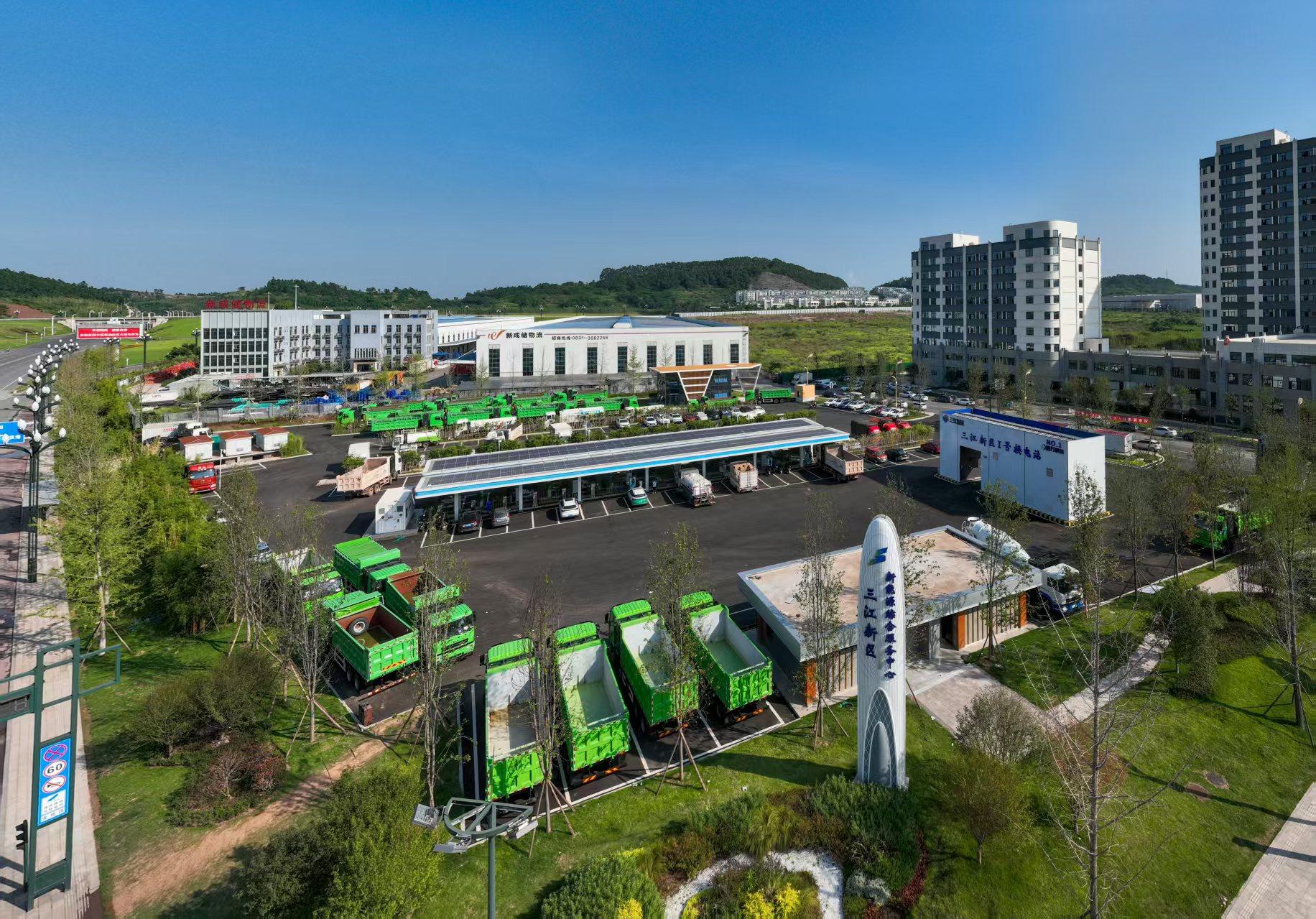
Heavy - truck battery - swapping station in Yibin's Sanjiang New Area (Photo by Wang Yu)
However, Yibin's ambition is far more than just building a demonstration project. The relevant responsible personnel are trying to build it into a profitable business closed - loop.
"Zhilithium IoT" is a heavy - truck battery - swapping company about to be put into production in Yibin. The founder of the company is Li Liguo, who is also the secretary - general of the China Electric Heavy - Truck Battery - Swapping Industry Promotion Alliance. More importantly, he is a student of Professor Ouyang Minggao from Tsinghua University. His goal in starting a business in Yibin is to build a cross - regional heavy - truck transportation battery - swapping network starting from Yibin and covering Chengdu and Chongqing.
This business model driven by urban scenarios not only consumes the locally produced power batteries but also provides real and sustainable business orders and replicable business paths for battery - swapping battery enterprises, energy - storage enterprises, and operators across the country.
Let's shift our focus from land to water. "Electrifying the Yangtze River" is the blue ocean that Yibin is exploring on the water. As "the first city along the Yangtze River for thousands of miles," Yibin launched the "Electrifying the Yangtze River" initiative at the 2023 World Power Battery Conference and quickly took action.
A series of iconic "Made in Yibin" electric ships were launched in a concentrated manner, marking that Yibin has achieved full - coverage of electric ships in four core scenarios. These include: the country's first 5,000 - ton "electric + methanol" dual - power cargo ship as a bulk freight solution, aiming to solve the mileage anxiety of pure - electric cargo ships; the largest electric tourist ship in the province (with a capacity of 205 passengers) for green cultural and tourism services; the province's first electric maritime patrol boat for official law enforcement, which has been officially named "Chuanhaixun 001" and is equipped with a 1,029 - kilowatt - hour battery pack from CATL, achieving zero - emission and low - noise intelligent cruising; and a 60 - passenger electric ferry for people's livelihood ferry services. These actions are opening up a brand - new market for high - value - added marine power batteries.

Yibin Port Railway Collection and Distribution Center, the first 5G smart port in Sichuan Province
Now, Yibin has set its sights on the more cutting - edge low - altitude field. At the upcoming 2025 World Power Battery Conference, "low - altitude economy" and "electric aviation" are two frequently mentioned keywords. As early as mid - 2025, CATL announced a strategic cooperation with a leading eVTOL manufacturer in China to develop more suitable power batteries for it. As one of CATL's largest global bases, Yibin's position in the trillion - level new low - altitude economy track is very clear.
In addition, the conference will also focus on demonstrating the application scenarios of cutting - edge technologies such as embodied intelligence, sending a strong signal to the global industrial community: Yibin is not only today's power battery manufacturing base but also an important player in the next - generation cutting - edge applications.
"New Technologies" Drive the Next Decade
The ultimate goal of industry competition is technological competition. If the ecosystem represents Yibin's present and scenarios represent its tomorrow, then technology represents its more distant future. At the starting point of China's high - tech industry's new decade, Yibin will deploy the innovation chain around the industrial chain, advance from a manufacturing high - ground to a R & D high - ground, and seize the high - ground of next - generation technologies.
However, for a fourth - tier western city like