From vehicles to intelligent agents, embodied intelligence has opened up a new trillion-dollar track in the automotive industry.
As the 15th Five-Year Plan clearly identifies embodied intelligence as a core growth point for future industries, and SaneMotion's 4D imaging radar achieves a double breakthrough in doubling performance and optimizing costs, the automotive industry is standing at a historical juncture of leaping from "transportation tools" to "intelligent mobile entities." The strategic inclination at the policy level and the technological breakthroughs in core hardware form a synergistic effect, which not only rewrites the implementation rhythm of intelligent driving but also promotes the reconstruction of the automotive industry chain from single manufacturing to a full-chain of "intelligent manufacturing + services."
Recently, the industry's hot discussion triggered by the release of XPeng's Iron robot and the technological radiation generated by Tesla's Optimus robot previously also show the in-depth intersection of the two trillion-level tracks of the automotive and robotics industries, providing an illustration for the industrial implementation of embodied intelligence.
Two-way Empowerment of Policy Anchoring and Hardware Breakthrough
The strategic positioning of embodied intelligence in the 15th Five-Year Plan is not an isolated industrial layout but a systematic plan based on the strategies of building a powerful manufacturing country and a digital China. The plan clearly designates the automotive industry as the core scenario for the implementation of embodied intelligence, and promotes the technology to move from the laboratory to large-scale application through multi-dimensional support such as policy guidance, standard improvement, and infrastructure construction.
The new-era industrial development plan compiled by the Ministry of Industry and Information Technology focuses on key core technologies such as vehicle artificial intelligence and automotive operating systems. The accelerated construction of 20 pilot cities for "vehicle-road-cloud integration" provides a policy test field and infrastructure guarantee for embodied intelligent vehicles; the "Guiding Opinions on Vigorously Developing Digital Consumption and Jointly Creating a Better Life in the Digital Age" jointly issued by eight departments including the Ministry of Commerce starts from the market side, encourages the pilot access and promotion of intelligent connected vehicles, and forms a closed-loop ecosystem of "policy guidance - technology R & D - market application."
This top-down policy design not only provides a clear orientation for enterprise innovation but also reduces the threshold for technology commercialization through supporting measures such as purchase subsidies and R & D support from local governments, enabling embodied intelligence to transform from a "future concept" into a tangible development opportunity for enterprises.
In terms of hardware, the Turing AI chip, Tianji AIOS system, and Eagle Eye vision system carried by XPeng's Iron robot are not the products of isolated R & D but deeply reuse XPeng's long-term accumulation in the field of intelligent driving - the 720° all-round environmental perception ability of the Eagle Eye vision system comes from the recognition technology of the automotive intelligent driving system for complex road conditions; the end-to-end decision-making algorithm is in line with XPeng's second-generation VLA large model, which innovatively skips the language translation link and directly generates action instructions from visual signals, empowering the automatic assisted driving function of vehicles without navigation and enabling the robot to have the same stability as automotive driving when walking and avoiding obstacles and performing precise operations. This technological homology allows automobiles and robots to share R & D results and share cost pressure, forming a synergistic effect of "1 + 1 > 2."
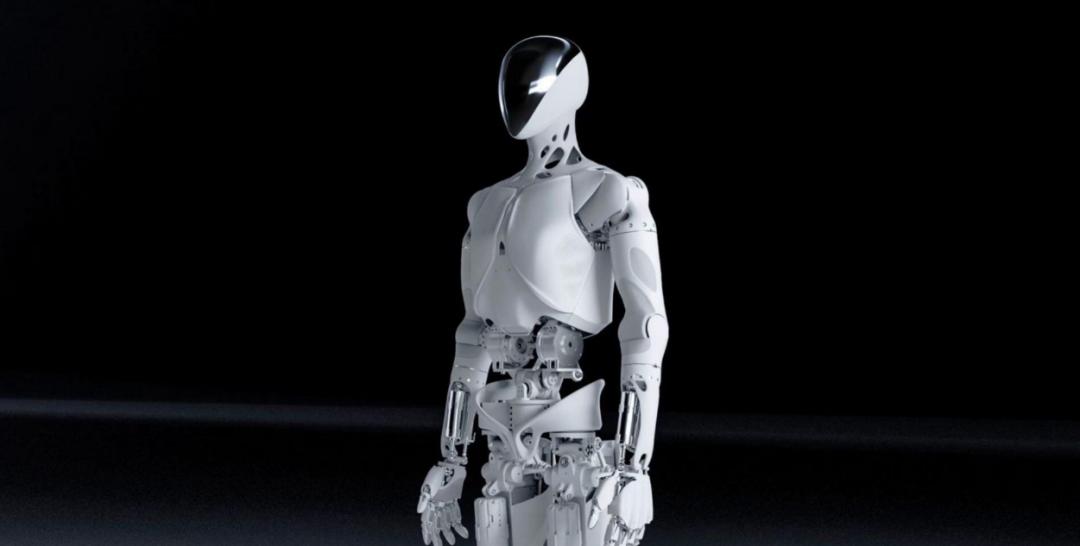
At the industry level, this technological synergy has become a common trend. The white paper jointly released by the Society of Automotive Engineers of China and Geely Automobile clearly lists the VLA model as the basis of the driving intelligent agent and proposes that automobiles should have the core characteristics of autonomy, interactivity, and adaptability, which are highly consistent with the technological requirements of embodied intelligence.
Changan Automobile has accumulated a large amount of data and computing power clusters through the "Beidou Tianshu" plan, and its end-to-end intelligent driving architecture has entered the pre-mass production stage. These data and algorithms can also provide a training basis for potential robot products; Huawei takes intelligent driving technology as the core and extends the multi-modal perception and end-side large model deployment capabilities to automobiles and intelligent terminals, constructing a cross-product technological ecosystem.
From the perspective of hardware, the automotive industry's demand for lightweight and high-precision components is driving the maturity of the robot supply chain in the reverse direction. The core components such as harmonic reducers, six-dimensional force sensors, and flexible electronic skins used in embodied intelligent robots are mostly supplied by enterprises in the automotive parts field. Through technological iteration, these enterprises not only meet the requirements of robots for accuracy and reliability but also reduce the cost of automotive intelligent components through large-scale production. This cross-field technological migration and supply chain sharing are accelerating the maturity and popularization of embodied intelligent hardware and clearing obstacles for the intelligent upgrade of the automotive industry. This virtuous cycle of two-way empowerment not only presses the "accelerator button" on the intelligent process of the automotive industry but also gives rise to an ecological layout of "vehicle - machine - road - cloud" integration, constructing a complete industrial foundation for the in-depth application of embodied intelligence.
Transformation from Manufacturing Logic to Ecological Thinking
Embodied intelligence not only brings technological innovation but also rewrites the underlying logic of the automotive industry. For a long time, the competition in the automotive industry has revolved around "manufacturing capabilities," and the core value has been concentrated in hardware fields such as vehicle assembly, power systems, and chassis technology. The arrival of embodied intelligence is shifting the focus of competition to "intelligent capabilities," promoting the industry to transform from "hardware manufacturing" to "ecological operation" and forming a new industrial pattern.
Traditional automakers are no longer limited to vehicle manufacturing but are transforming into "intelligent entity operators." Enterprises such as BYD, SAIC, and Changan, relying on their million-level mass production experience and vertically integrated supply chain advantages, are applying their large-scale automotive manufacturing capabilities to the robotics field. XPeng's Iron robot has triggered hot discussions in the industry since its release. Its core value lies not only in the product itself but also in verifying the feasibility of "migrating automotive intelligent driving technology to robots" - this humanoid robot, which has entered the XPeng P7+ production line to participate in operations, reuses XPeng's technological accumulation in fields such as autonomous driving algorithms, multi-modal perception, and AI large models, and plans to achieve industrial L3-level mass production in 2026, demonstrating the technological synergy effect of "building cars" and "building robots." This cross-field reuse not only reduces the cost of technological R & D but also gives automotive enterprises a natural technological barrier in the embodied intelligence track.
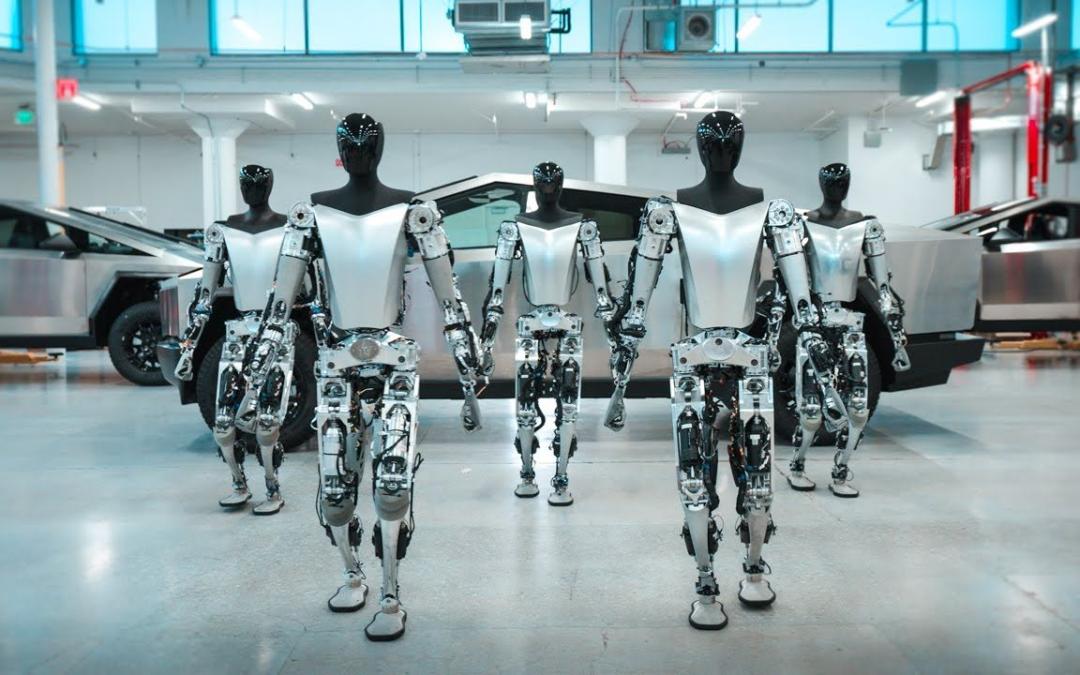
The technological radiation of Tesla's Optimus affects the automotive industry from another dimension. As a leading global new energy vehicle enterprise, Tesla migrates its automation experience, battery technology, and AI algorithms in vehicle manufacturing to the robotics field. The core technologies such as the end effector and motion control algorithm developed by it, in turn, provide new ideas for the intelligent upgrade of the automotive industry.
For example, the precision control technology applied by Optimus in industrial manufacturing is expected to optimize the motion control logic of automotive chassis; the R & D experience of its multi-modal perception system can further improve the environmental recognition ability of vehicles under complex road conditions. More importantly, through the ecological layout of "automobiles + robots," Tesla promotes the technological iteration and cost reduction of core components such as servo motors and harmonic reducers, providing supply chain support for the intelligent transformation of the entire automotive industry chain. This "two-way technological spillover" effect is breaking the boundary between the automotive and robotics industries and forming a virtuous cycle of "technological reuse - cost optimization - scale expansion."
The strategic transformation of parts and components enterprises has become an important microcosm of the reconstruction of the industry chain. Driven by embodied intelligence, traditional parts and components suppliers are transforming into "intelligent hardware service providers," focusing on core fields such as 4D imaging radars, high-order chips, and precision reducers. Enterprises such as Shuanghuan Transmission and Green Harmonic, relying on their technological accumulation in the reducer field, have obtained fixed-point cooperation from automakers such as BYD and GAC; Inovance Technology, Hechuan Technology, and Changan, Chery jointly develop servo and drive control systems, forming a collaborative R & D model of "automaker + parts and components enterprise." Diverse market participants transform the automotive industry chain from a linear supply chain to a networked ecosystem, and the focus of competition also shifts from the performance of a single product to the comprehensive ability of "hardware + software + services."
Diversified Scenario Extension of the Automotive Industry
The in-depth integration of embodied intelligence and the automotive industry is giving rise to diversified application scenarios, from industrial manufacturing to travel services, from cockpit interaction to after-sales maintenance, and the industrial boundary of the automotive industry is constantly expanding. At the production end, XPeng's Iron robot and Tesla's Optimus have taken the lead in being implemented in automotive factories. In the travel scenario, embodied intelligence enables automobiles to shift from "passive response" to "active service." Intelligent vehicles equipped with 4D imaging radars and multi-modal perception systems can accurately identify pedestrians, non-motor vehicles, and static obstacles in complex road conditions, and achieve real-time decision-making and path optimization through AI algorithms, enabling high-level intelligent driving to be safely implemented in multiple scenarios such as urban roads and rural paths.
Cockpit interaction is evolving towards "super anthropomorphic." Voice interaction based on large models can understand complex instructions and emotional needs, achieving a leap from "function control" to "scenario service" - when the user mentions "feeling tired," the vehicle can automatically adjust the seat angle, play soothing music, and plan a nearby rest point; when encountering an emergency, the vehicle can link up with emergency rescue, traffic police and other departments to achieve a rapid response. This in-depth interaction makes the vehicle a "travel partner" for users and redefines the relationship between people and vehicles.
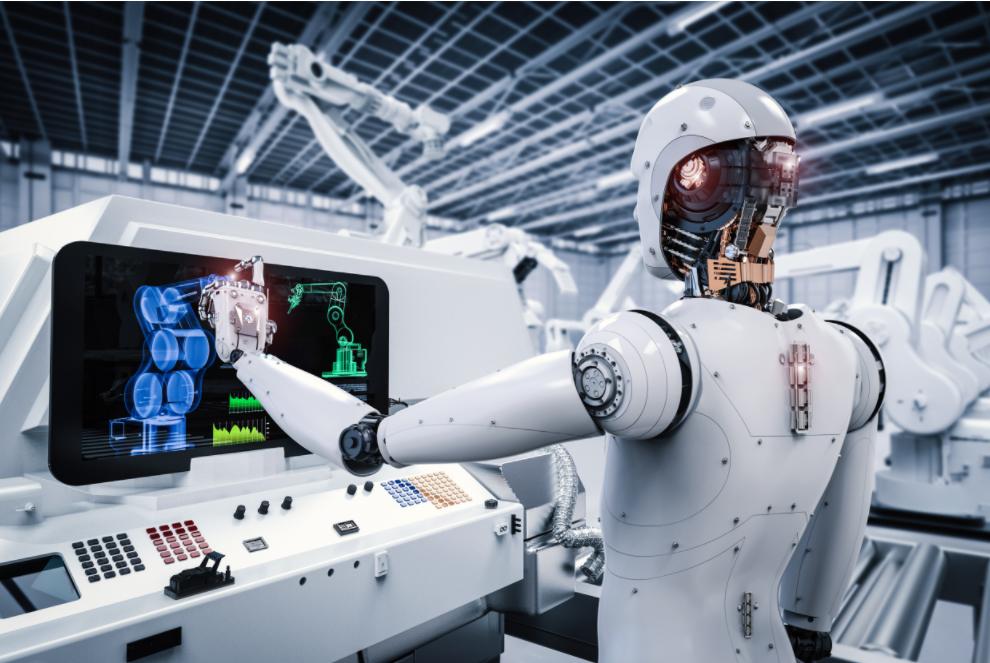
The innovation in the after-sales and service fields is also worth looking forward to. Embodied intelligent robots can be applied to automotive inspection, repair, maintenance and other links, improving service efficiency and quality through accurate fault diagnosis and standardized operations; in scenarios such as logistics distribution and charging services, the coordinated linkage of mobile robots and intelligent vehicles constructs a service network of "vehicle - machine - person" integration.
With the maturity of technology, the profit model of the automotive industry will also shift from "product sales" to "full-life cycle services." Automakers obtain user data by operating intelligent entities, provide personalized travel plans, value-added services, and financial products, and form a sustainable profit ecosystem. This transformation can not only improve user stickiness but also open up a service market space worth trillions of dollars, enabling the automotive industry to leap from "manufacturing value" to "operational value."
In terms of market space, embodied intelligence brings growth potential from hundreds of billions to trillions of dollars to the automotive industry. Goldman Sachs predicts that the global market size of humanoid robots will reach $154 billion in 2035, while Citigroup is more optimistic about its long-term development and expects the market size to exceed $7 trillion in 2050. In the automotive factories and supporting logistics and warehousing fields in China alone, the cumulative potential demand in 10 years will reach millions of units, corresponding to an output value of hundreds of billions of yuan; if extended to cross-border scenarios such as after-sales, energy, and 3C, the market size will increase several times. Driven by the continuous strengthening of policies and the rapid iteration of technology, the Chinese automotive industry has formed a first-mover advantage in the embodied intelligence track with the triple advantages of "million-level mass production experience + vertically integrated supply chain + algorithm innovation."
This article is from the WeChat public account "Automotive Market Insights", author: Yang Shuo, published by 36Kr with authorization.