How does this Japanese company, highly respected in the industry, perfect the reproduction of ancient Chinese paintings and calligraphy?
Not chasing scale, but focusing on one thing. For fifty years, Nigensha has been dedicated to replicating calligraphy and paintings. With industrial precision, it has reproduced the charm of artworks and, with extreme dedication, set a respectable benchmark in the industry.
You may not know that when you visit any national museum, those exquisite calligraphy and paintings in the display cases that take your breath away are very likely just replicas.
For various reasons, most of the authentic calligraphy and paintings from past dynasties are locked away in the constant - temperature storage rooms of museums, and even researchers rarely get to see them. However, it is a Japanese publishing house, Nigensha, that has made these national treasures "multiply" and created replicas that are almost indistinguishable from the originals.
Thanks to the efforts of Nigensha, the glass display cases in many museums no longer hold dull "replicas" but rather artistic masterpieces that Mr. Qi Gong exclaimed were "second only to the authentic works." The national treasures that were once out of reach for the public now have the opportunity to be appreciated by ordinary people.
Over the past fifty - odd years, this Japanese publishing house has been doing one thing day in and day out: disassembling each precious calligraphy and painting into tens of thousands of color slides and then "reviving" the entire work micron by micron.
It is precisely with its superb "forgery technology" in replicating Chinese calligraphy and paintings that this Japanese publishing house has become the "world's number one" in the field of calligraphy and painting reproduction.
From an ordinary publishing house to the starting point of technological innovation
The story of Nigensha begins with an encounter between its founder, Watanabe Takao, and the painting "Travelers among Mountains and Streams."
In 1953, Watanabe Takao founded Nigensha, which was just an ordinary calligraphy and painting publishing house at that time, unremarkable among the numerous publishing houses in Japan.
In 1968, Watanabe Takao saw the famous Northern Song Dynasty painting "Travelers among Mountains and Streams" by Fan Kuan at an exhibition and was extremely excited.
Before that, Watanabe Takao had seen a printed version of this masterpiece in an album and was deeply impressed. But when he saw the authentic work with his own eyes, he was completely conquered by its magnificent momentum and profound brushwork and lingered there for a long time.
At that time, most of the handed - down calligraphy and paintings were made of fragile materials and required high - standard preservation environments. The more precious they were, the less frequently they could be exhibited. So, when Watanabe Takao heard that such authentic works could only be publicly exhibited once every 60 years, he felt very regretful.
He secretly made up his mind that he hoped his Nigensha could use more advanced technology to replicate these authentic works so that they could be more widely circulated and seen by more people.
In fact, before Nigensha, calligraphy and painting replicas were always regarded as "printed handicrafts" in the industry and were not considered high - class.
This was mainly because most of the calligraphy and painting replications at that time were simply simple copying or photo - printing. Either the momentum could not compare with the authentic works, or due to technical limitations, it was difficult to present the detailed brushstrokes.
By observing the "Travelers among Mountains and Streams," which is about the size of a "zhang - two - piece" (more than 2 meters in length and about 1 meter in width), Watanabe Takao realized that the delicate brushstrokes of these large - scale ancient Chinese paintings were difficult to capture with the ordinary shooting techniques of traditional cameras, and the edges of the picture were prone to deformation due to the principle of perspective.
So, Watanabe Takao organized a research and development team consisting of a group of engineers, photographers, and calligraphy and painting experts, and launched a 20 - year technological transformation process for Nigensha.
In the 1970s, while global publishing houses were still using standardized cameras to replicate artworks, Nigensha quietly developed a large - scale shooting device that weighed 3 tons and occupied nearly 20 square meters.
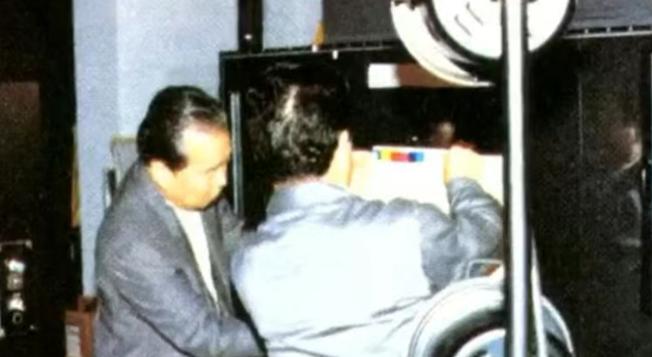
This large - scale camera not only used a precise track control system to keep the lens perpendicular to the painting at all times, achieving a "1:1 restoration" when shooting calligraphy and painting works, but also eliminated common highlights and shadow interference.
After taking the photos, Nigensha sent them to its self - developed 12 - color printing press. Even today, most printing factories use 4 - color overprinting, which is difficult to restore the hierarchical sense of "five shades of ink" in ancient paintings. However, this 12 - color printing press can not only make the brushstrokes clearly visible but also restore the magnificent momentum of the authentic works to the greatest extent.
In addition, Nigensha added 8 special colors such as light cyan and gray - purple on the basis of traditional four - color overprinting, expanding the printing color gamut by 40% compared with traditional technology. Especially through the research on the azurite pigment in Emperor Huizong of Song's "Picture of Auspicious Cranes" and repeated experiments with special overprinting techniques, it finally achieved the "gem - like deep luster" that was the same as the authentic work in the replicas.
However, in the replication and printing of ancient paintings, half lies in the brushwork, and half lies in the carrier.
Since most ancient Chinese paintings were painted on paper made from materials such as mulberry bark and paper mulberry bark, they have formed a unique texture and feel over thousands of years. The industrial production of modern paper cannot replicate these "traces of time" at all. Therefore, the choice of paper for replicas is particularly crucial.
Nigensha's material revolution and color code
In order to find suitable paper, Nigensha's material team launched a long - term experiment.
After 3 years and 127 formula adjustments, and after trying more than 300 kinds of paper, Nigensha finally developed a special "Sino - Western eclectic" paper: using 60% Western paper as the base to ensure strength, mixing 20% African paper mulberry fiber to simulate the texture of ancient paper, and adding 20% short fibers of Japanese washi to increase water absorption. This paper not only meets the requirements of printing accuracy but also presents the texture of ancient paper that is "as gentle as jade."
In order to make the paper have the characteristic of "feeling warm to the touch" like ancient paintings, Nigensha continued to use the ancient Chinese "beating" process. Workers beat the pulp by hand with a wooden mallet for 4 hours a day for a week to make the fiber interweaving density reach 85% of that of traditional paper before obtaining a relatively satisfactory piece of paper.
There is also Nigensha's amazing and unique "antiquing" technology.
New paper often has a "fiery" feel. Nigensha puts the paper into a special constant - temperature and constant - humidity box to simulate the climate conditions in the southern region of China (temperature 22°C, humidity 65%) and adds a small amount of mold spores to let the paper age naturally, thereby achieving the effect of "aged paper."
The entire paper - making process takes up to 8 months, and during this period, the oxidation degree of the fibers needs to be observed regularly with a microscope to ensure that the final product is in the same state as the paper of the authentic work.
If the suitable paper is already amazing, Nigensha's extreme pursuit of color restoration in ancient paintings is even more touching.
"Replication is not imitation but understanding the state of mind of the ancients when they wrote or painted."
This is the motto of Nigensha's color - correction masters and also the sincere respect of the entire team for the authentic works.
In order to restore the colors of the authentic works most accurately, they abandoned the shortcut of modern digital color - adjustment and adopted the "manual comparison" method, which has achieved a level that digital technology can hardly reach.
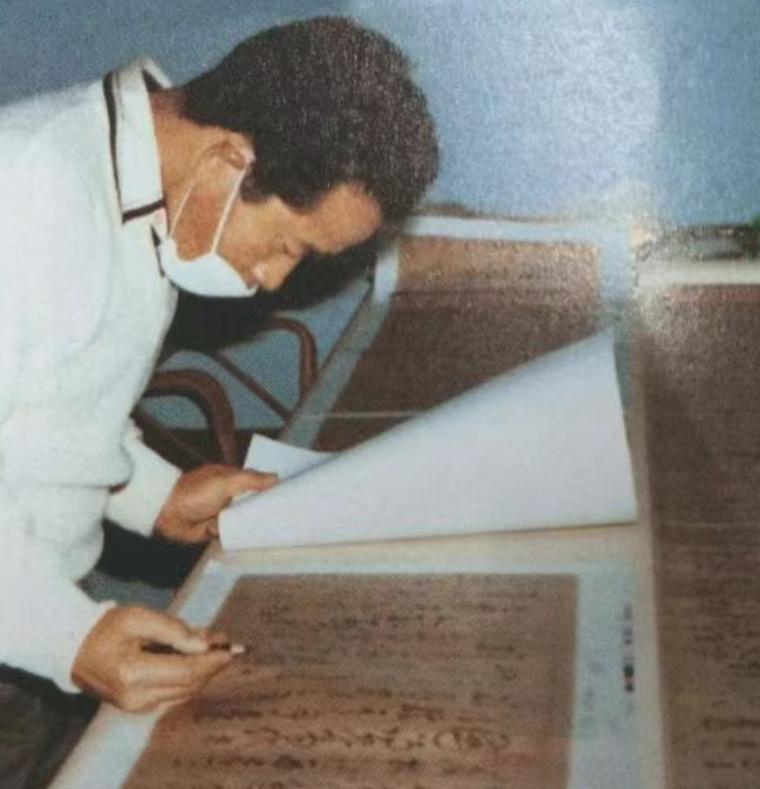
After getting the authentic work, Nigensha's color - correction masters immediately use a high - power magnifying glass to decompose the picture into more than a thousand color blocks, record the color data one by one, and then verify the colors through computer - simulated overlay effects. This process can take as short as 1 year or as long as 2 years.
Taking Wang Xizhi's "Letter on a Snowy Day" as an example, the color - correction team divided the authentic work into 28 color areas, made 15 color samples respectively, and finally invited 10 calligraphy and painting appraisal experts to blindly select the closest version.
The ink color of the four characters "Xizhi bows" in the letter has an oxidized "brown - tinted black" special texture due to multiple mountings of the authentic work. The color - correction masters prepared 72 ink color formulas and finally achieved the "ancient yet vivid" effect by adding three - ten - thousandths of ocher to the black ink.
In order to capture the subtle color changes in ancient paintings, Nigensha also invented the "layered comparison method." For example, the rocks in Fan Kuan's "Travelers among Mountains and Streams" seem to be a single ink color from a distance, but when magnified, one can find subtle colors such as cyan - gray and ocher hidden in the "cun method." Nigensha accurately replicated the color of each detail to ensure that there is no difference between the authentic work and the replica in the eyes of ordinary people.
For Nigensha, calligraphy and painting replication is not only a craftsmanship but also a way to protect the authentic works.
Due to the passage of time and the preservation environment, the ink color of ancient paintings will gradually oxidize and fade. For example, the Hongqiao section of the "Along the River During the Qingming Festival" is 30% lighter in color than other areas because it was once soaked in water.
Nigensha did not choose to "repair" this fading but accurately replicated this "imperfection."
They believe that "the traces left by time are also part of the work's life."
It can be said that through continuous exploration and research and development, Nigensha has gradually upgraded the replication of ancient paintings into a systematic project that integrates optics, materials science, and color science. Many of its technological breakthroughs are still unattainable peaks in the industry today.
Let the national treasures come out of the "deep palace"
In the 1980s, when Nigensha's replication technology became increasingly mature, it set its sights on a more ambitious mission: to rescue those precious calligraphy and paintings that were on the verge of "disappearing" due to their long history and difficult preservation conditions.
At that time, among the more than 30,000 calligraphy and painting collections in the National Palace Museum in Taipei, less than 5% were publicly exhibited, and many national - level treasures in the Palace Museum in Beijing were only exhibited once every 60 years, and the exhibition period was no more than 30 days.
In order to break this "visible distance," in 1981, Watanabe Takao, the president of Nigensha, brought a set of replication samples and contacted the National Palace Museum in Taipei after many twists and turns.
Due to the cautious attitude towards cultural relic replication and concerns about technology leakage or damage to the authentic works, the National Palace Museum in Taipei was initially not interested in Watanabe Takao's proposal to replicate ancient calligraphy and paintings.
For this reason, Watanabe Takao put forward the "Three Non - contact Principles": not touching the authentic works, shooting under the supervision of the museum experts, and leaving all master plates in the museum. Finally, he moved the museum authorities.
The first project of their cooperation was Wang Xizhi's "Letter on a Snowy Day," which was praised by Emperor Qianlong as the "number one calligraphy in the world."
Considering that this calligraphy work is a "national treasure among national treasures" and the paper is fragile, the National Palace Museum in Taipei had never allowed any institution to shoot it before.
Out of respect for this work, the Nigensha team worked in the constant - temperature painting studio of the museum for a full 45 days, shooting only from 9 a.m. to 11 a.m. every day - this is the time when the natural light is the softest, which can minimize the damage to the paper caused by light.
During the shooting, they gently supported the center of the painting with silk gloves to avoid finger contact, and the camera lens always kept a distance of 1.5 meters from the work and completed the focusing through remote control. After the relevant preparations were completed, they immediately took the materials back to Japan for trial printing and then sent them back to Taipei for comparison with the authentic work... After such repeated and continuous work, it took more than a year.
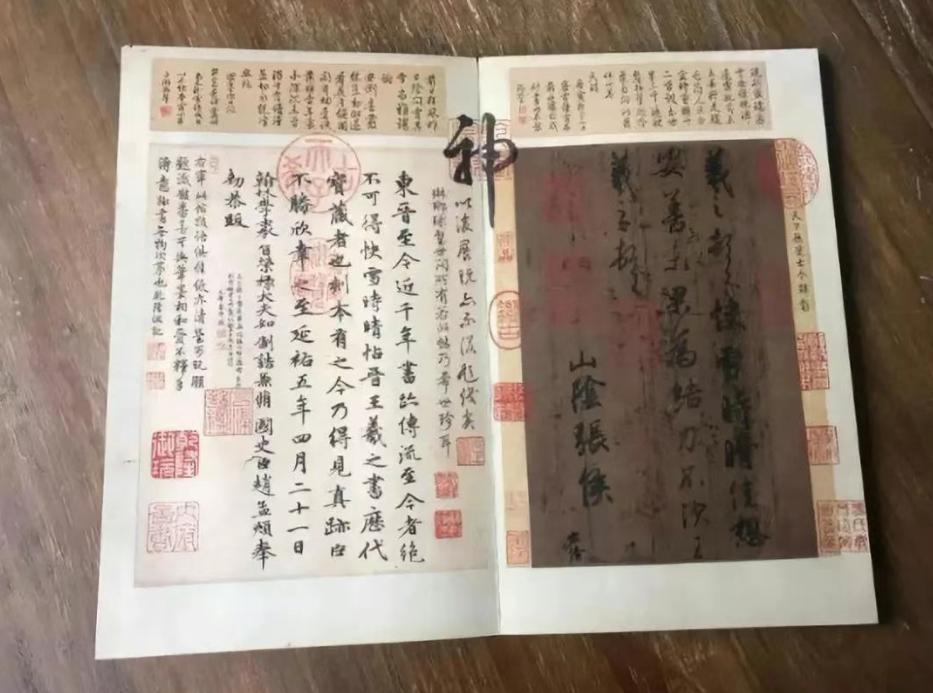
Finally, when the replicated "Letter on a Snowy Day" by Wang Xizhi was presented to Chiang Fu - tsung, the then president of the National Palace Museum in Taipei, he stared at it for a long time and said:
"This is the authentic work taken from our museum's warehouse. Is there still a need to look at it? What I want to see is Nigensha's replica!"
When he learned that it was actually a replica by Nigensha, Chiang Fu - tsung was extremely surprised. After repeated verifications, he marveled at the superb "ability to pass off fakes as real."
Since then, Nigensha in Japan has started a decades - long cooperation with the National Palace Museum in Taipei to replicate hundreds of large - scale calligraphy and painting treasures from the Tang, Song, and Yuan Dynasties in its collection.
Let's take a look at how Nigensha replicates those national - level calligraphy and paintings.
After getting the authentic work, Nigensha first determines the dimensional accuracy, ensuring that the dimensional error between the replica and the authentic work does not exceed 0.5 millimeters. This rigor is particularly important for long - scroll works. For example, for a hand - scroll like the "Lanting Xu," the spacing between each character can be exactly the same as the authentic work, presenting the real momentum of the calligraphy.
Secondly, in terms of color restoration, Nigensha requires that more than 95% of the color blocks of the replica should match the authentic work under the detection of a spectrometer, and no color difference can be seen with the naked eye. As for the paper texture, even if the most suitable paper has been selected, more than 10 calligraphy and painting appraisal experts will still be invited for a blind test, and the passing rate needs to reach more than 80%.
Finally, the work must stand the test of time. After the replication of the picture is completed, an electron microscope is used to observe the shade levels of the ink color to ensure that the details of brushstrokes such as "flying white" and "dry brush" are clearly distinguishable, and the color and texture remain stable for 50 years.
The strictness of Nigensha's standards can be seen from the replication process of famous handed - down works such as the "A Thousand Li of Rivers and Mountains" and the "Night Revels of Han Xizai."
Extreme restoration from the "A Thousand Li of Rivers and Mountains" to the "Night Revels of Han Xizai"
The "A Thousand Li of Rivers and Mountains" is a color - on - silk painting created by Wang Ximeng of the Northern Song Dynasty and is now collected in the Palace Museum in Beijing. In the form of a long scroll, based on tradition, the picture is extremely detailed. It not only represents the development milestone of blue - and - green landscape painting but also...