Honda will produce and export its global strategic EV models in India.
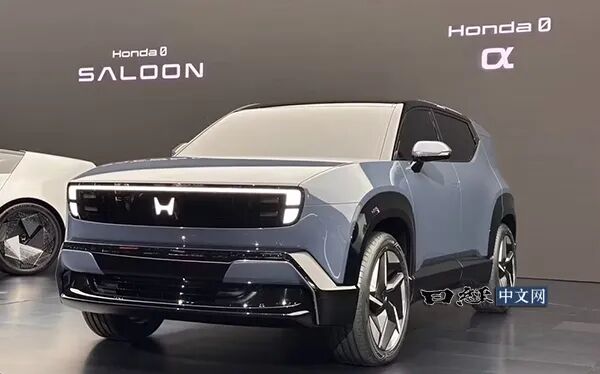
Honda will export the EV "Honda 0 α" from India to Japan (October 29, Koto-ku, Tokyo)
"Honda 0 α" is Honda's first global strategic model developed with India as the core from the planning stage. Against the backdrop of low-cost EVs from China sweeping the market, Honda will produce in India to enhance cost competitiveness. In turn, it will export from India to Japan...
On October 29, Honda announced that it will produce a global strategic model of pure electric vehicles (EVs) in India. It will turn India into an export base for a new pure electric SUV to be launched in fiscal year 2027. The Indian market has great growth potential, and the manufacturing cost is lower than that in Japan. Against the backdrop of low-cost EVs made in China sweeping the market, Honda will face the challenges by enhancing cost competitiveness.
The conventional model of Japanese automakers is to establish technology in domestic factories and then transfer the production model overseas. There are limitations to supply chain reform only in Japan. Therefore, Honda will export from India to Japan instead to challenge price competition.
On the morning of October 29, Honda unveiled a prototype of the new EV "Honda 0 α" at the media opening event of the "Japan Mobility Show 2025".
Honda plans to launch the first model of its main EV series "0", a mid-size SUV, in the United States in 2026, and then launch the second model, the high-end sedan "Honda 0 SALOON", in 2027.
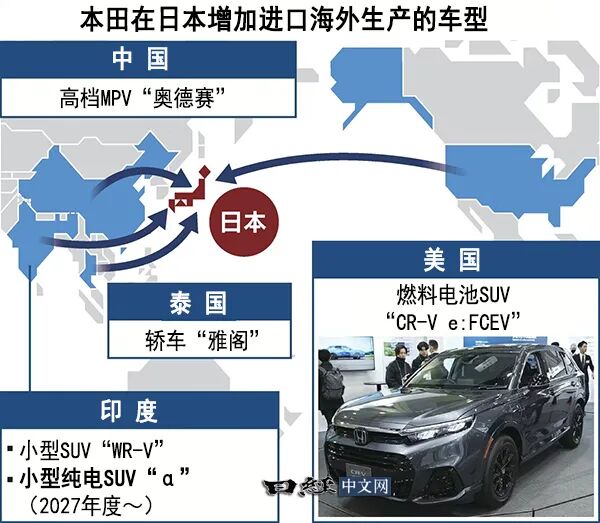
The Honda 0 α, as the third model in the 0 series, will be launched in Japan in fiscal year 2027. The Honda 0 α adopts a compact size suitable for Japanese road conditions. This time, to enhance the cost competitiveness of the Honda 0 α, India was chosen as the production location.
For the first two models of the 0 series EVs developed by Honda with global promotion in mind, the United States was the main production location. The production cost in the United States is relatively high, and low-cost production is needed in the Asian market where low-cost EVs from China have an advantage.
Therefore, Honda set its sights on India. The Indian government has set an ambitious goal of increasing the EV penetration rate to 30% by 2030. In 2024, India's automobile sales exceeded 5 million vehicles, higher than Japan's (4.42 million), ranking third in the world. Forecast data shows that India's annual automobile sales will exceed 7 million vehicles by 2030.
Honda's Indian factory currently does not produce EVs. Producing EVs in India can not only enhance cost competitiveness through low labor costs but also is expected to reduce costs by increasing production volume. Honda sees an opportunity to win from this.
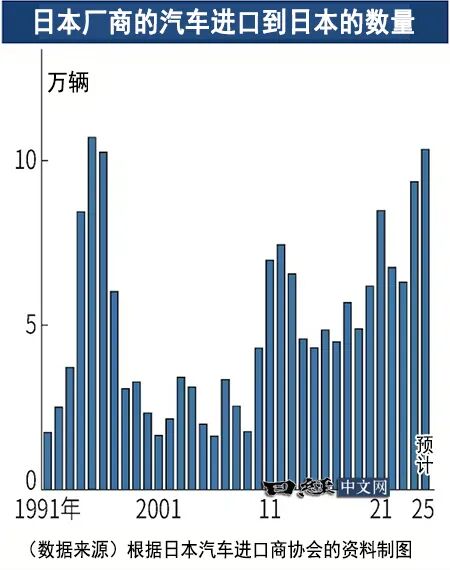
Since March 2024, Honda has started importing the small gasoline SUV "WR-V" produced in India to Japan for sale. The number of orders received within one month exceeded four times the monthly sales plan. The affordable price of 2 - 2.4 million yen (approximately RMB 93,100 - 111,600) has driven sales growth.
The success of the WR-V has prompted Honda to decide to produce EVs in India. The Honda 0 α is Honda's first global strategic model developed with India as the core from the planning stage.
EVs of Chinese companies have increased their sales in the Japanese and Southeast Asian markets. BYD's price - cut sales strategy has been effective. In September, BYD's imported car sales in the Japanese market reached a new monthly high. Honda has a sense of crisis about the price offensive of Chinese companies.
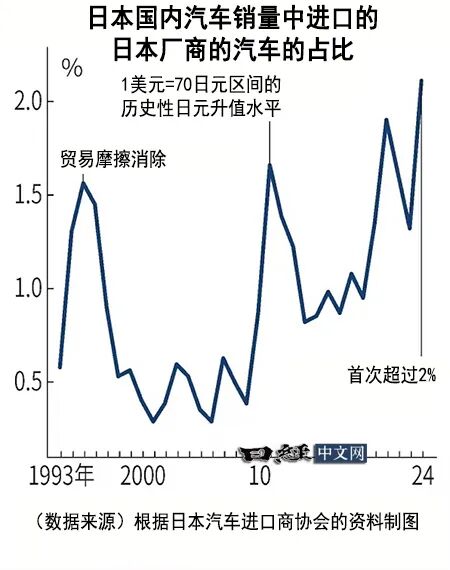
The current concern is the depreciation of the yen. Due to the expectation that the Kishida government will implement active fiscal policies and monetary easing policies, the yen has shown a depreciation trend, leading to an increase in the cost of imported cars.
The 0 series models are positioned as "vehicles that embody Honda's dreams". Currently, the EV penetration rate in Japan is less than 2%, the lowest among developed countries.
Can the Honda 0 α stimulate the demand of Japanese consumers who are not familiar with EVs? Honda's challenge from India will be a touchstone to test this.
This article is from the WeChat public account "Nikkei Chinese Net" (ID: rijingzhongwenwang), author: Shoya Okunaga. It is published by 36Kr with authorization.