The average price of new energy vehicles has hit a six-year low, and the "chill" of the price war is eroding the supply chain.
"Perspective" is a newly launched lightweight data graphic column by 36Kr - using data to analyze trends and pictures to present key points.
"Talk is Cheap. Show me the data."
Author | Xu Caiyu
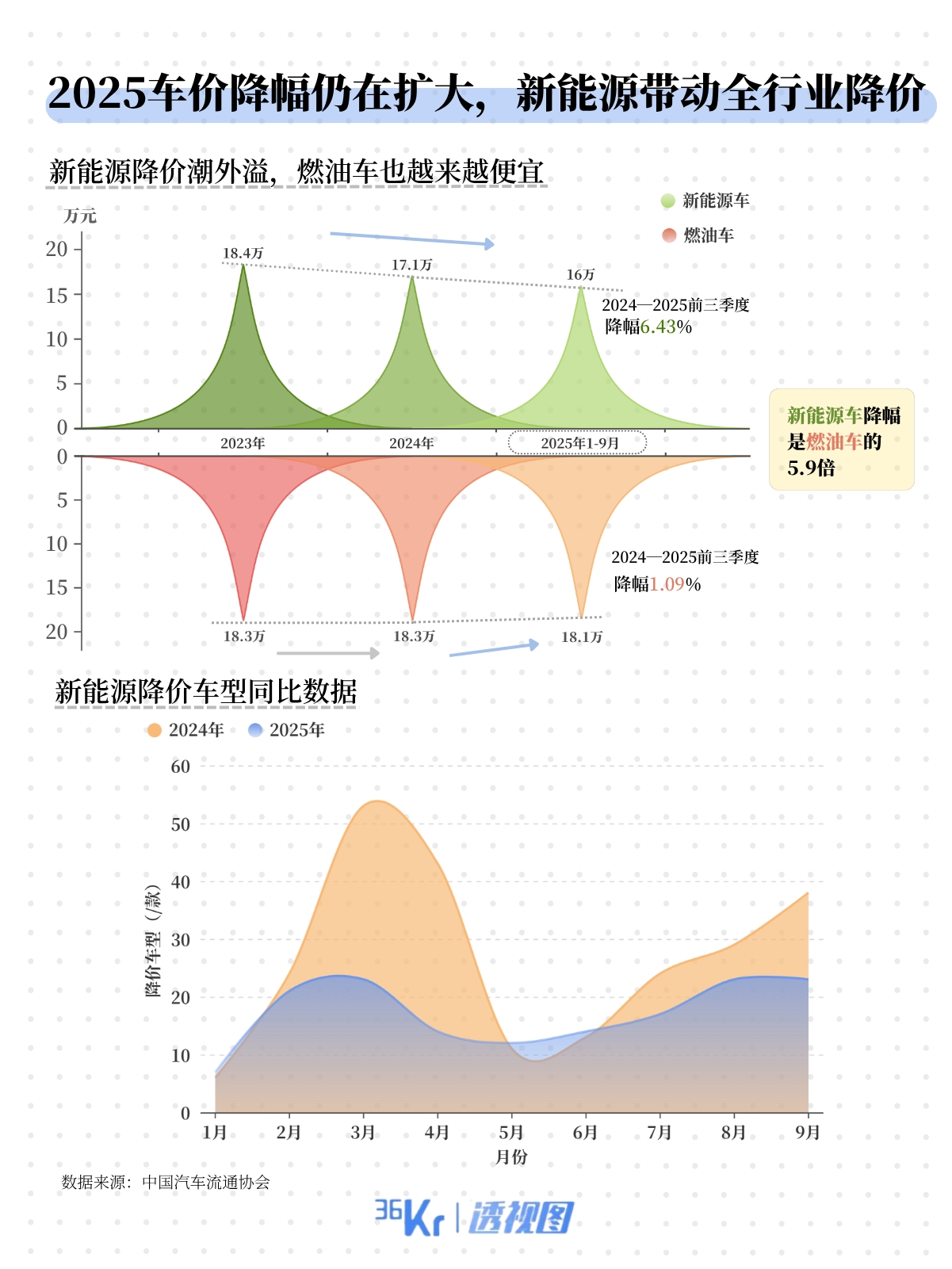
This year, the cold chill of the price war in China's automotive industry has become even more intense.
Graphic by 36Kr
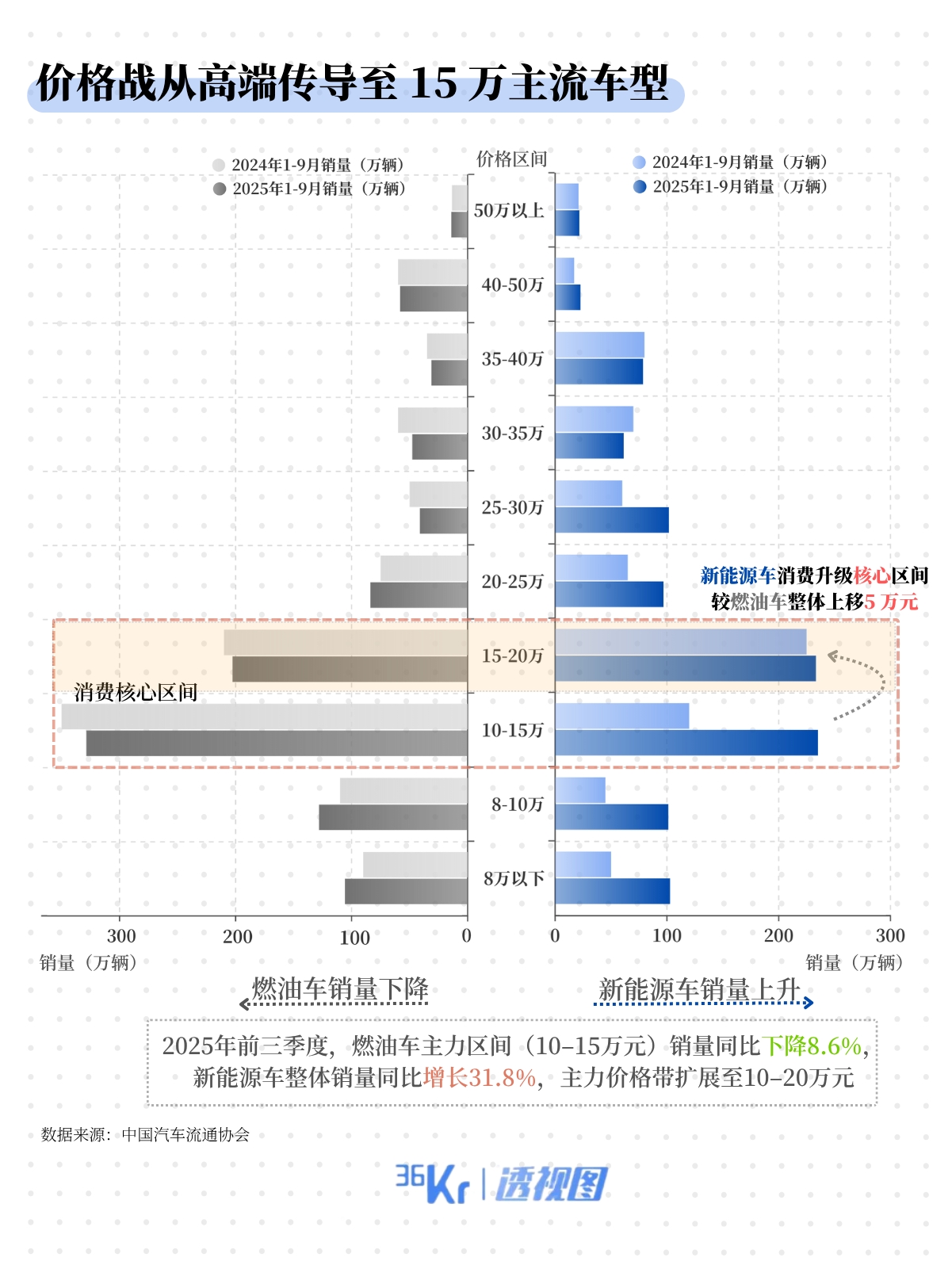
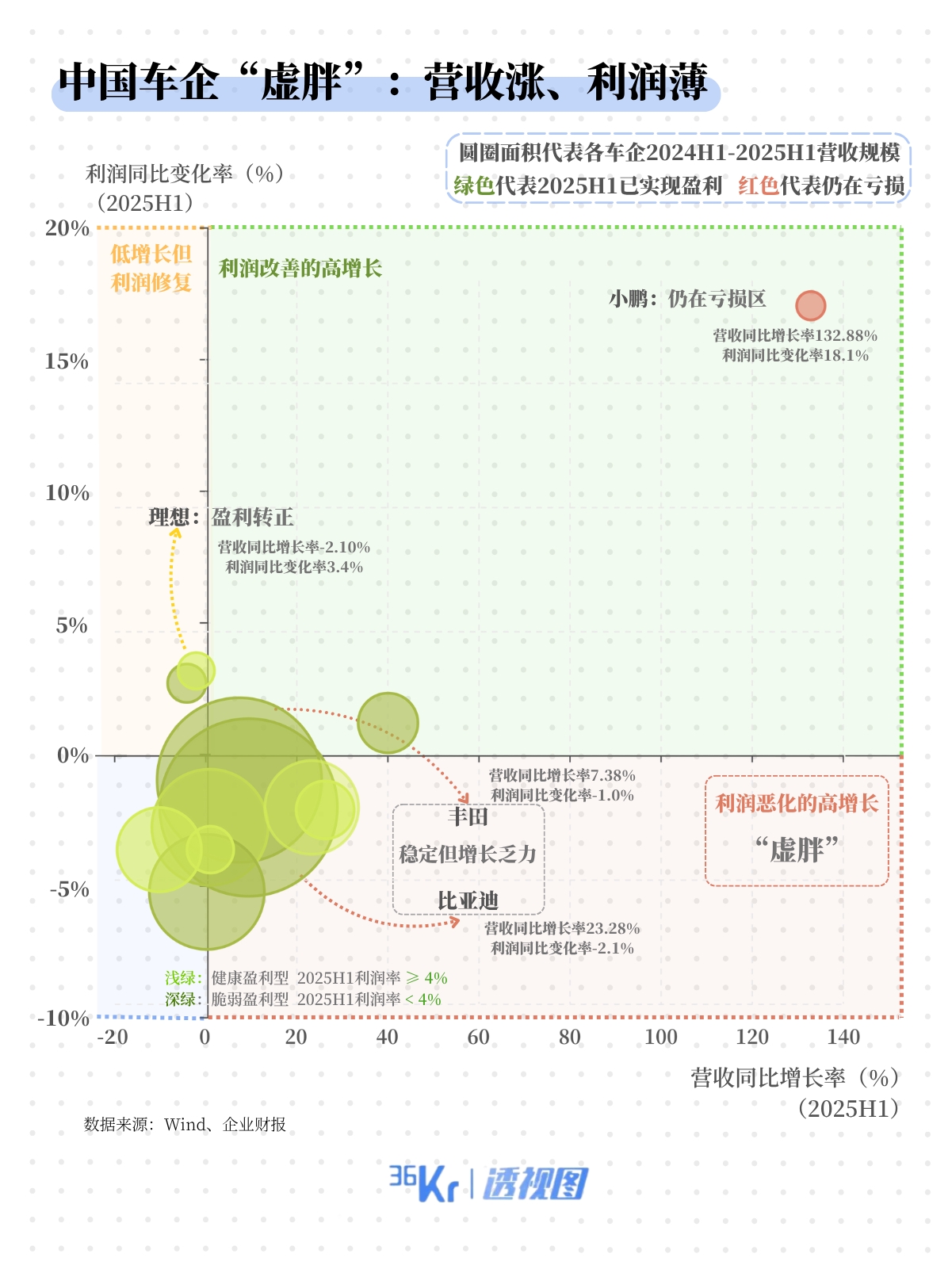
In September 2025, the average selling price of new energy vehicles dropped to 158,000 yuan, breaking below the 160,000 - yuan mark for the first time since 2019. Fierce competition has distorted the market. Although new energy brands such as Li Auto and XPeng have seen an increase in sales, it's difficult for them to boost profits. Enterprises like BYD, Toyota, and Volkswagen are caught in the strange cycle of rising revenues but falling profits. The backlash of long - term price cuts has emerged.
Graphic by 36Kr
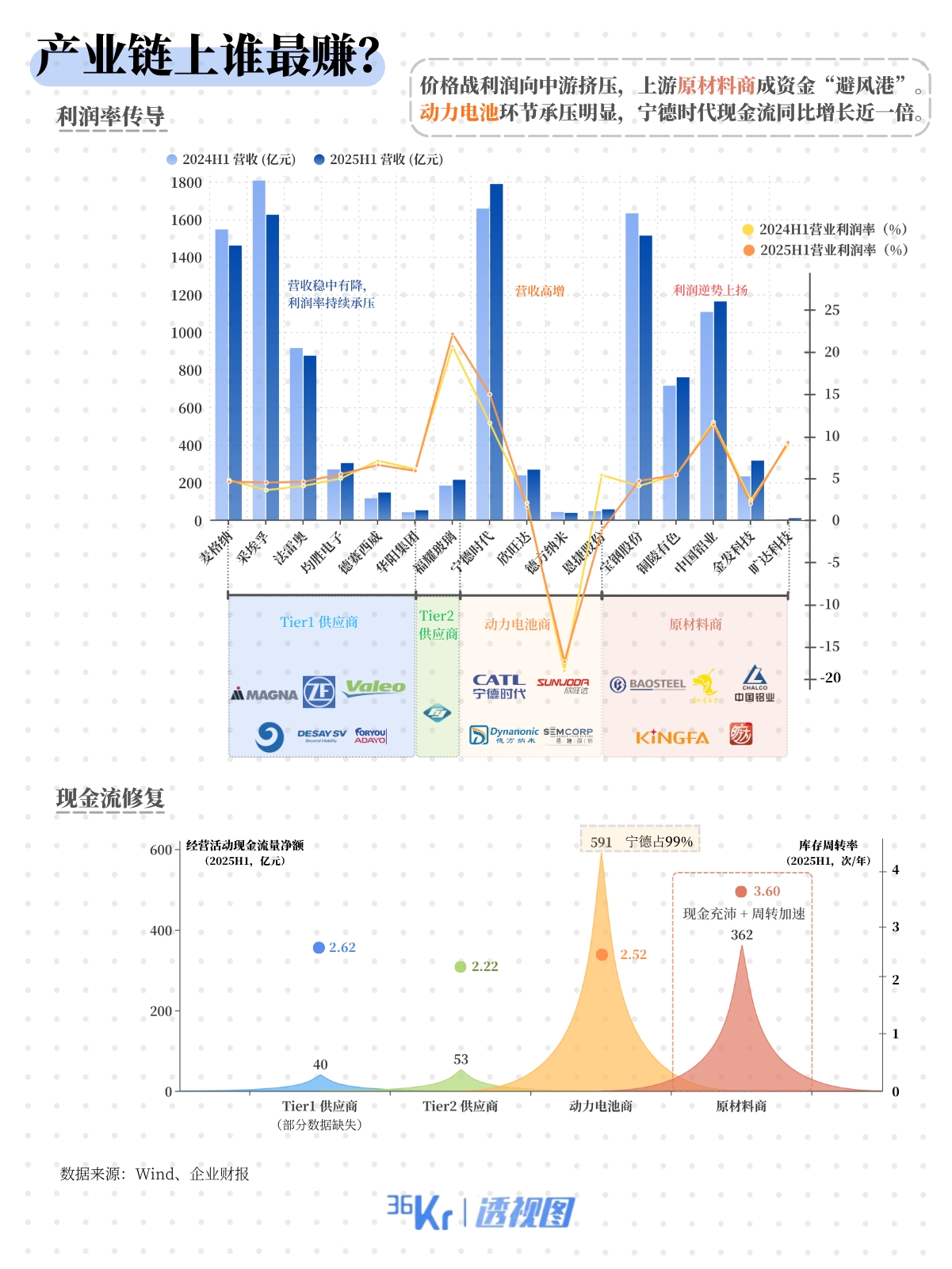
To control costs, vehicle manufacturers generally require suppliers to cooperate in cost reduction and significantly extend the payment cycle. The pressure of the price war has penetrated deep into the automotive supply chain, but the situations vary.
Graphic by 36Kr
Raw material manufacturers such as Baosteel and Chinalco are growing steadily and have sufficient funds. Core power battery manufacturers like CATL have shown obvious growth, but raw material manufacturers of cathode materials and separator films are still in the red. Traditional power and chassis Tier 1 enterprises are experiencing a simultaneous decline in revenues and profits, and many giant enterprises have launched multiple rounds of global lay - offs.
Graphic by 36Kr
When the price war evolves from a short - term strategy to a normal - state competition, the core of survival for vehicle manufacturers and the supply chain is no longer simply price cuts. Instead, it requires technology - driven cost optimization and strategic reshaping from "competing on price" to "competing on value".