Nissan sold its headquarters building after suffering a huge loss of tens of billions, and a Chinese company acquired it.
According to a report by CCTV News, Nissan Motor Co., Ltd. (hereinafter referred to as Nissan) announced on November 6 that it will sell its global headquarters building in Yokohama, Kanagawa Prefecture, for 97 billion yen (approximately 4.5 billion yuan). After the sale, Nissan will continue to use the building through a lease agreement.
According to Global Times, citing sources familiar with the matter, the buyer of Nissan's headquarters building is a consortium supported by Minth Group, an auto parts manufacturer listed in Hong Kong. The transaction will be led by KJR Management (a Japanese real estate subsidiary of US private equity giant KkrCo.), and Minth Group is one of the major investors.
It is reported that this sale is part of Nissan's business reconstruction. The funds will be used to improve its financial situation, and the relevant sale procedures will be completed in December this year.
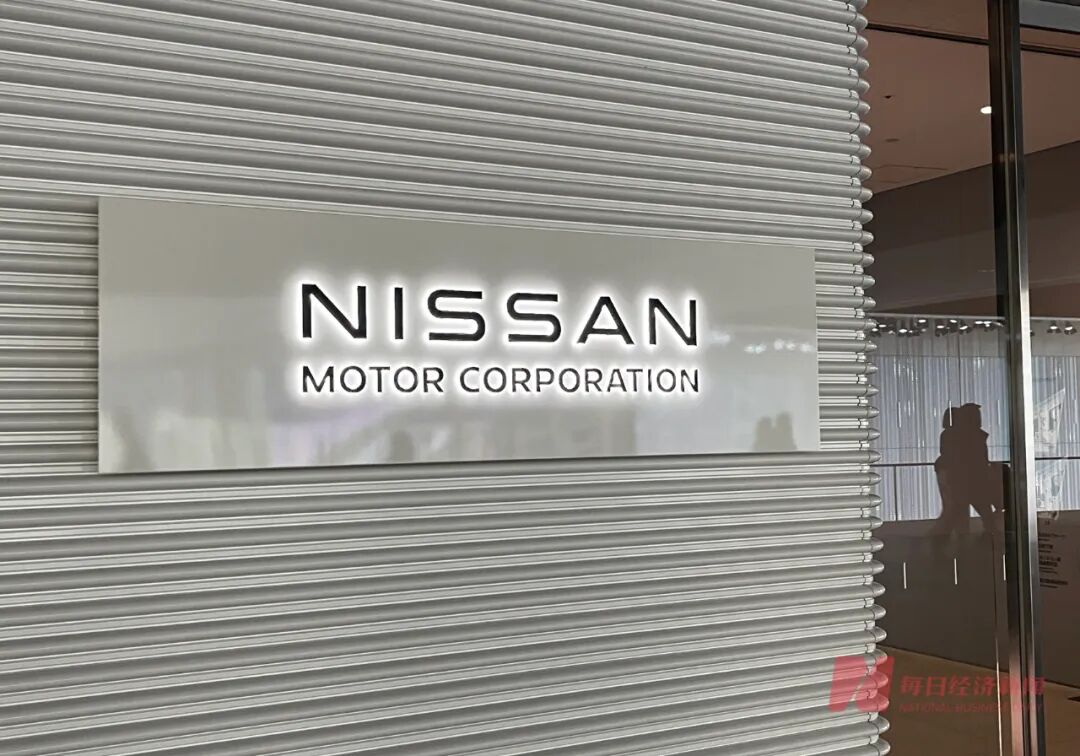
Photo source: Photo by Hao Shuai, a special correspondent of National Business Daily (File photo)
The above - mentioned CCTV News report said that local Japanese media pointed out that the high - tariff policy of the Trump administration in the United States has put pressure on Nissan, and its sales in Japan, the United States and other regions have been continuously sluggish.
Notably, on the same day, Nissan's semi - annual report for the fiscal year 2025 (April - September) showed that the company had a net loss of 221.921 billion yen (approximately 10.3 billion yuan) during the reporting period. In the same period last year, Nissan had a profit of 19.223 billion yen.
Specifically, in the second quarter of fiscal year 2025 (July - September), Nissan's global sales volume was approximately 773,000 vehicles, a year - on - year decrease of 4.5%. By region, Nissan's sales volume in China was approximately 158,000 vehicles, a year - on - year decrease of 8.1%; in Japan, sales dropped to 98,000 vehicles, a year - on - year decline of 20.8%; in North America, sales were approximately 319,000 vehicles, a year - on - year increase of 6.7%, making it the only regional market where Nissan saw positive sales growth; in Europe, sales dropped to 72,000 vehicles, a year - on - year decline of 10.6%; and in other regions, sales decreased by 6.3% year - on - year.
Looking ahead to the whole year of 2025, Nissan predicts that its vehicle sales will reach 3.25 million vehicles. Among them, sales in China are expected to be 645,000 vehicles, a year - on - year decrease of 7.4%; in Japan, sales are expected to be 445,000 vehicles, a year - on - year decrease of 3.4%; in North America, sales are expected to be 1.3 million vehicles, a slight year - on - year decrease of 0.2%; in Europe, sales are expected to reach 340,000 vehicles, a year - on - year decrease of 3.1%.
Based on the above sales situation, Nissan still maintains its forecast of an annual operating loss of 275 billion yen and believes that the company can achieve break - even without the impact of tariffs.
In fact, before selling its headquarters building, Nissan had already taken various measures to reduce operating costs.
On May 13 this year, Nissan's financial report for the fiscal year 2024 (April 2024 - March 2025) showed that Nissan had a net loss of 670.8 billion yen, a year - on - year decline of 257.3%, turning from profit to loss and setting the largest loss since the company's establishment.
On the same day, Nissan launched its revival plan "Re:Nissan", aiming to cut costs by approximately 500 billion yen by the fiscal year 2026 through measures such as laying off 20,000 employees globally and closing 7 factories. Among them, the number of laid - off employees accounts for about 15% of the company's total workforce. By the fiscal year 2027, the number of the company's global factories will be reduced from 17 to 10.
In the Chinese market, Nissan is also eager to reverse the decline and is increasing its efforts in the new - energy transformation to enhance its competitiveness. In April this year, the first new - energy strategic model under Dongfeng Nissan's "Tianyan Architecture" - the Dongfeng Nissan N7 was launched, with a price range of 119,900 - 149,900 yuan. It is understood that the "Tianyan Architecture" is a new new - energy technology architecture independently developed by Dongfeng Nissan, "originating from China and facing the world". In terms of intelligence, Dongfeng Nissan has deeply cooperated with Momenta to jointly develop a one - stage end - to - end intelligent driving large model.
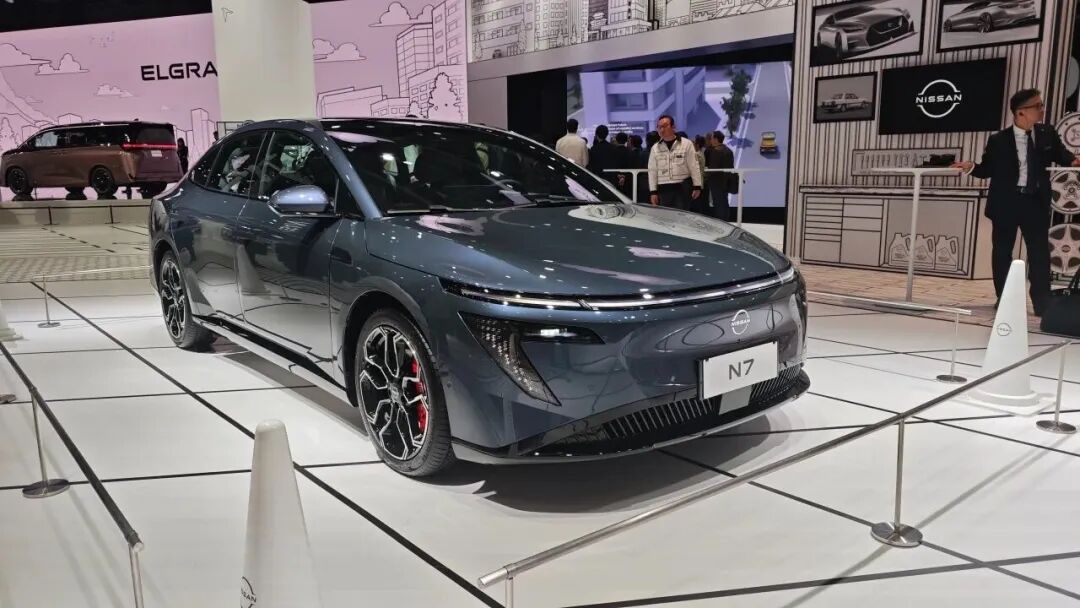
Photo source: Dongfeng Nissan's official WeChat account
In the first three quarters of 2025, the Nissan N7 performed actively in the pure - electric vehicle market. Data released by the Passenger Car Association showed that from January to September, the cumulative sales of this model exceeded 36,000 vehicles, with the highest monthly sales exceeding 7,000 vehicles, ranking among the top in the sales of joint - venture brand pure - electric models. This also provided impetus for Dongfeng Nissan's layout in the new - energy vehicle field.
Meanwhile, Nissan is taking the Chinese market as the bridgehead for its global business. On November 6, at the 8th China International Import Expo, Nissan announced the establishment of Nissan Import and Export (Guangzhou) Co., Ltd., the first joint - venture vehicle import and export company established in China by a foreign - funded auto company. Among them, Nissan (China) Investment Co., Ltd. holds a 60% stake, and Dongfeng Motor Group holds a 40% stake. It is reported that the Dongfeng Nissan N7 and the Frontier Pro PHEV will be the first products developed locally in China and exported to overseas markets.
Zhou Feng, the deputy general manager of Dongfeng Motor Co., Ltd., said that the establishment of Nissan's import and export company marks that Nissan's development in China has entered a new stage of "based on the local market and benefiting the world".
This article is from the WeChat public account "NBD Auto", author: Sun Tongtong, published by 36Kr with authorization.