Is the low-altitude economy about to boom? XPeng's flying car enters trial production as policies are fully relaxed.
The development of the low-altitude economy industry is about to enter a new round of explosive growth period.
As a star enterprise in the eVTOL (Electric Vertical Takeoff and Landing Aircraft) field, the flying car factory under XPeng HT recently started trial production, and successfully rolled out the first "Land Aircraft Carrier" aircraft. It will enter the stage of large-scale mass production and delivery next year.
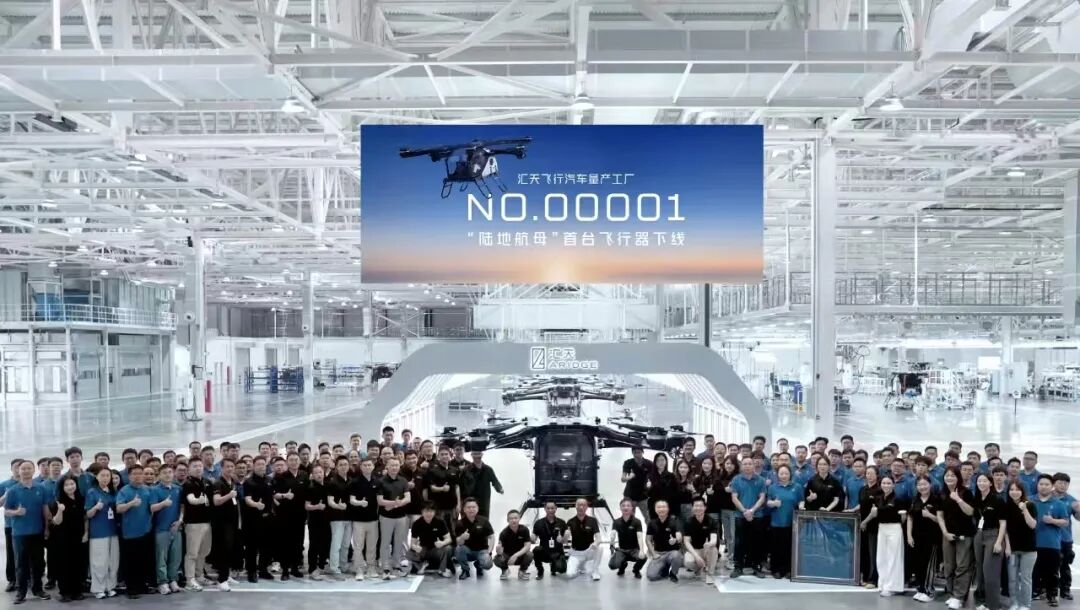
(Image source: XPeng HT)
Located in Huangpu District, Guangzhou, the XPeng HT flying car factory is the world's first to use modern assembly line standards for mass production of flying cars, with five core workshops of "composite materials", "power", "connection", "painting" and "final assembly". The factory covers an area of about 120,000 square meters, with a planned annual production capacity of 10,000 vehicles and an initial annual production capacity of 5,000 vehicles. At full production, one aircraft can roll off the production line every 30 minutes.
XPeng HT is building two flight systems for low-altitude travel, namely the "Land Aircraft Carrier" for personal low-altitude flight and the fully tilt-rotor hybrid-electric flying car "A868" for efficient low-altitude travel.
Among them, the "A868" adopts a fully tilt-rotor configuration. Based on XPeng Motors' Kunpeng Super Extended-Range Architecture, it uses a self-developed aviation-grade hybrid-electric core, enabling a long-range flight of 500 kilometers, with a maximum airspeed of up to 360 kilometers per hour. The 6-seater cabin design better meets the needs of business travel. Currently, the prototype of the "A868" has completed its first test flight and officially entered the critical stage of flight verification.
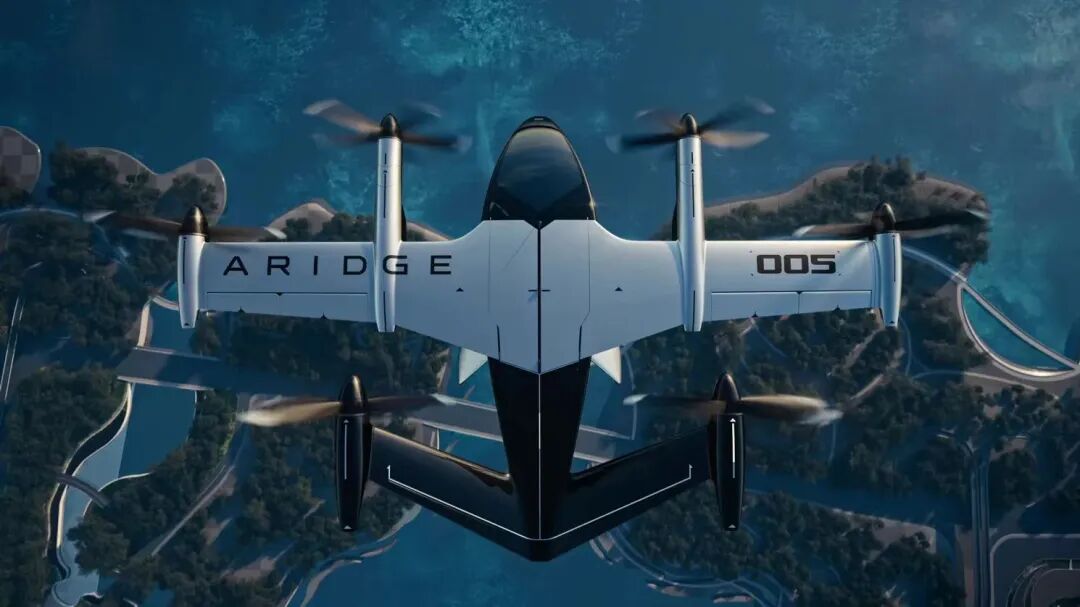
(Image source: XPeng HT)
Each plays to its strengths, and eVTOL sees a fierce competition
In 2023, when "low-altitude economy" was not yet a hot term, the domestic market scale of this industry was about 500 billion yuan, mainly composed of civil drones (consumer/industrial) and traditional general aviation (helicopters, fixed-wing aircraft, etc.).
Since 2024, with the continuous strengthening of top-level design support and the active response at the local level, this industry has begun to fully focus on the eVTOL category, covering two major application scenarios of passenger and cargo transportation.
In 2030, the scale of the low-altitude economy, as a strategic emerging industry in China, is expected to reach 2 trillion yuan, equivalent to four times the market scale in 2023. To achieve this goal, the "first round" of market explosion period in the eVTOL industry, from 2026 to 2028, will be the "crucial three years".
On the eve of the explosion of the eVTOL industry, in addition to XPeng HT, Ehang Intelligent, Fengfei Aviation and other "early bird" players are also actively preparing.
Ehang Intelligent's EH216-S has successively obtained the world's first Type Certificate (TC), Production Certificate (PC) and Standard Airworthiness Certificate (AC) for unmanned manned electric vertical takeoff and landing (eVTOL) aircraft issued by the Civil Aviation Administration of China. The relevant operating airlines of the EH216-S have also obtained the first batch of Civil Unmanned Aircraft Operating Certificates (OC) for manned civil unmanned aircraft issued by the Civil Aviation Administration of China. So far, Ehang Intelligent's EH216-S has become the world's first manned eVTOL with "four certificates in place", with complete commercial operation qualifications.
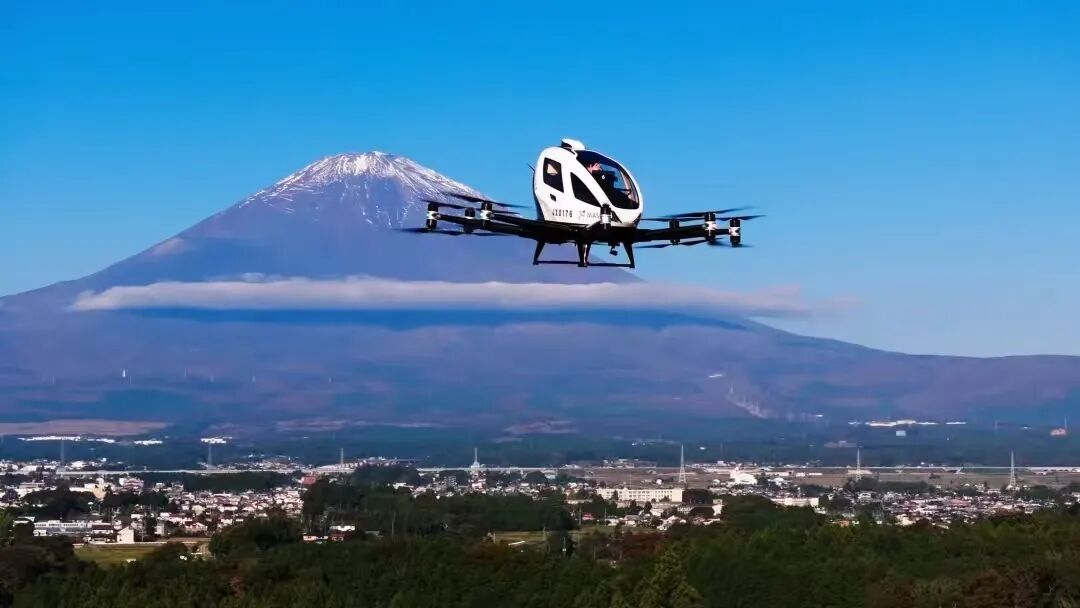
(Image source: Ehang Intelligent)
Recently, Ehang Intelligent has also launched a new generation of long-range unmanned manned aircraft "VT35", mainly targeting medium and long-distance transportation scenarios across cities, seas and mountains.
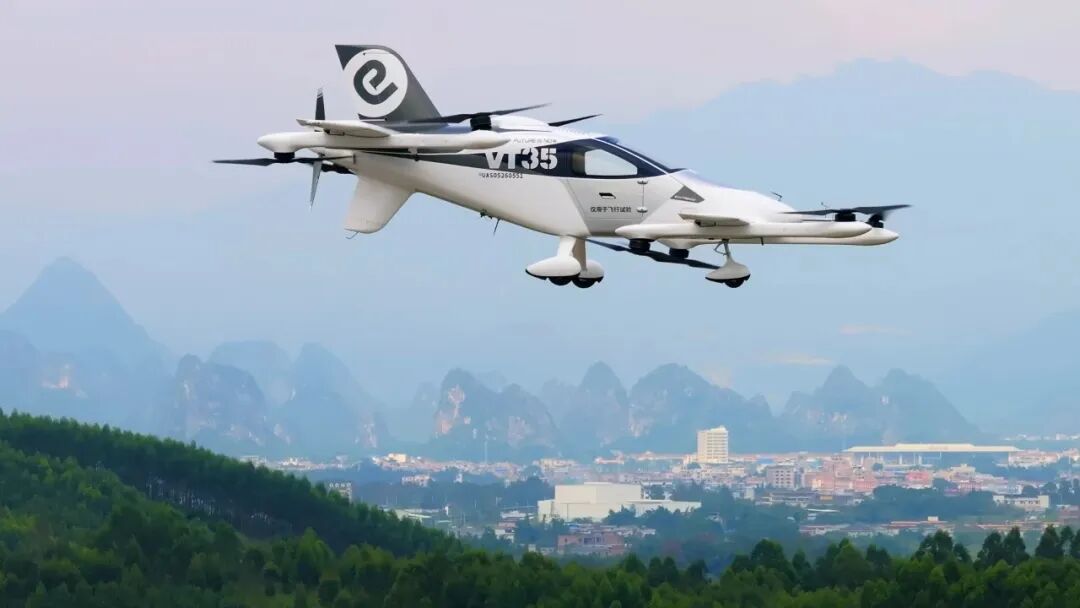
(Image source: Ehang Intelligent)
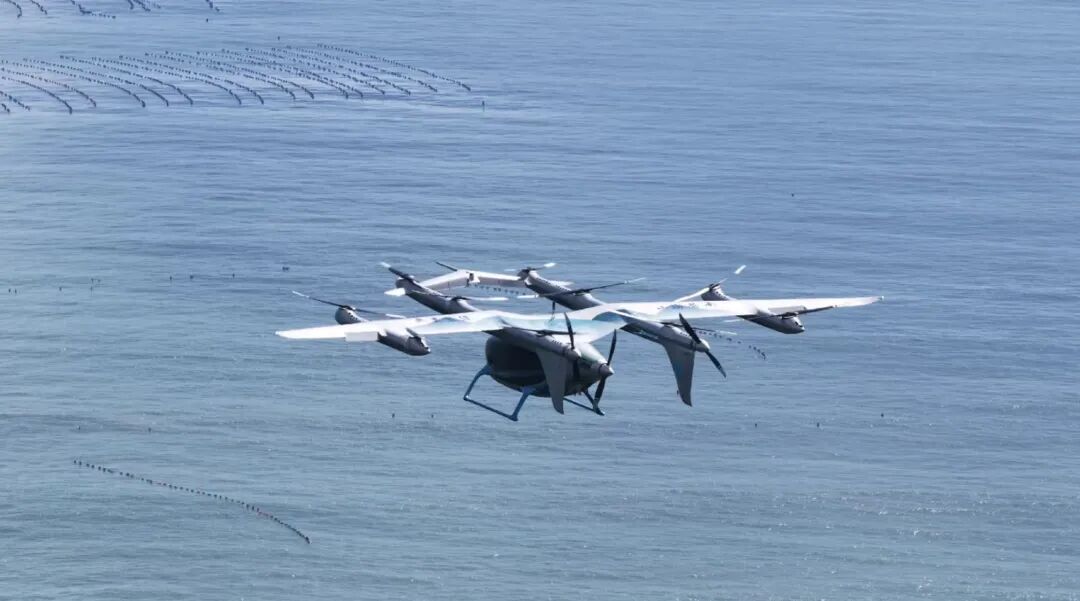
After obtaining the TC, PC and AC certificates successively, Fengfei Aviation's V2000CG Keruiou has become the world's first cargo eVTOL above the tonnage level with "three certificates in place", with the basic qualifications for legal flight and operation.
(Image source: Fengfei Aviation)
More players in the eVTOL industry, like XPeng HT, are still in the certification stage, such as Volant Aerotech, Gaoyu Technology, Shidi Technology, Vollerant Aviation and so on.
If we classify all relevant domestic eVTOL industry enterprises at present, Lei Technology believes there are the following major factions:
1. Automobile OEMs.
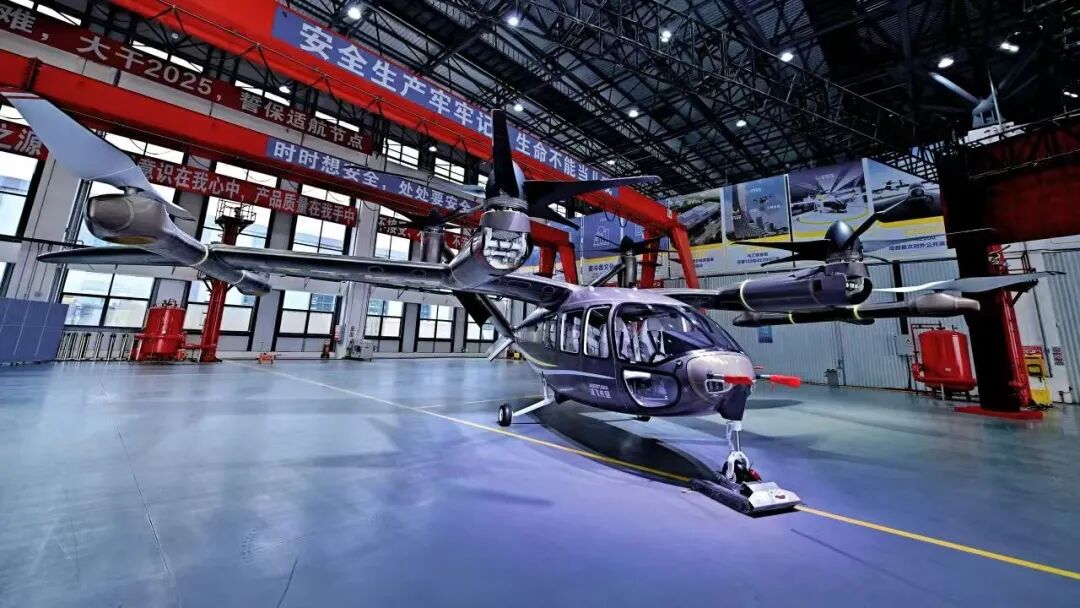
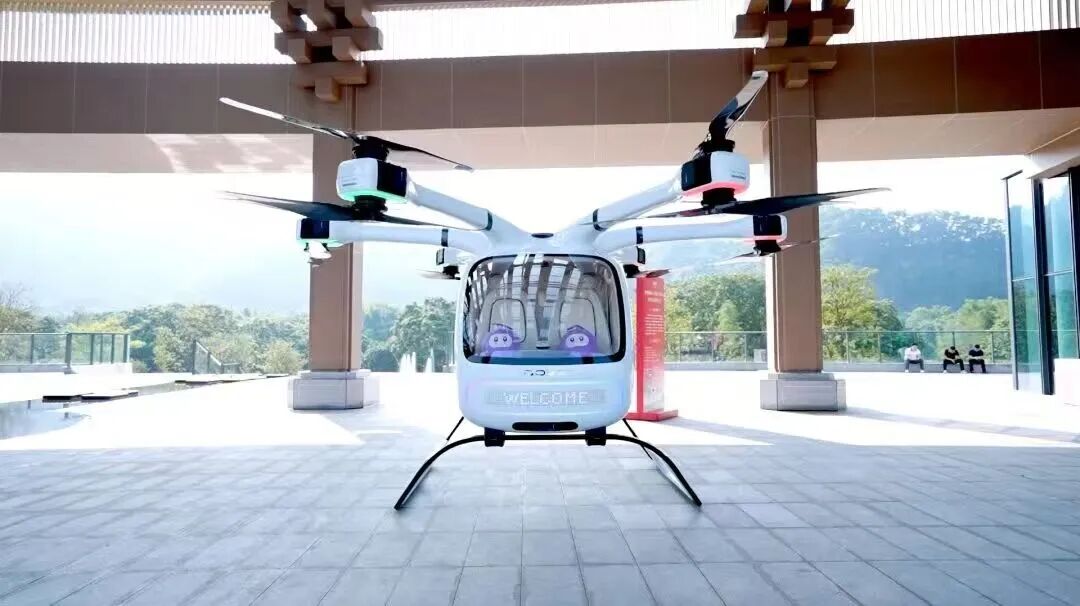
Among them, there is XPeng HT from a new energy vehicle startup, and also Volant Aerotech (Geely) and Gaoyu Technology (GAC) acquired or incubated by traditional auto giants. Recently, Changan Automobile has also established a joint venture with Ehang Intelligent.
(Image source: Volant Aerotech)
For these automobile enterprise players, the technical and supply chain advantages accumulated in the field of automobile manufacturing (especially new energy vehicle manufacturing), combined with the promotional positioning such as "flying cars", as well as the strong brand effect and offline sales and service channel resources, naturally make them major players in the eVTOL industry, and may even be the biggest winners in the first round of explosion.
(Image source: Gaoyu Technology)
2. Battery enterprises.
One of the key core technologies of eVTOL, or even the "lifeblood" technology, is the battery. Therefore, the entry of battery (especially power battery) enterprises is inevitable.
Fengfei Aviation has received hundreds of millions of dollars in investment from CATL, and the two sides are jointly developing eVTOL aviation batteries. Ehang Intelligent has joined hands with Gotion High-Tech to customize a power battery system solution for the EH216 series of aircraft.
3. Drone manufacturers.
The leader of this faction is Ehang Intelligent. Before Ehang Intelligent fully focused on eVTOL, its main business was consumer drones, and it had launched mid - and low - end drone products mainly controlled by mobile phones. Even now, Ehang Intelligent has not completely abandoned the drone market, but mainly targets the B - end customer market, such as Ehang Egret, which undertakes drone formation performances.
It is worth mentioning that as a serial entrepreneur, Tian Yu founded a drone enterprise, YUNEEC, before establishing Fengfei Aviation, which received a $60 million investment from Intel in 2015.
4. Professional airlines.
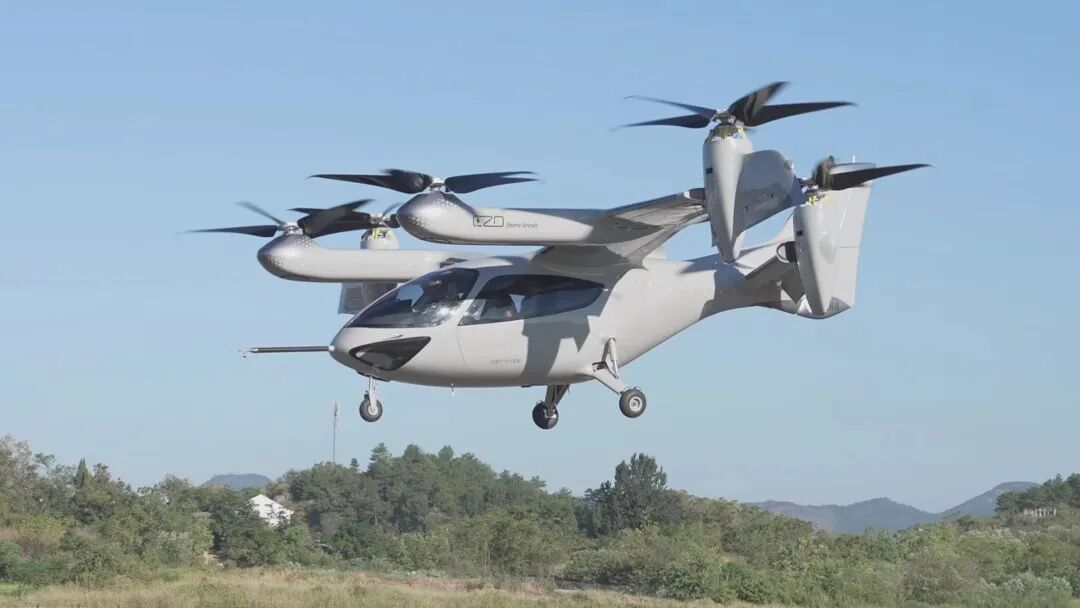
Logically, airlines or aviation enterprise players should naturally be a major faction in the eVTOL industry. However, in the domestic market at present, the voice of this faction is relatively small. Is it because they are more entrenched in the fields of aviation and aerospace?
(Image source: Shidi Technology)
Both Shidi Technology and Vollerant Aviation are founded by people with aviation backgrounds. Huang Yongwei, the founder of Shidi Technology, is a Malaysian - Chinese aviation engineering expert. Before starting his business, he served as the chief engineer of Airbus China and the deputy general manager of Geely Terrafugia. Dong Ming, the founder of Vollerant Aviation, is an aviation technology expert who participated in the development of domestic large - scale aircraft such as the ARJ21 and C919.
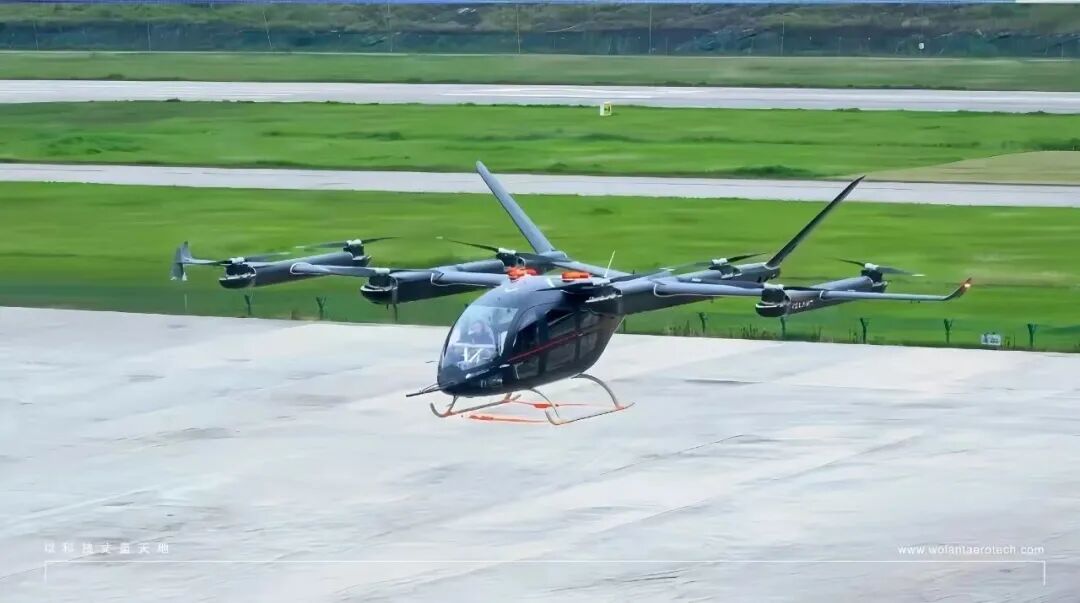
(Image source: Vollerant Aviation)
Divergence in eVTOL technology routes, tilt - rotor gradually takes the lead
Behind eVTOL products, besides the speed of certification (airworthiness certification), there is also a competition in technology routes.
In terms of aerodynamic configuration, there are currently three major mainstream technology routes for eVTOL, namely multi - rotor, compound - wing and tilt - rotor types.
Multi - rotor type (first - generation technology) was the first to enter the market, with the lowest cost, simple mechanical structure and high safety. However, it has problems such as short range and slow speed, and is mainly 2 - seater. The representative model is Ehang Intelligent's EH216 - S, the world's first manned eVTOL with "four certificates in place".
Compound - wing type (second - generation technology) integrates both rotors and fixed wings, solving the problems of short range and slow speed. However, correspondingly, it has more motors, higher cost and more complex mechanical structure. The manned models are mainly 5 - to 6 - seater. The representative model is Fengfei Aviation's V2000CG Keruiou, the world's first cargo eVTOL above the tonnage level with "three certificates in place".
Tilt - rotor type (third - generation technology) combines the vertical takeoff and landing, hovering capabilities of helicopters and the high - speed cruising performance of fixed - wing aircraft. It has the greatest R & D difficulty and complex mechanical structure, but has obvious advantages in terms of range, cruising speed and load ratio. Therefore, its application prospect is the most promising, and it is getting more support from manufacturers and their products. However, the R & D cost of the models needs to be reduced, and airworthiness certification needs to be obtained.
Tilt - rotor is further divided into semi - tilt - rotor and fully tilt - rotor. The latter is considered the "ultimate solution" for eVTOL configuration, mainly 5 - to 6 - seater. The representative model is XPeng HT's fully tilt - rotor hybrid - electric flying car "A868".
In terms of power system, eVTOL is mainly divided into pure - electric power propulsion system and hybrid - electric power propulsion system, and pure - electric power is the current mainstream. For longer - distance flights or carrying more passengers/cargo, hybrid - electric power still has a place.
In terms of battery technology, compared with electric vehicles, eVTOL has higher requirements for power batteries in many aspects, such as high energy density, high cycle life, lighter weight and smaller volume, and most importantly, "aviation - grade safety".
For power battery and automobile enterprises entering the eVTOL industry, to some extent, it is also forcing them to break through the "ceiling" of R & D of core technologies such as batteries, and at the same time, it will feed back into the technological evolution of the automobile category.
On the eve of large - scale commercialization, policy relaxation is the last kick
eVTOL is about to explode, and the commercialization of industry enterprises and products is becoming more and more urgent.
Currently, the global cumulative orders for XPeng HT's "Land Aircraft Carrier" have exceeded 7,000 units, of which more than 6,000 are domestic orders, and 600 of the approximately 1,000 overseas orders are from the Middle East market.
In response to the overseas market, Ehang Intelligent has been continuously strengthening its layout in the past two years and has now entered markets in Europe, the Americas, Africa, as well as the Middle East, Southeast Asia, Central Asia, Japan and other regions.
It is worth mentioning that as the "earliest bird" in the manned eVTOL industry and the first enterprise to start the commercialization process, Ehang Intelligent is gradually constructing a complete set of "air traffic" solutions in domestic and overseas markets, including an "intelligent command and dispatch system" integrating five core functions of monitoring, dispatching, management, early warning and clustering, as well as infrastructure, operation and safety guarantee systems.
In terms of application scenarios, compared with the passenger - carrying scenario, the cargo - carrying scenario application of eVTOL may be more quickly and comprehensively promoted. CNOOC, CITIC Offshore Helicopter and Fengfei Aviation have jointly completed the world's first flight for transporting supplies to an offshore oil platform.
In the passenger - carrying scenario, limited by the currently high overall cost of eVTOL, resulting in relatively high pricing of the final products, for example, the estimated price of XPeng HT's "Land Aircraft Carrier" is no more than 2 million yuan, and the official guide price of Ehang Intelligent's EH216 - S reaches 2.39 million yuan. Therefore, in the near future, it can only target the B - end market, such as tourism