XPeng IRON "Proves Non-human by Shedding Skin"; ByteDance Spends Over 80 Billion. The Competition in Humanoid Robots Is Fierce!
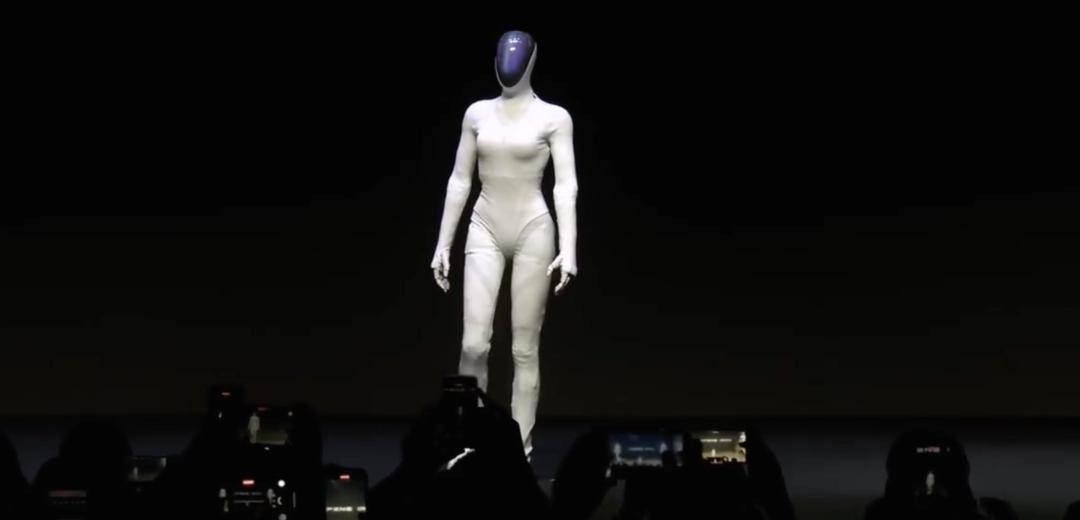
In the past two days, everyone must have been bombarded with news about XPeng's humanoid robot IRON, right?
Due to the incredibly realistic gait of this robot, netizens have been arguing fiercely about whether there is a real person inside the "suit". Eventually, He Xiaopeng himself couldn't sit still and released a single-shot video, peeling back the robot's skin to prove its authenticity.
On the other hand, ByteDance is also ready to enter the market aggressively. It is recruiting humanoid robot experts with a monthly salary of 120,000 yuan. There are also rumors that it will invest $12 billion (approximately 85.45 billion yuan) this year to develop AI chips.

According to 21st Century Business Herald, as of the first half of 2025, the total global financing in the humanoid robot field has exceeded 14 billion yuan, with Chinese enterprises accounting for a staggering 60%, reaching 8.4 billion yuan, surpassing the full - year level of 2024.
Today, the domestic humanoid robot market has become extremely competitive. From unicorns like Unitree Technology and Zhipu Robotics to the established BAT giants (Baidu, Alibaba, and Tencent), they have all entered the market...
Additionally, according to Cailian Press, since the beginning of this year, orders for domestic robots have totaled over 3 billion yuan, corresponding to nearly 20,000 humanoid robot bodies.
This article will take a detailed look at the specific progress of humanoid robots in China.
What new tricks have humanoid robots come up with?
First, let's see what new skills the ever - evolving humanoid robots have mastered and what technological breakthroughs are behind them.
This is XPeng's latest generation IRON walking the catwalk. It walks more naturally and steadily than previous robots, looking very much like a real person walking.
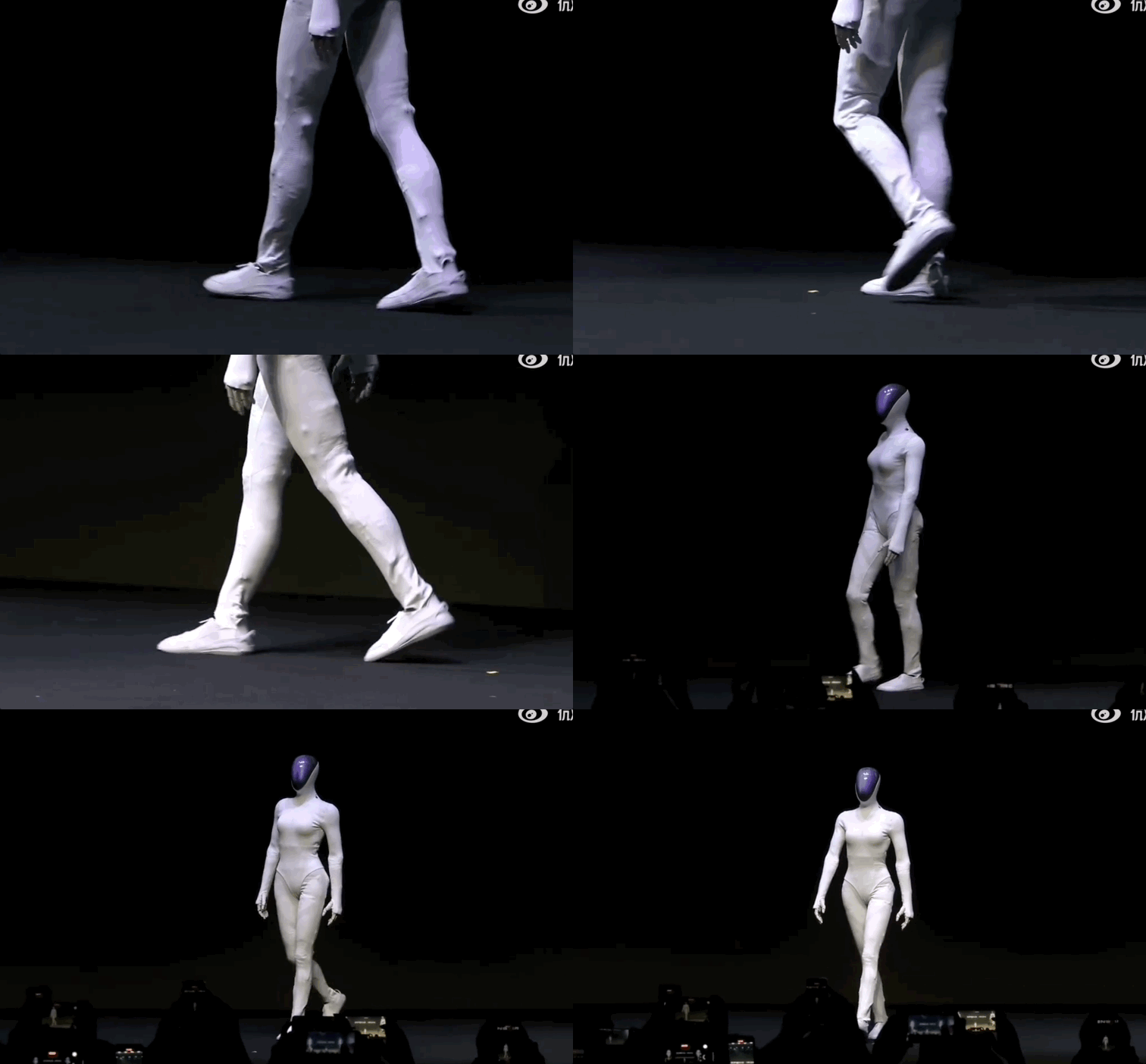
He Xiaopeng introduced that the reason this generation of IRON can walk so human - like is mainly because its "brain" is very powerful, with two "soul components": the physical world large model and three Turing chips.
XPeng Turing is a multi - terminal general AI chip independently developed by XPeng Motors. It was successfully taped out on August 23, 2024, and can be applied to AI cars, AI robots, and flying cars simultaneously.
The three Turing chips on IRON form a powerful "brain - like central processing unit". Each chip can independently complete tasks such as perception, decision - making, and control. It is the core computing unit that supports the robot's "whole - body intelligence", with a total computing power of up to 2250 TOPS.
In addition to having a "smart brain", the new IRON also has flexible limbs. It has a total of 60 joints and 200 degrees of freedom throughout its body, and its hands have 15 degrees of freedom, allowing it to manipulate objects flexibly.
Besides XPeng IRON, Unitree also made a big splash recently: it released a robot called Unitree H2 that can walk the runway, dance, and do kung fu. Of course, its most prominent feature is its bionic human face.
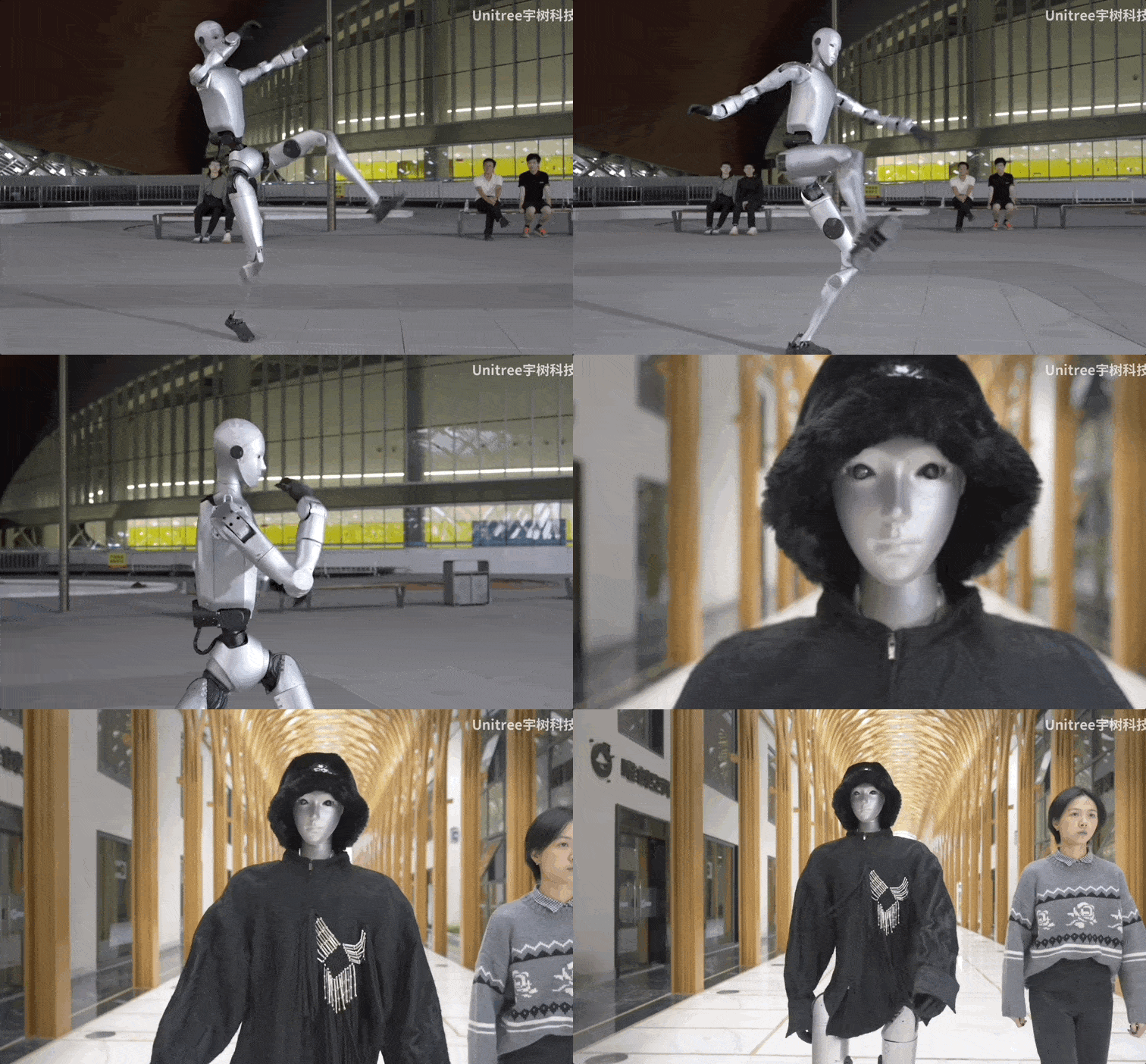
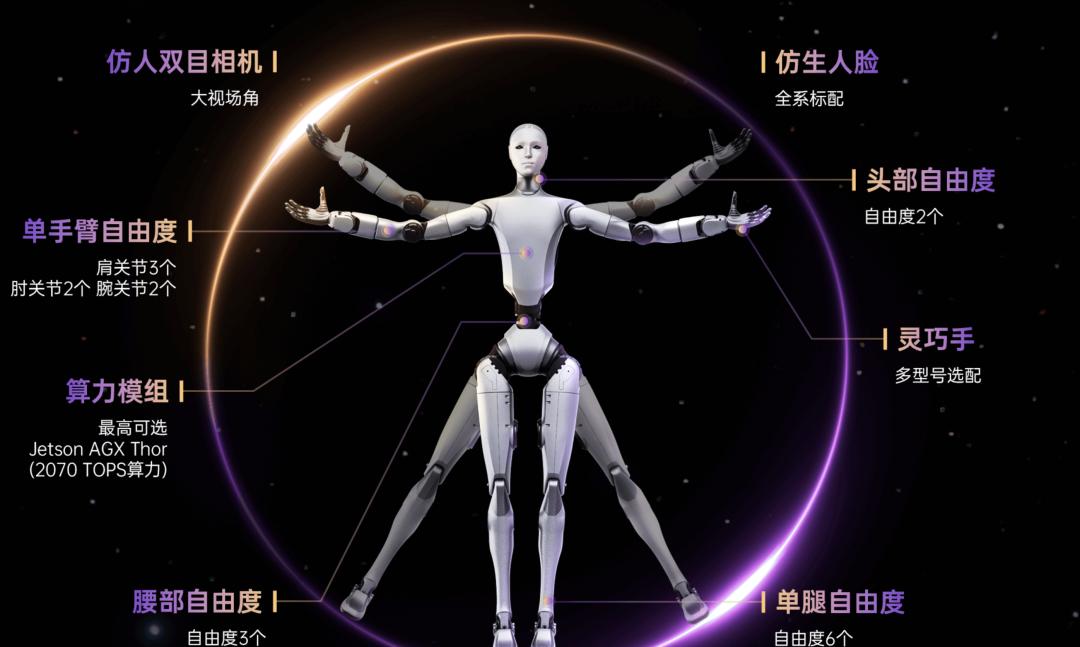
Moreover, Unitree H2 has a great figure: it is 180 cm tall, with broad shoulders and a narrow waist, which means its battery and control board must be squeezed into its small chest.
In addition, H2 has a total of 31 degrees of freedom. Although it is not as high as some ultra - high - degree - of - freedom demonstration platforms, under its positioning as a "commercial general - purpose humanoid robot", it is an "efficient balance" - it can show the fluency of dance and martial arts movements while also ensuring system reliability.
Besides walking the runway and dancing, robots are also working as salespersons.
At this year's World Robot Conference, an embodied intelligence convenience store was extremely popular. Here, it's not real people but Galbot from Galaxy Universal that takes orders and sells goods.
Currently, there is a Galaxy Universal convenience store in Zhongguancun, Haidian, Beijing, where Galbot is working.
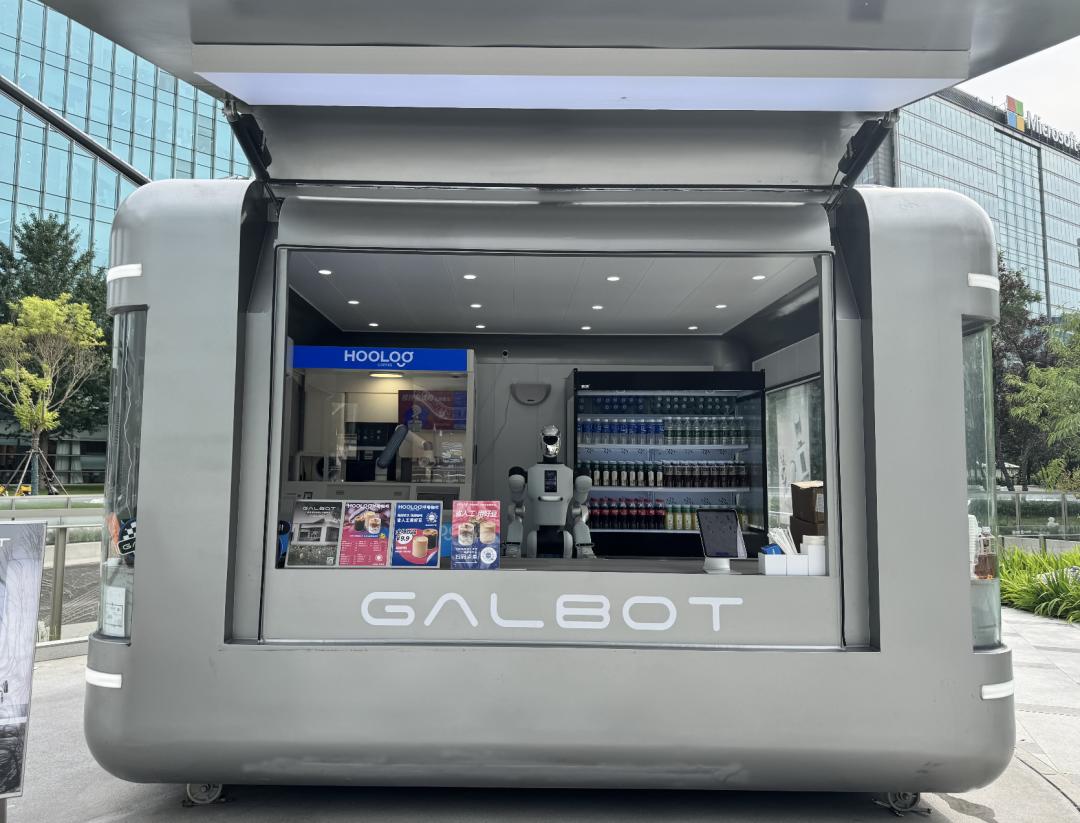
The highlight of Galbot is its strong generalization ability. It has a complete set of end - to - end embodied intelligence large models independently developed by Galaxy Universal.
Among them, GraspVLA is the world's first end - to - end embodied grasping basic large model, focusing on the multi - modal collaborative learning of the robot's "vision - language - action" (VLA).
GroceryVLA focuses on the retail scenario, optimizing the ability to grasp across different forms on tight shelves. It can adapt to new layouts without additional map collection or parameter adjustment. Breaking through the traditional separated design of "vision + trajectory planning", it can independently identify and stably grasp goods in real scenarios with almost no gaps, tight shelves, and a large number of SKUs, and can operate flexibly and efficiently without path planning.
In fact, some robot friends have entered consumer electronics factories in batches.
Zhipu Elf G2 is an industrial - grade interactive embodied operation robot. In the automotive parts production workshop, Elf G2 is being used in the production process of automobile seat belt lock cylinders, cooperating with humans to complete operations such as pressing seat belt lock cylinders and handling materials.
In precision operation scenarios, Elf G2 uses a high - precision force - controlled arm. Based on the real - machine reinforcement learning algorithm, it can learn precise and flexible operation tasks such as inserting memory modules in just one hour.
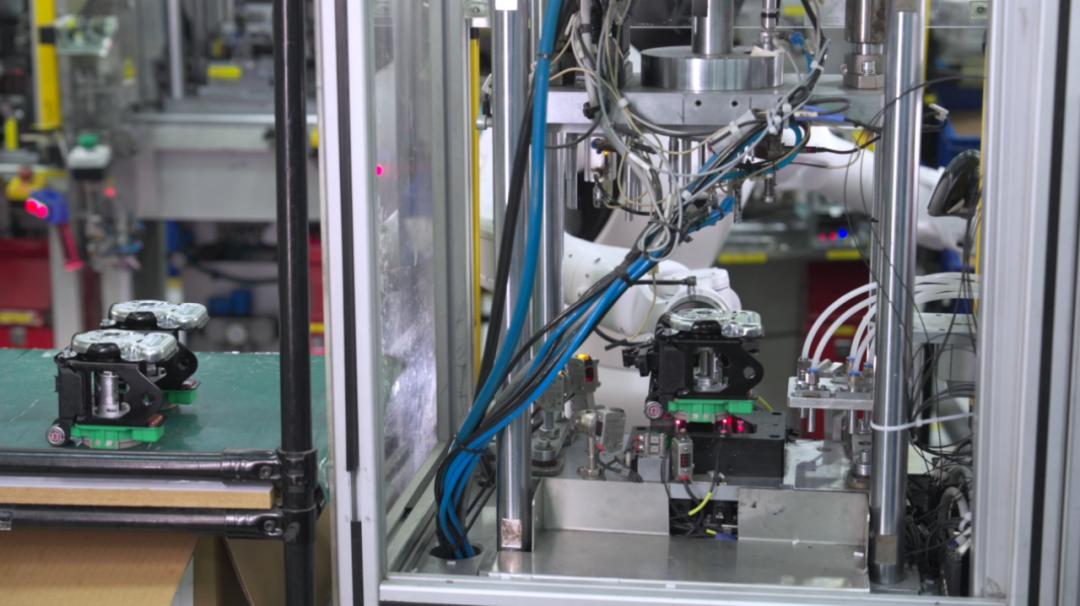
Caption: Zhipu Elf G2 is sending the automobile seat belt lock cylinder into the pressing machine
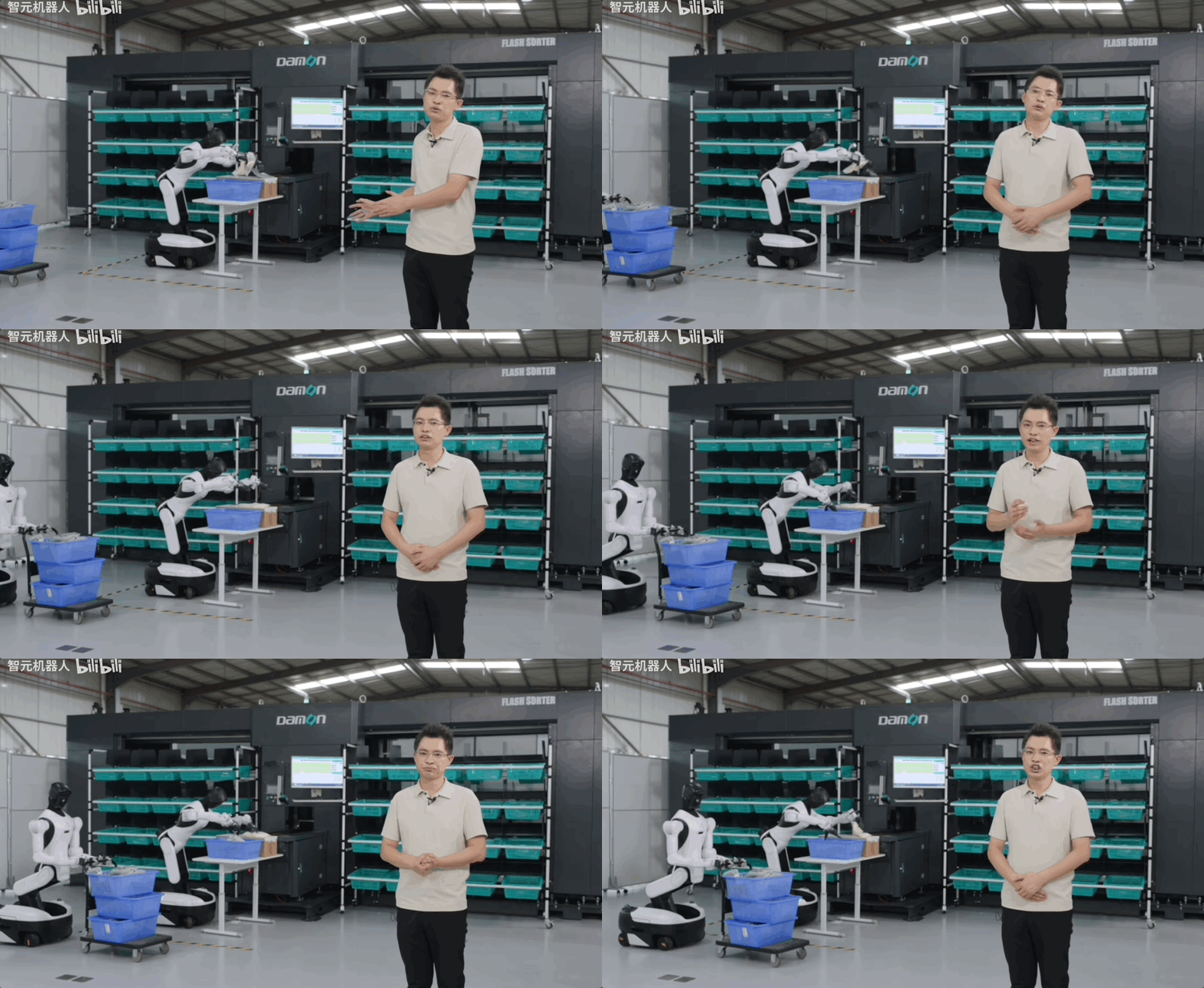
In the logistics sorting scenario, Elf G2 has been used in the package feeding and loading process, and can effectively grasp packages of various sizes, shapes, and materials. Before the current wave of loading tasks is completed, another Elf G2 quickly transports subsequent materials to the buffer area through autonomous navigation. Its powerful mobility and good passability enable it to adapt to more than 95% of factory floors.
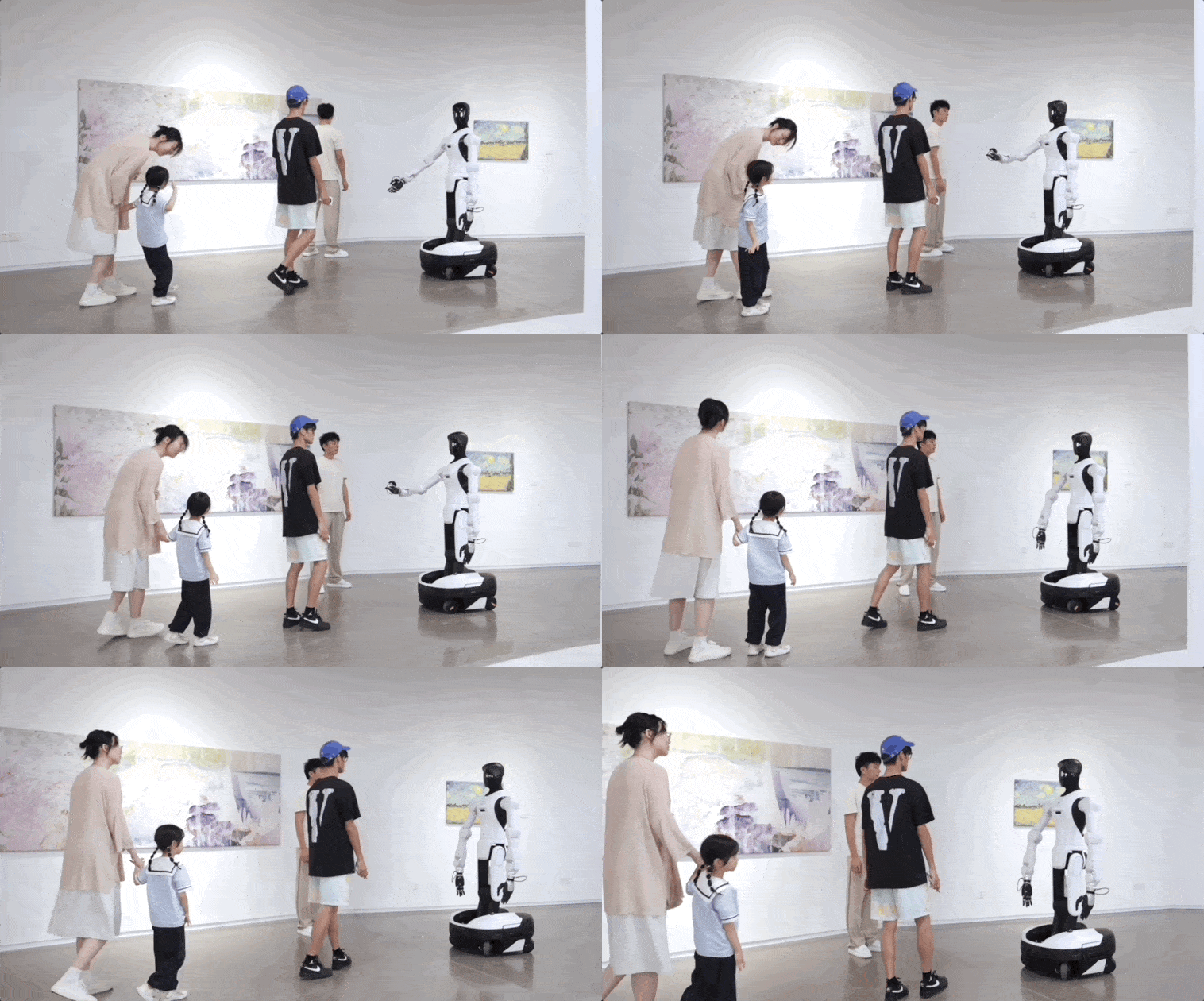
Additionally, Elf G2 has excellent speaking skills. It can act as a tour guide in museums, science and technology museums, and other scenarios, and can also intelligently identify the questioner.
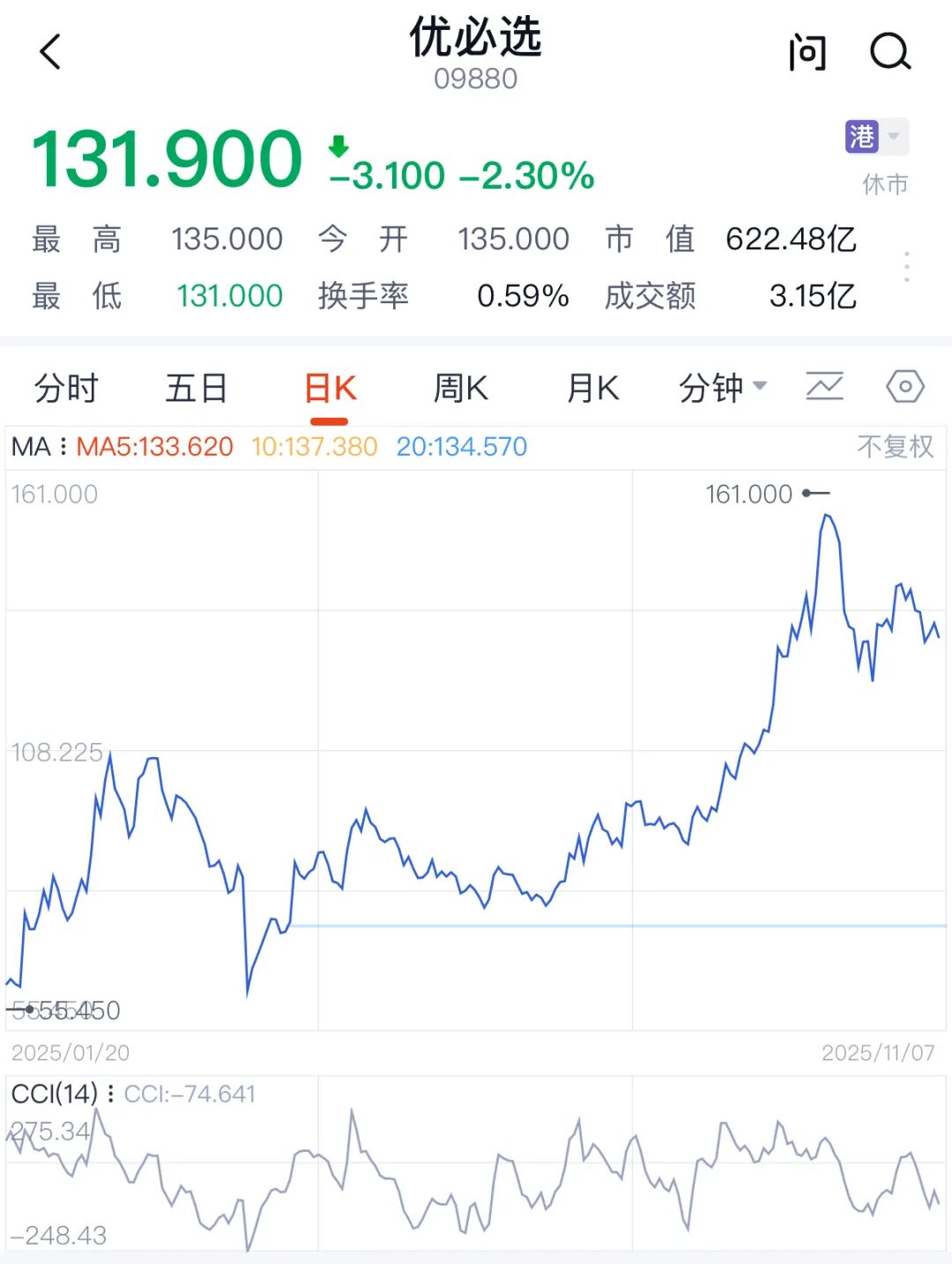
It's worth mentioning that as the recognized "first stock in the humanoid robot field", UBTECH's market value in the Hong Kong stock market has exceeded 60 billion yuan.
Are big companies flocking in and starting a new round of bets?
This year seems to be the prime time for humanoid robots. Besides ByteDance, Tencent and Xiaomi have long been players in embodied intelligence, and other domestic big companies have also entered the market, triggering a new round of competition.
ByteDance
As mentioned earlier, ByteDance has hired embodied intelligence experts at a high price. In fact, they have long - term plans in this field.
As early as 2020, ByteDance quietly incubated an embodied intelligence team internally. Three years later, this team officially stepped onto the stage. In July 2023, the robot team was incorporated into the AI Lab, led by Li Hang, a veteran in artificial intelligence. The goal is to make machines truly understand the world, rather than simply execute instructions.
In just two years, ByteDance's technological offensive can be described as "intensive bombing".
In just two years, ByteDance's technological offensive has been intensive. In November 2023, it jointly released RoboFlamingo with Tsinghua University, enabling robots to have the ability to "understand pictures". In October 2024, it launched the GR - 2 model, which learned the logic of human actions from 38 million segments of Internet videos. In July 2025, the iterative Seed GR - 3 was launched. In the demonstration, the robot could insert a hanger into a shirt and hang it up smoothly and naturally. Subsequently, the Robix model appeared, forming a new - generation robot "brain matrix" with GR - 3 for ByteDance.
In April 2025, ByteDance integrated the entire robot team into the Seed large - model system and established Seed Robotics, officially moving towards "general embodied intelligence". Many papers from the AI Lab have been selected for top international conferences such as ICLR, NeurIPS, and CVPR, establishing its technological status in the fields of multi - modal understanding and robot learning.
Additionally, ByteDance is no longer absent in the "physical" aspect. In July 2025, it launched the high - degree - of - freedom dexterous hand ByteDexter, which has 20 degrees of freedom and can simulate complex human hand operations. Through the Jinqiu Fund, it has invested in companies such as Unitree Technology and Stardust Intelligence, forming a complete closed - loop from algorithms to machinery.
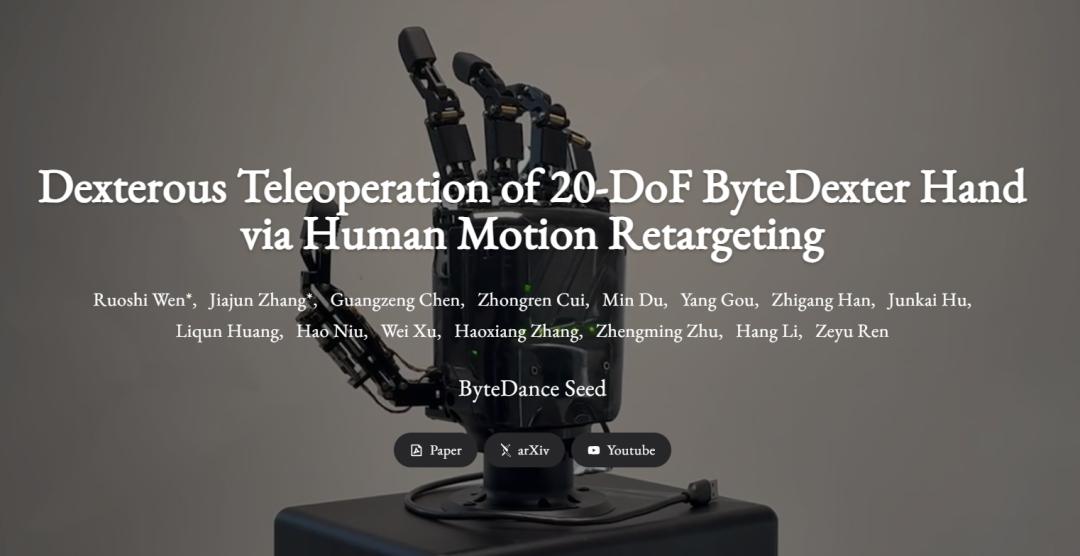
ByteDance has transformed from a content algorithm giant into a core player in AI embodied intelligence. It is making robots move from "understanding language" to "understanding the world", from virtual cognition to real - world actions, building its own "general large - model for robots".
Alibaba
Alibaba has been very active in this wave, comprehensively deploying the entire chain from multi - modal large models to physical AI.
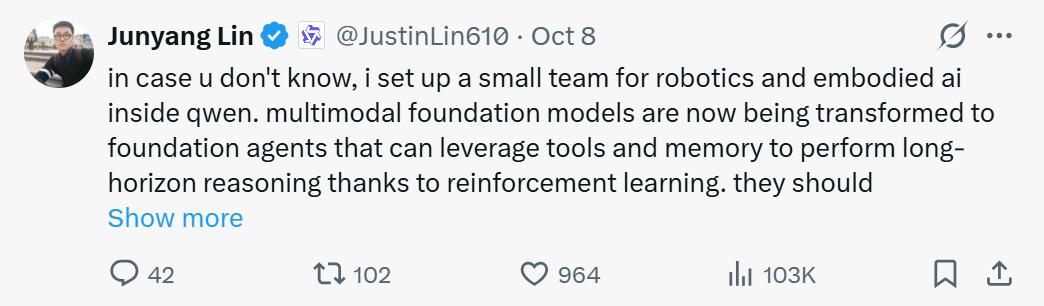
On October 8, Lin Junyang, the person in charge of Tongyi Qianwen at Alibaba, posted on a social platform that the team had established a special embodied intelligence group within Qwen.
He revealed that the multi - modal model of Tongyi Qianwen is evolving into a "basic intelligent agent" with long - term sequential reasoning ability, and such an intelligent agent "should move from the virtual world to the real world".
As early as at the Yunqi Conference in September, Alibaba Cloud announced a partnership with NVIDIA in the field of Physical AI. Simply put, this means that Alibaba Cloud is combining the "computing power brain" with the "simulated muscles" - providing both cloud - based training and reasoning capabilities and opening up the key link for AI to "move" in the physical world.
Notably, as an embodied intelligence company under the Alibaba ecosystem, Lingbo Technology, a subsidiary of Ant Group, had previously launched its first humanoid robot Robbyant - R1. This robot has multi - modal perception and interaction capabilities and can perform tasks such as guided tours, drug sorting, health consultations, and basic housework. It has also been piloted in some scenarios.
JD.com
Since the beginning of this year, JD.com has hardly stopped its investment rhythm.
Since May, JD.com has successively invested in several companies such as Zhipu Robotics, Qianxun Intelligence, Zhujie Dynamics, Zhongqing Robotics, and RoboScience, covering the entire chain from "robot bodies" to "brain models".
Simply