In the field of AI hardware, there are always new opportunities.
On November 3rd, Morgan Stanley released a forecast stating that 2026 will be a crucial year for the explosive growth of AI technology hardware.
Before the upsurge arrived, we had already witnessed many entrepreneurs diving into the field of intelligent hardware. For example, Wang Mengqiu, the founder and CEO of Zero Zero Robotics, has been in business for 11 years. Despite experiencing the ups and downs of the market, he still persists in developing flying cameras. Niu Yafeng, the founder and CEO of AeroBand, supported the first six years of the startup with just a few million RMB and launched products such as motion-sensing drum sets and intelligent guitars. Hu Chengyang, the founder and CEO of Pixboom, was developing cameras capable of high-speed photography while pursuing his Ph.D. at Tsinghua University.
Not long ago, at an AI hardware event jointly organized by Ant Group's investment department, Frees Fund, and Ma Shang Startup Camp, Uncle Feng had a chat with Wang Mengqiu, Niu Yafeng, and Hu Chengyang about the product methodology and innovation opportunities in the AI hardware field.
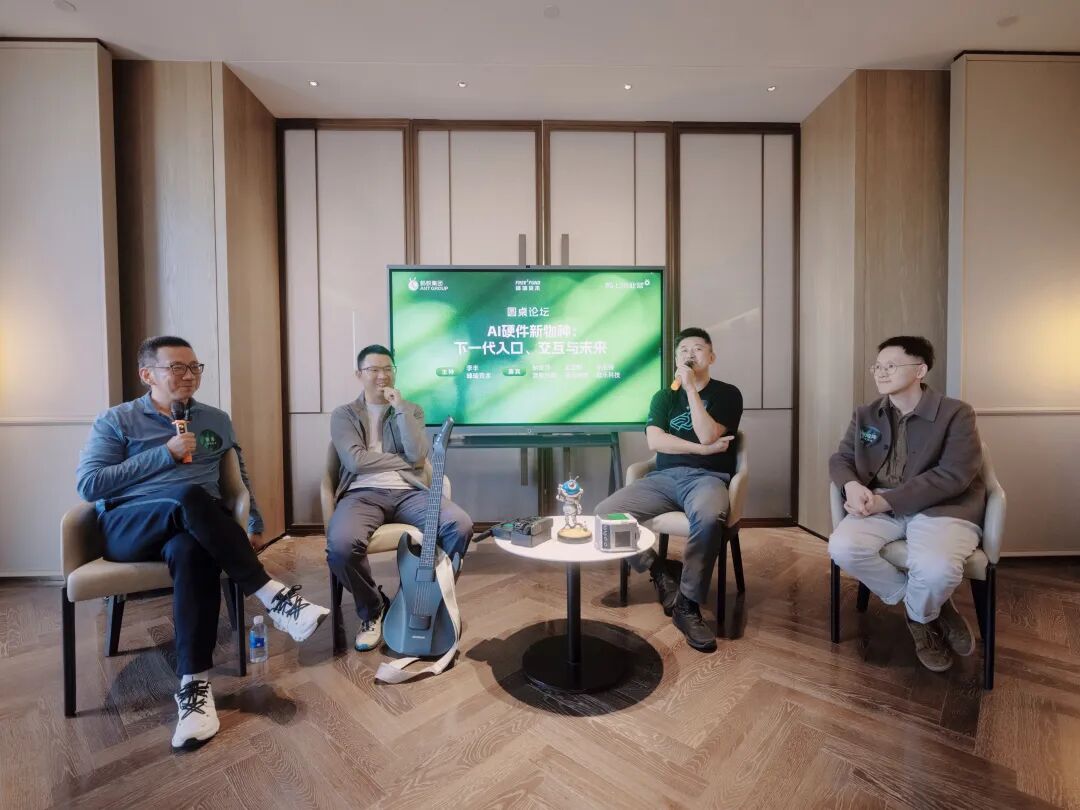
They discussed the following topics:
- How can hardware products transform from the B2B to the B2C market? This process means that entrepreneurs need to put aside some of their "ego" and switch back and forth between the perspectives of engineers and consumers.
- How to conduct a successful crowdfunding campaign? "Success" here includes both the crowdfunding operation strategy and the maturity of the product itself.
- How to better integrate AI technology into products to provide users with a better experience.
In Uncle Feng's view, there are always new opportunities in the field of AI intelligent hardware, and it's difficult for anyone to maintain a monopoly. Once any intelligent product becomes popular, it will become more specialized and niche, giving rise to new entry points. We look forward to collaborating with more innovators. You are welcome to contact us (bp@freesvc.com).
We have edited some of the content from the conversation, hoping to provide new perspectives. This article is part of the "AI Industry Observation" series, which will continue to share the first-hand experiences and insights of entrepreneurs in the AI field.
What kind of capital cycles did they go through before this wave of AI hardware upsurge?
Li Feng: You are all entrepreneurs in the hardware field. Let me ask a few questions. First, how many years have you been in business? Second, how many capital cycle changes have you experienced, and what's your perception of the market's ups and downs? Third, what products do you make?
Niu Yafeng: I started my entrepreneurial journey in 2016, and it's almost been a decade. Before Uncle Feng's investment, we were rejected by numerous investment institutions. We managed to survive the first six years of the startup with just a few million RMB.
Li Feng: Has your entrepreneurial direction remained the same?
Niu Yafeng: Yes, we've always been focused on intelligent musical instruments.
We develop intelligent musical instruments, including intelligent guitars and intelligent drum sets. Our goal is to enable the general public to express themselves through music and be heard through technology and digitization.
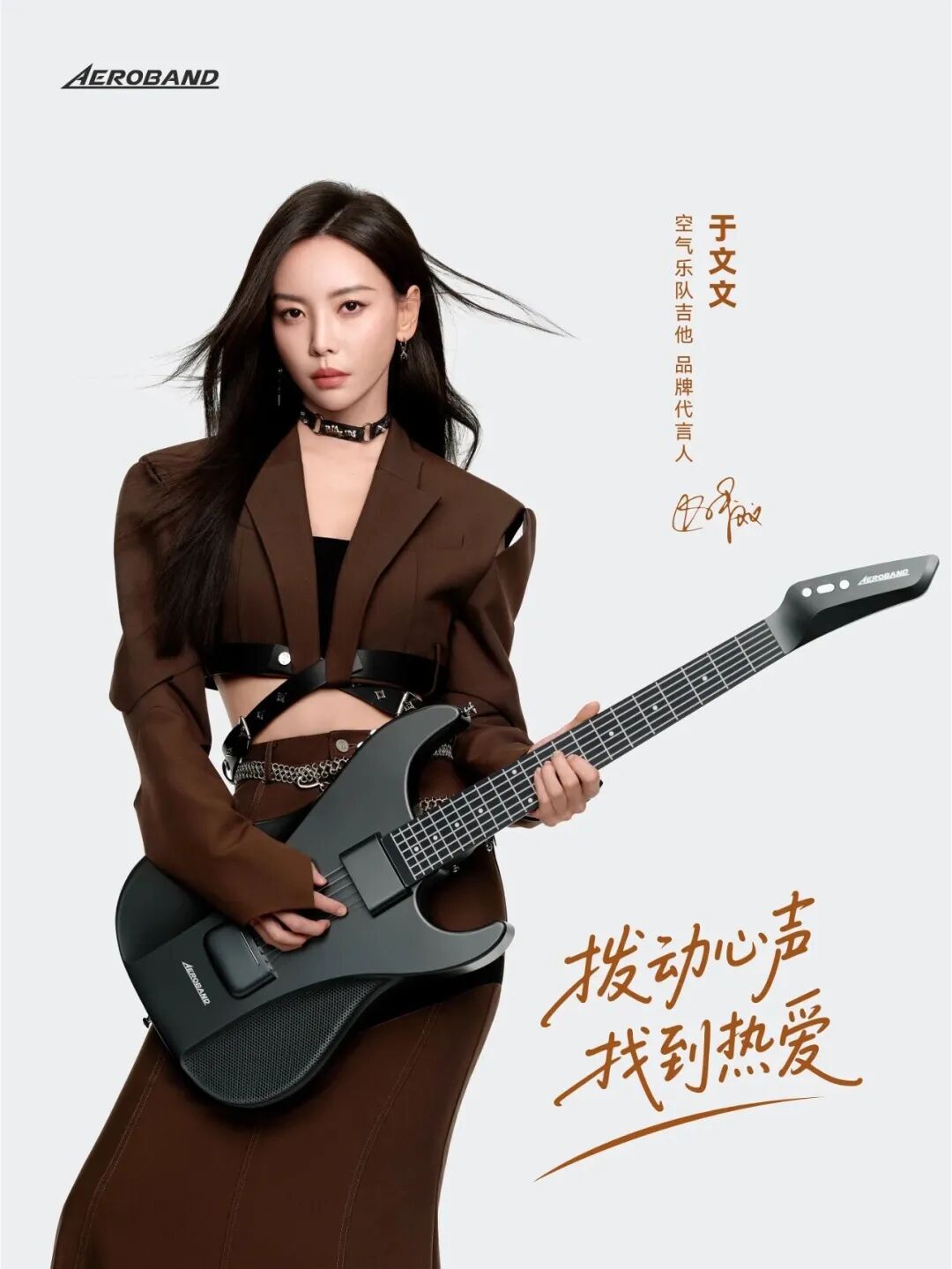
The guitar launched by AeroBand. Image source: AeroBand
Wang Mengqiu: I've been in business for 11 years. Our product is a self-flying camera. You press a button, and it flies out three meters, records a video, and then flies back. This product has many modes, such as auto-follow, cycling, and skiing.
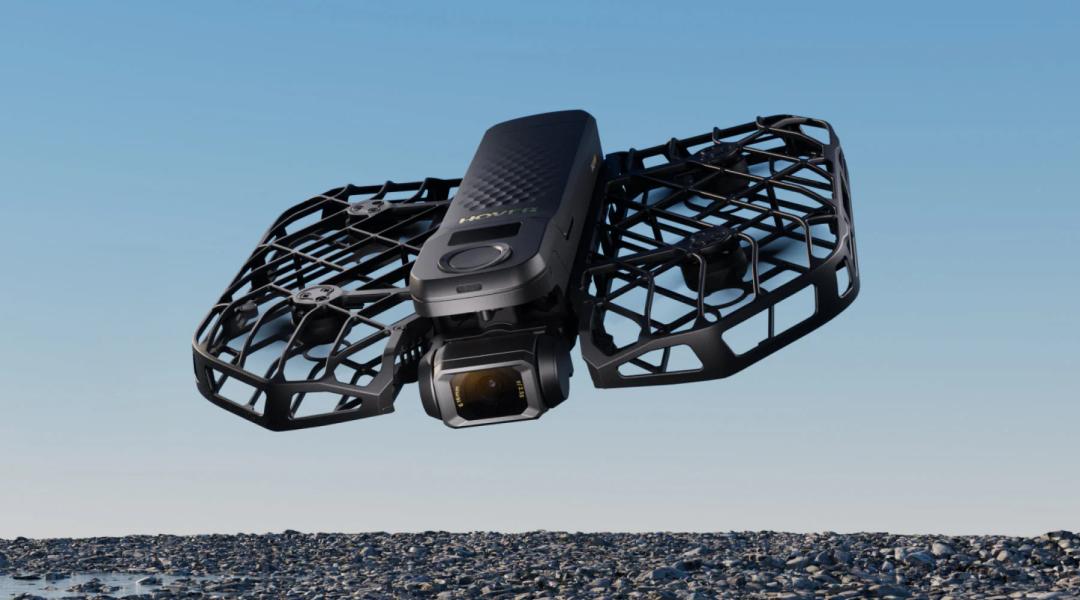
The self-flying camera. Image source: Zero Zero Robotics
Uncle Feng once said something to me that I'll never forget: "Mengqiu, you've already had a valuable experience. You've gone through everything a startup can experience except for success."
Around 2016, we were favored by top tech companies in Silicon Valley, and they wanted to acquire us entirely. However, the acquisition deal didn't go through. Later, we opened a factory and did OEM/ODM work for four and a half years. Three years ago, we restarted the R & D of our own products.
Li Feng: How long was your longest "dry spell" in financing?
Wang Mengqiu: Two periods, a total of seven years. One was the four years when we did OEM/ODM work. The other was after a round of financing, and it took three years to secure the next round.
Li Feng: So, you've experienced about two capital cycles. It's quite remarkable that the flying camera product was introduced nine and a half years ago. It took so long for the flying camera to be recognized by consumers and the investment industry for the third time.
Hu Chengyang: I've been in business for a relatively short time. We founded Pixboom in 2023. However, we've been working on high-speed cameras for a long time, dating back to my Ph.D. days. Initially, we served scientists, helping them capture interesting physical processes, such as the refractive index change when light passes through a crystal.
After starting the business, we explored serving B2B customers for some time but found it wasn't what we really wanted to do. So, we decided to shift to the B2C market. In September, we officially launched our first camera for content creators in the European and American markets. In the future, we'll focus on providing creative tools for content creators.
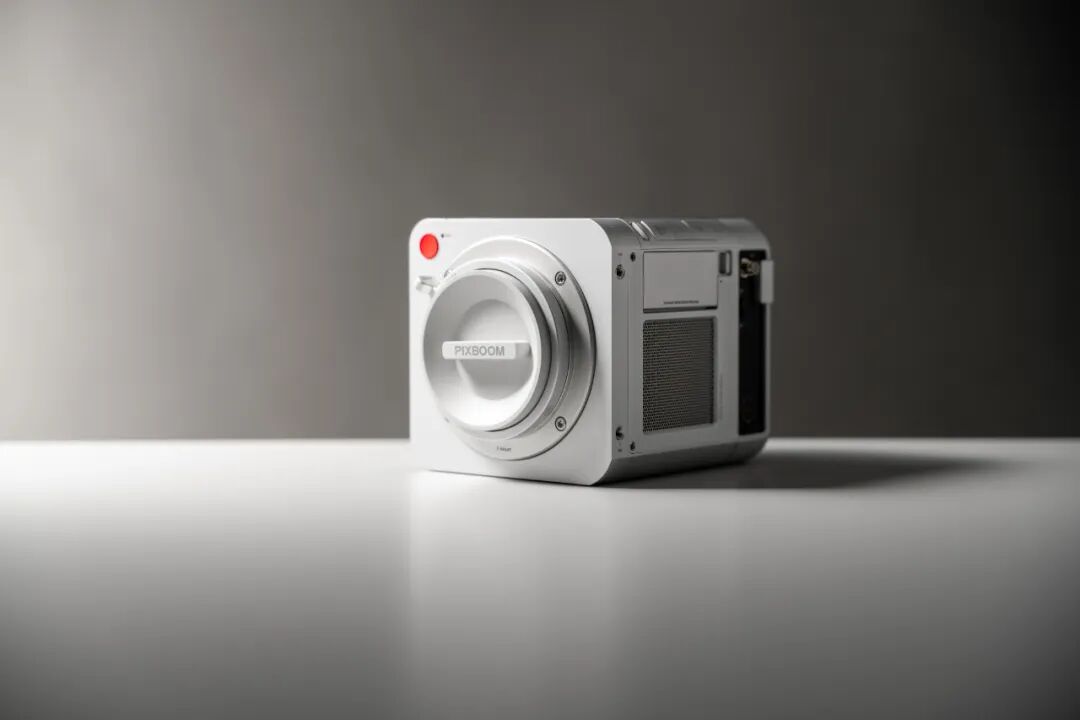
The camera developed by Pixboom. Image source: Pixboom
Li Feng: Let me add something.
What is high-speed photography? The videos we usually watch are shot at 20 to 30 frames per second, while high - speed cameras can achieve 500 to 1000 frames per second. High - speed cameras can record the entire process of a bullet passing through an object. For example, in video ads, the scenes of a water drop falling, splashing up a water column, and then bouncing up small droplets can be captured by high - speed cameras.
Previously, this type of equipment cost hundreds of thousands of RMB and was very expensive. However, Pixboom has now reduced the price to around $10,000, a significant reduction.
/ 02 / What are the "changes" and "constants" when transitioning from B2B to B2C?
Li Feng: In the field of tech consumer products, many successful companies have founding teams with technical backgrounds rather than pure B2C backgrounds.
In the traditional consumer field, founders usually understand consumers very well, such as Zhong Shanshan, the founder of Nongfu Spring, and Zhang Liaoyuan, the founder and CEO of Three Squirrels. However, the hardware industry is different, with many technical entrepreneurs from the B2B background.
Why can people with a B2B background eventually create successful B2C products? What changes in capabilities did you experience when shifting from a technical background to defining consumer products? What was the process like? And what remained unchanged?
Hu Chengyang: After doing B2B work for a short time, we felt uncomfortable and realized that our team was more suitable for the B2C market. We also had an underlying consensus: in the long run, for a consumer tech product in the C - end market, there are no technological barriers that cannot be overcome with time and money. More importantly, we need to stand with users and build a globally influential consumer brand.
From the day we decided to target the C - end market, we didn't work in isolation. We "old - fashioned" interviewed many content creators around the world, both online and offline at their studios and shooting locations, to understand their creative processes in depth. Every detail of the final product comes from the practical experience of front - line content creators.
People with a technical background creating C - end products need to put aside their technical ego and truly stand with users. This process has brought me a lot of positive feedback and fun. Different from working with tech geeks, working with artists makes us very excited. Witnessing our product capturing their exciting moments and the huge visual impact it brings is extremely rewarding.
As a new brand, we dared to sell a high - priced product of nearly $10,000 on a crowdfunding platform, which was unimaginable in the past. However, through a lot of co - creation work in the early stage, we built brand trust, making users willing to believe that a Chinese brand going global can create interesting products in the high - end imaging field.
Wang Mengqiu: We've hardly done any formal B2B work and have been targeting the B2C market from the start.
Over the past decade, the mobile phone industry has brought huge dividends to many industries. All the components in mobile phones are optimized in terms of cost, power consumption, and size. When I started my business, I thought: take a mobile phone apart, remove the screen, run a real - time system, and apply the NLP and vision technologies I learned at Stanford AI Lab to the mobile phone's hardware supply chain platform. In this way, I could create a low - power, low - cost, and small - sized household robot.
The first thing I chose to do in my entrepreneurship was to turn a camera from a passive device into an active shooting robot, offering a completely different product form and interaction experience.
The past three years have been interesting. Our first product after the revival, the Hover Camera X1, is purely for the B2C market, priced at around 2000 yuan. It caters to users of all ages from 4 to 80, and 60% of our users are women.
In 2024, we shifted to the skiing sports scene. Now, Zero Zero Robotics has become the designated Chinese brand of the US National Ski Team. Our flying cameras have entered retail channels like Costco and were selected for the Time magazine's Best Inventions of 2025 list.
In the consumer market, the pace of intelligentization and the iteration of the consumption experience of flying cameras have exceeded my expectations, and we've also been able to unleash our huge potential.
Li Feng: What capabilities need to be improved when shifting from a technical background to consumer products?
Wang Mengqiu: I think consumers rarely buy products from a technical perspective. They mainly obtain emotional value from products, whether it's the emotional value of recording life images or pure entertainment. I've visited many users and found that many overseas moms buy DSLR cameras but only use them once a year, for taking pictures at their children's birthdays. Recording important moments of loved ones is a universal value.
For consumer products, "having fun" is very important. The moment the product takes off, the interaction experience, and the packaging design all provide emotional value. I think Insta360 is special in that they "know how to have fun."
Innovation and "having fun" are inseparable. I wasn't the top - scoring student when I was a kid, but I was the most popular in the neighborhood because I always came up with new ideas to have fun with everyone. In a way, Insta360 today is like a "big kid leader" leading a group of people who love to have fun.
Li Feng: You've raised a very important point. When shifting from a B2B technical background to B2C, one needs to break the rules. It's not about crossing the line but about not just following the "footsteps" of technology and trying the world outside those "footsteps" to create something new. If entrepreneurs are too conservative, it's difficult to succeed in the C - end market.
What's the proportion of "fun" and "usefulness" in your products?
Wang Mengqiu: I hope the products are both fun and useful. "Fun" can attract users and significantly reduce marketing costs. Our spread on TikTok is all because of the "fun" factor; no one has ever seen a drone take off like ours. "Usefulness" leads to repeat purchases and word - of - mouth recommendations.
Li Feng: Consumer products need to find their position in the "usefulness - fun" quadrant matrix. For a global brand, "fun" might be a better positioning than "usefulness." Because "fun" provides emotional value and makes users less price - sensitive. After making a product fun, one needs to ensure it doesn't gather dust. Otherwise, the product won't get data, can't be intelligentized, and users' perception will decline.
Wang Mengqiu: It's like playing golf: "Drive for the show, putt for the dough." (The drive is for showmanship, and the putt is for scoring.) The putt is not flashy but useful and determines the outcome; how cool the drive is determines the first impression.
Niu Yafeng: I majored in automation. My experience in creating C - end products is that entrepreneurs need to first transform from engineers into consumers and then back into engineers.
In the first three years of entrepreneurship, I was more like a pure engineer, being imaginative and defining products based on technical thinking. For example, our first product, the "air guitar," was just a pick. It was more like a work of art than a product.
In the middle three years, we tried to think from the users' perspective when designing products. For example, for a guitarist, what actions does he need to perform in what scenarios? What are the pain points? What are the expectations? The product definition "grows" around the needs.
To turn user needs into a product with a good experience, technology is still required, so we need to switch back to the engineer's perspective. For example, how should the strings be designed? What about the amplifier and the tone? Almost every detail is the result of a balance between the "consumer" and the "engineer" in our minds.
I think this is crucial. Many people with strong consumer awareness can't "translate" needs into technical solutions. If the engineer's thinking is too dominant, the technical solution will be complex and costly. If only consumer experience is considered, many solutions may not be technically feasible. A good hardware product manager must strike the right balance between the two, using relatively low - cost technical solutions to provide the best user experience.
Later, we need to think from a philosophical level: what underlying needs of consumers does the product we create actually satisfy? For example, a guitar allows users to play and compose music in three minutes, but the underlying motivation is that music is a universal language, and everyone has the need to "express" and "be heard." Starting from these underlying needs, we continue to build our hardware and software forms. For example, if a user plays a sad song, the system could sense the emotion and recommend music that can make the user happy or resonate with them.
Li Feng: You've raised a very important but often overlooked point. Some tech entrepreneurs may have a typical mindset: "I use the best technology to create good things and then see who wants them."
However, the difficult hurdle in the market is that you need to first understand what users need the most and what products are likely to have the highest sales volume, and then figure out how to use your technical capabilities to deliver them at a reasonable cost - performance ratio. It sounds simple but is extremely difficult in tech entrepreneurship. In fact, it's about thinking clearly whether you "find a hammer for an existing nail" or "look for a nail with a hammer in hand."