Humanoid robots are approaching the industrialization threshold. Who is buying them?
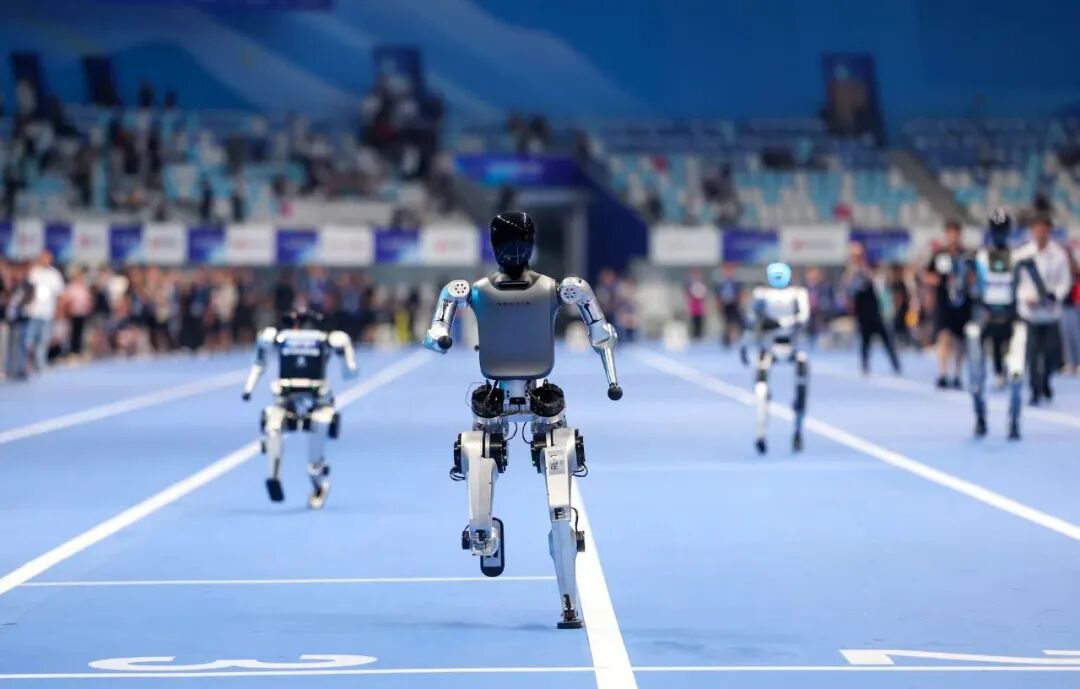
Cover image: Provided by the interviewee
In the first half of 2025, almost every humanoid robot company was "showing off its muscles": punching, dancing, running, folding clothes, wiping tables... Various demos (demonstration videos) took turns to appear, becoming the latest synonym for high technology in the eyes of the public.
Entering the second half of the year, the trend changed. Demos gradually faded out, and orders became the new focus.
In just the past two months, several companies have successively entered the "thousand-unit club". According to incomplete statistics from Economic Observer, eight enterprises, including Ubtech Robotics, Unitree Robotics, Zhipu Robotics, Songyan Power, Stardust Intelligence, Zhipingfang, Zhongqing Robotics, and Accelerated Evolution, have all disclosed thousand-unit level orders.
Based on public data calculations, the prices of humanoid robots for education and exhibition purposes are mostly between 20,000 and 100,000 yuan, while the prices of industrial products are generally above 200,000 yuan. Therefore, thousand-unit level orders often correspond to contracts worth hundreds of millions of yuan.
For example, at the beginning of October, Zhipu Robotics signed a cooperation agreement worth hundreds of millions of yuan with Longcheer Technology (603341.SH) and planned to deploy nearly a thousand robots. Since September, Ubtech Robotics won a project worth 250 million yuan; Stardust Intelligence disclosed a thousand-unit level cooperation with Seer Robotics; Zhipingfang signed a 500 million yuan agreement with HKC and will deliver over 1,000 units in three years; Zhongqing Robotics signed a cooperation agreement with Duolun Technology (603528.SH), and Duolun Technology plans to purchase no less than 2,000 units in three years. Earlier, Songyan Power announced that it had received over 2,500 orders, with the contract amount exceeding 100 million yuan.
This wave of "order signing tides" is the result of multiple factors. Since its appearance on the Spring Festival Gala this year, humanoid robots have frequently appeared in the public eye and quickly established a cognitive foundation. At the same time, the actual needs of industries such as manufacturing, education, and culture and tourism are emerging, creating a batch of scenarios that can be implemented in batches. Against the background of tightening financing, many enterprises urgently need "real sales" to leverage the next round of financing and valuation.
Thousand-unit level orders are becoming the watershed for the industrialization of humanoid robots. It means that robots are no longer just demonstration prototypes in the laboratory but are starting to enter real industrial scenarios.
This stage can be compared to the situation when new energy vehicles were first introduced into logistics, ride-hailing, and government demonstration projects ten years ago - first verify usability, and then consider popularization. For humanoid robots to truly enter households and become mass consumer products, they still need to go through product optimization, cost reduction, and the establishment of user habits.
As humanoid robots take the first step in industrialization, some key issues have also emerged: Who is buying, and what are they buying for? Who is selling, and how can they really sell?
A sales war shifting from "competing on demos" to "competing on deliveries" is quietly rewriting the business logic of humanoid robots.
Large customers from the manufacturing and education industries
Behind the current wave of "order signing tides", there are not many customers with the ability to "deploy a thousand units". The manufacturing and education industries stand out.
The demand in the manufacturing industry is more rigid. Yao Maoqing, the partner and president of the Embodied Business Department of Zhipu Robotics, said that manufacturing enterprises have the ability to undertake thousand-unit level orders, mainly due to the common pain points in the industry: Difficulty in recruiting workers, rising labor costs, insufficient automation of production lines, and continuous high pressure on production tasks. In positions with three - shift work, night shifts, and repetitive labor, once robots can replace human labor, there is feasibility for batch deployment.
In the past, factories generally adopted non - standard automation solutions. Once the product model was updated, the production line had to be completely rebuilt. Especially for OEM enterprises with complex SKUs and frequent product iterations, this model had high costs and poor flexibility. Humanoid robots are more like a "trainable operator". They can change jobs by updating models or task instructions without replacing hardware. This flexible deployment method is the greatest advantage of humanoid robots compared to robotic arms.
In cooperation with its shareholder enterprise, Longcheer Technology, Zhipu's G2 robots are deployed on its PC and tablet production lines and will be extended to production lines for high - iteration products such as mobile phones in the future.
From the perspective of cost structure, in regions such as the Yangtze River Delta, the annual comprehensive cost of a front - line worker is about 150,000 yuan. If robots are used to replace human labor in double - shift positions, the cost can be basically recouped in two years. With the continuous optimization of structural modules and core components, this calculation is almost feasible in the Chinese market and is even more attractive in the European and American markets.
Yao Maoqing said that the return on investment (ROI) of current humanoid robots is not as good as that of mature robotic arm systems. Their real value lies in making up for those links that cannot be standardized and still require a large amount of human input.
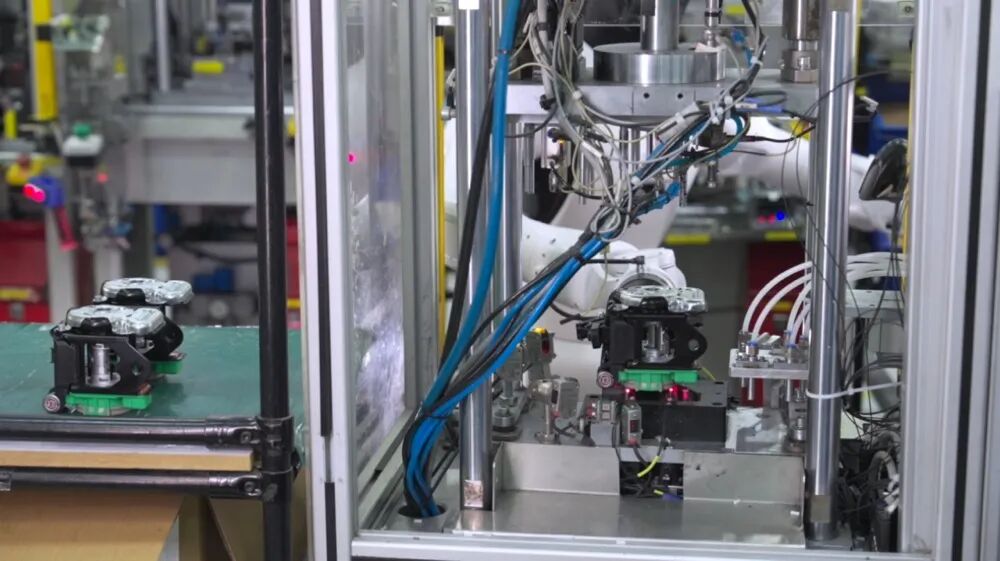
Zhipu's Elf G2 sends the car seat belt lock cylinder into the pressing machine (Provided by the enterprise)
Manufacturing customers are not only the largest order - placers but also become the invisible "product managers" promoting robot iteration.
Take Stardust Intelligence as an example. Lai Jie, the founder, told Economic Observer that in the past year, he led a team to visit more than a hundred potential customers. From chemical laboratories to high - end manufacturing workshops, the scene requirements were extremely diverse: some hoped that robots would replace chemical protective suits to enter the experimental space, some proposed automatic inspection of cell culture equipment every two hours, some teams tested the remote control ability across countries and provinces, and some even envisioned applying robots to high - risk scenarios such as bomb disposal.
These front - line feedbacks prompted Stardust Intelligence to make adjustments to its product solutions: On the one hand, Stardust Intelligence made "subtractions" and launched the half - body product S1 - U. For example, in cooperation with the industrial robot manufacturer Seer Robotics, the two sides jointly launched a modular combination of "upper - body robot + AGV (Automated Guided Vehicle) chassis", promoting the robots to enter factory tests and adapting to scenarios such as warehousing, manufacturing, logistics sorting, loading and unloading, and collaborative handling.
On the other hand, on the full - body flagship product S1, Stardust Intelligence made "additions". It is equipped with 5 sets of depth cameras, 2 laser radars, and 1 blind - filling camera, and cooperates with the edge computing power platform for high - precision path planning and task execution, better coping with complex working conditions such as stacked materials and narrow channels in the factory. Although this configuration increases the unit cost, it helps to verify the ability boundary in extreme scenarios and provides standards for the establishment of the future product system.
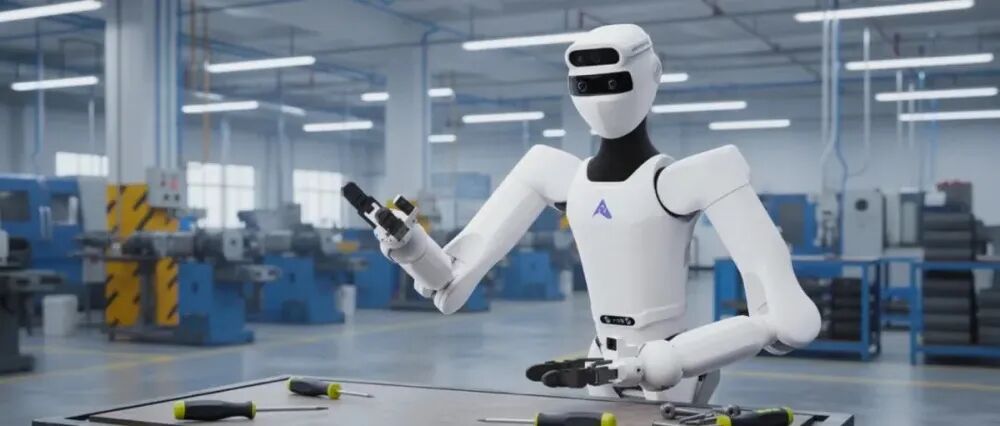
Stardust Intelligence's S1 robot in the factory (Provided by the enterprise)
Meanwhile, leading enterprises in the manufacturing industry are also thinking about how to embrace humanoid robots. In mid - October, at an academic conference on embodied intelligence held in Hangzhou, Zeng Fangqin, the chairman of Lingyi Precision Industry (002600.SZ), a leading enterprise in the "Apple supply chain", was recording technical points throughout the three - hour conference. She told Economic Observer that once humanoid robots enter the factory, the entire production line and production process will be reconstructed, and "the whole company is learning".
Although Zeng Fangqin did not disclose the specific deployment rhythm, Lingyi Precision Industry disclosed on October 27 that it provides whole - machine manufacturing and OEM services for multiple customers. Recently, it also received an order for more than a hundred units from a leading customer and deepened cooperation with multiple companies such as Qiangnao Technology, Beijing Humanoid Robot Innovation Center, and Zhipu Robotics.
However, compared with the sellers' high - profile announcements of orders, the voices of manufacturing buyers are still weak.
Many front - line engineers told Economic Observer that they have not really seen humanoid robots in the factory. Even within enterprises that have announced large - scale purchases, front - line employees lack a clear understanding of "why to buy" and "what to buy for".
In addition, some phenomena similar to those in the early new energy vehicle industry have also appeared behind some order signings: Some orders come from shareholder enterprises or affiliated parties of group enterprises, or are signed in the form of framework agreements, lacking specific delivery plans and rhythms. These signs all point to a reality: The current industrialization process of humanoid robots is still mainly supply - driven, and real demand has not been widely established.
Different from the manufacturing industry, the procurement path of humanoid robots in the education industry usually starts with "small - scale pilots". The requirements for technical performance are not necessarily extreme, but there are higher expectations for teaching adaptation, curriculum resources, and on - site demonstration effects. If the manufacturing industry is looking forward to an efficiency revolution, the education market provides another possibility: Can humanoid robots become a popular teaching tool like personal computers did back then?
Many robot distributors in the education industry said that the procurement process generally adopts the "POC" (Proof of Concept) model: In the early stage, a small batch of 1 - 3 units are deployed on campus for cultural and art exhibitions, teaching demonstrations, or programming competitions. Later, depending on the students' feedback and the degree of curriculum integration, a decision will be made on whether to expand the procurement scale. Limited by budget approval and procurement processes, the education market is more sensitive to products with "low thresholds and high usability". Institutions such as local education commissions and university laboratories introduce humanoid robots in batches through the method of "promoting teaching through competitions", becoming another force driving the release of orders. This type of order demand is more obvious in first - tier cities.
Another part of the small - value orders goes to companies engaged in secondary development and exhibitions. These enterprises actively "create scenarios" with robots - promoting leasing, exhibitions, cultural and tourism in parallel.
A company engaged in robot performances has purchased more than 50 robots and robot dogs of various brands since last year and completed more than a hundred performances this year. The robots are more like "mobile advertising spaces".
Economic Observer learned that the daily rental price of a single robot is between 4,000 and 7,000 yuan, a nearly 30% decrease compared to the beginning of the year, reflecting the downward trend of the popularity of robots this year.
Delivery is the touchstone
Signing orders is just the starting point of industrialization. The real test lies in the delivery stage.
On October 26, Songyan Power announced the completion of nearly 300 million yuan in Pre - B round financing. Seven months ago, the company launched the N2 robot for developers. So far, it has signed more than 2,500 orders, with the total contract amount exceeding 100 million yuan.
Jiang Zheyuan, the founder of Songyan Power, told Economic Observer that the team once found in the quality inspection that a batch of products had missing pins in the ankle joints. They immediately fined the production line and then adjusted the process, pre - installing the pins with the incoming materials and putting them into production as a whole.
This is an important change. "99% of delivery problems stem not from workers but from product design." Jiang Zheyuan said that compared with the technical polishing in the laboratory, when really entering the delivery stage, it tests the product design ability and depends on a production system that can self - correct and iterate quickly.
Another pressure on delivery comes from the supply chain. The core components of Songyan Power's robots are self - developed, and some components are purchased externally. As the order volume increases, the production capacity of some core suppliers has begun to be strained. Songyan Power copes with uncertainties by promoting multi - source inventory preparation.
After accumulating delivery experience, Songyan Power has also become one of the few companies in the industry to publicly announce a detailed production expansion plan. Economic Observer learned that currently, its Beijing factory can deliver more than 200 units per month. The first phase of the Changzhou factory is expected to reach a production capacity of 300 units per month in December, and a third factory with a planned production capacity of 500 units per month is also in preparation.
In Jiang Zheyuan's view, the most important thing is not to "show off orders" but the closed - loop ability of delivery. This includes the entire business process from obtaining customer intentions to collecting deposits, delivering products, and then recovering the balance - whether the whole business process can really run smoothly. Songyan Power takes "confirmed revenue" and "healthy cash flow" as key indicators and gradually gets rid of the single pursuit of signing amounts in the early stage.
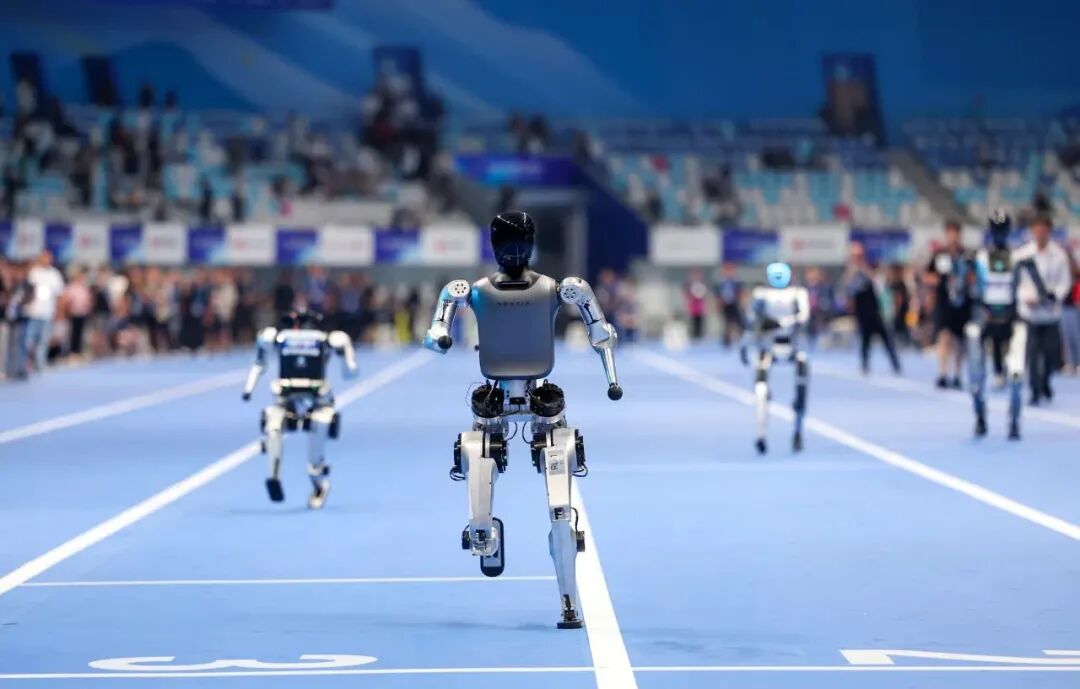
Songyan Power's N2 robots in a race (Provided by the enterprise)
This change in the industry rhythm from "order signing to delivery" is also reflected in the capital market.
Many investors told Economic Observer that the financing window in 2026 is gradually tightening. The leading teams have basically completed angel and Series A financing. In the next stage, who can enter Series B and higher rounds no longer depends on the team background and storytelling ability but on whether the products can really be launched and stably delivered.
Li Yipei, the director of Beijing Robot Financial Leasing Co., Ltd., told Economic Observer that this wave of enthusiasm is also quietly changing the evaluation logic of investors. At the beginning of the year, the industry could only see demos and promotions, but now it looks at real sales and payment collection ability. The recently popular "thousand - unit level orders" do contribute to valuation, but ultimately, it's about who can really deliver the robots to customers, obtain real payments, and achieve continuous repurchase.
Zhao Weichen, the vice - president of Accelerated Evolution, holds a similar view. He told Economic Observer that in the first half of 2025, the industry experienced a period of traffic dividends. There were cases where financing could be obtained with just one popular video, but this model quickly became ineffective. "People are becoming more and more aware that relying solely on demos is meaningless, and the industry is returning to the fundamentals."
Different from many enterprises betting on industrial scenarios and trying to quickly increase sales by signing large orders, Accelerated Evolution chose a slower path, starting from the education market. They packaged the robot body, graphical development platform, and supporting competitions into a complete solution and sold it to institutions such as universities, primary and secondary schools. "Just like the first computer installed in the classroom back then, we also want to make robots a standard configuration." Zhao Weichen said.
To avoid "signing many orders but being unable to deliver", Accelerated Evolution adopted a phased delivery strategy of "10 - 100 - 1000", selling one by one first, then ten, and then a hundred. Founder Cheng Hao revealed that the team once actively rejected a large order