36Kr Research Institute | Research Report on the Development of China's Large Model Industry in 2025
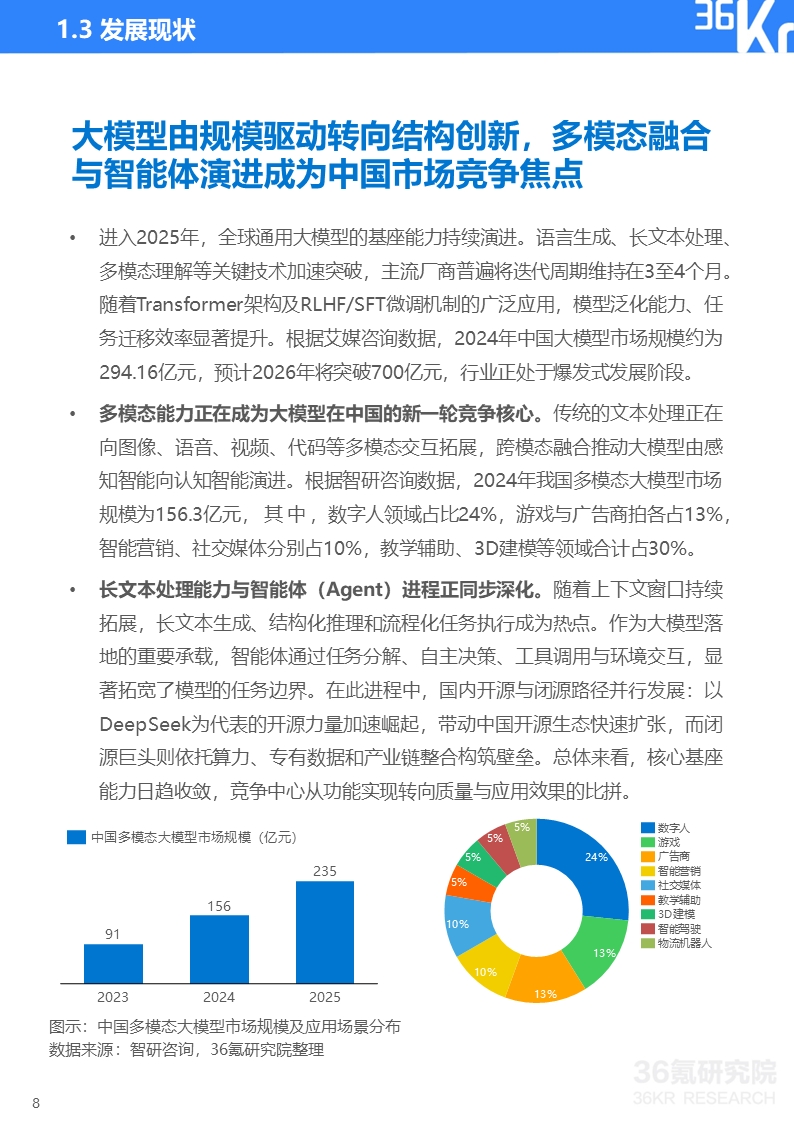
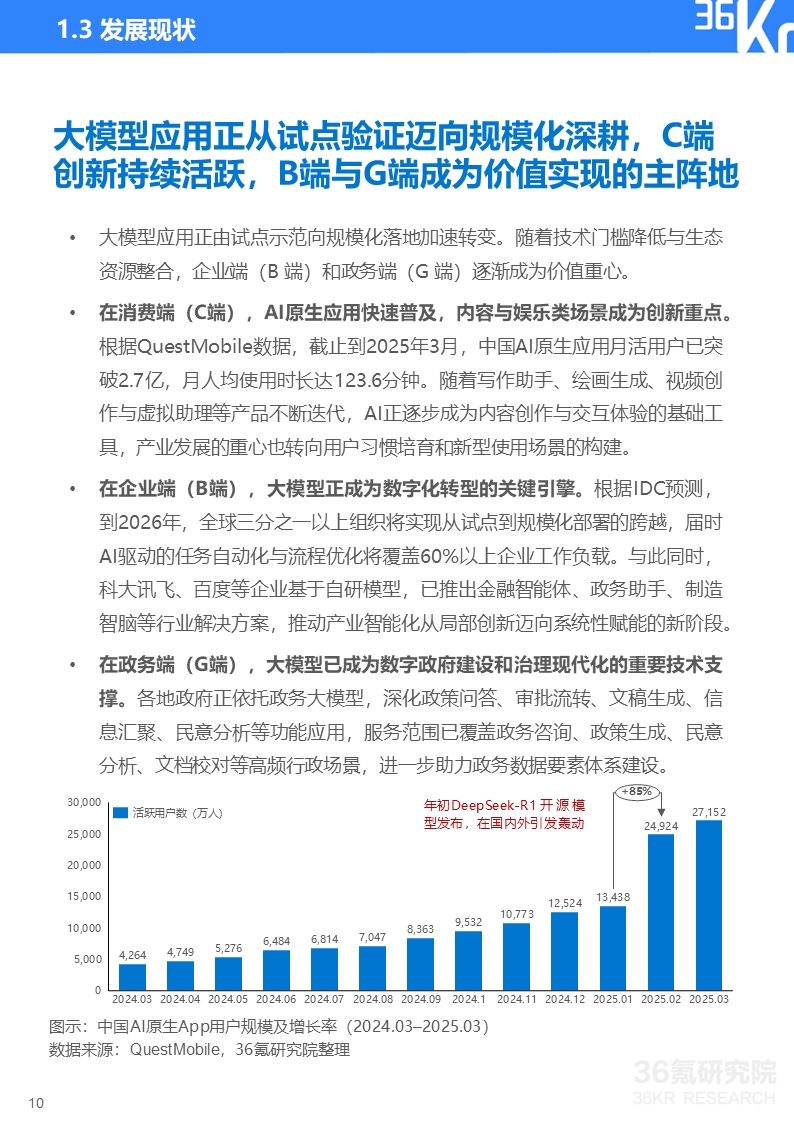
Currently, the large model industry in China is undergoing a crucial transformation driven by both technological iteration and ecological reconstruction. Report data shows that the market size of large models in China reached 29.416 billion yuan in 2024, and it is expected to exceed 70 billion yuan by 2026. Among them, the market size of multimodal large models is 15.63 billion yuan, and the application scenarios such as digital humans and games have shown remarkable performance with significant growth potential.
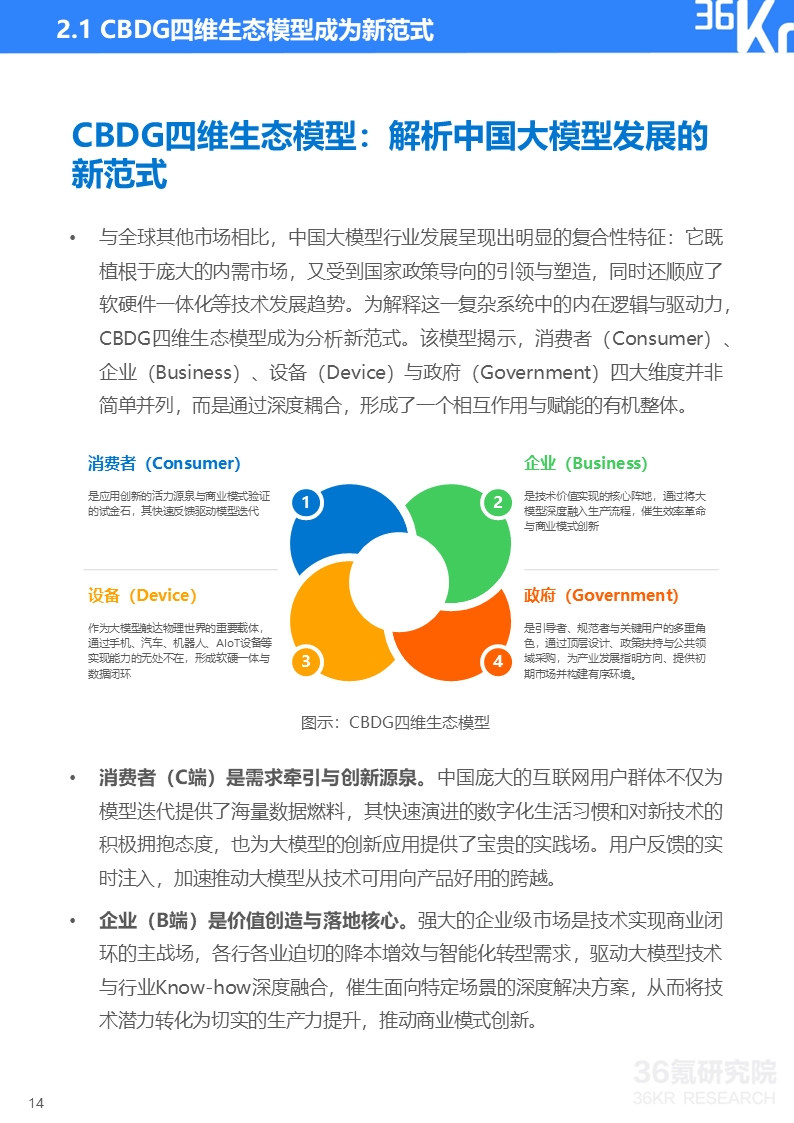
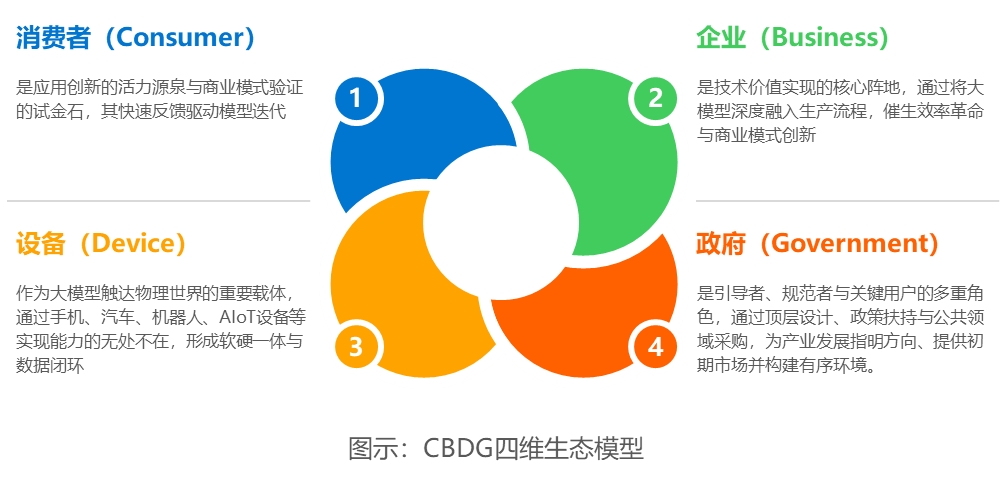
As the industry develops at an accelerated pace, the logic of market competition for large models is also changing: from single - point confrontations of technology or products to a systematic competition covering multiple dimensions such as ecological construction, technological R & D, and industry empowerment. In terms of technological evolution, cutting - edge fields such as multimodal cognition and embodied intelligence are becoming key development directions. Against this background, how to rely on the CBDG four - dimensional ecosystem (Consumers, Businesses, Devices, Government) to grasp the core logic of market growth and effectively transform technological value into a commercial closed - loop has become the core proposition for the high - quality development of large model enterprises.
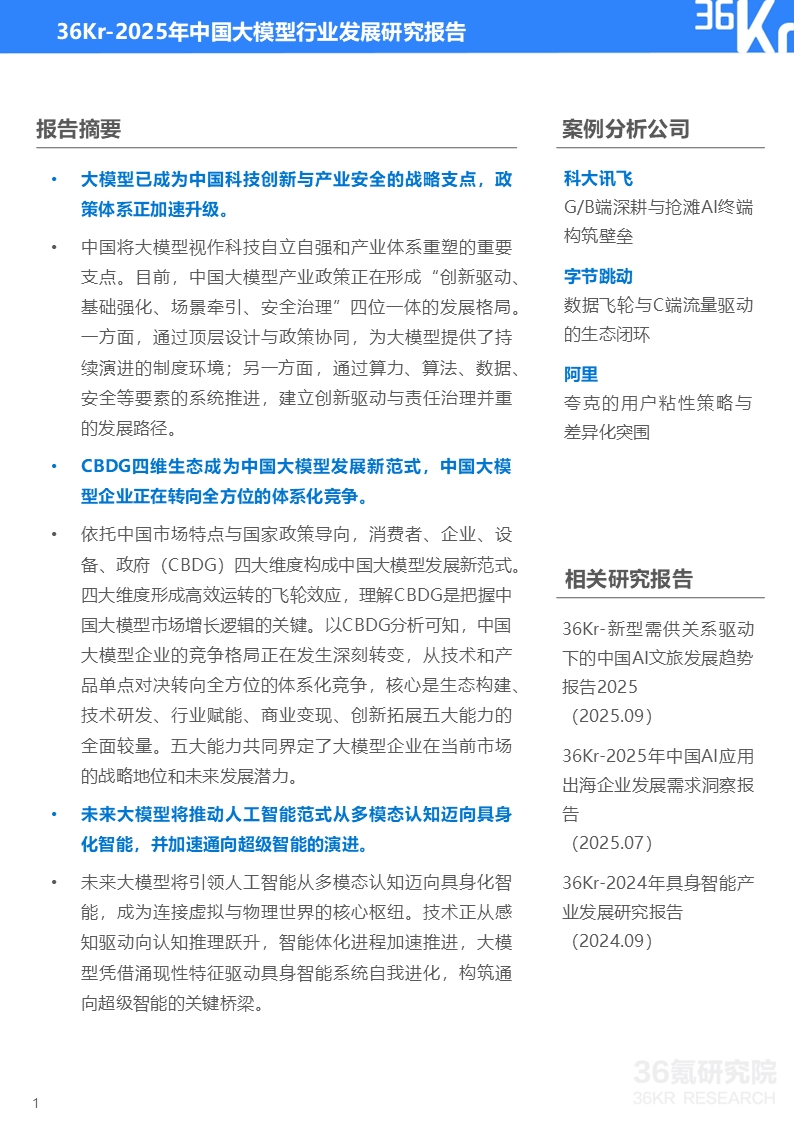
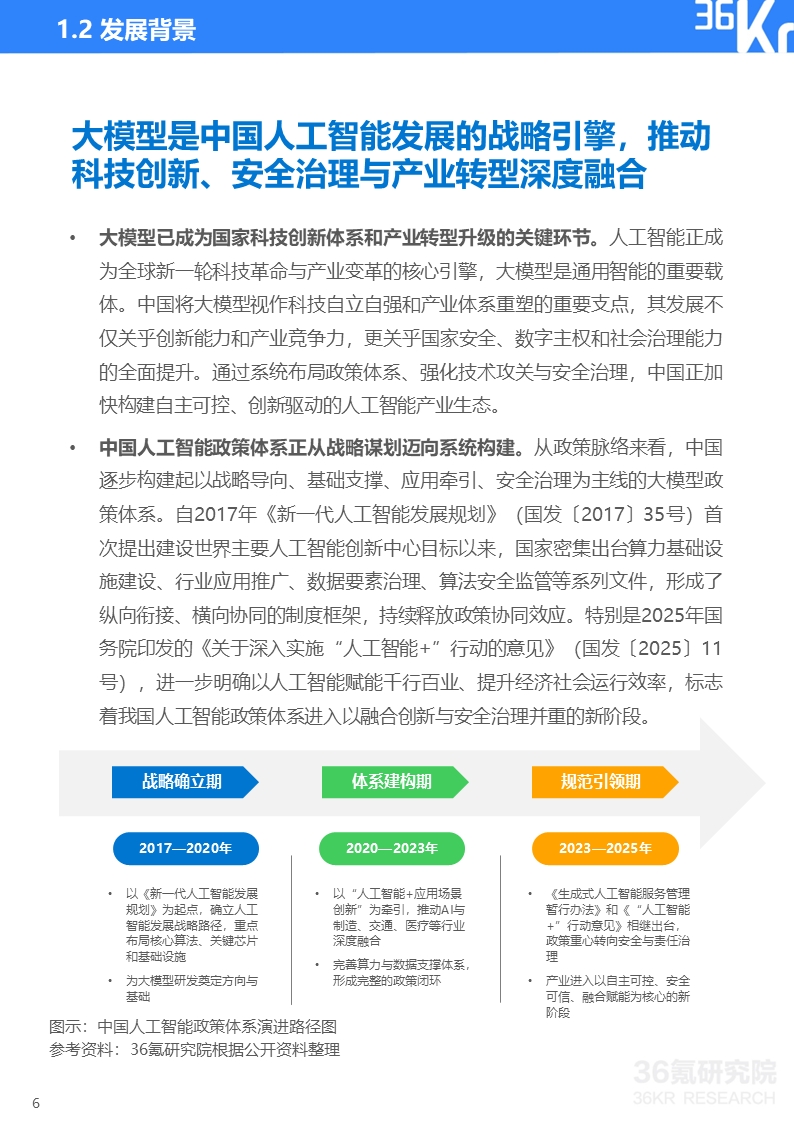
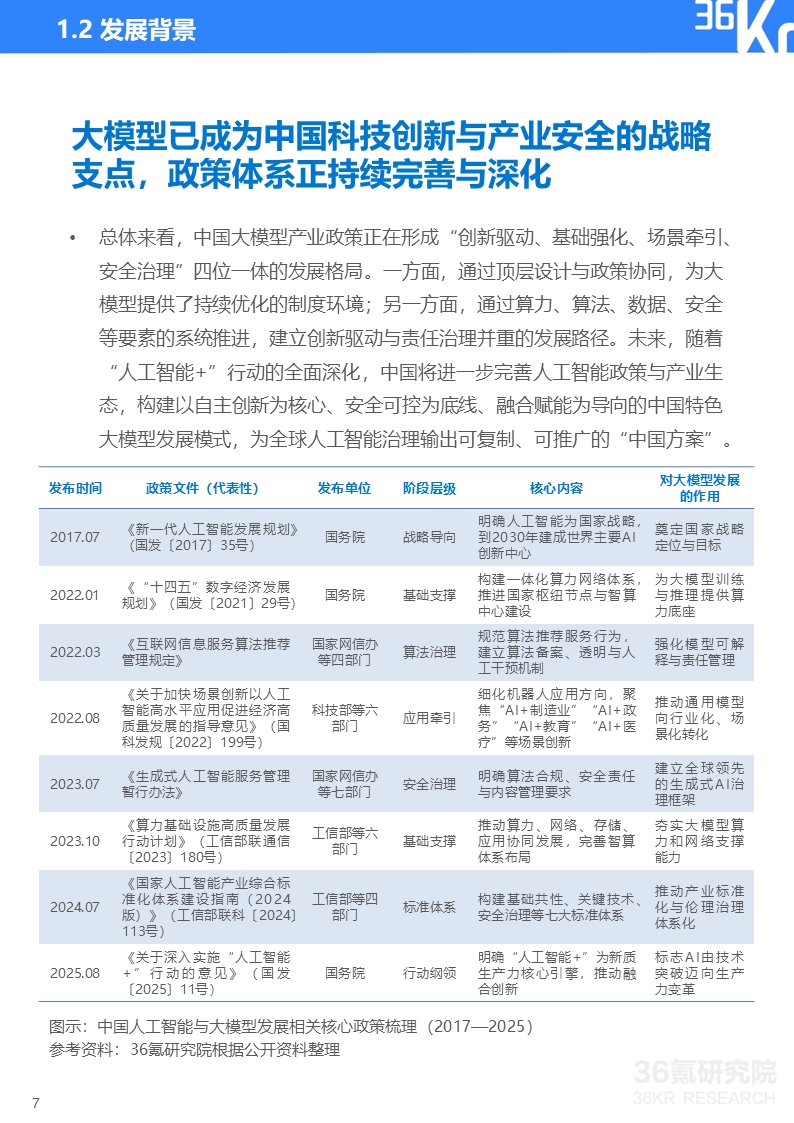
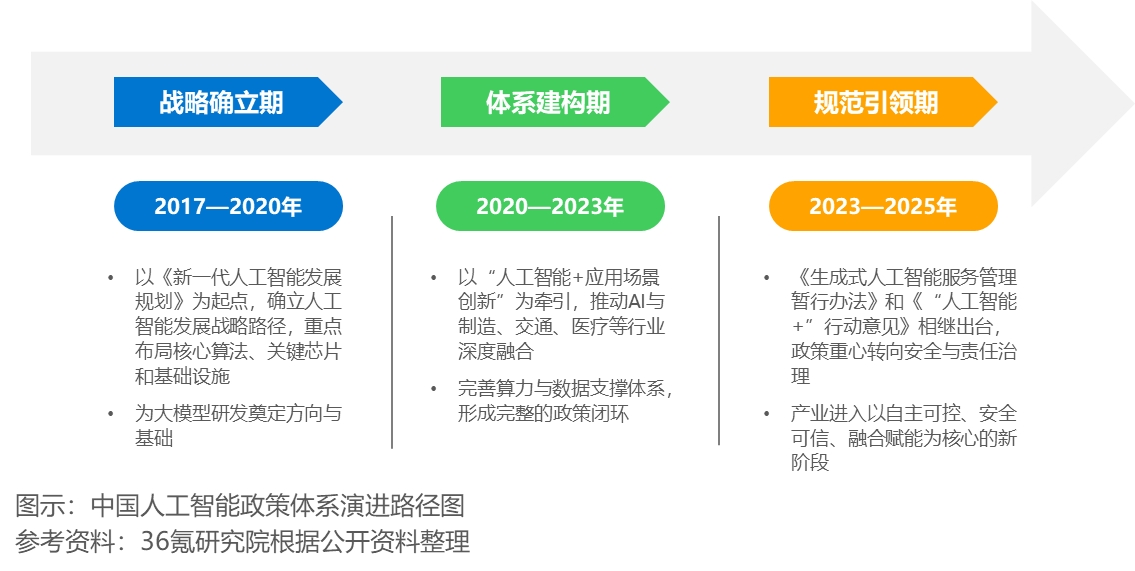
Large models have become a strategic fulcrum for China's technological innovation and industrial security, and the policy system is accelerating its upgrade
China regards large models as an important fulcrum for achieving self - reliance and self - strength in science and technology and reshaping the industrial system. Currently, the industrial policy for large models in China is forming a four - in - one development pattern of "innovation - driven, foundation - strengthening, scenario - leading, and security governance". On the one hand, through top - level design and policy coordination, it provides an institutional environment for the continuous evolution of large models; on the other hand, through the systematic promotion of elements such as computing power, algorithms, data, and security, it establishes a development path that emphasizes both innovation - driven and responsibility governance.
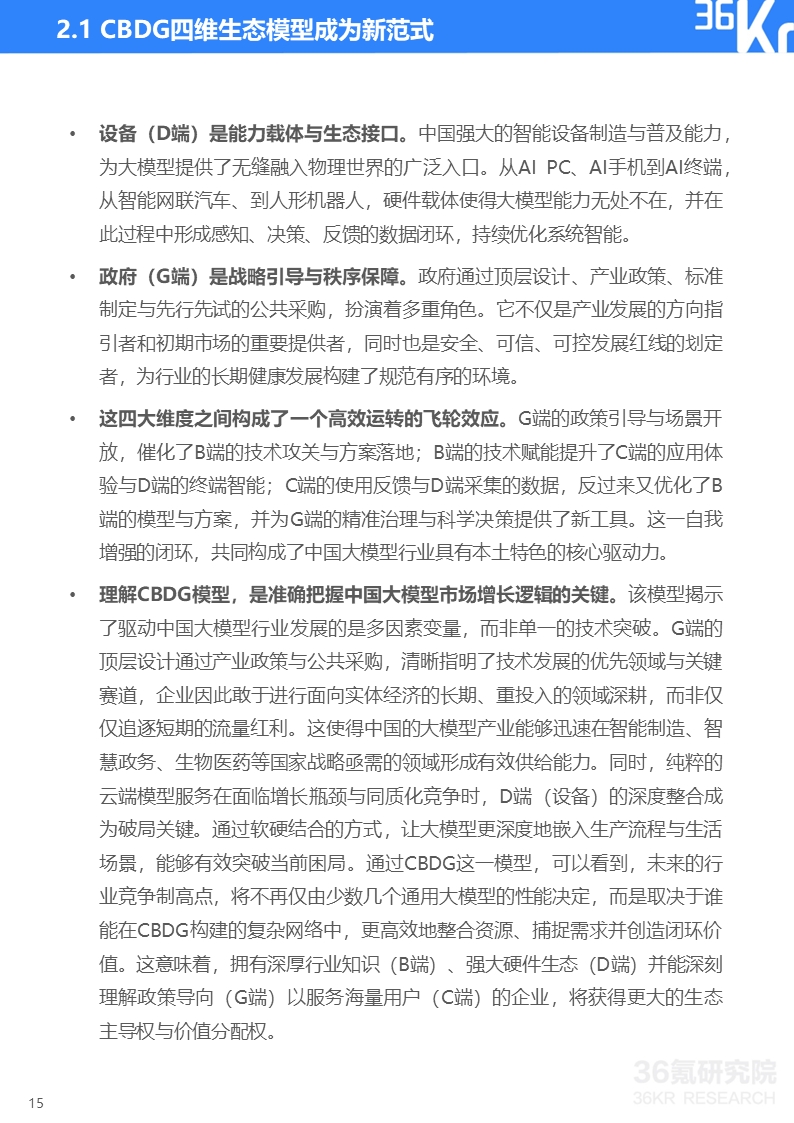
The CBDG four - dimensional ecosystem has become a new paradigm for the development of large models in China, and Chinese large model enterprises are shifting to all - around systematic competition
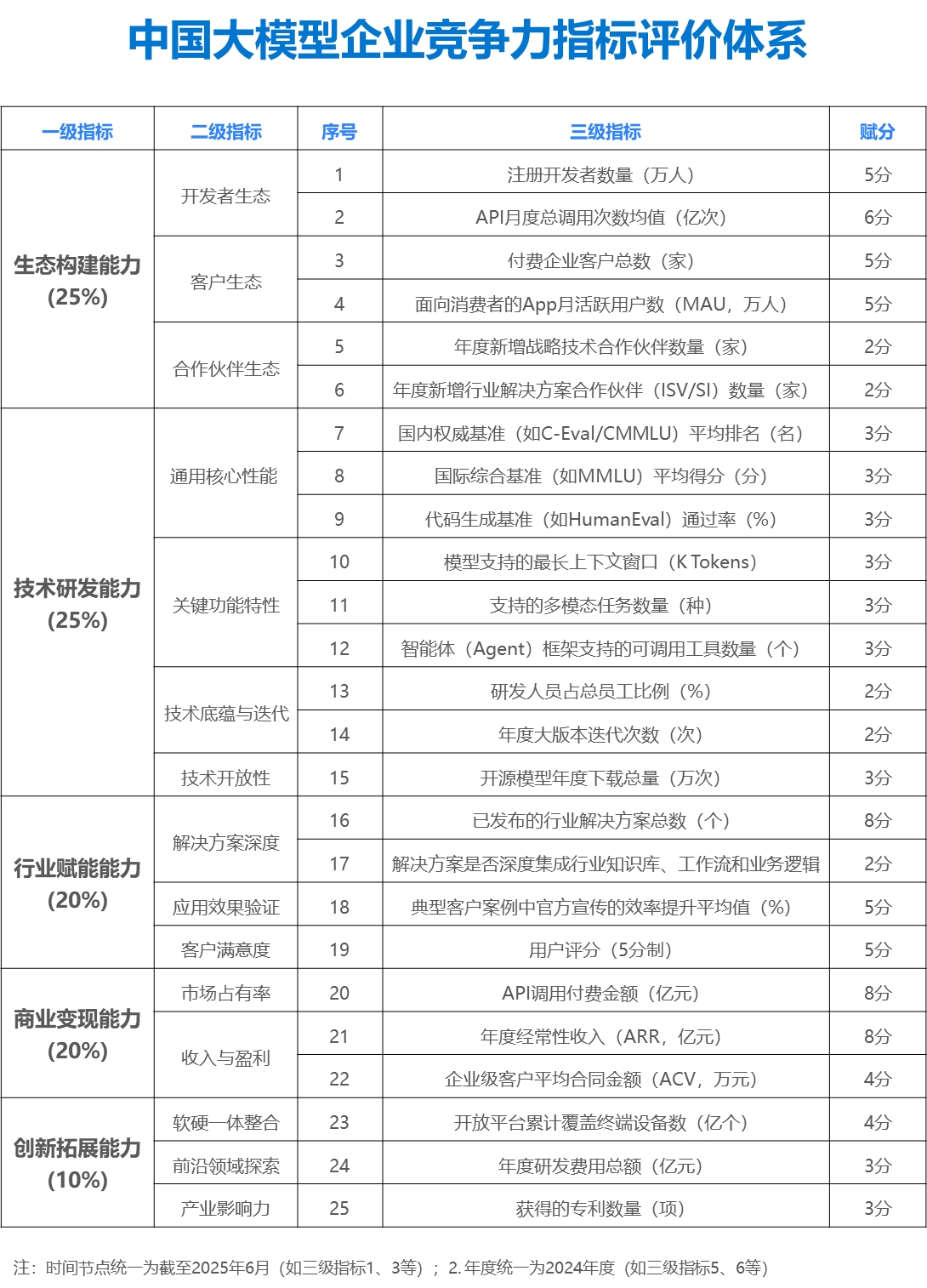
Relying on the characteristics of the Chinese market and national policy orientation, the four dimensions of consumers, businesses, devices, and government (CBDG) constitute a new paradigm for the development of large models in China. These four dimensions form a highly efficient flywheel effect, and understanding CBDG is the key to grasping the growth logic of the Chinese large model market. An analysis based on CBDG shows that the competitive landscape of Chinese large model enterprises is undergoing profound changes, shifting from single - point confrontations of technology and products to all - around systematic competition. The core lies in a comprehensive competition of five major capabilities: ecological construction, technological R & D, industry empowerment, commercial monetization, and innovation expansion. These five capabilities jointly define the strategic position and future development potential of large model enterprises in the current market.
The first - tier group of large model enterprises has formed and is gradually stabilizing
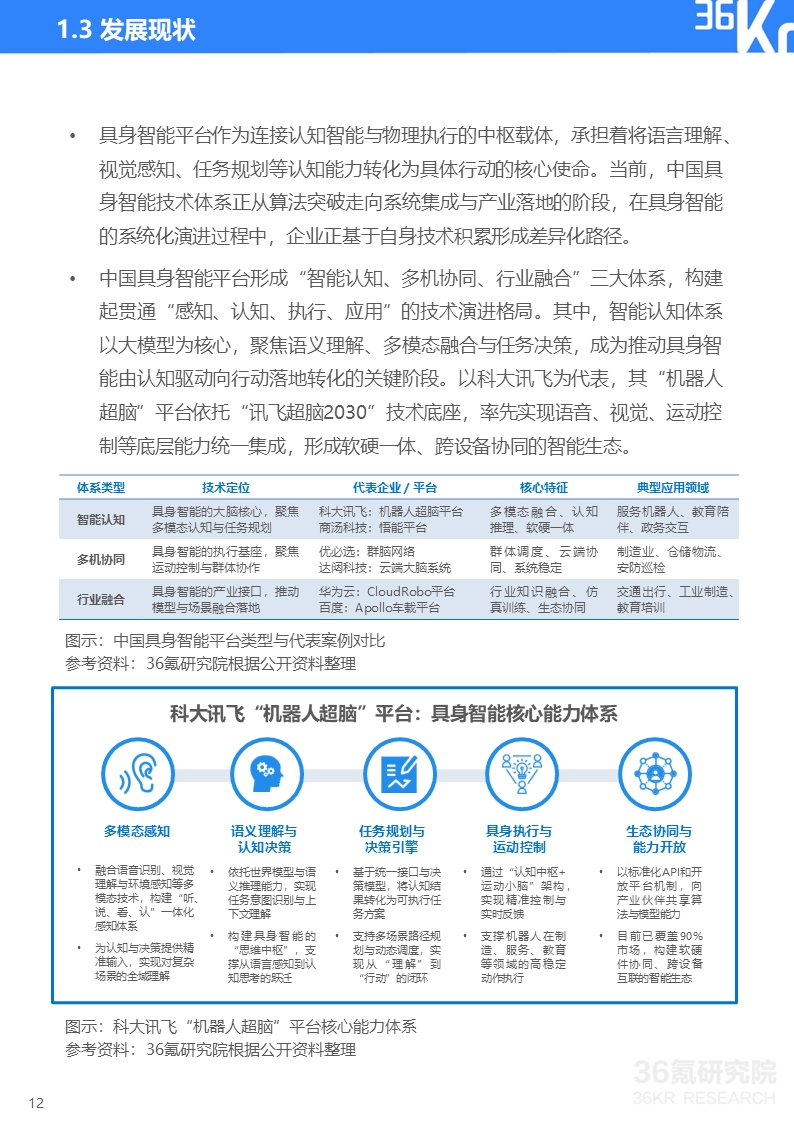
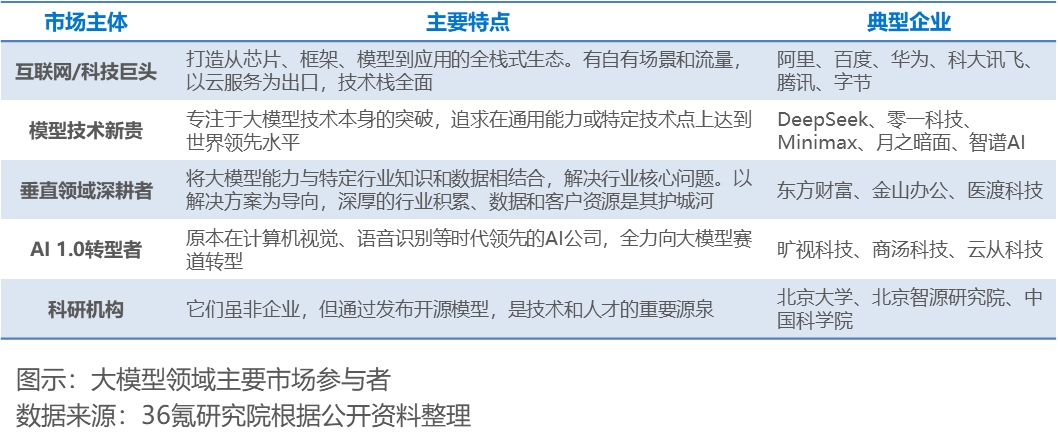
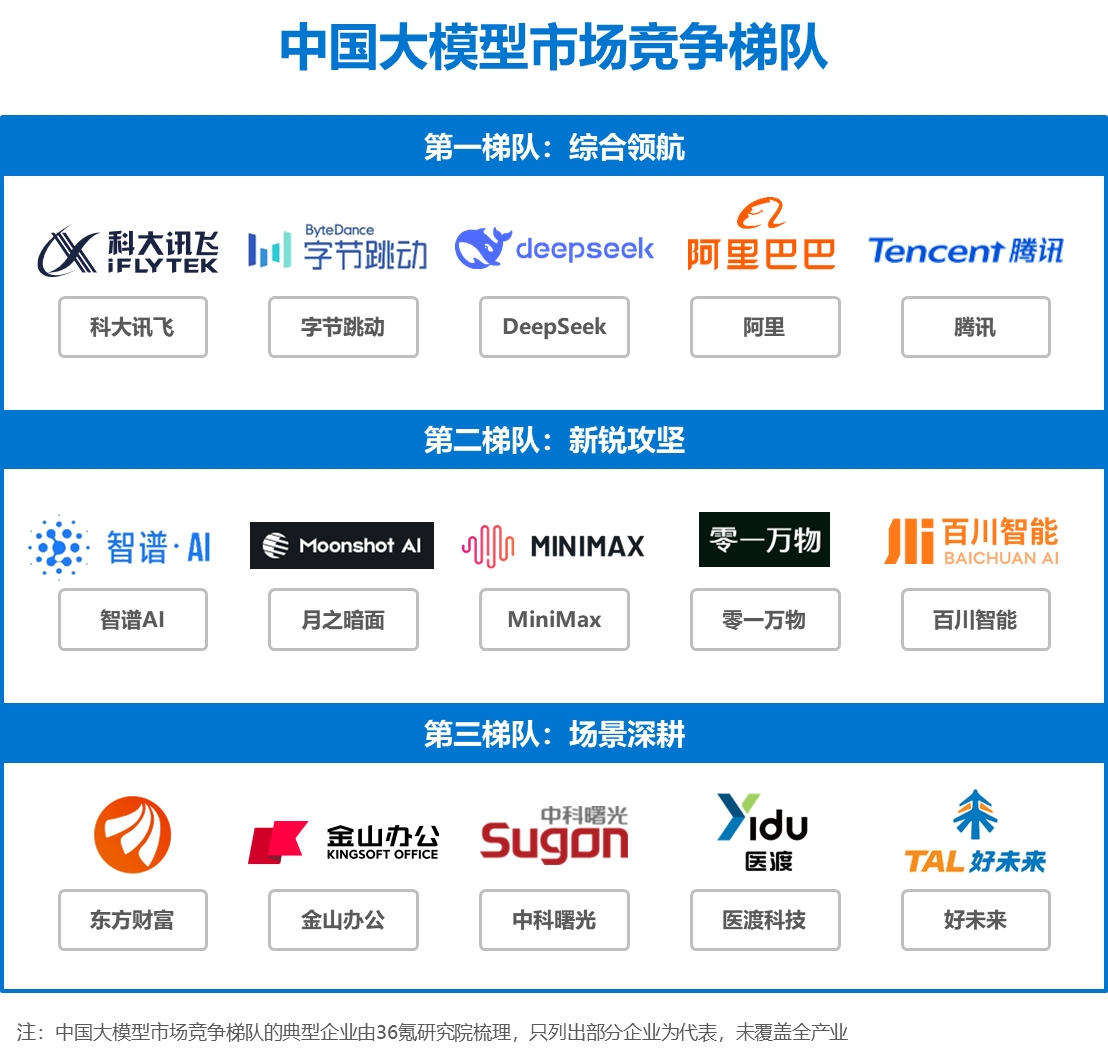
Currently, the large model field in China has entered the stage of systematic competition, and the market presents a diverse and complex competitive situation. Market participants can be mainly divided into the following five types: Internet/technology giants that build moats through full - stack layout, emerging model - focused companies known for their technological sharpness, vertical field players that create value through in - depth industry penetration, AI 1.0 transformers seeking breakthroughs in the transformation process, and scientific research institutions as the source of innovation. Among them, some enterprises have achieved leapfrog development through multi - dimensional capacity building. For example, iFlytek has built comprehensive comprehensive competitive advantages by virtue of its developer ecosystem of millions of levels, continuous breakthroughs in voice and multilingual technology fields, large - scale implementation capabilities in the government and enterprise markets, and innovative layout in cutting - edge fields such as embodied intelligence, ranking among the first - tier players in the industry.
The key research questions in this report are as follows:
- Given the strategic fulcrum position of large models in China, how can the policy system shape a unique development gene that differentiates it from other global markets?
- What is the CBDG four - dimensional ecosystem? Why can CBDG become the key paradigm for cracking the growth logic of China's large model industry? What are the underlying reasons behind it?
- As large model enterprises shift from single - point technology competition to systematic capacity competition, around which core dimensions do they mainly conduct competition?
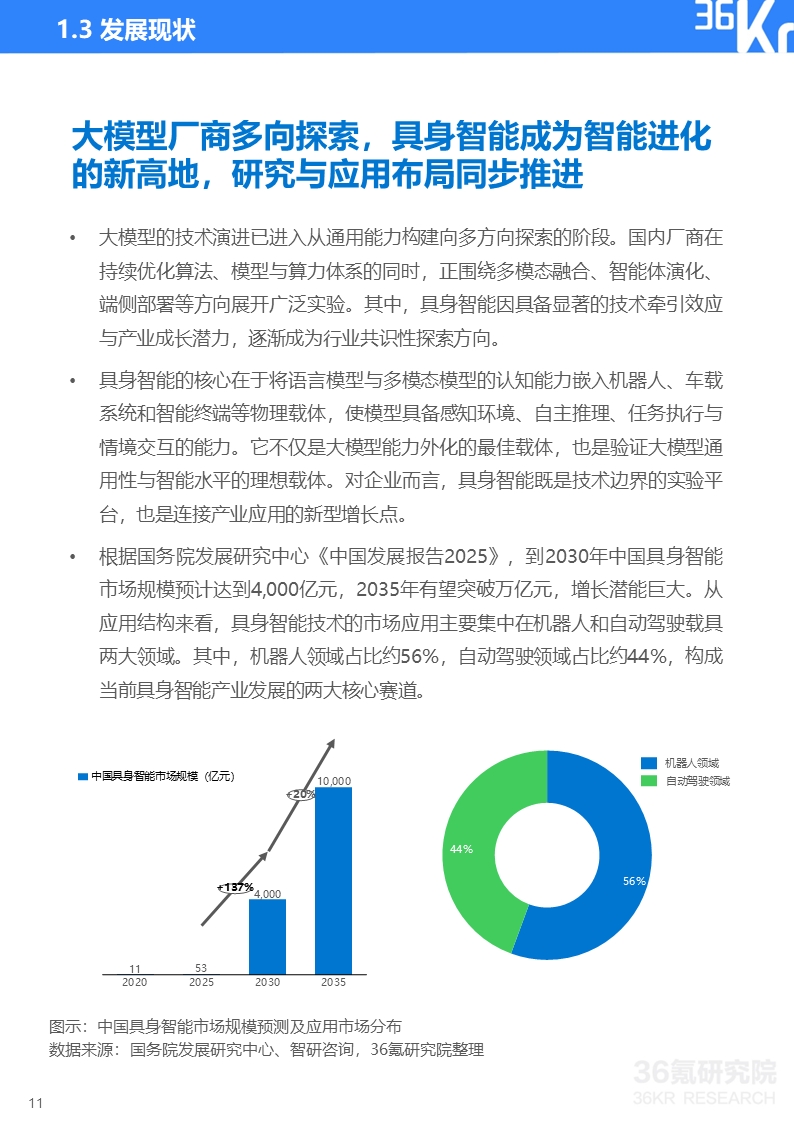
- As a new cutting - edge track in the large model field, what strategic significance does embodied intelligence have for enterprises to compete for ecological niches?
- What are the characteristics of the competitive landscape of China's large model industry? What are the differentiated strategic paths of leading enterprises?
- What key technological trends and industrial changes will the large model industry face in the future?
- How can China's large model governance achieve a balance between innovation vitality and security bottom - line, and thus form a governance solution that can be learned from globally?
For more exciting content, please refer to the "Research Report on the Development of China's Large Model Industry in 2025". Click Download Link, extraction code: mmej