How long can the Japanese K-CAR market remain closed?
On the first day of her reporting at the Traffic Police Department of Sumida Ward Police Station in Tokyo, Japan, newly - recruited traffic police officer Tsujimoto Natsumi was late and was assigned to work with Kobayakawa Miyuki by the section chief. From then on, on the streets of Tokyo, one could often see a pair of policewomen with different personalities but a cynical attitude performing extreme maneuvers. The patrol car combination of Honda Today and Honda Motocompo has become a mobile force in combating organized crime.
From 1986 to 1992, this comic, created by Fujishima Kousuke and serialized in the special edition of Kodansha's "Weekly Morning Party", not only depicted an imaginative police - and - bandit blockbuster for comic fans around the world but also told a story about Japan's unique automotive world from a cultural perspective.
Japan has the most charming automotive ecosystem in the world. Who can deny this? When the comic comes into reality, in the Japanese automotive market, passion and simplicity can only blend in a way full of adrenaline in the midst of contradictions.
Among them, looking back at the glorious 20 years of Japanese cars, we always wonder why the arms race under the bubble economy came to an end. When will the gentlemen's agreement of 280 horsepower stimulate the further evolution of Japanese cars in a new way? However, on the other hand, the car - using philosophy represented by K - CAR has always remained in people's vision.

Under the pen of cartoonists, many local small cars like Honda Today have contributed to the birth of JDM culture. Similarly, the Japanese people's affection for K - CAR has naturally led to a unique supply - and - demand relationship.
As of 2025, we can still clearly see that the closed nature of the Japanese K - CAR market has never changed. Interestingly, as BYD brought its electric K - CAR, RACCO, to this year's Tokyo Mobility Show, it has indeed added some unprecedented variables to the future development of this ecosystem.
01
The Closed Japanese K - CAR Market
Actually, since the concept of K - CAR was proposed, Japanese consumers' enthusiasm for this type of vehicle has never waned in the past few decades. It can even be said that with the passage of time, the industrial culture formed by K - CAR has almost penetrated into every aspect of Japanese society. Cartoonists like Fujishima Kousuke who incorporate K - CAR into their works are everywhere in Japan.
To date, due to such development, every Japanese automaker has built its own moat in this field with its K - CAR products.
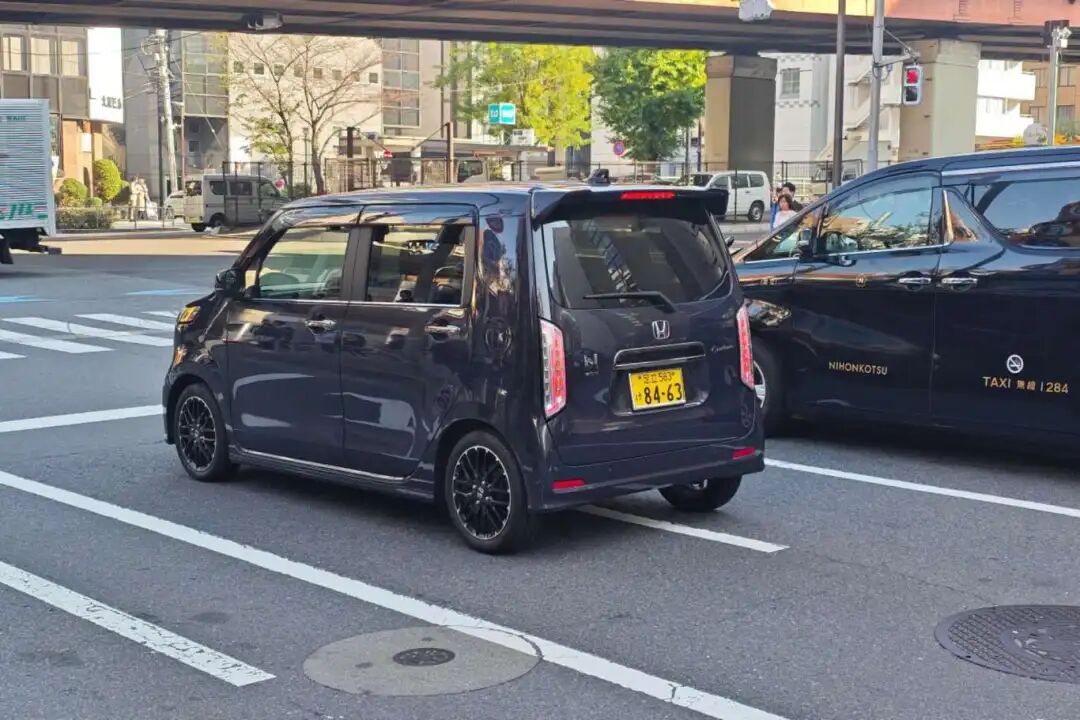
In 2024, just the Honda N - BOX once again proved its unshakable position. It not only topped the list of the best - selling K - CARs in Japan but also surpassed the Toyota Corolla, the champion of ordinary car sales, with a sales volume of 206,272 units, becoming the absolute leader in the Japanese market and making Honda as popular as Toyota in Japan.
Following closely behind, the Suzuki Spacia also lifted the Suzuki brand to a position where it could compete with the three major Japanese automakers with a sales volume of 165,679 units. Even Daihatsu, which has disappeared from the domestic market, could win a lot of applause with its Daihatsu Tanto, which sold 93,759 units annually.
In 2025, given that the product matrix of the entire K - CAR market is relatively stable, in addition to the continued success of the Honda N - BOX, Suzuki Spacia, and Daihatsu Tanto, the Suzuki HUSTLER, Wagon R, Nissan Roox, Mitsubishi eK, etc., also firmly hold their own market shares.
However, at the same time, this also makes us think: since the Japanese market has such a strong demand for K - CARs, why are non - Japanese brands reluctant to enter this market?
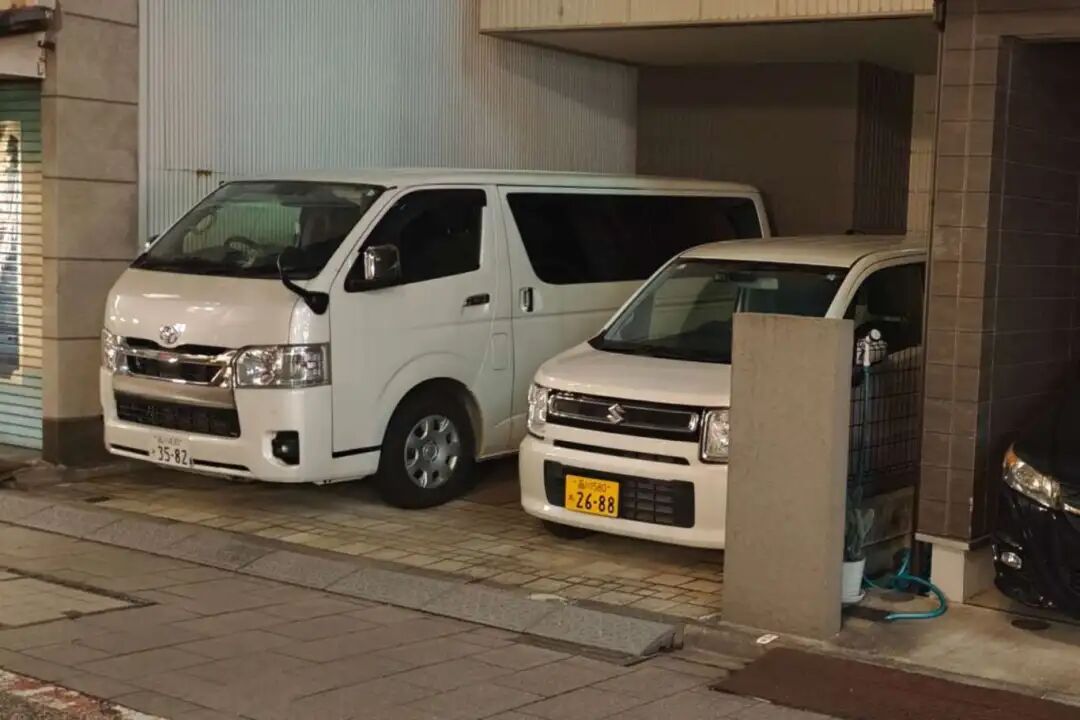
Historically, in 2001, smart launched the smart K model that met the K - CAR regulations for the Japanese market. By adjusting the body width, tire size, and configuration, it met the K - car standards. The car was equipped with a 598cc three - cylinder turbocharged engine and a 6 - speed semi - automatic transmission.
Similarly, Caterham from Europe also introduced its most entry - level product, the Seven 160, to Japan. After adjusting its size and engine displacement to meet the Japanese K - CAR regulations, it was sold under the name of 130.
However, from smart to Caterham, their overly personalized product positioning hardly matches the Japanese market. After all, under the dominance of strict regulations, K - CAR has always been a product that emphasizes pragmatism rather than hedonism. On the premise of ensuring low prices, near - perfect all - scenario applicability is the key to survival.
Those who are familiar with Japanese automakers know that Japanese companies have racked their brains to meet the needs of their domestic customers. "Keeping the best in Japan" may be a joke, but it is definitely true in the K - CAR market. This means that for any foreign company to enter the Japanese K - CAR market, it must have a product specifically targeted at the Japanese market.
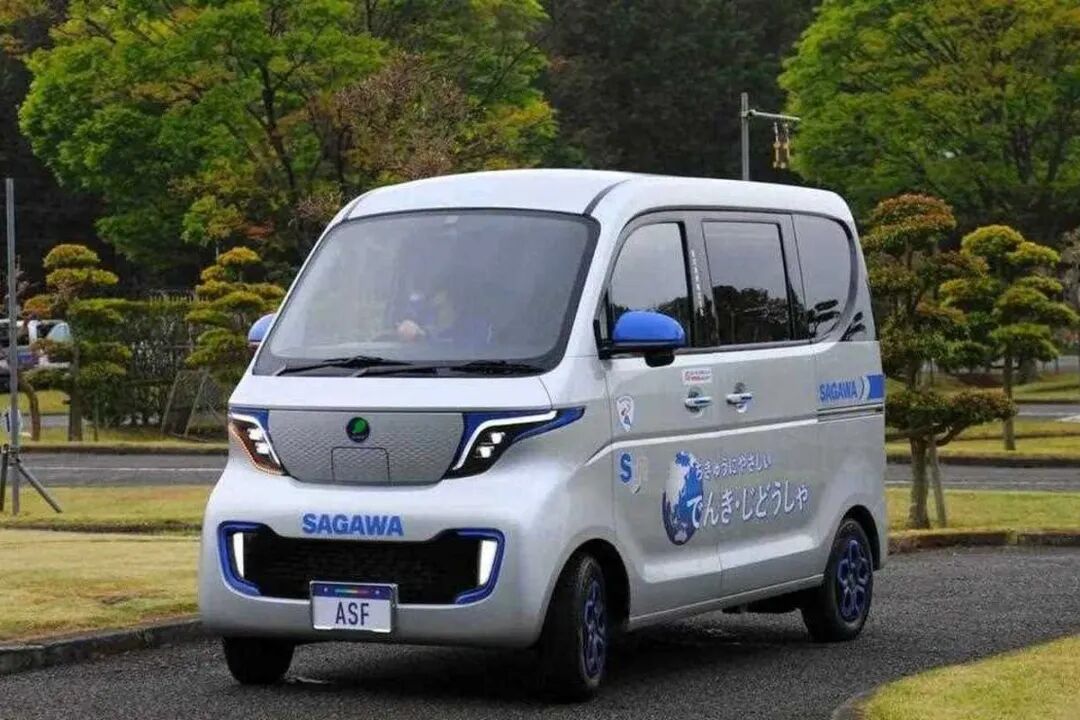
In the past two years, Liuzhou Wuling New Energy cooperated with Japan's ASF Co., Ltd. In 2023, taking advantage of the RCEP agreement, they managed to meet Japan's strict PHP certification and collision regulations and delivered the first batch of electric logistics K - CARs named G050 to the Japanese market. It has a range of 230 kilometers and is priced at around 80,000 RMB.
However, due to the natural demand barrier between the commercial and civilian sectors, even the strongest foreign brands cannot achieve widespread success with such products.
02
K - CAR is a Tough Nut to Crack
Since the initial formulation of the K - CAR industry standards in 1949, the entire niche market has formed a complete set of operating rules. In terms of vehicle classification, we can clearly see that all types of vehicles that have appeared in the traditional automotive market have also appeared in the Japanese K - CAR field.
From the so - called "Three Heroes of the Heisei Era", the Suzuki Cappuccino, Honda Beat, and Mazda AZ - 1, to the modern Honda S660 and Daihatsu Copen, these very niche products have also been favored by many consumers. However, even so, the main consumers of K - CARs are still the general public.
Over the years, the core reason for the popularity of well - known models in China such as the Suzuki Alto and Wagon R, and later the Honda N series, is inseparable from this basic principle.
Currently, with the electrification transformation in full swing, the emergence of new players in