Anhui is still building a cross-river bridge.
Another Yangtze River Bridge is Added in Anhui.
After more than three years of construction, the G3 Tongling Yangtze River Rail-cum-Road Bridge will be officially opened to traffic at the end of the year. The bridge is 11.88 kilometers long, with a main span of 988 meters. It is the world's first bridge adopting a double-deck cable-stayed and suspension cooperative structural system.
The G3 Tongling Yangtze River Rail-cum-Road Bridge is a bridge with three functions of cross-river transportation: expressways, intercity railways, and freight railways. One of the purposes of its construction is to divert the traffic flow of the existing Tongling Yangtze River Highway Bridge and relieve congestion during peak hours.
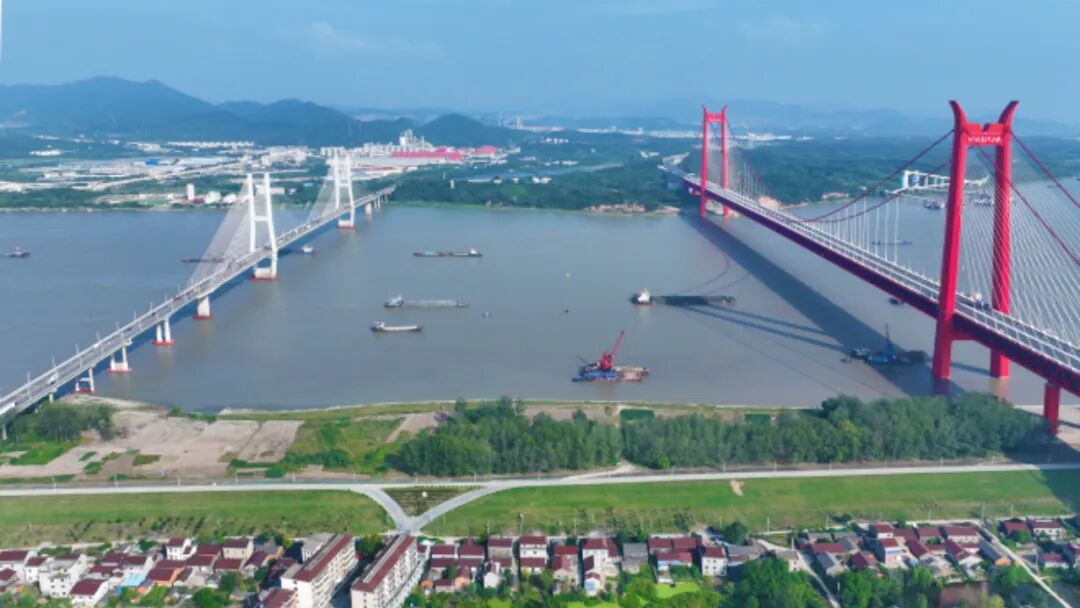
The G3 Tongling Yangtze River Rail-cum-Road Bridge and the Tongling Yangtze River Highway Bridge. Image source: Provided by China Railway Bridge Bureau Group
If we take a broader view of Tongling, the city is located in the central and southern part of Anhui Province and the lower reaches of the Yangtze River. It is at the intersection of the Yangtze River Delta Urban Agglomeration and the Wuhan Metropolitan Area, and is an important node city in the Yangtze River Economic Belt.
Meanwhile, as the intersection of the national trunk Beijing-Taiwan Expressway, Shanghai-Chongqing Expressway, and Beijing-Fuzhou High-Speed Railway, Tongling's position as a transportation hub connecting the east and the west is particularly prominent.
The completion and opening of the bridge not only mark a new breakthrough in cross-river transportation but also inject new impetus into Anhui's in-depth integration into the Yangtze River Delta integration and the development of the Wanjiang Urban Belt.
In fact, as an important province along the Yangtze River's golden waterway, Anhui is not short of bridges spanning the Yangtze River.
With the completion and opening of the G3 Tongling Yangtze River Rail-cum-Road Bridge, 11 cross-river bridges have been built in the Anhui section of the Yangtze River. However, Anhui's cross-river layout continues. Currently, the Chizhou Yangtze River Rail-cum-Road Bridge and the Ma'anshan Yangtze River Rail-cum-Road Bridge are under construction, and the Anqing Haikou Yangtze River Rail-cum-Road Bridge will start construction in November this year.
With so many existing bridges, why does Anhui still need to build new cross-river channels? What kind of ambitions does Anhui have behind this?
01 Realistic Needs
As the longest river in China, the main stream of the Yangtze River stretches for 6,363 kilometers, connecting 11 provinces, autonomous regions, and municipalities directly under the Central Government, including Qinghai, Sichuan, Tibet, Yunnan, Chongqing, Hubei, Hunan, Jiangxi, Anhui, Jiangsu, and Shanghai, and finally flowing into the East China Sea.
While nourishing the civilizations on both sides, the wide river surface of the Yangtze River used to be a natural barrier blocking north-south transportation and economic development. It was not until 1957 when the Wuhan Yangtze River Bridge was completed and opened to traffic that the history of no bridges on the Yangtze River came to an end.
At that time, the completion and opening of the Wuhan Yangtze River Bridge completely reshaped the regional development pattern.
It not only connected the three towns of Wuhan (Hankou, Hanyang, and Wuchang) into one, greatly reducing the cost of personnel and material flow, but also formed the complete Beijing-Guangzhou Railway by connecting the Beijing-Hankou and Yuehan Railways, opening up the north-south transportation artery in China and laying the foundation for resource allocation and industrial division of labor.
With the rapid economic development, the strategic position of the Yangtze River Basin has become increasingly prominent. Li Hongchang, the deputy dean of the School of Economics and Management at Beijing Jiaotong University, told a reporter from Times Weekly that the Yangtze River channel ensures the circulation of raw materials and finished products and maintains the stability of the national and even global supply chains.
"Anhui is not only an important national main grain-producing area, energy, and raw material base, ensuring the transportation of bulk commodities and energy security, but also a manufacturing center. Key industries such as automobiles, steel, electronics, and chemicals are concentrated in the areas along the river, forming a complete industrial chain and supply chain system," he said.
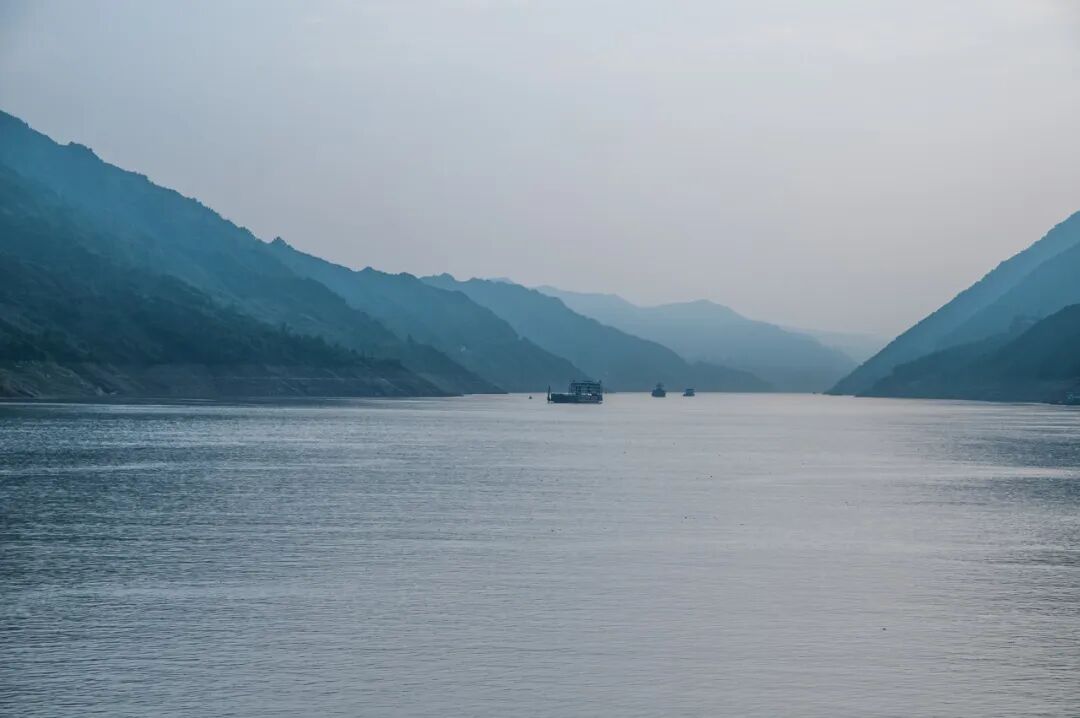
The Yangtze River. Image source: Tuchong Creative
However, compared with the rapid economic and social development, the construction of cross-river channels on the Yangtze River still lags behind.
The "Layout Plan for Cross-river Channels along the Main Stream of the Yangtze River (2020 - 2035)" issued by the National Development and Reform Commission in 2020 pointed out that the total number of cross-river channels is insufficient. In some areas, people still need to make long detours to cross the river, which not only increases logistics costs but also affects shipping safety. Some channels are overloaded, and the cross-river channels in megacities such as Chongqing, Wuhan, and Nanjing are becoming increasingly congested, seriously restricting north-south exchanges.
Therefore, the plan clearly states that by 2025, a cross-river channel system along the main stream of the Yangtze River with appropriate scale and resource conservation should be basically formed, focusing on alleviating prominent problems such as detours to cross the river, ferry interference, and channel congestion. According to the requirements of the integrated development of the Yangtze River Delta, by 2035, 32, 41, and 3 cross-river channels along the main stream of the Yangtze River will be planned and laid out in Anhui, Jiangsu, and Shanghai respectively.
Currently, in the Anhui section of the Yangtze River, with the completion of the G3 Tongling Yangtze River Rail-cum-Road Bridge, there are already 12 cross-river channels, including 11 Yangtze River bridges and 1 cross-river tunnel. With the upcoming construction of the Chizhou, Ma'anshan, and Anqing bridges, there will be 15 cross-river channels in the Anhui section in the future.
It is worth noting that as a transportation artery connecting the Beijing-Taiwan Expressway and running through important cities such as Hefei, Bengbu, and Anqing, the Tongling Yangtze River Bridge has been in operation for 30 years since it was opened to traffic in 1995 and has been in an overloaded operation state for a long time.
In this context, the construction of the new G3 Tongling Yangtze River Rail-cum-Road Bridge is to effectively "reduce the burden" on the existing bridge and relieve the increasingly serious traffic pressure.
Accelerating the construction of cross-river channels is not only an improvement of the transportation system but also a strategic fulcrum for Anhui to break through development bottlenecks and deeply integrate into the Yangtze River Delta.
Economically, the regional development in Anhui is unbalanced. In 2024, among the 16 prefecture-level cities in the province, only Hefei's GDP exceeded one trillion yuan, and there was a "gap" in the range of 600 billion to one trillion yuan. Most cities were still in the range of 200 billion to 400 billion yuan, and problems such as obvious urban-rural gaps and uneven public services were still prominent.
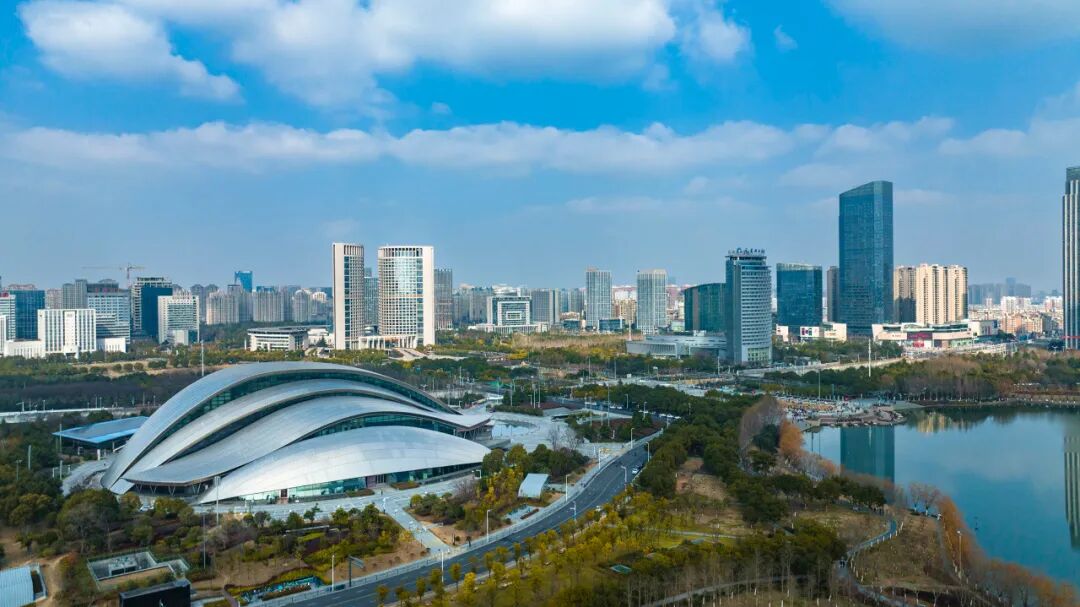
Hefei, Anhui. Image source: Tuchong Creative
In this context, promoting cross-river linkage and implementing transportation first will be the key to promoting the efficient interconnection of people flow, logistics, and capital flow.
Cao Xianzhong, a professor at the Institute of Urban Development at East China Normal University, said in an interview with a reporter from Times Weekly that although the driving effect of cross-river channels on the development of northern Anhui is indirect, it is of great significance.
On the one hand, it opens up a fast logistics channel for northern Anhui to go south, significantly reducing transportation time and cost. On the other hand, it enhances the attractiveness of northern Anhui to undertake industrial transfer.
"With the industrial upgrading in the Yangtze River Delta and southern Anhui, some industries will transfer to areas with lower costs. The improvement of cross-river channels makes northern Anhui an ideal choice. Enterprises can enjoy the local cost advantages and maintain close contact with the core markets in the Yangtze River Delta through the efficient road network, realizing regional coordinated development," he said.
02 Leveraging the Yangtze River Delta
It is not difficult to find from the map that Anhui occupies a special position in the regional transportation network. Whether it is the crisscross highways, the north-south connecting railways, or the shipping routes leading to the sea, it is an important link and key passage for the interconnection between the central region and the Yangtze River Delta.
More importantly, Anhui is exactly located at the "T"-shaped intersection of the coastal economic belt and the Yangtze River Economic Belt, with unique geographical advantages.
With such unique geographical advantages, there is still a controversy about Anhui's "belonging." On the one hand, the surrounding provinces have strong economic strength, and on the other hand, there is an obvious development gap between Anhui and Shanghai, Jiangsu, and Zhejiang. Whether it should be included in the central camp or the Yangtze River Delta region has never had a clear answer.
It was not until the end of 2019 when the State Council issued the "Outline of the Yangtze River Delta Regional Integrated Development Plan" that Anhui was clearly included in the Yangtze River Delta in its entirety.
In fact, before officially integrating into the Yangtze River Delta, Anhui had actively made arrangements. In 2005, Anhui proposed the "eastward development" strategy, aiming to transform its "near-sea" geographical conditions into development advantages "almost as good as being coastal."
To achieve this goal, Anhui focused on two aspects. On the one hand, it accelerated the upgrading of transportation infrastructure to open up connection channels with the core cities in the Yangtze River Delta. On the other hand, it actively explored an industrial cooperation model where R & D and incubation are carried out in Shanghai, Jiangsu, and Zhejiang, and production and transformation are carried out in northern Anhui.
These measures were continuously deepened in the following decade, and the new energy vehicle industry is a microcosm of this path.
Specifically, in the new energy vehicle industrial chain built in the Yangtze River Delta, Anhui, with its automobile manufacturing foundation, forms an efficient division of labor with its sister provinces and cities: Shanghai focuses on the "brain" of automobiles - chips and software, Jiangsu specializes in power batteries, Zhejiang provides integrated die-casting equipment, and Anhui is responsible for vehicle assembly.
This efficient division of labor allows the entire process of new energy vehicle development, from design, parts supply to vehicle assembly, to be completed within the 4-hour transportation circle in the Yangtze River Delta, not only reducing industrial costs but also significantly enhancing overall competitiveness.
The effectiveness of industrial collaboration is directly reflected in the impressive economic data. In the industrial field, in 2023, the operating income of Anhui's above-scale industrial enterprises exceeded 5 trillion yuan, ranking 7th in the country and 1st in the central and western regions, achieving a leapfrog improvement in industrial strength.
In terms of total economic volume, Anhui's growth pace is also remarkable. It joined the "trillion-yuan club" in 2009, exceeded 2 trillion yuan in 2014, reached the 3-trillion-yuan mark in 2018, and has since maintained a steady pace of crossing a trillion-yuan level every three years.
In the first three quarters of 2025, Anhui's GDP reached 3,977 billion yuan, a year-on-year increase of 5.4%, ranking 11th in the country. At the end of September this year, when summarizing the economic development achievements during the "14th Five-Year Plan" period, the Anhui Provincial Development and Reform Commission mentioned that Anhui has entered the ranks of large economic provinces.
It can be seen that Anhui's rapid economic development is achieved by leveraging the Yangtze River Delta to realize efficient linkage and circulation of industries, logistics, and capital.
However, with the accelerating integration, another problem has emerged, that is, the outflow of personnel.
As a traditional labor-exporting province, the scale of Anhui's outflow population cannot be ignored. According to the "China Population Census Yearbook 2020," the number of people flowing out of Anhui to other provinces reached 11.5205 million, ranking second among the 31 provinces in the country, second only to Henan.
In terms of the flow direction, the outflow population from Anhui is mainly concentrated in Zhejiang, Jiangsu, and Shanghai, reaching 3.1399 million, 3.0808 million, and 2.4265 million respectively, accounting for 75% of the total outflow population from the province.
This highly concentrated flow direction reflects, on the one hand, the increasingly close exchanges between Anhui and the Yangtze River Delta region, making cross-provincial living a reality and personnel interaction frequent. On the other hand, it also intensifies concerns about the "talent siphon" effect.
However, the situation has improved in recent years. From 2020 to 2023, the number of people flowing out of the province for more than half a year decreased by 330,000.
Facing the advantages of developed coastal areas in talent competition, how should Anhui continue to enhance its own attractiveness?
Cao Xianzhong believes that Anhui has formed an advantage of leading enterprise clusters in multiple industrial fields. For example, in the chip field, there is Changxin Memory Technologies; in the new display field, there are BOE and Visionox; and in the new energy vehicle field, a number of enterprises such as BYD, NIO, Jianghuai, and Chery have gathered. These complete industrial chains provide a large number of employment opportunities for talents.
In addition, the cost of living in Anhui is relatively low. Taking Hefei as an example, it forms a competitive edge by offering a different lifestyle from the high-pressure and high-cost living in coastal cities. Coupled with special talent programs such as "Gathering Talents in Anhui" and a series of policy supports such as housing purchase subsidies, living allowances, start-up funds for entrepreneurship, and equity incentives, it effectively solves the concerns of talents about settling down and further enhances Anhui's attractiveness to talents.
This article is from the WeChat public account "Reading the City Studio." Author: Alimire. Editor: Li Guang. Republished by 36Kr with permission.