Starting from Xi'an: The Chinese Starting Point of XR Films
In October in Xi'an, the boundary between virtuality and reality has once again become blurred.
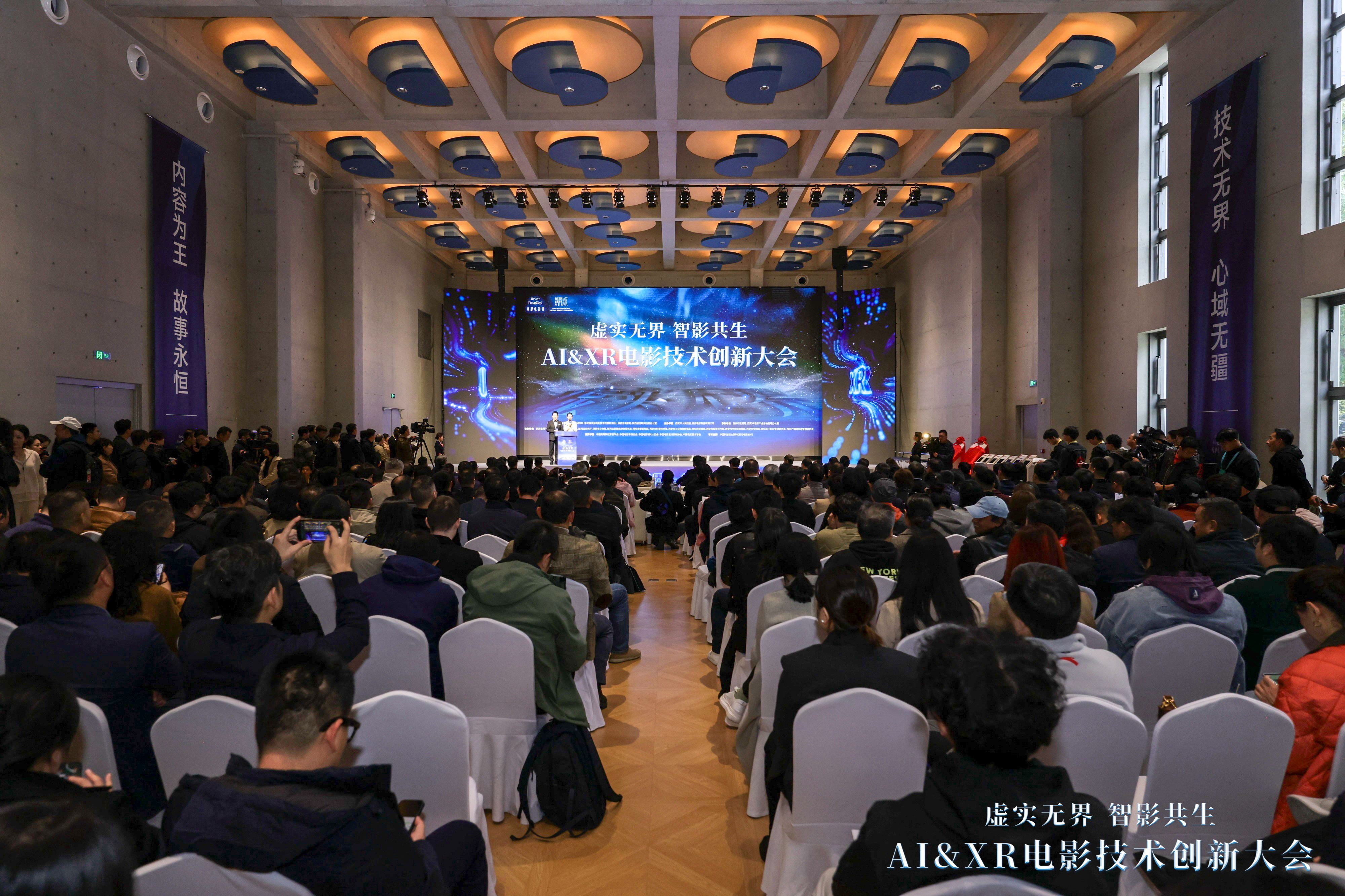
On October 22nd, the "Boundaryless Virtual and Real, Symbiotic AI and Cinematic Images - AI & XR Film Technology Innovation Conference" was held at the Xi'an XR Film Industry Base. Guests from the National Film Administration, the Publicity Department of the Shaanxi Provincial Party Committee, the Xi'an Municipal Government, and the national film, technology, and education sectors gathered together to witness a systematic leap of Chinese cinema in the field of the integration of artificial intelligence and virtual reality. From the launch of the "Yingpu · Chinese Film AI - Assisted Creation Platform", to the inauguration of the country's first "Virtual Reality Film Technology Innovation Center" and the "Xi'an XR Industry Innovation Center", and then to the debut of the "Boundaryless Cinema", a complete system from creation, technology to screening was outlined at this moment, jointly forming a real - life picture of technological innovation in Chinese cinema.
The reshaping of the film industry has sent a signal. As Mao Yu, the executive deputy director of the National Film Administration, said in his speech at the event, "The future of cinema lies in innovation, and technology provides the impetus for innovation."
Virtual reality technology is becoming the engine for the rebirth of film art and industry: from the compression of the two - dimensional screen to the expansion of the three - dimensional space, for the first time, audiences are not just "seeing the story" but are invited to "enter the story".
I. Technology and Art: When Cinema Begins to "Grow Space"
Under the combined effect of AI and XR, cinema is no longer just a visual art but has become a re - creation of "space".
The emergence of virtual reality films has enabled audiences to break free from the passive viewing posture and start to participate in the narrative as "present participants". The "Progressive XR Large - Space" and the "Sit - and - Watch Immersive Cinema" are becoming the two main forms of this new narrative system.
"Virtual reality films break the traditional two - dimensional compression and place audiences in a real three - dimensional space, transforming them from onlookers to participants." Zhao Wentao, the chairman of the Western Film Group, pointed out at the exchange meeting.
The core of this change lies not in stronger visual impact but in the shift of the narrative mode: the director's "shot language" no longer exists within the frame but is translated into the comprehensive scheduling of sound, light field, potential energy control, and spatial composition. The audience's line of sight is no longer passively following the editing rhythm but is guided to flow in space.
In the subsequent industry discussion session, deeper - level issues of shifting from "technology demonstration" to "industry structure" were discussed. Almost all participants reached a consensus: virtual reality is not a side branch of cinema but the next reconstruction of the film industry system. In the past century, the technological iteration of cinema has always revolved around "pictures": from film to digital, from 2D to 3D, but XR has interrupted this linear evolution. It is no longer an expansion of the frame but a reorganization of the narrative structure.
Industry experts pointed out that the core of XR is not to make cinema "more real" but to reorganize it: the director's creative logic, the actors' performance methods, and the audience's perception paths will all be rewritten. The narrative dimension of XR requires creators to understand the linkage laws of space, potential energy, light field, and emotion, which means that for the first time, the film industry needs to share the same "crew list" with algorithm engineers, interaction designers, and hardware developers. In this sense, XR is not a superposition of new technologies but a "rearrangement of industrial division of labor".
The release of the Western Film's "Boundaryless XR Cinema" provides a practical implementation plan for the "sit - and - watch narrative". Audiences can control the movement of the seats according to the director's settings and experience the sense of direction in the narrative while being immersed. The customized head - mounted devices support binocular 8K, ultra - wide field of view, and spatial audio, and also integrate gesture recognition and eye tracking, achieving a cinematic immersive experience.
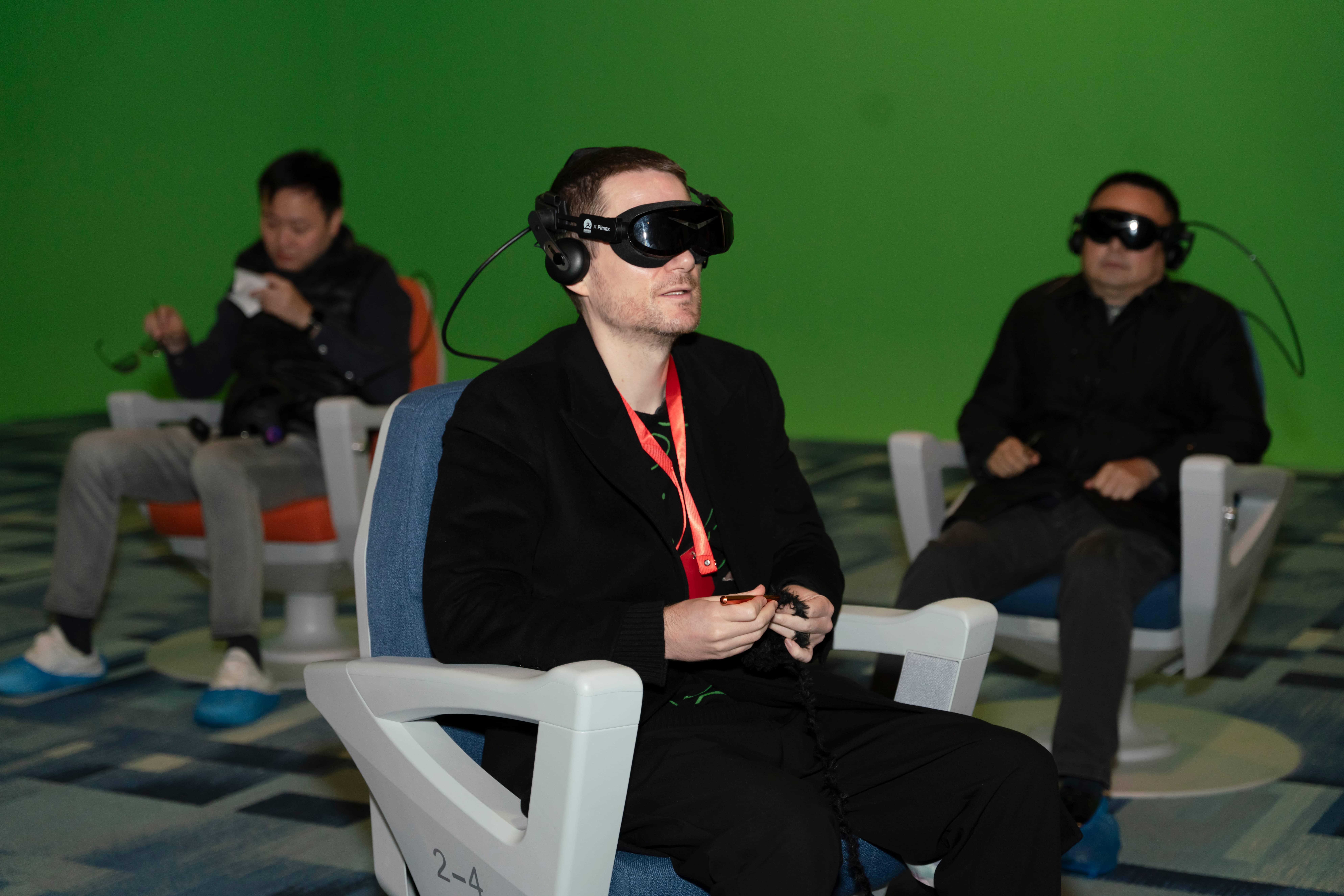
Mao Yu described this experience as "guided freedom" in his speech. The director regains the right to tell the story in space, and at the same time, the audience is given the power to explore.
This means that virtual reality films are completing the transformation from "novel experience" to "mature narrative". It inherits the emotional depth of film art and opens up new expression dimensions, making technology truly become the language for the extension of art.
II. From Concept to Reality: A Self - Portrait of a City's XR Ecosystem
In this emerging wave, the Western Film Group and the Xi'an Municipal Government have jointly drawn an industrial ecosystem map: an XR film ecosystem constructed around the four dimensions of "content, technology, talent, and capital".
The 12,000 - square - meter Xi'an XR Film Industry Base has become a reality from a blueprint; the country's first "Virtual Reality Film Technology Innovation Center" was inaugurated in the Western Film Park, becoming the industry's first authoritative testing and service institution for virtual reality films; at the same time, the "Xi'an XR Industry Innovation Center" was also established, focusing on technological breakthroughs and industrial incubation, and becoming a key support for Xi'an to build itself into a pioneer city in the virtual reality industry.

Ye Niuping, the mayor of Xi'an, said at the conference: "Facts have proved that making XR films requires not only technology and resources but also dreams and feelings. Now the XR film industry and traditional cinema are 'blooming on two branches', and we need to transform niche experiences into mass consumption."
What he meant by "blooming on two branches" refers to the parallel prosperity of traditional cinema and virtual reality films. One continues to delve deep into the aesthetic of on - screen narrative, while the other explores the boundaries of "spatial narrative" brought by new technologies.
The industrial structure of XR films is far more complex than that of traditional films. From production, encryption, distribution to screening, almost every link requires a new set of software and hardware systems.
The approach of the Western Film Group is to re - introduce innovative forces into the existing film industry system to create a new ecosystem. The technology base is jointly built by enterprises such as CEC Cloud, Pimax Technology, Lijiang Chair Industry, BYD, and Silexica; on the content side, it cultivates talents together with film schools; on the financial side, an industrial development fund is established; on the operation side, it explores commercialization paths relying on the "Boundaryless XR Cinema".
The entire system, configured as "innovation center + industrial park + service platform + application scenario", forms a closed - loop. "We are not just making a film but building a complete ecosystem for virtual reality films," Weng Chao, the chairman of Boundaryless Technology, told 36Kr.
As an important technical support for this conference, Boundaryless Technology behind the Boundaryless XR Cinema runs through almost the entire chain of the XR film ecosystem. It is a technology enterprise key - incubated by the Western Film Group, leading the R & D of the core software and hardware of the Boundaryless Cinema, and undertaking the "last mile" from content to experience, making virtual reality films truly enter the commercial stage of being screenable and replicable.
In this city, XR is not just a technology but an industrial language. It integrates hardware manufacturing, culture and art, film and television education, technological innovation, and capital flow into a new "cultural and technological industrial entity", making Xi'an the origin of China's XR film industry and giving Chinese virtual reality films its own industrial fulcrum.
III. Industry Standards: From "Experiment" to "Order"
The prosperity of technology must be based on the existence of standards.
The Western Film Group is one of the main participating enterprises in the drafting of the virtual reality film technology standard system being led by the industry management agency. The industry technical standards will establish a film - level "quality scale" in aspects such as content production, hardware adaptation, playback specifications, and testing and certification.
"Only through standardization and regularization can marketization and scale - up be achieved," Ye Niuping emphasized at the conference.
This judgment has also received a response at the national level. Mao Yu introduced that the "Notice of the National Film Administration on Promoting the Orderly Development of Virtual Reality Films" has promoted the filing of nearly a hundred virtual reality films across the country, and 10 have passed the review; in places such as Guiyang, Shanghai, and Henan, several cinemas have piloted the screening of virtual reality films, and the cumulative box office during the National Day holiday exceeded one million yuan.
This means that virtual reality films are completing the leap from "project - based" to "industrialized".
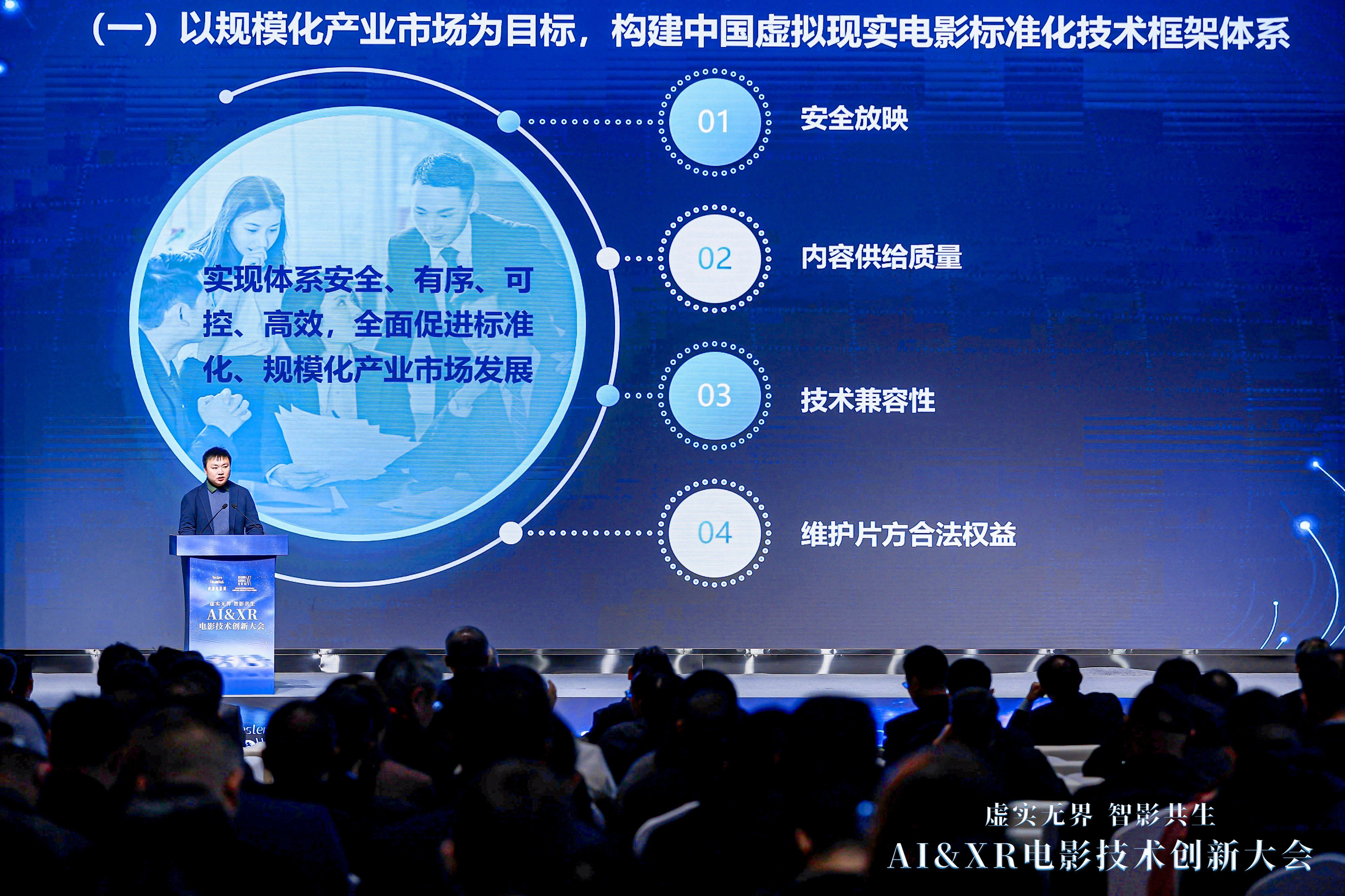
The "Virtual Reality Film Technology Innovation Center" jointly built by the Western Film Group and the China Film Science and Technology Research Institute (the Film Technology Quality Inspection Institute of the Publicity Department of the CPC Central Committee) undertakes functions such as technological R & D, application and promotion, standard formulation, and software, hardware, and content testing, evaluation, and certification. It is not only a national - level platform but also the industry's first authoritative certification system, laying an institutional foundation for subsequent marketization.
What standards bring is a sense of order and cultural confidence. When Chinese filmmakers, engineers, and policymakers jointly discuss the production specifications of virtual reality films, this industry has for the first time its own discourse system.
IV. From Virtual to Real: The Next Stop of Cinema
If the competition in cinema in the past decade was about visual language, then in the next decade, the focus of competition will be on "immersive experience" and "intelligent creation".
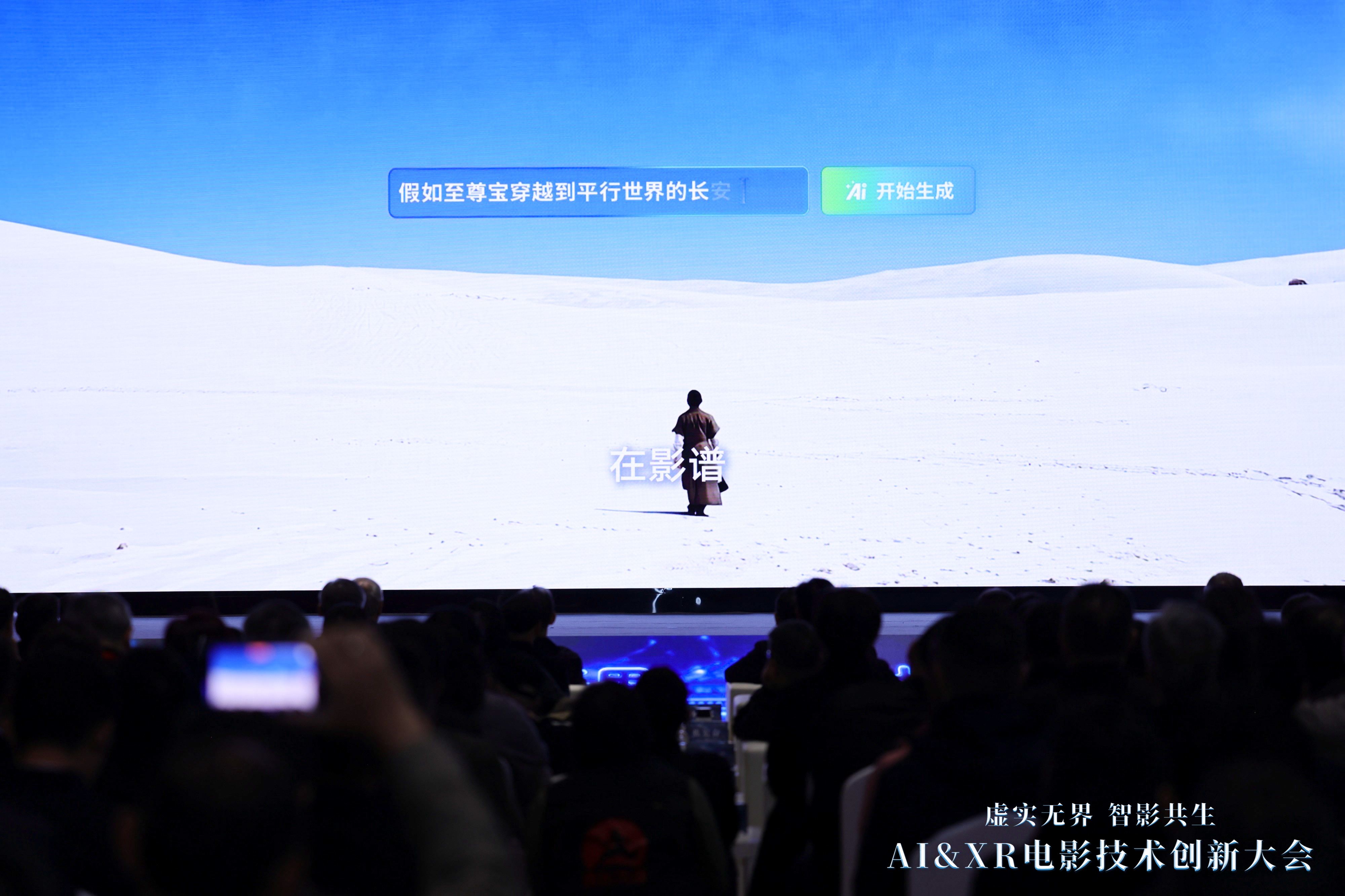
In the field of AI, the "Yingpu · Chinese Film AI - Assisted Creation Platform" launched by the Western Film Group has become an important breakthrough in the industrialization of Chinese cinema. It enables AI to become the "second brain" of screenwriters, directors, and producers, with functions such as text generation, scene composition, project scheduling, and cost control.
More importantly, this platform is extending to XR narrative. According to the Western Film Group, the XR module of Yingpu AI, including the spatial narrative script and three - dimensional pre - viewing system, is in the final stage of development and will achieve a natural transition from two - dimensional to three - dimensional and from linear to spatial narrative. This means that AI can not only write stories but also "understand stories in space".
As Sun Daguang, a member of the Standing Committee of the Shaanxi Provincial Party Committee and the head of the Publicity Department, said in his speech at the conference: "Digital technologies such as artificial intelligence and virtual reality are profoundly reshaping the cultural industry and becoming an important engine for promoting industrial transformation."
When AI becomes the "thinking center" of creation and XR becomes the "sensory shell" of presentation, cinema has entered a brand - new system, where technology and art, algorithms and imagination, and narrative and space converge again.
In the future, cinema will no longer be just an art of "watching" but an art of "being present". It may take place in a cinema or exist in head - mounted devices and immersive spaces; its creators are both directors and algorithms.
When the audience becomes part of the narrative, when algorithms learn to understand emotions, and when a city builds a new film industry map with infrastructure: cinema has completed another evolution.
The essence of cinema has never been "seeing" but "believing".
When technology is no longer just a tool but becomes part of the narrative, and when the audience is no longer just a recipient but a co - builder of the world, the vitality of cinema is pushed to a higher dimension.
The story of Xi'an is just the beginning.
Driven by the combination of AI and XR, a new era of cinema is being filmed, rendered, and imagined.