Zhu Jiang of Caitong Leasing: The financial leasing industry has entered a transformation period, and intelligent agents are exploring the "New World" of asset operation.

In 2025, the financial leasing industry stands at a crossroads of "transformation".
Facing the shortage of assets and the continuous narrowing of interest spreads, the business model driven by capital cost and relationships has hit the ceiling of growth and efficiency.
In the traditional financial leasing world, account managers often have to manually process mountains of contracts and documents. This is an industry highly dependent on interest spreads and the "human - wave tactic", with fierce homogeneous competition. The bottleneck of operational efficiency is obvious, and it has become increasingly difficult to simply play the role of "capital provider".
It is precisely during this arduous journey that the financial leasing industry has welcomed the "era of AI reshaping everything".
In Jiangsu, Wuxi Caitong Financial Leasing Co., Ltd. (hereinafter referred to as "Caitong Leasing"), a subsidiary of Wuxi Urban Construction Development Group, with an asset scale of over 53 billion yuan and ranking first among commercial leasing companies in the province, is providing an entry point for AI application and intelligent transformation through its new "Intelligent Agent Plaza" platform.
"For us traditional financial practitioners, AI is not just a trend or a gimmick, but one of the most effective tools we can find at present."
Zhu Jiang, the general manager of Caitong Leasing, told 36Kr that the future strategic development direction is clear: in the continuous exploration and practice of new technologies such as AI, to transform from a "capital provider" to an "asset operator".
Seeking Change: The Only Way in the "Asset Operation Era"
In July last year, Caitong Leasing began to invest in AI. By integrating internal and external demands and technological resources, it incorporated the conceptual ideas into the substantial strategic layout.
Meanwhile, they found that under the common inherent anxiety in the industry, AI has more opportunities for implementation than expected. The inherent development bottleneck in the industry lies not only in the backward operation mode but fundamentally in the need for new value - releasing points in the operation model.
Zhu Jiang pointed out the core problem sharply: "In the past, it was basically the creditor's rights thinking, aiming to solve the capital problems of large customers."
Under the dominance of traditional creditor's rights thinking, financial leasing companies have generally fallen into the homogeneous competition of "earning capital price differences", and the profit margin has been continuously compressed. This model not only has relatively meager profits but also leads to excessive concentration of risks and values on customer credit and manual services rather than the assets themselves.
Facing this "dilemma", Caitong Leasing made a clear judgment: it must sink into the industry and deeply cultivate asset operation.
"Now, the understanding of financial leasing in our industry is gradually becoming more industrialized and internationalized, and is transforming towards niche areas and the operation end. The future business form will be very different from traditional financial leasing institutions." Zhu Jiang explained the internal logic of this strategic shift.
This means that Caitong Leasing is no longer just a capital provider but will "step directly into the arena", go deep into the forefront of asset management, and provide customers with comprehensive solutions beyond capital. In Caitong Leasing's practice, AI is an essential "weapon", and its capabilities run through three core links:
First, process massive and heterogeneous asset data. As the business sinks and customers become more dispersed, the complexity and quantity of management objects increase exponentially. Relying on a simple increase in the number of people is no longer sustainable. Taking the back - end management of assets in the new energy field as an example, Zhu Jiang said that for high - end equipment with a relatively high unit price, both asset safety and compliance management rely on a large amount of data analysis and calculation. There may be billions of data volumes every year in the future, and it must rely on AI for efficient processing.
Second, drive the automation of internal processes and intelligent decision - making. Caitong has embedded intelligent agents into the business approval process, covering the front, middle, and back ends. This not only improves operational efficiency but more importantly, AI can handle standardized processes, freeing business managers' energy for more complex and non - standard decision - making, which also reflects the differentiated competition of financial leasing institutions.
Third, achieve penetrating and refined risk control management. Traditional risk control lags behind business, while AI can achieve real - time perception and prediction of asset status. For example, by continuously monitoring and analyzing the operation data (such as operating rate and health status) of objects (such as vehicles and battery assets), AI can actively warn of risks, truly transforming risk control from "looking at reports" to "managing assets".
Although the value of AI is obvious, introducing intelligent agents into the financial leasing industry poses challenges far beyond technology.
A common misunderstanding is to regard intelligent agents as an isolated product, expecting an intelligent agent to serve as a demand entry point and solve all business problems. However, the real difficulties are as follows: First, the financial leasing business process is complex and the data standardization level is low. Intelligent agents need to be deeply integrated into the existing workflow rather than simply added. Second, industry data is sensitive, and the requirements for the reliability and compliance of intelligent agents are extremely high. Deploying them is more like introducing a "super employee" that needs continuous training and assessment rather than a traditional digital application.
Therefore, whether it is a single internal intelligent agent or the integrated "Intelligent Agent Plaza" platform launched by Caitong, its essence is not a single product but a base for AI capabilities. Its core value lies in the reconstruction of business processes and the improvement of ecological collaboration efficiency through the flexible configuration of modular and reusable Agentic AI capabilities.
Laying the Foundation: The "Open Road" of the Intelligent Agent Plaza
In Caitong's plan, the evolution of AI follows a clear "three - step" path:
First, it serves as a powerful internal management tool, automatically processing processes such as resume screening and compliance approval, enabling employees to "strengthen themselves". Then, it becomes an entry - level platform directly serving customers, actively providing customers with operation and maintenance suggestions and asset scheduling plans through data analysis.
In the future, the ultimate form of the "Intelligent Agent Plaza" platform will be a connector for an open ecosystem.
In the process of transforming from a platform to an ecosystem, by integrating modules such as leased asset management, trading, and risk control, the Intelligent Agent Plaza can enable traditional leasing institutions in the ecosystem to provide comprehensive solutions for their industrial customers, transforming one - time "single financing" behaviors into in - depth cooperative relationships throughout the entire life cycle.
Zhu Jiang has a profound insight into this. He pointed out: "Second - rate teams build platforms, while first - rate teams build ecosystems." Today, Caitong Leasing has achieved its strategy by climbing the ladder of AI to reach the other side of an ecosystem - level enterprise.
In engineering design, Caitong is committed to encapsulating complex AI capabilities into easy - to - use intelligent agents. Its goal is to enable business personnel to call professional AI capabilities to process data and assist decision - making through simple interactions. Zhu Jiang emphasized that they always "precisely enter from replicable high - value scenarios, are business - oriented, and gradually deepen based on scenarios and demands" rather than blindly showing off technology.
This strategy of starting from actual pain points and "taking small steps quickly" ensures that intelligent agents can be firmly embedded in the financial leasing business process and create clearly visible value.
In terms of the technological path, Caitong adopts an efficient "combination of internal and external" model. Externally, it cooperates with large companies such as Volcengine to introduce mature AI development platforms and infrastructure. Internally, it focuses on the in - depth integration of business logic and core data and independently controls the development of key modules. This collaborative model ensures both the advancement of technology and the close fit between the solution and the business scenario.
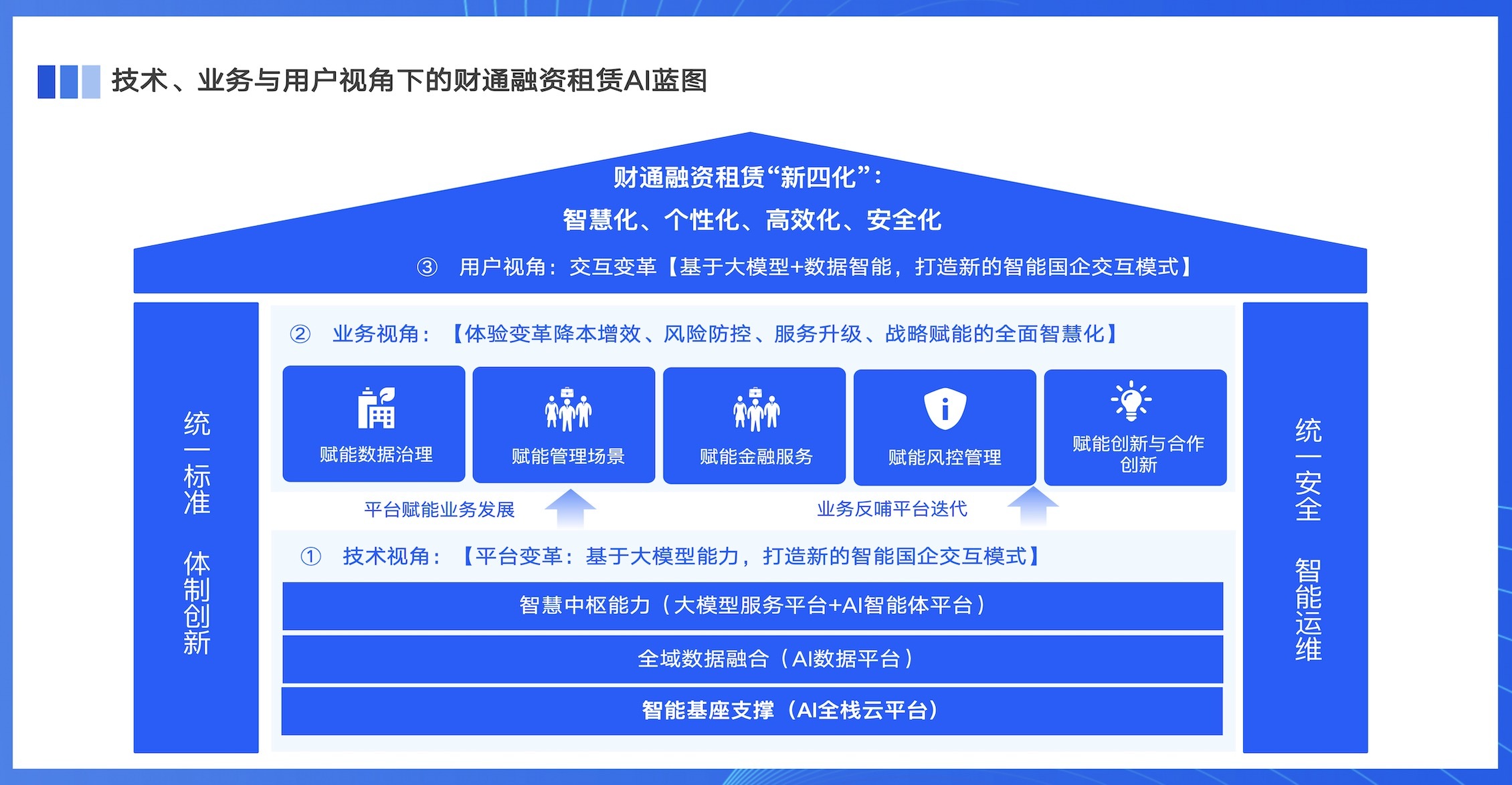
It is precisely by virtue of this practical implementation path that Caitong quickly transforms general AI capabilities into "proprietary intelligence" in the financial leasing industry, seizes the precious time window to promote the large - scale application of intelligent agents from concept verification, and takes the lead in the industry to achieve the leap from "talking about AI" to "using AI".
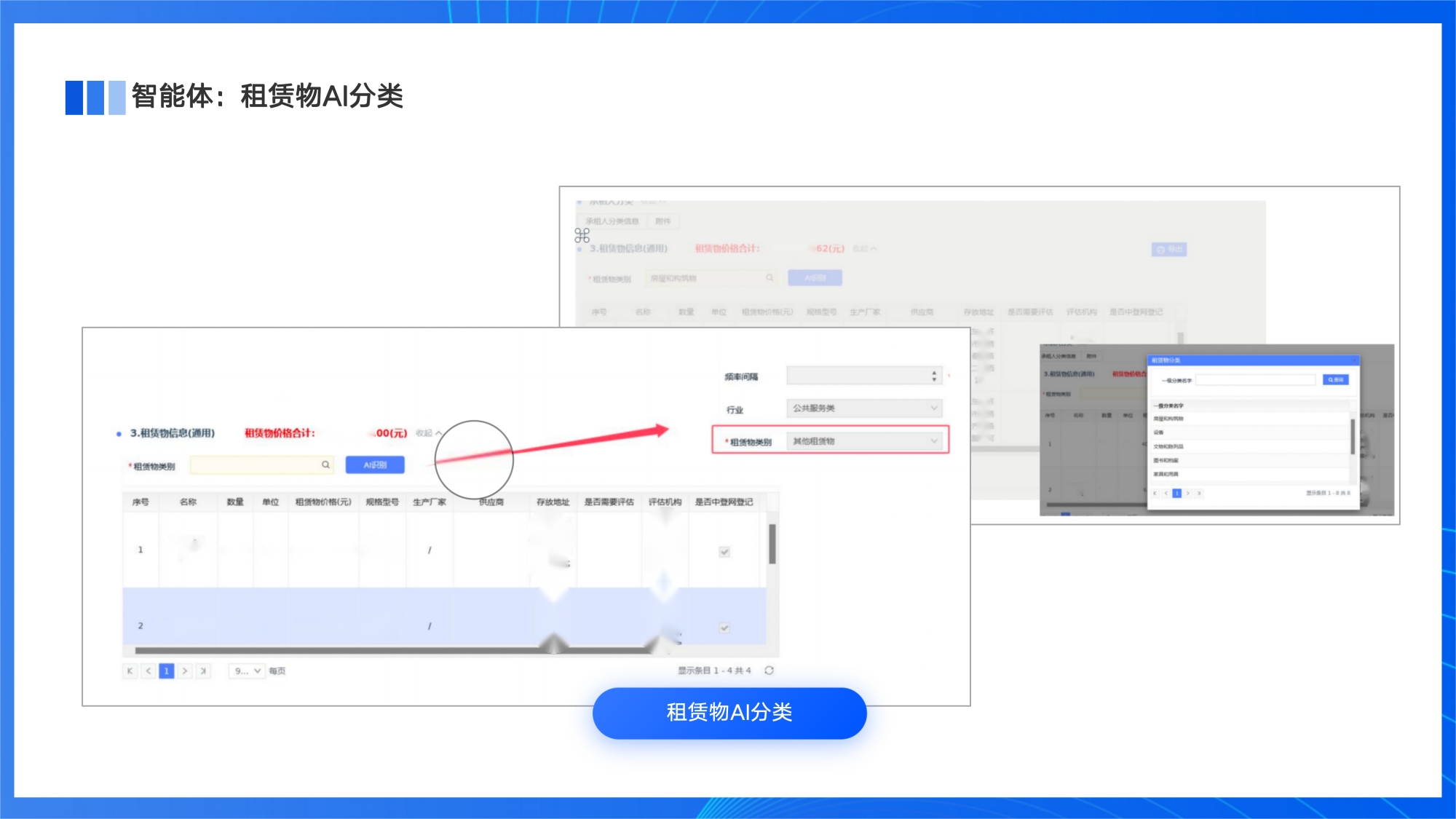
The capabilities of the Intelligent Agent Plaza platform are already clear in actual business. At the internal governance level, AI is systematically improving operational accuracy and efficiency - from the robot that compresses the resume screening time from "five minutes" to "five seconds", to the approval assistant that automatically determines the compliance path, and then to the system that accurately classifies leased assets according to national standards. Artificial intelligence has freed employees from a large amount of basic work, achieving the initial goal of "strengthening themselves".
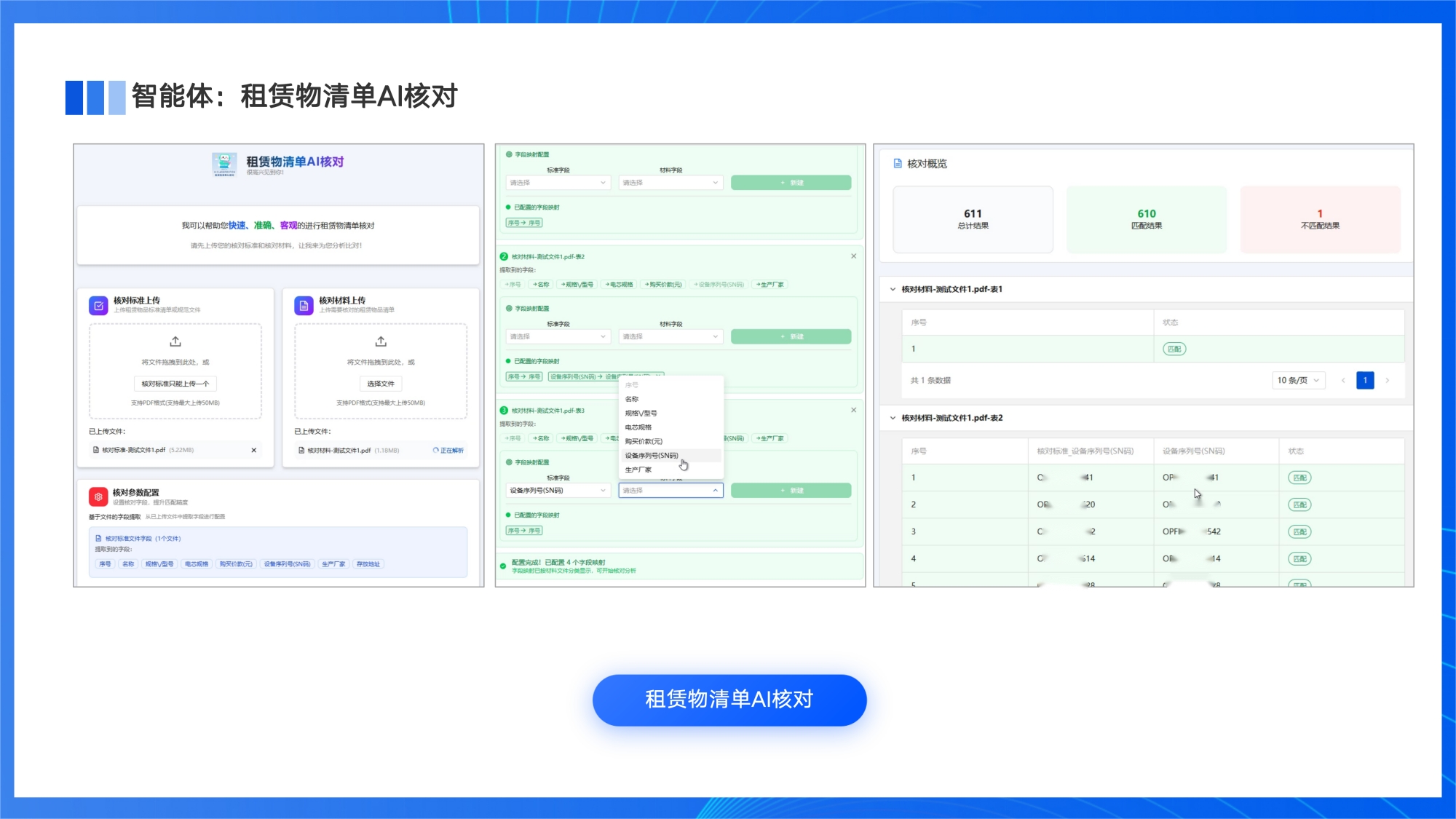
A more profound transformation has taken place in the field of asset operation. The platform realizes the full - life - cycle monitoring of assets such as new energy batteries and medical equipment through real - time processing of Internet of Things data. Intelligent agents can not only efficiently complete health assessment and risk warning but also actively schedule assets to optimize the operational efficiency of the client side, transforming risk control from passive review to an active value - creating link.
This series of capabilities ultimately points to an unprecedented expansion space for business boundaries. The platform provides a reliable basis for the evaluation and management of high - value and non - standard equipment leasing, making it possible to lease what was previously "unrentable".
More importantly, it lays the data foundation for "asset exchange pricing" among peers. As Zhu Jiang envisioned in the ecological blueprint, Caitong is using the power of AI to evolve from an independent service institution into an "ecological hub" that connects multiple parties and activates asset liquidity.
Reconstruction: The Inspiration and Value Boundary of the "Caitong Model"
Caitong's promotion of the Intelligent Agent Plaza from "self - use" to "openness" also enables the value of intelligent asset operation to transcend the enterprise boundary.
This phenomenon of leading enterprises actively building an "industry - level AI capability base" is emerging in various industries today. It also means that in the Agent era, the roles of enterprises are being reshaped.
Leading institutions like Caitong are no longer satisfied with being just a capital channel. Instead, they want to become an indispensable "operation consultant" for customers through efficient, flexible, and refined technology and services. Zhu Jiang believes that as a financial leasing institution, Caitong's future value lies in systematically "solving the enterprise's reporting problems and survival problems". That is, from financial optimization to operational efficiency improvement, it provides third - party support throughout the enterprise's life cycle.
In this process, Caitong's accumulation and governance of massive asset operation data have themselves spawned new "strategic assets", which not only provide a decision - making basis for current risk control and operation but also open up the imagination space for future data - value - added services for peers and the industrial chain.
Caitong Leasing's practice also reveals a reference path for the "AI - transformation" of other industries: in traditional industries such as financial leasing, the value of AI is not limited to cost reduction, efficiency improvement, and the enterprise's own intelligence. It is also the key infrastructure for reshaping the business model and breaking through the value ceiling.
The Caitong model has proven that in the homogeneous competition caused by creditor's rights thinking, rather than getting involved in the involution, actively opening up new markets such as asset collaboration and data services is the winning way for long - termism.
To achieve this "ultimate vision", it is also necessary to cooperate with industrial parties, peer institutions, end - customers, and technology manufacturers to jointly develop intelligent agents in specific vertical scenarios, so as to solve the data island and scenario - based challenges that a single role cannot overcome.
This ecological openness also reflects the common "ambition" of implementing intelligent agents in various industries today: to reconstruct the value distribution of the industrial chain with the "tailwind" of technology and bring the industry into a new stage of co - construction, co - sharing, and co - existence.
However, the road ahead is not smooth. The AI - transformation exploration of "Caitong - like" enterprises is destined to be a continuous battle. This means that enterprises must maintain a deep understanding of both industry knowledge and technological evolution in the numerous and complex scenarios of traditional industries and have the tenacity to keep trying and making mistakes. At the same time, they also need to face the data and algorithm barriers brought by AI as a new core competitiveness.
The AI - transformation process of the financial leasing industry is still ongoing, but Caitong has partially verified the great potential of AI in reshaping the business model in the traditional financial format. This starting point has made it a benchmark worthy of long - term attention.
In the intelligent coordinate system, the real transformation does not start with technology but with the original motivation of enterprises to seek value breakthroughs. Only when computing power sinks deep into the industry can this motivation find a carrier for progress.