Having tasted the benefits of cost reduction, Amazon plans to replace 600,000 human jobs with a robot army.
While people are still worried about whether AI will replace human jobs, tech giants have quietly started to expand their layout in robotics.
According to a leaked document cited by The New York Times, tech giant Amazon plans to replace more than 600,000 jobs in the United States that would otherwise be filled by human employees with robots by 2033.
It is reported that Amazon's robotics team plans to automate 75% of the company's operations, and the core driving force behind the automation strategy is cost reduction. Data shows that after automation, Amazon can save $0.3 per item shipped, and the company can save $12.6 billion in costs from 2025 to 2027 alone. Based on this calculation method, the company estimates that the sales volume of goods will double by 2033, with higher profits and lower labor costs.
Meanwhile, the plan to cut human jobs is also advancing. Before 2027, 160,000 new jobs that would have been created will be eliminated, and by 2033, more than 600,000 jobs will have been replaced by robots in total. The leaked materials also show that Amazon's senior management is considering participating in community projects to defuse the social backlash caused by job losses.
Obviously, Amazon's senior management is well aware that automation will cause concerns about unemployment and public sentiment from society.
To relieve external pressure, internal documents show that there are hidden public - relations skills. Amazon internally suggests avoiding direct use of terms such as "artificial intelligence" and "automation", and prefers to use "advanced technology". It even considers using words like "cobot" to downplay the idea of machines replacing humans. At the same time, the company claims to have trained 700,000 employees to transition to technical positions, and the case of Neisha Cruz, a picker in Connecticut, whose salary tripled after the transition, is often widely publicized within the company.
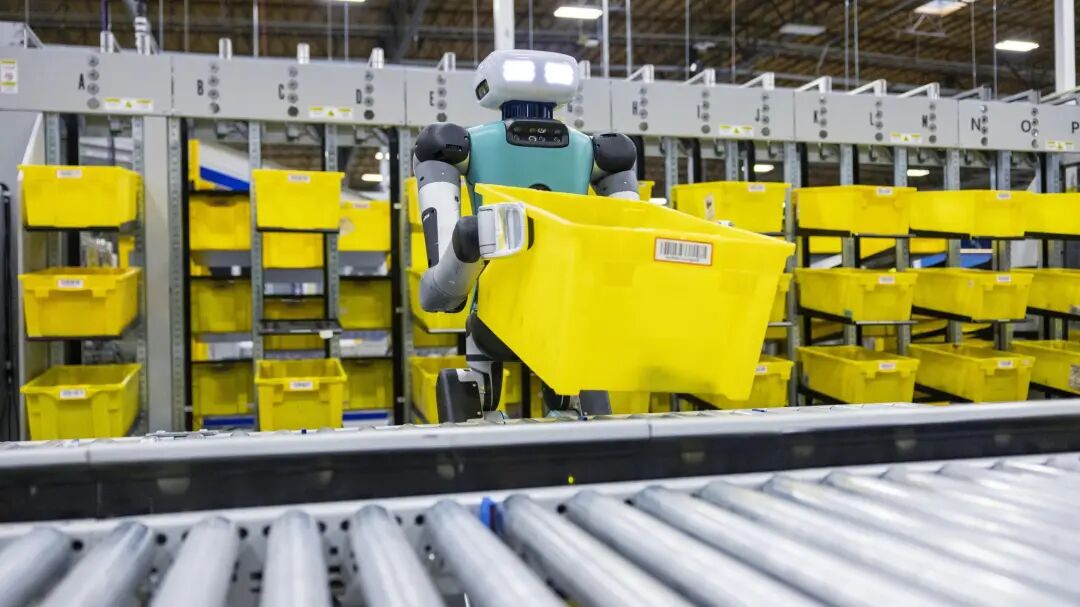
Actually, as early as July this year, Amazon announced that it had deployed its one - millionth robot in its global warehouses. Behind this milestone, Amazon's robot army has long had the ability to replace warehouse workers.
For example, in May this year, Amazon launched the two - armed robot Vulcan, which has tactile perception capabilities. Through force - feedback training, it can handle 75% of the inventory goods and has completed 500,000 orders in warehouses in the United States and Germany. After being paired with the generative AI model DeepFleet to optimize the path, the operating efficiency of the robot has increased by another 10%.
In practical applications, the "Next - Generation Logistics Center" in Shreveport, Louisiana, has become a real - world example of automation. More than 70 robotic arms dominate the sorting and packaging process, which not only increases the goods turnover speed by 25% compared with traditional warehouses but also reduces the number of employees by a quarter compared with the non - automated model. Currently, 75% of Amazon's global delivery tasks are already being carried out with the participation of robots.
Statistics show that the average number of employees in Amazon's global warehouses has dropped to the lowest in recent years, and the number of packages handled by each employee per year has soared from 175 in 2015 to 3,870. Behind the increase in efficiency actually reflects the change in the human - resource structure.
Some professionals analyze and support that Amazon's automation transformation is not only about its own interests but may also become a trendsetter for the entire industry, triggering a chain reaction across the United States.
Daron Acemoglu, the winner of the 2024 Nobel Memorial Prize in Economic Sciences, has issued a warning: "If Amazon's automation model is profitable, it will quickly spread to industries such as Walmart and FedEx." He is worried that this company, which was once a job creator, may become a "job destroyer".
This article is from the WeChat official account "Meku.com". Author: jh. Republished by 36Kr with permission.