Your gasoline-powered car is saved! Sunlight + air + water = gasoline. A startup team from the alma mater of Einstein. The factory is already in operation.
There is indeed a serious scientific approach to turning water into oil.
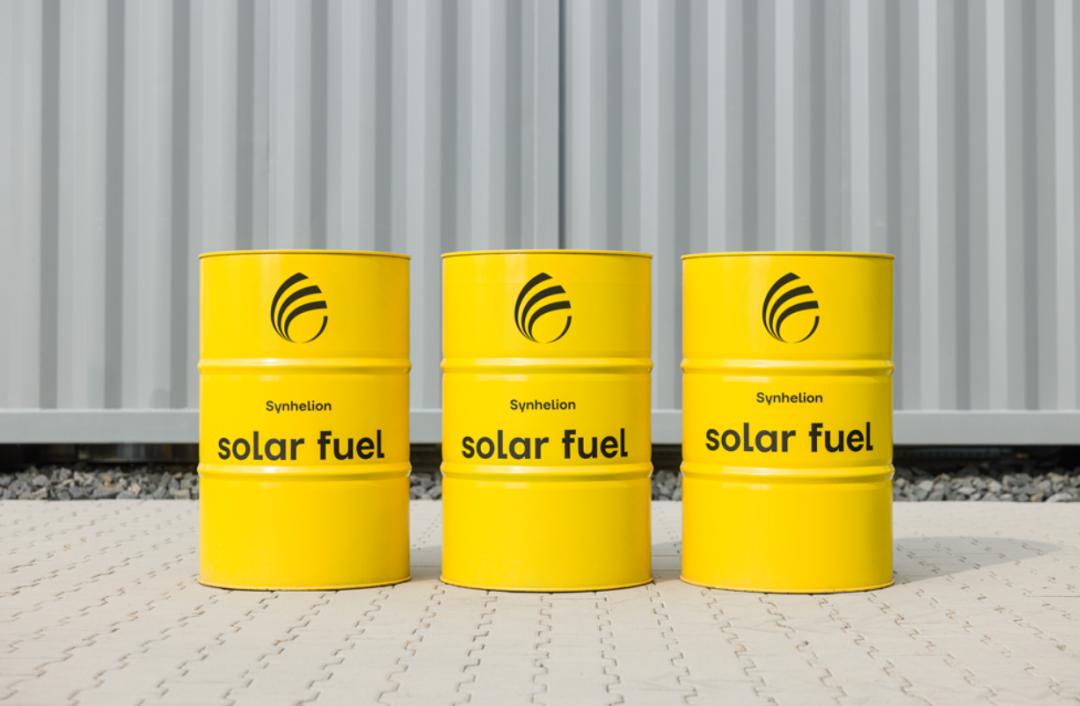
A startup team from ETH Zurich, the alma mater of Einstein, recently completed a sensational scientific experiment. They can produce real gasoline that can be used in fuel vehicles using only sunlight, carbon dioxide from the air, and water, without any engine modifications.
△
This technology has been successfully verified in the factory they built, and the produced gasoline has been filled into fuel vehicles and driven on the road.
Once large-scale mass production is achieved, it will change not only the cost of oil and the energy landscape but also potentially the future of humanity.
So, what kind of research is this exactly?
How to "put sunlight into the fuel tank"?
The latest progress comes from a clean technology company called Synhelion. The entire team is from ETH Zurich.
The solar technology they introduced is not the traditional solar panel power generation but using thermal energy to drive chemical reactions.
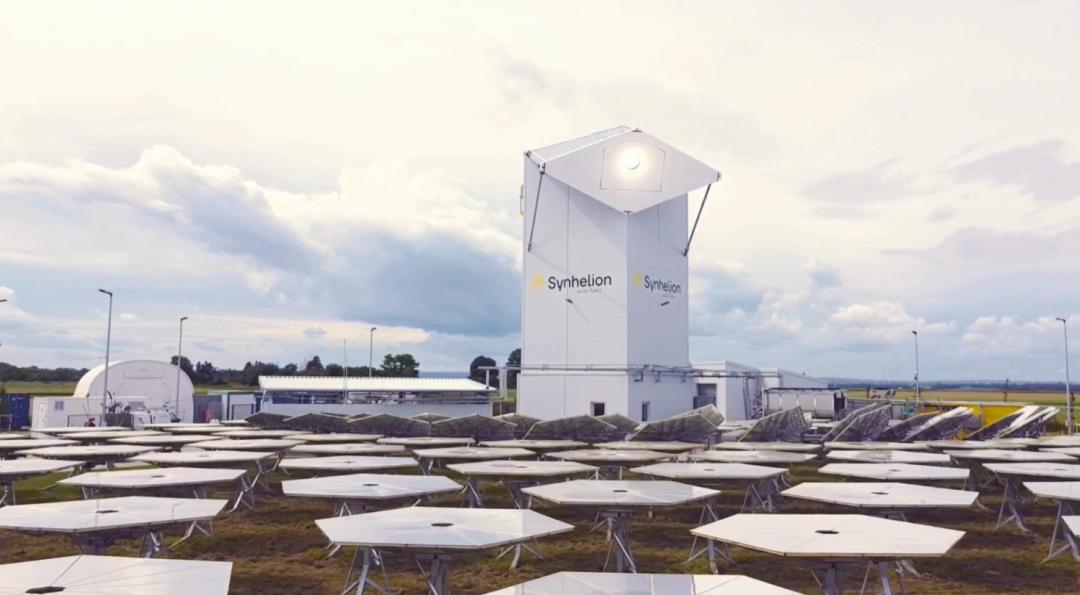
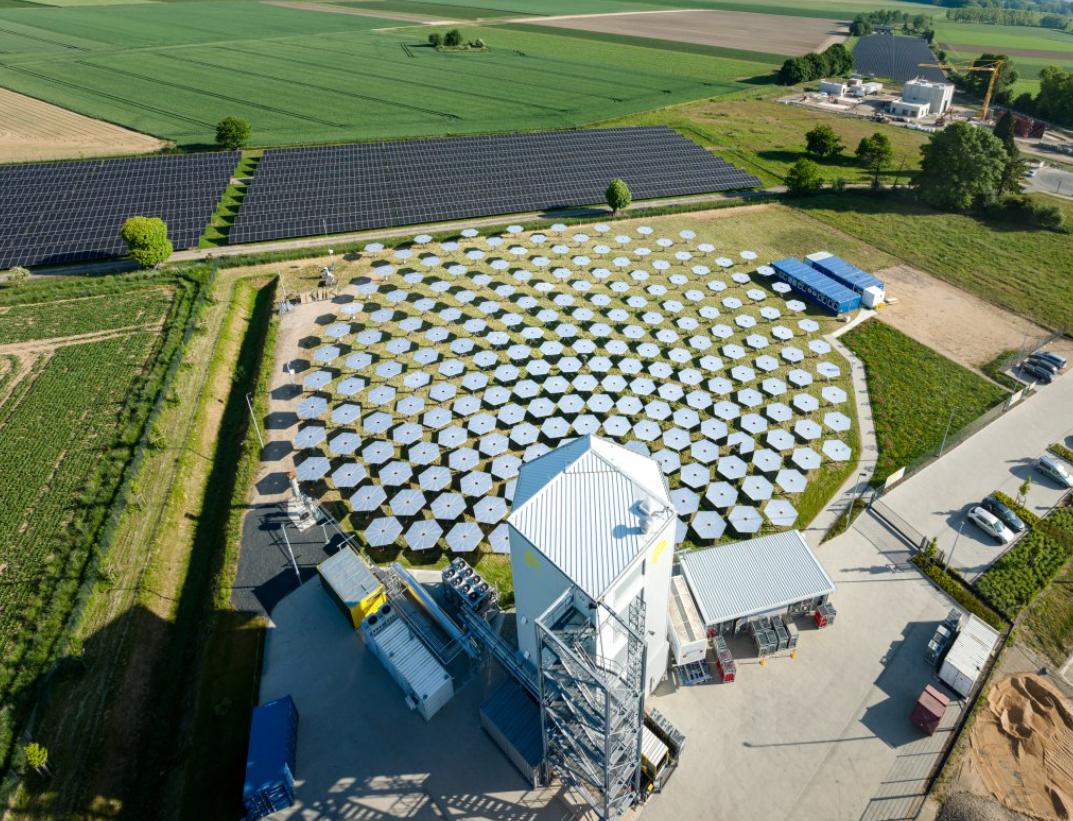
Specifically, they built the world's first industrial-scale solar fuel factory in Jülich, Germany, named DAWN, symbolizing "dawn".
The reason for choosing Jülich is that there is one of the largest scientific research institutions in Europe - the Forschungszentrum Jülich. Its research focuses on material structure, energy, information, transportation, aerospace, etc., and is at the world's forefront, especially in research on nuclear physics, solar cells, and fuel cells.
△
The oil production system created by Synhelion is divided into three parts:
The first part sucks in ambient air, uses adsorption to extract carbon dioxide and water, and transports them through pipes to the second part.
The second part is a reactor with a ceramic structure made of cerium oxide inside.
Raw materials such as biomass and water enter this part and are converted into hydrogen and carbon monoxide, which is syngas.
This process requires a large amount of heat. Synhelion's method is to use a whole set of heliostat arrays calibrated by AI (similar to large mirrors commonly used in solar thermal power plants) to concentrate sunlight on a central tower.
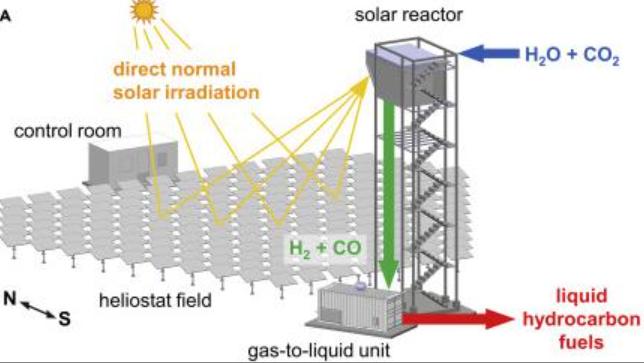
The dedicated receiver at the top of the tower will be heated by this super beam of light to over 2700 degrees Fahrenheit (about 1482 degrees Celsius), hotter than the magma from a volcanic eruption.
After the syngas is collected, it is transported through a funnel to the third part. After one-step conversion there, it becomes liquid "synthetic crude oil".
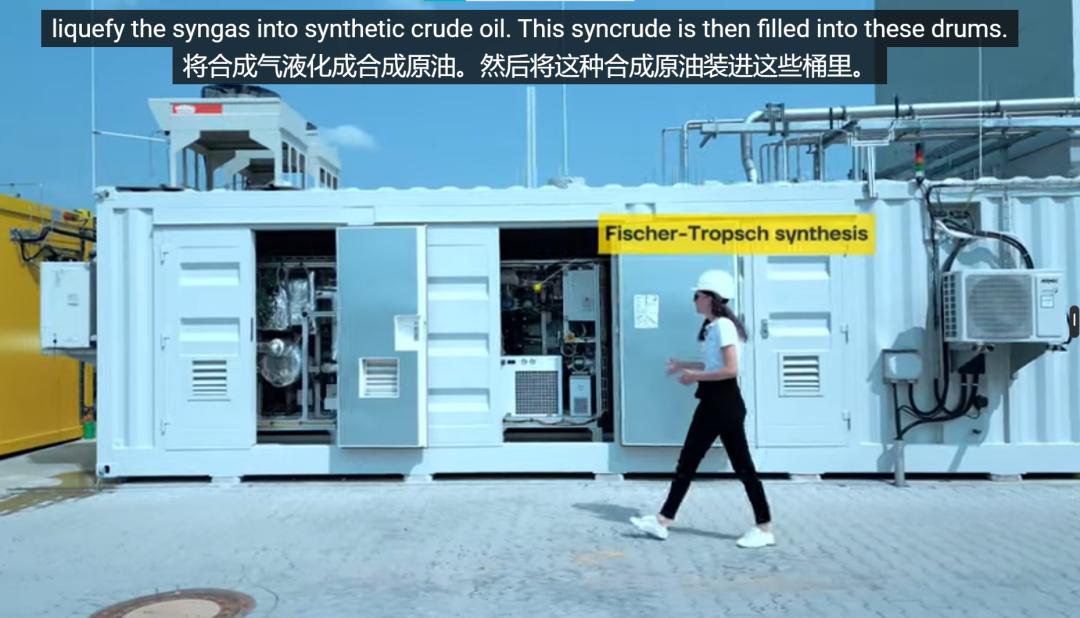
Finally, the synthetic crude oil is sent to a traditional refinery to be refined into ready-to-use gasoline, diesel, and aviation kerosene without any engine modifications.
What about when there is no sun at night?
Store the energy.
Synhelion has developed a thermal energy storage system (TES) for this purpose. It stores heat during the day and releases it at night to support the operation of the reaction device around the clock.
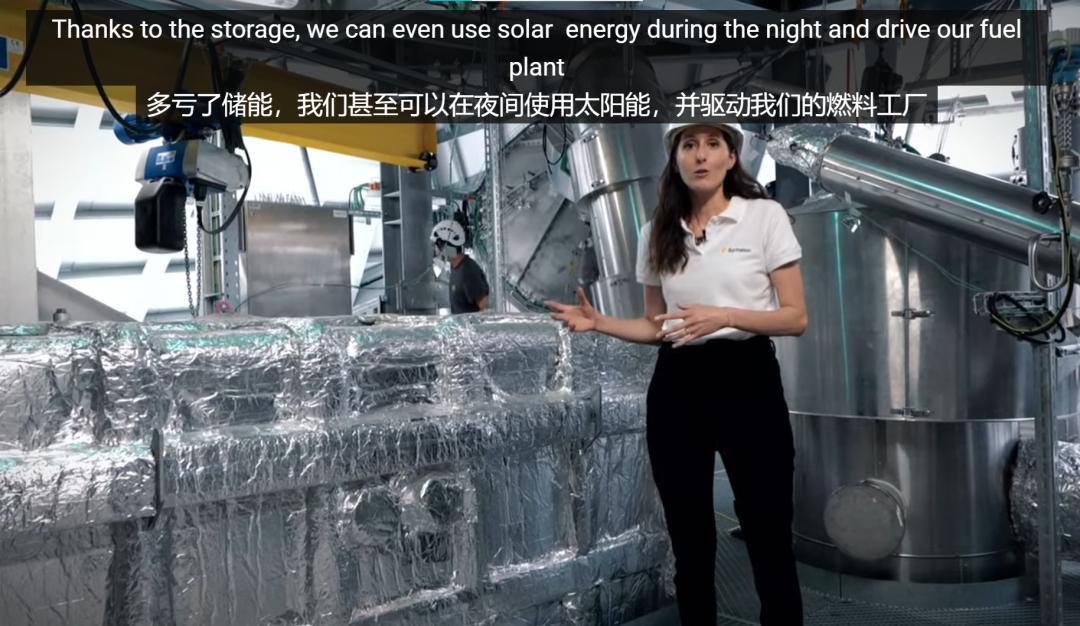
Synhelion claims that their system is 10 times cheaper than equivalent battery energy storage systems and avoids the dependence on rare metals such as cobalt and nickel.
In the field of synthetic fuels, there are other players trying, but most of them use wind energy to produce hydrogen and then convert it into fuel.
And Synhelion is currently the only player to achieve industrial-scale solar fuel production and has the conditions for large-scale deployment.
This sounds like a crazy approach, but the project is not just theoretical, and the team behind it is not unknown.
Who is Synhelion?
Synhelion was founded in 2016 and was incubated from ETH Zurich - a top university in Switzerland, ranking first in Europe in the QS 2025 rankings, surpassing Imperial College London and the University of Oxford.
The two co-founders and co-CEOs, as well as the company's chief technology officer, are all doctoral graduates from this university.
One of the two co-founders, Gianluca Ambrosetti, is a doctor in physics/nanotechnology from this university and has nearly 20 years of work experience in the concentrated solar power and photovoltaic industries.

△
The other, Philipp Furler, is a doctor in mechanical engineering/solar thermochemistry from ETH Zurich.
He has more than a decade of experience in the fields of high-temperature solar chemistry and reactor engineering and has served as the operating agent for solar chemistry research in the SolarPACES technology project of the International Energy Agency.

△
Before joining Synhelion, he was also the founder of Sunredox, a spin-off company from ETH Zurich, which was acquired by Synhelion in 2018.
The chief technology officer, Philipp Good, is also a doctor in mechanical engineering from ETH Zurich.
He has more than a decade of experience in the design, modeling, engineering, and experimental testing of high-temperature solar receivers, as well as the optical alignment, characterization, and operation of solar concentrators.

△
The birth of Synhelion started from a crazy idea at ETH Zurich.
Normally, when gasoline burns completely, it mainly produces water and carbon dioxide and releases a large amount of heat. When it burns incompletely, it may also produce carbon monoxide, nitrogen oxides, etc.
As the issue of climate change becomes more prominent, "carbon emissions" have become a long-term global concern. How to reduce carbon dioxide emissions has become an important research direction in the energy industry.
ETH Zurich put forward an idea: Can "reverse combustion" be achieved?
That is, if the products of combustion are collected, can they be restored to fuel through certain means?
This was just a conjecture in the laboratory at first, but through repeated research and verification, they actually made it happen.
In 2016, the school formed a team with rich knowledge reserves and moved this solar fuel technology from the laboratory to the factory, finally achieving implementation.
According to Synhelion, their world's first industrial solar fuel production factory, DAWN, which was launched in June last year, is now in operation.
So, the question now is, when can we use this solar gasoline?
When can we drive solar-powered fuel vehicles?
Although there is still a way to go before full-scale mass production, Synhelion has provided very convincing real-vehicle verification.
Aldo Steinfeld, a professor at ETH Zurich and the founder of the company's core technology, personally took a test drive on a Harley-Davidson motorcycle powered by solar gasoline.

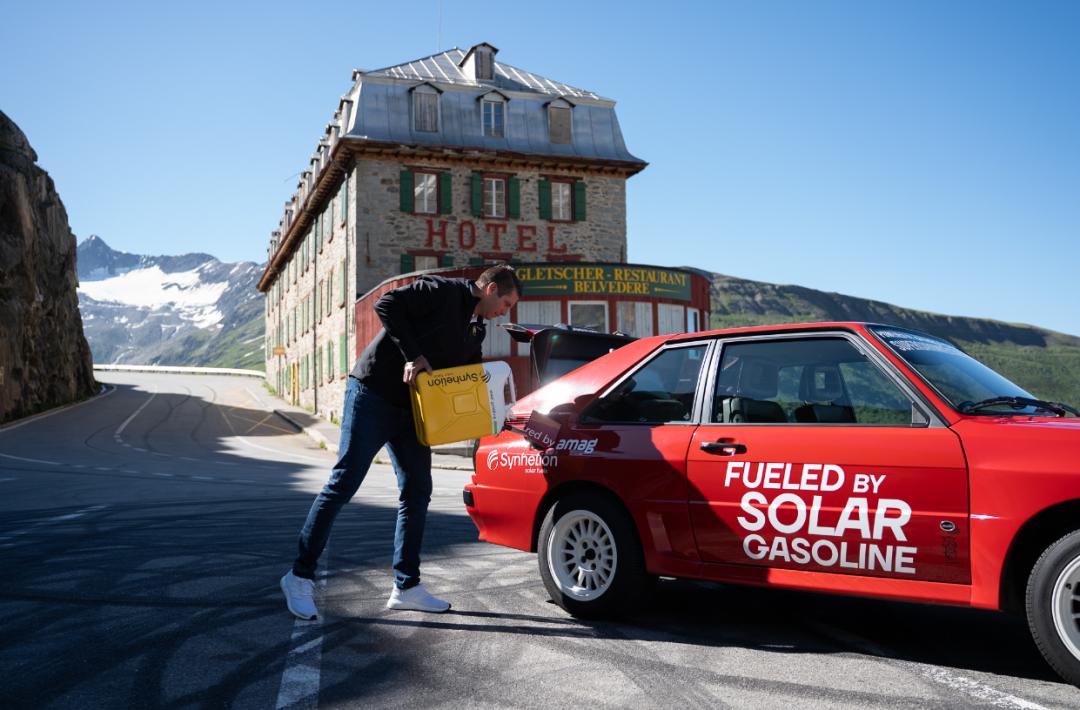
In a recent promotional video, the team also drove a 1985 Audi Sport Quattro using this solar fuel up the famous Furka Pass in the Alps.
They also emphasized that this classic five-cylinder turbo engine was completely unmodified, and its power and performance were not affected at all.

But there is still a very "realistic" problem in front of us, which is cost.
With the current technological level, the production cost of solar gasoline is still much higher than that of traditional gasoline.
Without government carbon tax policies, subsidies, or corporate carbon-neutral procurement, this technology may not be sufficient to support market competition.
For this reason, Synhelion has been unable to promote large-scale expansion. The DAWN factory is currently just a "showroom" at the verification scale stage, with an annual output of only a few thousand gallons (1 imperial gallon ≈ 4.546 liters), which is a drop in the bucket.
Although they plan to start building a larger-scale production facility this year and achieve large-scale mass production in 2027, the current progress is still a long way from truly meeting market demand.
However, they are also working hard.
Synhelion's thermal energy approach avoids a series of high-energy-consuming processes such as electrolyzing water and storing hydrogen. Theoretically, it has higher energy efficiency, a simpler system, and is easier to expand.
If large-scale and modular construction can be successfully achieved, then future fuel vehicles will have a crucial lifeline.
The good news is that Synhelion's solar fuel is covering various transportation fields such as automobiles, ships, and aviation, and practical application demonstrations have been completed in all of them.

The most prominent progress is in the aviation field. Now, Synhelion has cooperated with many companies and institutions such as Swiss International Air Lines and Lufthansa.
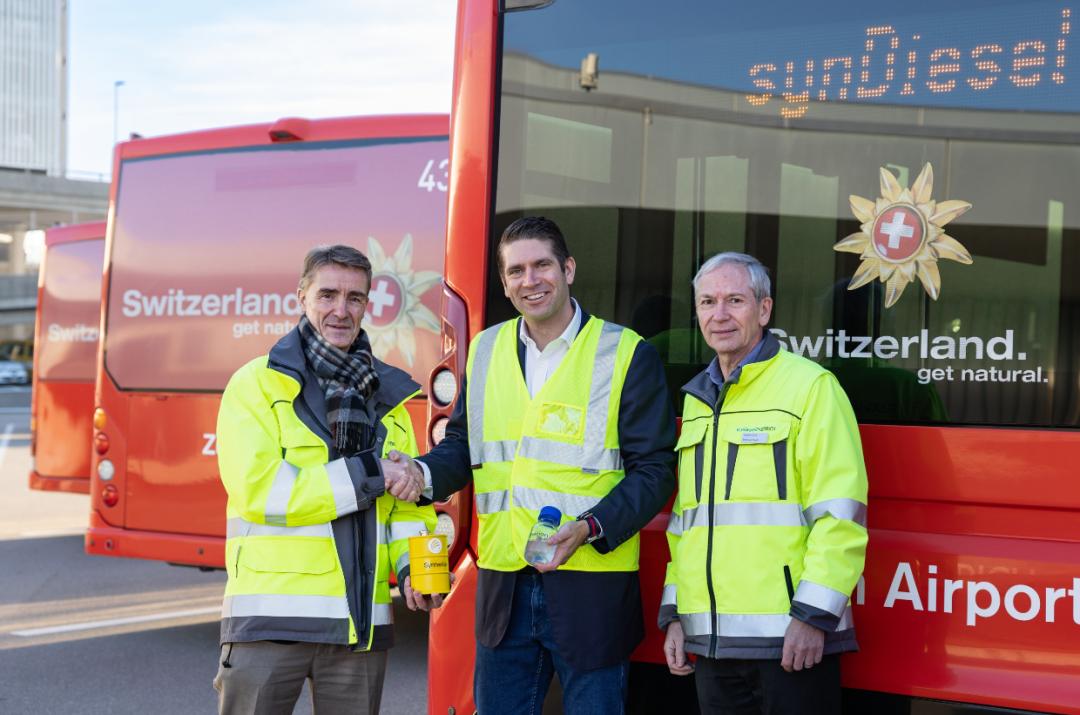
In December last year, Zurich Airport also signed a five-year solar fuel purchase agreement with them, promising that starting from 2027, Zurich Airport will purchase 30,000 liters of solar diesel from Synhelion every year for the buses at the airport.
This shows to some extent that Synhelion's technical approach is gaining more recognition, and it is not impossible to get resource support from policies and the capital market in the future.
In addition, regarding the automotive field, Synhelion clearly stated that their solar technology is not to compete with electric vehicles