After opening thousands of stores, they got tired of selling snacks.
Author | Xiao Sijia
Editor | Qiao Qian
The parent company of the "Haoxianglai" brand snack, Wanchen Group, submitted a listing application to the Hong Kong Stock Exchange on September 23.
This enterprise, originally mainly engaged in edible fungi, entered the bulk snack track in 2022 by crossing industries. With the integration of capital and the expansion of the store layout, the revenue of the snack retail business soared from 66.569 million yuan in 2022 to 31.79 billion yuan in 2024, an increase of nearly 478 times.
In the past three years, the bulk snack track has rapidly heated up and become one of the hottest trends in the new consumption field. The "low - price + bulk" model has been replicated crazily in the sinking market, penetrating from counties and townships to first - tier cities. Leading players such as Wanchen and Mingming Henmang have rapidly expanded their territories, often reaching a scale of tens of thousands of stores, forming a pattern of two - strong competition.
Wanchen is not the only player sprinting for the capital market. In April this year, another leading brand, "Mingming Henmang", also submitted a prospectus to the Hong Kong Stock Exchange. As one of the most competitive opponents in the track, "Mingming Henmang" has also maintained a rapid expansion momentum in recent years: as of the end of 2024, its number of stores exceeded 14,000, and the revenue scale reached 39.344 billion yuan. There are also reports that its number of stores reached 20,000 in September 2025.
As the two giants seek IPOs almost simultaneously, capital power may become a key variable in determining the industry pattern.
However, the model of small profits but quick turnover also implies risks: homogenization caused by price wars, insufficient industry barriers, and the incomplete establishment of consumers' brand awareness. At present, the competition is essentially a competition of financing ability and store - opening speed, rather than a competition of moats. As the market becomes saturated, intensified competition and profit pressure are gradually emerging.
Snack Brands in Fierce Competition in the Red Sea
2024 was the most aggressive year for "Haoxianglai" to open stores - a total of 9,776 new stores were opened throughout the year, which means that more than 27 stores opened for business every day. The crazy expansion of stores directly promoted the soaring of performance: according to the semi - annual report, Wanchen Group's revenue in the first half of 2025 reached 22.583 billion yuan, a year - on - year increase of 106.9%; the net profit attributable to the parent company was 472 million yuan, a year - on - year increase of 50,359%.
As a "dark horse" in the new consumption field, the bulk snack track has shown a "spreading like wildfire" trend since it became popular in 2023, achieving viral growth across the country. Wanchen Group is one of the pioneers. This A - share listed company, which originally started with edible fungi, entered the snack track by crossing industries in 2022, successively acquiring several regional brands such as "Luxiaocan", "Haoxianglai", "Laiyoupin", and "Yidiyidi", and unified them into "Haoxianglai Brand Snacks" in 2023. Then it continued to acquire another snack brand, "Laopo Daren".
Before that, Wanchen's revenue had long hovered around 400 million yuan. After the transformation, the company achieved leap - forward growth. Except for a temporary loss in 2023 due to large - scale investment in the supply chain and store construction, it quickly turned losses into profits in 2024, with a total revenue of 32.329 billion yuan and a net profit attributable to the parent company of 294 million yuan.
The logic behind the aggressive store - opening of bulk snack brands is not difficult to understand. The essence of its business model is to cut out middlemen, purchase goods directly from the source manufacturers, and then sell them to consumers at prices lower than those of supermarkets and convenience stores. According to Wanchen Group's prospectus, 95% of its products are directly purchased from brand manufacturers, eliminating multiple intermediate circulation links. Therefore, the average retail price is 20% to 30% lower than that of similar products in hypermarkets, supermarkets, and convenience stores.
In short, bulk snacks are loose - packed small snacks. To some extent, it is like the "Pinduoduo" in the snack industry: it attracts customers with low prices and then uses sales volume to drive down procurement costs. Although the profit of a single pack of snacks is extremely thin, the overall scale expands rapidly by "opening more stores and selling faster". Especially in markets such as counties and townships, which are price - sensitive and have large passenger flows, this model has natural explosive power.
Therefore, this model can only compress costs as much as possible and increase the gross profit margin when the procurement volume is large enough. As the store density increased, Wanchen Group's gross profit margin increased from 9.30% in 2023 to 11.41% in Q2 2025. The gross profit margin of another leading snack brand, "Mingming Henmang", has always remained in the range of 7.5% - 7.6%. This may indicate that Wanchen has a relative advantage in the supply chain, so it can leverage the procurement bargaining power of upstream suppliers with lower prices.
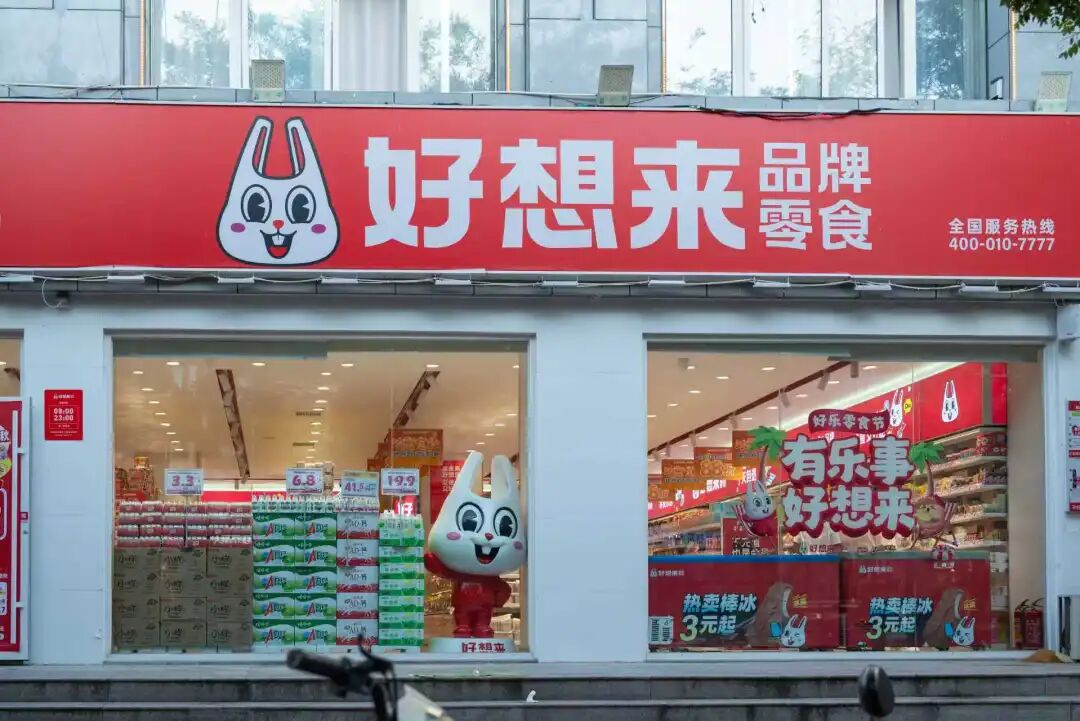
Haoxianglai Store
However, although Wanchen Group has a higher profit margin, its revenue is less than that of Mingming Henmang. At the end of 2024, Wanchen had 14,196 stores, while Mingming Henmang had 14,394 stores. With almost the same number of stores, their revenues in the bulk snack track were 31.79 billion yuan and 39.344 billion yuan respectively. It is not difficult to see that compared with Mingming Henmang, although Wanchen earns more from each product, it sells fewer products.
It is worth noting that the miracle of Haoxianglai opening more than 10,000 stores in three years relies on high - leverage capital investment. As the business scale expands, the company's debt also rises: as of the end of June 2025, Wanchen Group's total assets were 7.46 billion yuan, and the total liabilities were 5.14 billion yuan, with an asset - liability ratio of 68.9%. This indicates that the company currently relies mainly on debt rather than investment to drive asset expansion, which is a "high - leverage" operation model. In addition, the company's current liabilities are 4.42 billion yuan, accounting for as high as 86% of the total liabilities. This shows that the debt structure is biased towards the short - term, which requires extremely high management of capital liquidity. In other words, the company must continuously maintain a strong cash flow or strong refinancing ability to continuously "borrow new to pay old". Once there are fluctuations in market consumption or a large number of store closures, it is easy to fall into a situation of capital chain rupture.
Fortunately, Wanchen Group's main business still has a strong ability to generate profits, and the operating activities generated a cash flow of 1.298 billion yuan, which provides a foundation and confidence for its high - debt model.
The management has obviously realized the risks of high leverage. Compared with the amazing speed of opening 9,776 stores in 2024, only 1,468 stores were opened by Haoxianglai in the first half of 2025. The era of high - speed expansion has passed. In essence, this also explains why the two giants are seeking to list on the Hong Kong Stock Exchange one after another. An investor who has contacted the founders of both brands told 36Kr directly: the bulk snack industry "had clear opportunities" in the previous years, with real consumer demand, but it has been over - ripened under the promotion of capital in the past two years, and there has been a certain degree of oversupply in the market.
The dividends still exist, but they are coming to an end. Under the model of relying on scale expansion, both sides need to find new growth curves.
Accelerating Transformation and Layout of the New "Hard Discount" Business Format
With the intensification of involution, the competition is no longer limited to the comparison of scale and has entered a new stage.
Currently, the traditional retail model is facing challenges, and the hard - discount full - category wholesale supermarket is becoming a new hot spot in the industry. This is a "minimalist + low - price" retail model, mainly characterized by streamlined SKUs, mainly private brands, and low prices. It is equivalent to providing customers with high - quality and cheap products with the fewest categories and the lowest cost. In recent years, major retail enterprises, from Le'erle, Aotele to Aidizhe, have accelerated their layout. At the same time, snack track brands including Wanchen, such as Mingming Henmang and Lingyouming, have also begun to transform into this new business format.
At the end of 2024, Wanchen Group launched the "Laiyoupin Saving Supermarket", targeting community family shopping; then in January 2025, it launched the "Haoxianglai Whole Food Preferred", expanding the concept of snacks to more categories such as daily chemical products, fresh food, and frozen products; in March of the same year, the Whole Food Preferred 5.0 store, with a 390 - square - meter space, strengthened the concept of "whole food", reduced the supply of grain and oil seasonings, and significantly increased and highlighted categories such as freshly - made baked goods, fresh fruits, and frozen products.
As for how to transform the existing bulk snack stores into saving supermarkets, Zhou Peng, the retail partner of the Haoxianglai brand of Wanchen Group and the founder of the Laiyoupin brand, once told the media: "On the one hand, we can adjust and renovate the existing bulk retail stores, such as adding some shelves or categories. On the other hand, we can use the area that was previously used as a warehouse in the store as the business area, so that a bulk snack store can be transformed into a saving supermarket."
It is worth noting that Wanchen also mentioned in the prospectus that it will "focus on developing private brands through the Laiyoupin Saving Supermarket and other means". In the past, the products in the snack industry were highly homogeneous, and the competition often fell into the quagmire of price wars. Most of the snacks sold in bulk snack stores are white - label small snacks that lack channel opportunities and bargaining power, so they often cause disputes over quality issues. Developing private brands is the key to breaking this dilemma and building a competitive barrier.
The prospectus shows that Haoxianglai has launched two private brand series: "Haoxianglai Super Value" and "Haoxianglai Selection". The former focuses on core categories, emphasizing cost - performance. For example, the natural drinking water sourced from Qiandao Lake it launched has a unit price of only 0.6 yuan. After its launch in May 2025, the monthly average growth rate exceeded 250%, and the monthly sales volume in August exceeded 25 million bottles; the latter is committed to creating high - quality and differentiated products, such as the green grape and jasmine - flavored beer with unique oriental flavors, which shows the innovation ability of the products.
In terms of brand building, Wanchen actively layouts the IP track and enhances brand value through emotional connection: at the end of 2024, it cooperated with the domestic animated film "Ne Zha 2" to launch limited - edition peripheral blind boxes of figurines and co - branded snack gift boxes; during the Spring Festival in 2025, it joined hands with "Honor of Kings" to create limited - edition New Year gift boxes; at the beginning of the year, it reached a cooperation with the well - known IP Sanrio, launching theme snacks with images such as Hello Kitty and My Melody, trying to reach the young female consumer group.
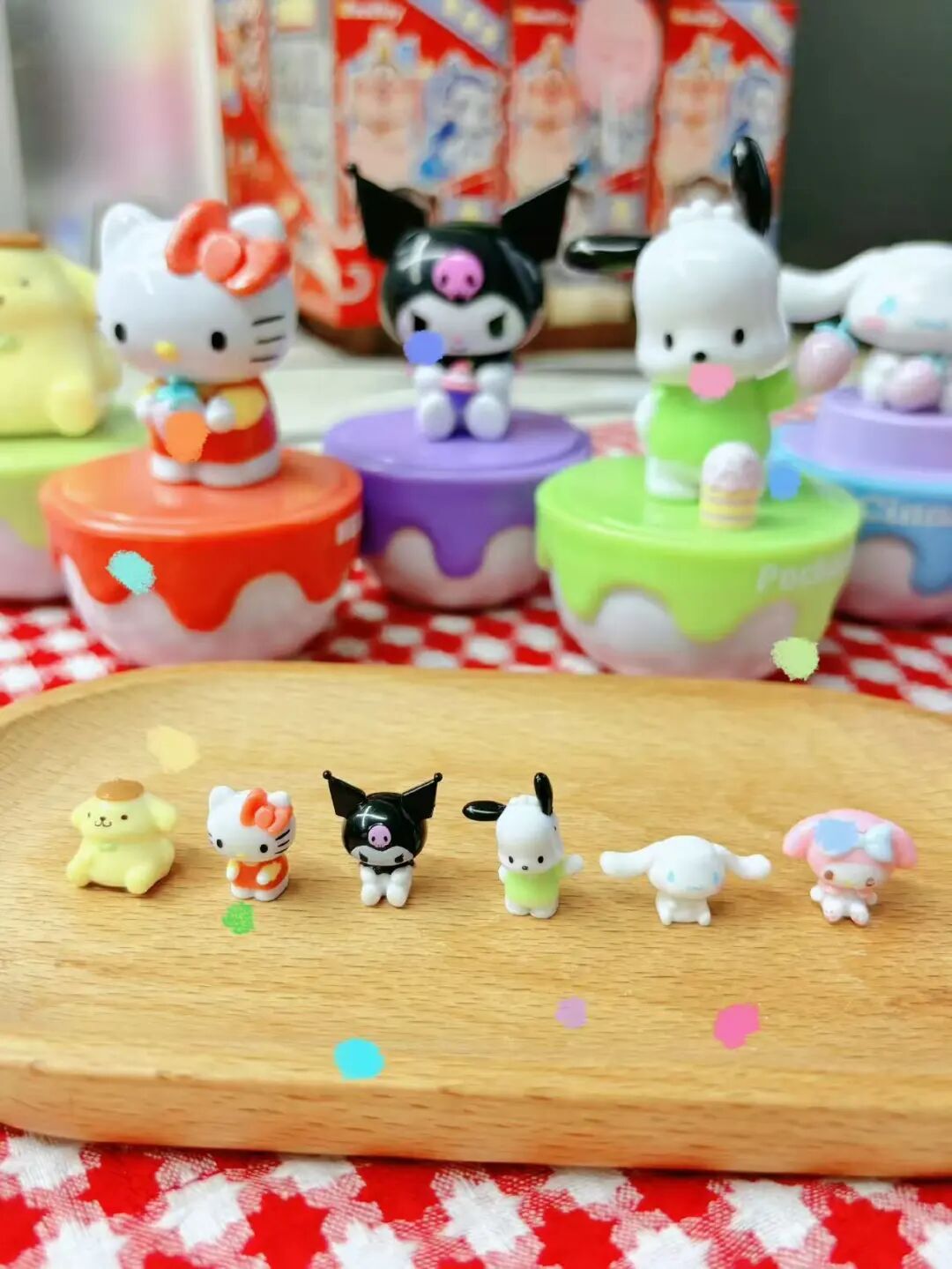
The "Sanrio Strawberry Surprise Box" launched by Haoxianglai
In the context of intensive transformation actions, the importance of obtaining capital support is self - evident. Seeking to list on the Hong Kong Stock Exchange is not only a practical choice for Wanchen to optimize its financial structure and reduce leverage risks, but also provides a financial basis for its subsequent transformation and refined operation. At the same time, listing can also provide an endorsement for its globalization strategy. As disclosed in the prospectus, Wanchen plans to start from Southeast Asia, leverage market insights and international resources, and strive to become a leading global hard - discount retailer.
Overall, this transformation logic is not difficult to understand: the ceiling of the bulk snack model has appeared. To extend the growth curve, it is necessary to break through into the broader "hard - discount supermarket" track. However, the problem is that it is by no means easy to succeed in this path. Expanding categories means reconstructing the supply chain system, which cannot be achieved just by "adding a few more shelves". Developing private brands requires long - term investment and precipitation. Although IP co - branding can bring short - term popularity, it cannot solve the fundamental problems of the industry.
Moreover, on this path, there is the example of Aldi in front, and there is also the competition from "Zhaoyiming Saving Supermarket", which is also seeking transformation. Even Internet giants such as Meituan and Alibaba are accelerating their layout. The competition is far more intense than in the snack track. At present, Wanchen Group is still in the competition stage, and it is still unknown whether it can truly stand out and establish its own brand awareness. In the future, whether Wanchen Group can successfully evolve from the "Pinduoduo in the snack industry" remains a big question mark.