Huawei's "Power Philosophy" - Being the "Most Knowledgeable Enabler"
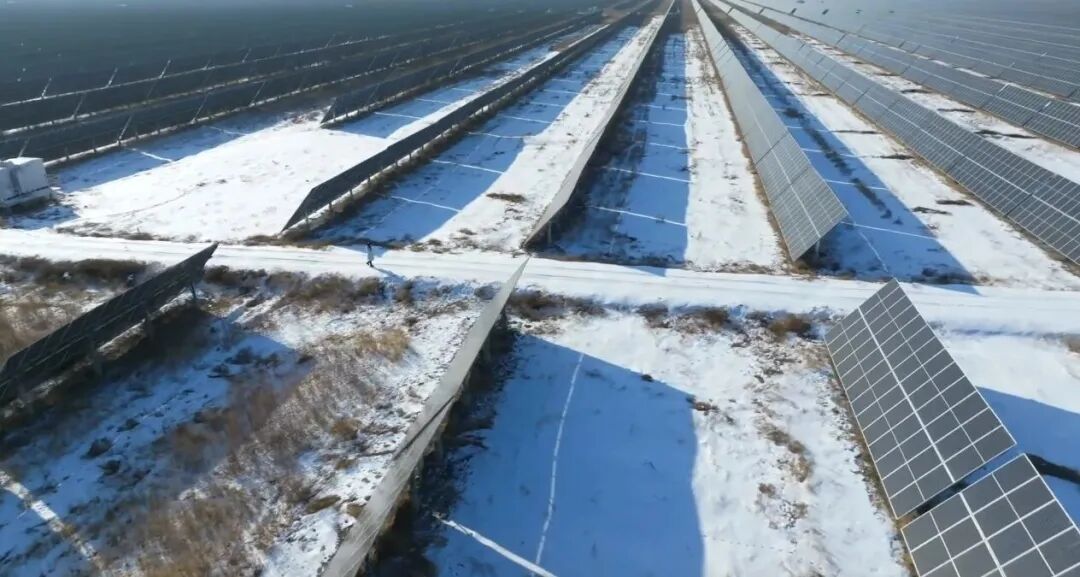
When the "dual carbon" goal pushes the power system to the eye of the storm in energy transformation, "intelligence" has changed from an optional move to a survival necessity. Data from the National Energy Administration in July 2024 shows that the proportion of wind and solar power generation in the country has reached 28.3%. However, due to inaccurate forecasting, lagging operation and maintenance, and low - efficiency coordination, the scale of wind and solar curtailment still exceeds 20 million kilowatt - hours per day. A traditional power industry veteran sighed: "In the past, we relied on experience to repair equipment and adjust loads. Now, we have to race against AI for time."
In this transformation, Huawei enters the arena as "the most knowledgeable enabler" - not as a disruptor, not competing for the main track, but using a philosophy of "technical foundation + ecological coordination + long - termism" to become the "invisible engine" for the intelligentization of the power industry.

Huawei's "Power Philosophy":
Empower rather than dominate; only by being knowledgeable can there be symbiosis
The underlying logic of Huawei's entry into the power industry stems from a profound understanding of the industry's characteristics: the power industry is a dual - intensive industry of "technology + experience", with high professional barriers, strict safety requirements, and a long coordination chain. Therefore, Huawei positions itself as an "enabler". Its core philosophy can be summarized in three points:
1. "Don't be an all - round player; just be the best partner"
The power industry covers all aspects of power generation, transmission, transformation, distribution, and consumption. Each aspect has professional players who have been deeply involved for decades (e.g., NARI is knowledgeable about dispatching, Goldwind about wind turbines, and China Energy about new energy). Huawei's rationality lies in: not replacing these "industry experts", but using its own "technical strengths" to make up for their "digital weaknesses". As Li Jiguang, the general manager of Huawei's China Enterprise Business Group for the power system, said: "We don't define the future of the power industry; we just act as 'paving stones' on the future road."
2. "Technology should be rooted in scenarios, and value should be measurable"
AI is not a castle in the air; it must solve specific problems. Huawei rejects "technology for the sake of technology" and instead starts from "bottleneck" scenarios such as new energy consumption, equipment operation and maintenance, and source - network - load coordination. It uses quantifiable indicators such as "a 1% increase in prediction accuracy" and "a 50% reduction in fault outages" to prove the commercial value of technology.
3. "Long - termism, grow with the industry"
The intelligentization of the power industry is not achieved overnight. Huawei doesn't pursue "rapidly occupying the market" but cultivates industry capabilities through "platform + ecosystem": helping enterprises build data middle platforms, training AI talents, and setting up joint laboratories, enabling power enterprises to go from "using AI" to "understanding AI" and finally achieving independent evolution.

Driven by pain points:
The "three hurdles" of the new - type power system,
Why do we need an enabler like Huawei?
The difficulty in transforming the new - type power system essentially lies in the conflict between the "traditional model" and the "intelligent demand". Huawei's empowerment philosophy is precisely born to solve these three core pain points:
1. Wind and solar power "rely on the weather" vs. dispatching "precisely control the situation":
The cost of inaccurate prediction
The intermittency of wind and solar power generation has made the traditional dispatching model of "daily plan + real - time adjustment" ineffective. National Energy Administration data shows that in 2023, the amount of wind and solar curtailment caused by errors in new energy power prediction nationwide exceeded 15 billion kilowatt - hours, equivalent to the annual power generation of 10 million - kilowatt - level thermal power plants. The person - in - charge of a wind power base in the northwest admitted: "With a 10% prediction error, when a sudden cloud mass appears, the power output drops by 30% within 2 hours, and the dispatching system simply doesn't have time to react."
Huawei's solution: Use the Pangu meteorological large - model to "calculate the weather". By cooperating with Jiu Tian Meteorology, the model integrates multi - source data such as satellite cloud images, terrain, and micro - climate laws, increasing the prediction accuracy from 85% to 93% and reducing the daily wind curtailment rate by 40%. This is not "replacing dispatchers" but equipping them with a "perspective lens" - seeing the weather 15 days in advance, accurate to the hourly level, allowing dispatch instructions to be "planned ahead".
2. Equipment as "dumb terminals" vs. operation and maintenance as a "fire - fighting team":
The cost of lagging
More than 60% of the power equipment in the country still relies on manual inspections, and the accuracy rate of fault prediction is less than 70%. A thermal power plant in the south once had an unplanned outage for 72 hours due to the failure to give timely warnings about transformer insulation aging, resulting in losses of over ten million. The operation and maintenance supervisor sighed: "The equipment can't speak, so we can only 'put out the fire after the fact'."
Huawei's solution: Use digital twin technology to make the equipment "speak". By collecting state data from over 100 dimensions through sensors and constructing a virtual mirror image of the equipment, the large - model analyzes the trends and gives a 7 - day advance warning of faults. After the application in a substation in Guangdong, the unplanned outage rate decreased by 65%, and the number of inspections by operation and maintenance personnel decreased from "4 times a day" to "1 time a week". "Now the system pushes warning work orders, and we 'prevent diseases' instead of 'curing diseases after they occur'," said the operation and maintenance team leader.
3. Data "islands" vs. the "necessity of coordination": The cost of fragmentation
The data of sources, networks, loads, and storage are scattered in different systems, and it takes 3 months to integrate them. Enterprises are afraid of feeding data to the large - model for fear of data leakage. Without data, the large - model has difficulty outputting accurate results - this is the "data dilemma" of 78% of provincial power grids.
Huawei's solution: Break the deadlock with "platform + ecosystem". On the one hand, provide the Ascend computing power base and the power digital platform to support local deployment, so that the data "never leaves the factory". On the other hand, cooperate with design institutes, consulting agencies, and industrial partners to formulate data standards and integrate interfaces, helping enterprises build a "data sharing pool". The person - in - charge of a provincial power trading center commented: "Huawei doesn't come to grab data; it comes to help us manage and use data."

Putting the philosophy into practice:
From "single - point breakthrough" to "full - chain intelligence",
How does Huawei "empower symbiosis"?
Huawei's "power philosophy" ultimately focuses on "full - chain value creation". Its solutions cover "source - network - load - storage", aiming to transform the power system from "passive response" to "active evolution".
1. Source side: Make new energy "predictable and controllable"
Integrate the functions of Pangu prediction, digital twin, and fault warning to create an "intelligent power generation platform":
The power prediction accuracy is ≥95%, the wind and solar curtailment rate is further reduced by 30%, and it is estimated that the loss of curtailed power will be reduced by over 20 billion yuan in 2025; the equipment failure rate is reduced by 20%, and the annual power generation of a single million - kilowatt wind farm will increase by over 50 million kilowatt - hours; it supports the multi - energy complementation of "wind - solar - storage - hydrogen", and a base in the northwest has achieved "hydrogen energy supplementation when wind and solar power are insufficient", with the comprehensive utilization rate increased to 92%.
2. Network side: Make the power grid "think and make decisions"
The "full - network intelligent dispatching system" based on the large - model analyzes the states of sources, networks, loads, and storage in real - time:
The fault location time is reduced from 2 hours to 5 minutes, the power supply reliability is increased to 99.99%, and the average annual power outage time of users is reduced to less than 5 minutes; the line loss rate is reduced by 12 percentage points, equivalent to delivering an additional 10 billion kilowatt - hours of electricity per year, meeting the annual electricity consumption of 20 million households; by connecting to the "virtual power plant", a pilot project in a province has achieved "a million - kilowatt distributed power source responding within seconds during peak load periods".
3. Load side: Make users "willing to participate and able to benefit"
Guide "demand response" through the large - model for load prediction:
By predicting the peak power consumption of factories and adjusting production in advance, the power grid pressure is reduced by 10%, and users can save 500,000 yuan in electricity bills annually; by constructing the "user - side energy storage + AI dispatching" model, the annual profit from peak - valley arbitrage in a park is increased by 25%; the user participation rate is increased from 15% to 40%, and the power grid changes from a "power supplier" to a "service provider".
4. Storage side: Make energy storage "smarter and more profitable"
Develop an "intelligent energy storage EMS" and use AI to optimize the charging and discharging strategies:
The energy storage utilization rate is increased from 70% to 88%, and the annual income of a power station is increased by over 3 million yuan; the investment pay - back period is shortened from 8 years to 5.5 years, attracting more capital to invest in energy storage; it supports "hydrogen - storage coupling", and the comprehensive income of a demonstration project is increased by 30%.

The most knowledgeable enabler,
Will eventually become the "symbiotic entity" of power intelligentization
From "digitization" to "intelligentization", the transformation of the power industry has entered the deep - water zone. Huawei's "power philosophy" is not "I'll take the lead" but "I'll help"; not "selling technology" but "cultivating capabilities"; not "being the protagonist" but "being a partner".
As Li Jiguang said: "We don't pursue 'disruption'; we only pursue'symbiosis' - using the Pangu large - model to improve accuracy, using the platform ecosystem to amplify value, and using long - termism to cultivate capabilities." When new energy consumption changes from "relying on the weather" to "precise regulation", when equipment operation and maintenance changes from a "fire - fighting team" to a "predictor", and when power grid dispatching changes from "experience - based decision - making" to "data - driven" - perhaps this is the best interpretation of Huawei as "the most knowledgeable enabler": Intelligence is not about replacement but about making the power industry more powerful, more efficient, and more human - centered.