Reconova AntOne: Visual Intelligence Reconstructs the Civil Aviation Ecosystem, and Embodied Robots Break Down Scenario Barriers
At the Airport Service Innovation Product Exhibition of the 2025 International Airport Expo, an intelligent luggage transfer robot named AntOne became the focus of the entire event. Inside the crowded exhibition hall, it accurately simulated the scenario of the luggage handling area in the terminal building, smoothly transferring pieces of luggage of various shapes from the sorting system to the downstream target luggage trailers and completing neat stacking. This seemingly simple operation completely broke the shackles of the purely manual handling link, which is the weakest in terms of intelligence in the civil aviation field, and can be regarded as a disruptive innovation in this scenario.
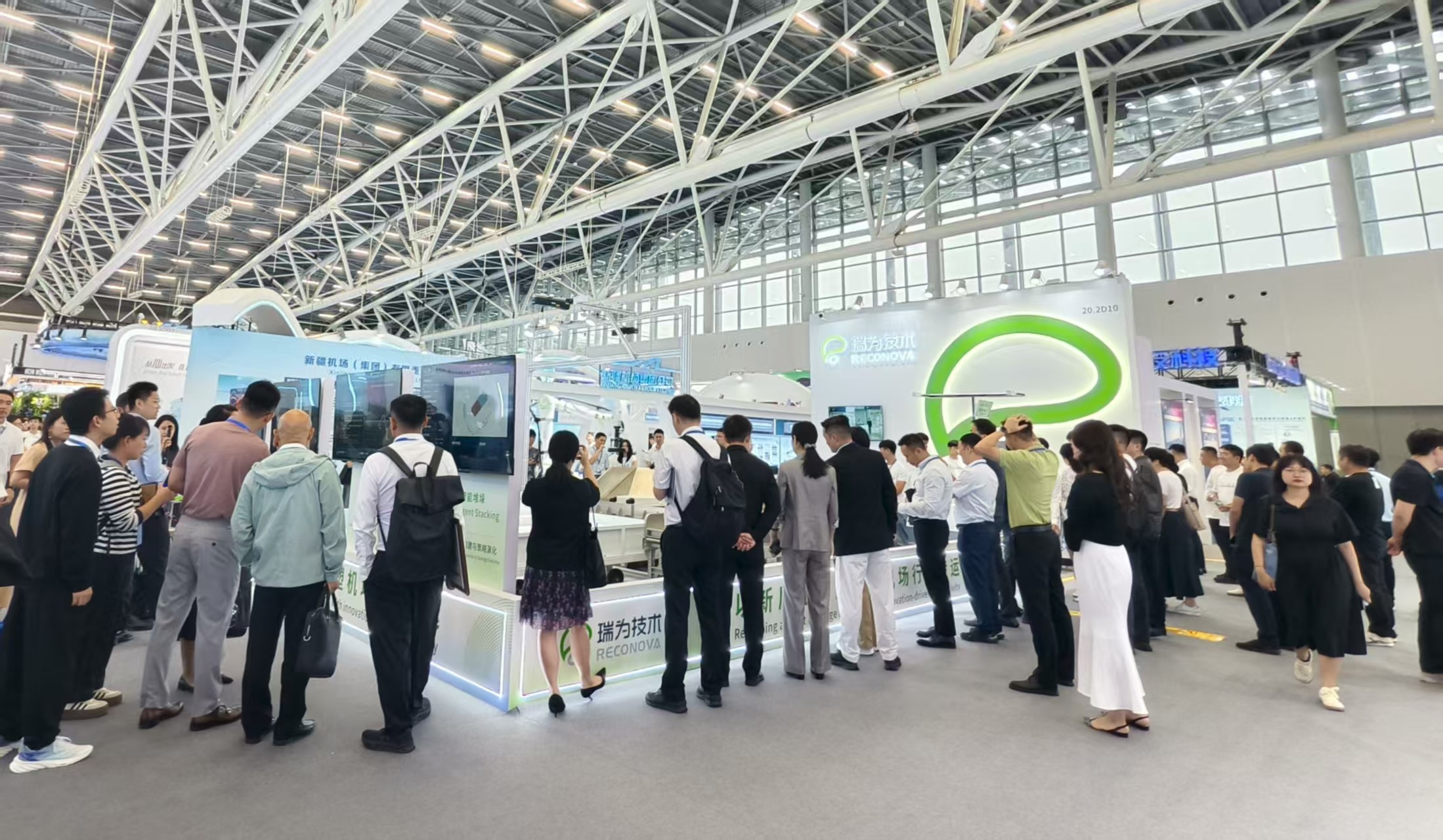
AntOne's amazing debut brought its R & D enterprise, Reconova Technology, back into the public view. As a leader in the field of domestic visual intelligent technology, Reconova has been deeply involved in the field of civil aviation intelligence for many years, and its products cover about one - third of domestic civil airports. The success of AntOne this time is not only a concentrated display of Reconova's technical strength but also marks a crucial step for commercial robots from technological exploration to the actual application of business scenarios.
In the dual "golden reshuffle period" of the accelerated intelligent transformation of the civil aviation industry and the transition of embodied intelligent technology from the production line to daily life, Reconova's rise is by no means accidental. Its development trajectory provides a highly valuable reference model for the implementation of AI technology in industries.
Ten Years of Grinding a Sword: The Evolutionary Path from Visual Intelligent Agents to Commercial Robots
Reconova's growth process is a classic microcosm of domestic AI enterprises from technological accumulation to scenario implementation and then to commercial verification. When the company was founded in 2012, Reconova Technology took edge - side intelligent technology as the core and continuously delved into the field of visual perception, aiming to build full - stack technical capabilities from the very beginning. From the early small models to today's large visual reasoning models based on perception and decision - making, Reconova has gradually improved its full - stack visual intelligent technology system, including the deep - learning framework, the Qingtun large visual model, and the front - end multi - modal perception base capabilities.
This forward - looking full - stack technology layout has seized a precious time window for Reconova's subsequent development in the field of commercial robots. As Shi Miaohong, the general manager of Reconova Technology's Commercial Robot BU, said, it was precisely because of the profound accumulation in the field of visual intelligence in the early stage that when the company decided to develop AntOne based on visual intelligent agents, it could quickly integrate resources and achieve efficient technology transformation.
While accumulating technology, Reconova has never ignored the "commercial productization" of technology. The company actively penetrated the full - stack capabilities of the "visual intelligent agent" into multiple segmented scenarios such as civil aviation, commerce, and freight, continuously polished the technology through practical applications, and accumulated industry experience. Around 2019, when the robot market was still in its infancy and most enterprises limited the application of robots to auxiliary tasks such as enhancing the customer experience, Reconova launched the first - generation commercial robot, "Xiaorui" Travel Service Robot. This robot undertook services such as passenger inquiries, welcoming and guiding, and luggage transportation at Daxing Airport, becoming Reconova's first successful attempt to explore the commercialization path of robots.
The implementation of "Xiaorui" allowed Reconova to taste the "fruits" of robot commercialization and also prompted the company to further think: In the civil aviation industry, which other scenarios can directly improve efficiency through robot applications rather than just optimizing the auxiliary experience?
Through in - depth research on multiple airport scenarios at home and abroad, the Reconova team found that there are a large number of efficiency blind spots in the "labor - intensive" links at airports, from passenger services to luggage sorting and handling, and then to airport inspections, all of which consume a large amount of manpower. With the development of technology and the continuous deepening of business verification, robots will have broad application prospects in these fields. They can effectively solve the problem of human overload operation, liberate human resources from simple, repetitive, and heavy physical labor, and break through the efficiency bottleneck.
In 2023, when the vertical large - model technology gradually reached the "usable" stage, Reconova keenly shifted its R & D focus to luggage transfer robots and focused the core of its market strategy on embodied robots, the "pearl" of future industrialization. At that time, the field of embodied intelligence had set off an exploration boom globally, with continuous breakthroughs in academic research and active layout in the industrial circle. However, there was still a certain distance from the real large - scale application and implementation, and a mature business model had not yet been formed. But Reconova resolutely invested in it based on its accurate judgment of technological trends and in - depth understanding of industry pain points.
The Sullivan Report shows that in 2024, Reconova had occupied the first position in the visual intelligent product market of Chinese civil aviation enterprises, with quite solid technical and business foundations, and completed a crucial step in the "intelligent agent evolution".
In the next five years, the application scenarios of embodied intelligent technology replacing heavy physical labor will enter an explosive period. Based on its own technological genes, Reconova firmly chooses to focus on the "difficult but correct" enterprise - level commercial robot field.
Shi Miaohong said that compared with consumer - grade robots, the challenges in the advancement of enterprise - level commercial robots are reflected in three dimensions. First, the technical reliability needs to meet industrial - grade standards to adapt to the continuous operation in complex scenarios. Second, cost control needs to achieve a refined balance to ensure the economic benefits of large - scale replication while meeting the customized needs of enterprises. Third, it must have a quantifiable return on investment (ROI) and direct value - creation ability, forming a closed - loop of technology implementation and commercial return. These three challenges constitute the core threshold that differentiates enterprise - level commercial robots from consumer - grade products. This requires manufacturers to have both a deep understanding of technology and in - depth insights into vertical industries. Especially in the complex and non - standard environment of civil aviation, the requirements for the safety and reliability of robots operating without errors for 24 hours and the adaptability requirements brought by high passenger flow and cross - regional collaboration may magnify potential "technical defects".
Therefore, AntOne's outstanding performance at the expo is not accidental, nor is it a flash in the pan. It is the "condensation" of Reconova's more than ten - year accumulation in technology and business understanding. Reconova has always adhered to the focused strategy of "one - meter wide and one - hundred - meter deep". Although it has chosen a more difficult field, it has provided a reference model for the implementation of embodied intelligence in the civil aviation industry at the fastest speed.
A New Chapter in Human - Robot Collaboration: Being the "Eyes" and "Brain" of Enterprises
In the field of enterprise - level commercial robots, there are two core problems that need to be solved urgently. Reconova has given its own answers with its unique ideas and practices.
The first problem is how to deeply integrate technology with customers and become the "brain" for enterprises to solve problems. This means that the implementation of technology should not pursue the "fully unmanned" showy skills but balance the contradiction between the current technological maturity and actual needs.
Zhan Donghui, the founder and chairman of Reconova Technology, has a clear understanding of this: "Technology is never a single - path option. From the perspective of completely solving problems for customers, technology may solve 20 - 30%, and the rest may depend on the engineering design of the product and how to understand the flexibility of customers' pain points." In Reconova's view, the relationship between the company and customers is not simply a service - provider and service - receiver relationship but more of a co - creation relationship. The supplier needs to understand the customers' pain points, and at the same time, let the customers understand the boundaries of technology. Both sides need to jointly clarify "what can be compromised and what must be achieved".
Taking airport luggage transfer as an example, from a technical perspective, the current visual semantic understanding, mathematical reasoning, and execution control capabilities are still unable to achieve 100% automatic transfer of passengers' checked luggage, but customers often have a psychological expectation of fully automated robots. Facing this contradiction, Reconova first let customers fully understand the technical bottlenecks and the future technology iteration cycle through full communication. Second, in the engineering design, it achieved seamless human - robot collaboration between AntOne and humans, allowing humans to safely, naturally, and easily coexist with robots. This practical approach not only respects the objective laws of technological development but also meets the actual needs of customers, achieving a positive interaction between technology and business.
The second problem is how to enable robots to interact naturally like "humans" in a complex and changeable human - robot collaboration environment, thereby improving operational efficiency. To achieve this, both excellent technical capabilities and in - depth thinking about the temperature of interaction are required.
AntOne's core capabilities come from the RecoThink visual reasoning intelligent agent independently developed by Reconova, which integrates perception, decision - making, execution, and collaboration. Driven by the large visual reasoning model, AntOne can perceive environmental information through 3D vision and the fusion of multiple sensors, independently obtain data such as luggage information, stacking status, and environmental obstacles, reason out the best pose based on this information, plan a reasonable movement path, and then the robot body can execute the whole - process operation precisely. At the same time, AntOne is equipped with an active and passive integrated safety mechanism to ensure the safety of human - robot collaboration.
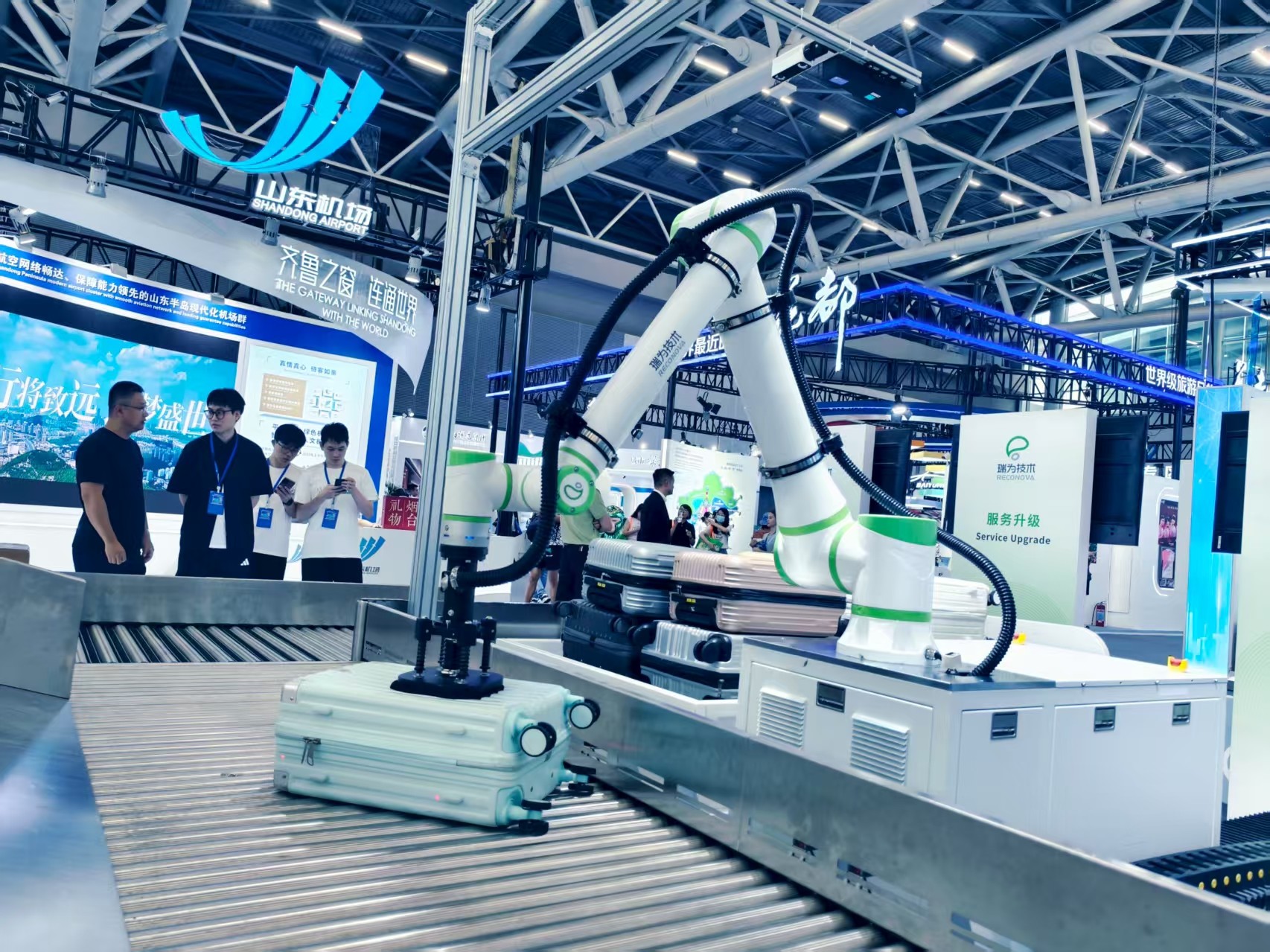
With continuous self - learning and model optimization, AntOne is becoming more and more "intelligent" and can independently process and recognize more and more types of luggage. In product design, AntOne adheres to the concepts of lightweight, miniaturization, and modularization, which is in sharp contrast to traditional industrial automation solutions. The miniaturized design of the robot body, combined with detachable modular core components, not only reduces the deployment difficulty and time but also can flexibly adapt to more types of sites.
From these two practical aspects, Reconova deeply realizes that the biggest challenge and opportunity for current commercial robots come from how to maximize "human value". To break through in the market, it is not about pursuing unrealistic full automation but about enabling robots to safely and efficiently cooperate with human labor, accurately target the weak efficiency links, and achieve quantifiable efficiency improvement.
The reason why the "Reconova model" can pioneer a new "battlefield" in the field of civil aviation robots is that it outputs core technologies to the ecological scenarios it has been deeply involved in for many years, balancing innovation and flexibility through human - robot collaboration. This practical strategy successfully avoids the common "castles in the air" dilemma when implementing AI technology and provides valuable experience for the industry.
Reconova's choice provides important inspiration for the application of AI and embodied intelligence: the essence of technology implementation is not to replace humans but to reshape the human - robot relationship. Letting technology integrate into the workflow with engineering power, combining the efficiency of robots and human judgment, is the core advantage of commercial robots.
Determination in the Technological Wave: Only Do What Can Be Implemented
In the ever - changing technological wave, Reconova's survival strategy is not to blindly follow one wave of hotspots after another but to maintain unique strategic determination in the "overheated" trend: distinguish between real and false needs and always focus on whether the product can be verified by the scenario closed - loop.
When the industry is chasing diversification and the blooming of multiple technologies everywhere, Reconova has always been deeply involved in vertical fields such as civil aviation, commerce, and freight. This "anti - wave" confidence comes from the company's solid ecological scenario moat and clear direction of progress. This is also the reason why Reconova insists on choosing the commercial robot track. On the one hand, it has a deep understanding of its own technological genes. On the other hand, the real needs for industrial digital and intelligent transformation and efficiency short - boards in fields such as civil aviation and freight have promoted the common growth of traditional enterprises and embodied intelligence.
Of course, Reconova also faces many challenges in the process from R & D to implementation. For example, the diversity of luggage brings considerable technical difficulties. Luggage of different sizes, materials, and colors requires precise adaptation of AntOne's end - effector and flexible grasping algorithm. In addition, the logical reasoning of the visual intelligent agent also places extremely high requirements on the robustness and safety of the entire system.
Using AntOne as a technical fulcrum, Reconova is building a broader imagination space on the blueprint of the smart airport. As a complex system involving multiple terminals such as flight scheduling, security inspection, and luggage transfer, the airport places strict requirements on suppliers. They not only need to have full - stack technology and engineering capabilities and sustainable service resilience but also have large - scale cases verified over a long period. The dual existence of technical barriers and industry barriers makes it difficult for new entrants to achieve breakthroughs in the short term.
Now, Reconova has the ability to output a standardized solution of "visual reasoning intelligent agent + robot". In the future, more "efficiency pain points" and "efficiency blind spots" are expected to be solved. For example, there are still many links in the civil aviation system that highly rely on manual labor, such as flight scheduling, aircraft take - off and landing guidance, and luggage cart recycling, which can all achieve technological transformation of repetitive labor through AI robots. These are all potential opportunities for Reconova in the future.
Zhan Donghui said: "In the future, Reconova will continue to focus on visual intelligent technology, be the eyes and brain of robots, and provide excellent commercial robot products for a broader enterprise customer market." Reconova's goal is to promote the transformation of industrial automation from the equipment level to the intelligent collaborative system level. From "knowledge" to "action" is not only the infinite imagination space for robots but also the internal development logic adhered to by a visual intelligent agent manufacturer.
In the era of industrial digital and intelligent transformation, those who can deeply integrate technology into the industrial context will open the real gateway to the future. With its ten - year perseverance and innovation, Reconova is gradually confirming this logic and setting a new benchmark for technology implementation in the industry.