Raywin Technology AntOne: Visuelle KI übergestaltet die zivilaeronomische Ökosystem, und Embodied Roboter brechen die Szenenbarrieren.
At the exhibition of innovative airport service products at the 2025 International Airport Exhibition, an intelligent luggage transport robot named AntOne was the center of attention. In the fully - occupied exhibition hall, it precisely simulated the scene of the luggage loading area in the terminal. It safely transported the differently - shaped luggage pieces from the sorting system to the target luggage trailers in the downstream area and stacked them neatly. However, this seemingly simple operation completely broke the shackles of purely manual transportation, which is the least developed area of digitalization in the aviation industry. This can be regarded as a groundbreaking innovation in this scenario.
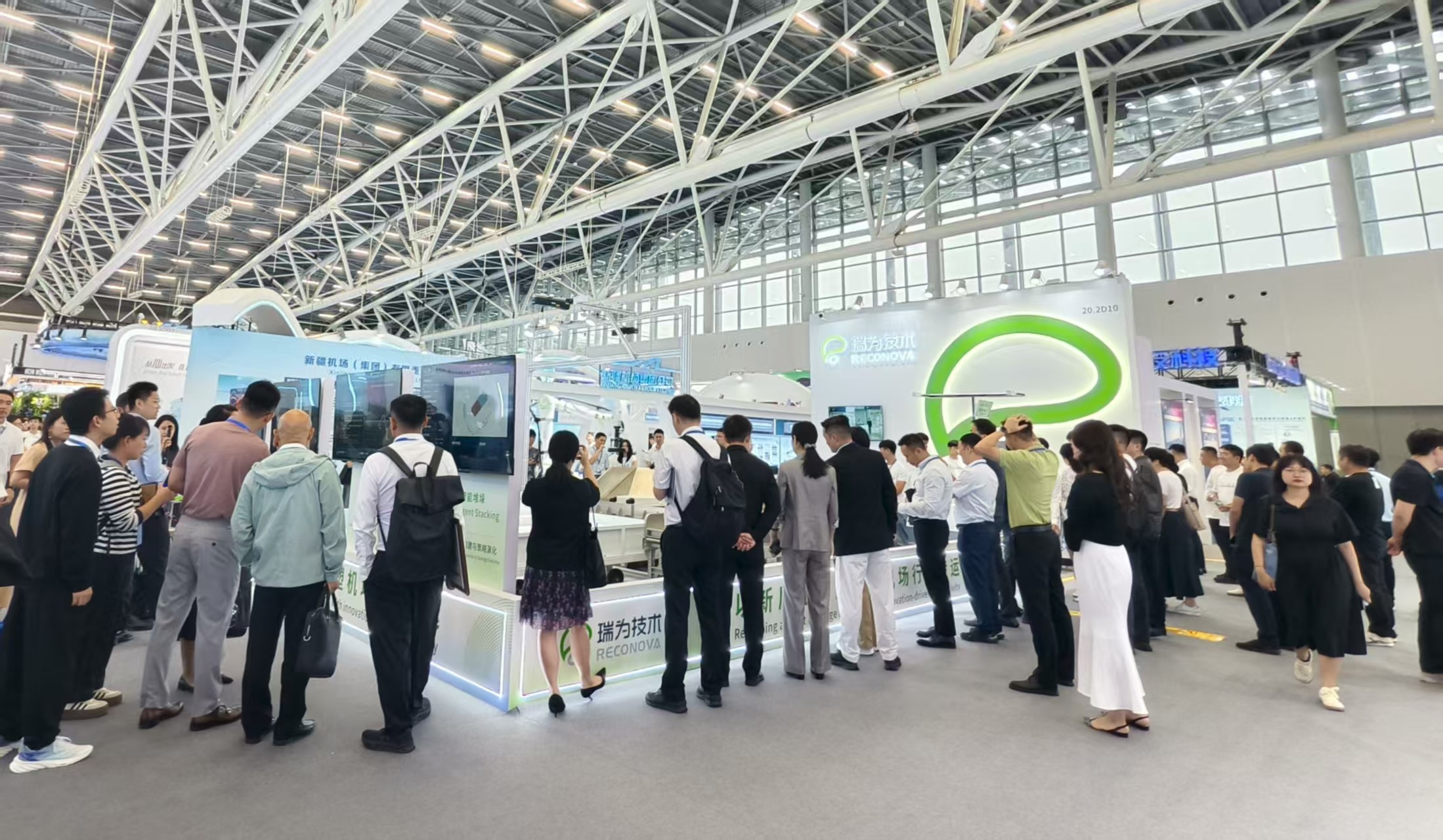
AntOne's impressive debut brought the underlying development company, Raywin Technology, back into the public eye. As a pioneer in the field of visual artificial intelligence in China, Raywin has been investing in the digitalization of the aviation industry for years. Its products are in use at about one - third of China's civil airports. AntOne's success was not only a concentration of Raywin's technological strength but also marked an important step for commercial robots from technological exploration to practical application in business scenarios.
As the aviation industry dives into digital transformation and Embodied AI technology moves from the production line into daily life, Raywin's rise is no accident. Its development provides a valuable reference model for the implementation of AI technologies in the industry.
Sharpening the blade for ten years: The evolution path from visual intelligence agents to commercial robots
Raywin's development is a classic example of Chinese AI companies, ranging from technological accumulation, scenario implementation to commercial validation. When the company was founded in 2012, Raywin focused on edge - intelligence technology from the start and continuously worked on visual perception to build capabilities at all levels of technology. From the early small models to today's large visual inference models based on perception and decision - making, Raywin has gradually developed a comprehensive system of visual intelligence technology, including the deep - learning architecture, the Qingtun large - scale visual model, and the capabilities of multimodal perception at the front line.
This forward - looking technology strategy has given Raywin valuable time to gain a foothold in the field of commercial robots later. As Shi Miaohong, the general manager of Raywin's commercial robot department, said, it was the previous in - depth work in the field of visual intelligence that enabled the company to quickly integrate resources and efficiently implement the technology when deciding to develop AntOne based on a visual intelligence agent.
During technological accumulation, Raywin has never neglected the commercial implementation of its technologies. The company has actively introduced the comprehensive capabilities of its "visual intelligence agent" into various industries such as aviation, commerce, and freight logistics to refine the technology through practical applications and collect industry experience. Around 2019, when the robot market was still in its infancy and most companies limited the application of robots to supporting tasks such as improving the customer experience, Raywin launched the first commercial robot, "Xiaorui", as a travel assistant robot. This robot took on tasks at Beijing Daxing International Airport, such as answering passengers' questions, greeting and guiding, and transporting luggage. This was Raywin's first successful attempt to explore the commercialization of robots.
The successful implementation of "Xiaorui" has allowed Raywin to taste the "fruits" of robot commercialization and has made the company think further: In which scenarios of the aviation industry can the efficiency be directly improved by the application of robots, rather than just optimizing the customer experience?
Through in - depth research on airport scenarios in China and abroad, the Raywin team found that there are many "labor - intensive" areas in the aviation industry with low efficiency. From passenger service, luggage sorting and loading to airport inspection, huge amounts of labor are used here. With the development of technology and the increasing validation of business scenarios, robots have broad application potential in these areas. They can effectively solve the problem of human overload by freeing up labor from simple, repetitive, and physically strenuous work and overcoming efficiency limitations.
In 2023, when the technology of vertical large - scale models was gradually ready for use, Raywin focused on the development of luggage transport robots and emphasized its market strategy on Embodied robots, which are regarded as the "jewel" of future industrialization. At that time, research in the Embodied AI industry was in full swing worldwide, academic research was making continuous breakthroughs, and the industry began to actively position itself. However, it was still far from the actual large - scale application of this technology, and no mature business model had been developed. But Raywin was ready to take on this challenge due to its accurate assessment of technological trends and in - depth understanding of industry problems.
The Sullivan report shows that in 2024, Raywin already held the leading position in the market for visual intelligence products in the Chinese aviation industry. The technological and business foundations were already very solid, and the company had taken an important step in the "evolution of the intelligence agent".
In the next five years, there will be a breakthrough in application cases where Embodied AI technology replaces physically strenuous work. Based on its own technological DNA, Raywin has decided to focus on the challenging but correct area of commercial robots for enterprises.
Shi Miaohong said that the challenges in the further development of commercial robots for enterprises compared with consumer robots lie in three dimensions: First, the technology must be reliable at an industrial level to meet the continuous operation in complex scenarios; second, cost control must achieve a well - tuned balance to meet customer - specific requirements while ensuring the economic effects of mass production; third, the robots must have a measurable return on investment (ROI) and the ability to directly create value to form a closed - loop between technological implementation and commercial success. These three challenges form the core barriers that distinguish commercial robots for enterprises from consumer products. This requires manufacturers to have both an in - depth understanding of technology and a profound insight into the industry. Especially in the complex and non - standardized environment of the aviation industry, the requirements for the safety and reliability of robots' 24/7 error - free operation, adaptability to high passenger volumes, and cooperation across different regions can magnify potential "technological deficiencies".
Therefore, AntOne's impressive performance at the exhibition was no accident and not a fleeting success, but a "condensation" of Raywin's more than ten - year understanding of technology and business. Raywin has always adhered to the strategy of "only one meter wide but a hundred meters deep". Although it has chosen a difficult area, it has provided a tangible example of the implementation of Embodied AI in the aviation industry in a short time.
A new chapter in human - robot cooperation: Being the "eyes" and "brain" of the enterprise
In the field of commercial robots for enterprises, there are two core problems that need to be urgently solved. Raywin has found its own answers with its unique approach and practice.
The first problem is how to deeply integrate technology into the business processes of customers to become the "brain" of enterprise problem - solving. This means that the implementation of technology should not aim at demonstrating "complete automation" but must balance the contradictions between the current technological maturity and actual needs.
Zhan Donghui, the founder and chairman of Raywin Technology, has a clear insight into this question: "Technology is never a one - way street. If we consider the overall problem - solving for customers, technology may solve 20 - 30% of the problem. The rest depends on product design engineering and understanding of the variable points of customer needs." From Raywin's perspective, the relationship between the company and customers is not just a simple relationship between service provider and customer, but rather a co - creation relationship. The supplier must understand the customers' problems, and at the same time, it must also educate the customers about the limitations of technology. Both sides must jointly clarify "what is negotiable and what must be achieved".
Take airport luggage loading as an example. From a technical perspective, the current capabilities of visual semantic understanding, mathematical inference, and execution control still cannot ensure the complete automatic loading of passengers' luggage. However, customers often expect robots to work completely automatically. In the face of this contradiction, Raywin first informed customers about technological bottlenecks and future technological iteration cycles through in - depth communication. Second, it realized seamless human - robot cooperation between AntOne and human labor in product design engineering, so that humans can work with robots safely, naturally, and comfortably. This practical approach respects both the objective laws of technological development and the actual needs of customers and achieves a positive interaction between technology and business.
The second problem is how robots can interact as naturally as humans in a complex and ever - changing human - robot cooperation environment to improve operational efficiency. To achieve this, both strong technological capabilities and in - depth thinking about the "warmth" of interaction are required.
AntOne's core capabilities come from the RecoThink visual inference intelligence agent independently developed by Raywin. This agent integrates perception, decision - making, execution, and cooperation. Driven by a large visual inference model, AntOne can perceive environmental information through 3D vision and the fusion of various sensors, independently collect luggage information, stacking status, and obstacles in the environment, determine the best position and pose based on this information, and plan an appropriate movement path. Then the robot precisely executes the entire process operation. At the same time, AntOne is equipped with an active and passive safety mechanism to ensure the safety of human - robot cooperation.
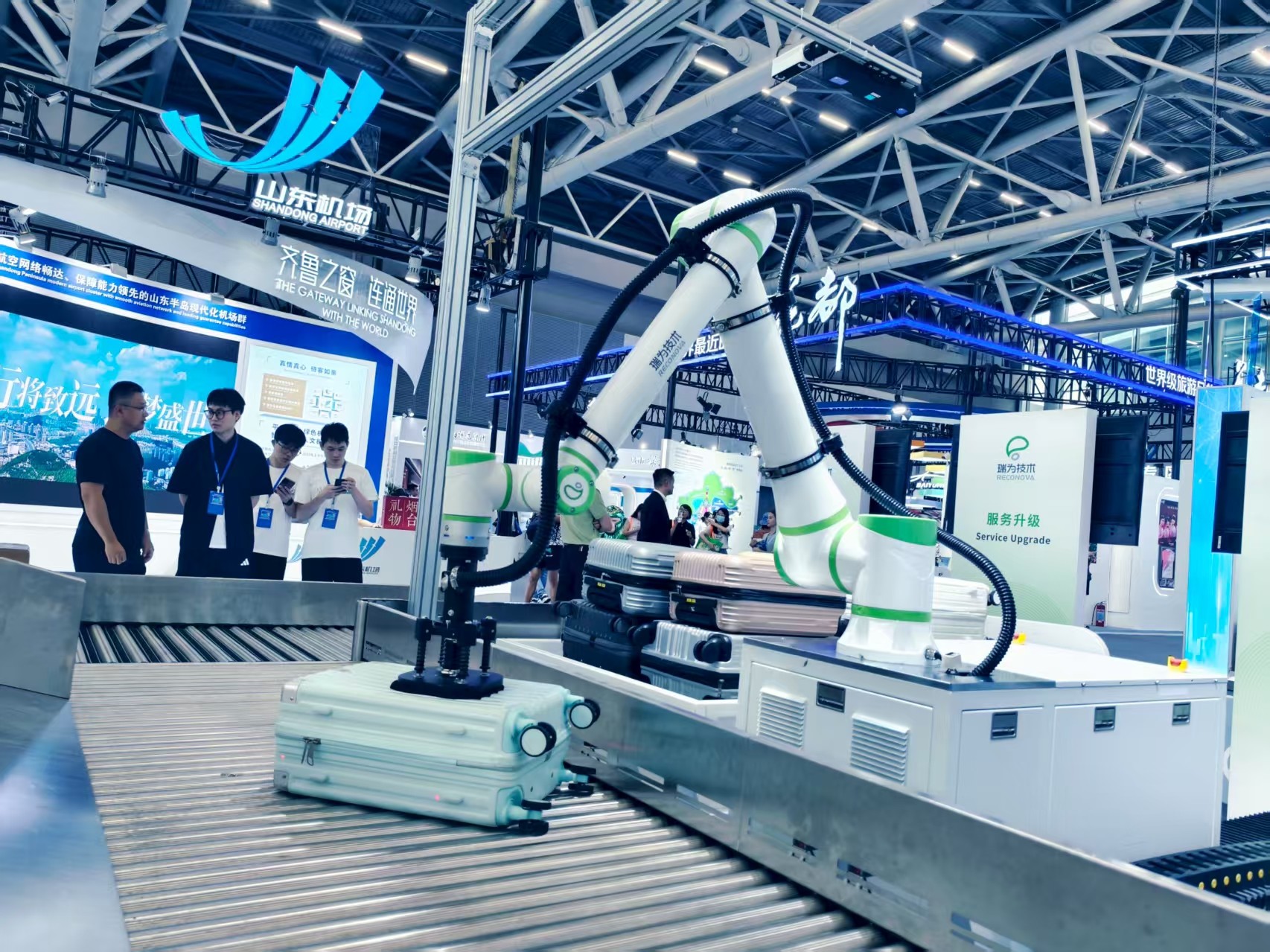
With the continuous self - learning and optimization of the model, AntOne will become "smarter" and can independently process and recognize more and more types of luggage. In product design, AntOne follows the concepts of lightness, miniaturization, and modularity, which is in contrast to traditional industrial automation solutions. The compact design of the robot body and the replaceable modular core components not only reduce the difficulty and time of installation but also allow for flexible adaptation to different types of locations.
From these two practical examples, we can see that Raywin deeply understands that the greatest challenge and at the same time the greatest opportunity for commercial robots today is to maximize the "value of humans". To succeed in the market, one should not aim at unrealistic complete automation but use robots to safely and efficiently support human labor and precisely intervene in low - efficiency areas to achieve a measurable increase in efficiency.
The "Raywin model" was able to open up a new "battlefield" in the aviation robot industry for the first time because it integrates core technology into the long - established ecosystem scenarios and balances innovation and flexibility through human - robot cooperation. This practical strategy has avoided the AI technology falling into the "castles in the air" trap in implementation and provides valuable experience for the industry.
Raywin's choice provides important clues for the application of AI and Embodied AI: The essence of technology implementation is not to replace humans but to reshape the human - robot relationship. Integrating technology into the workflow with the power of engineering to utilize both the efficiency of robots and the judgment ability of humans is the core advantage of commercial robots.
Perseverance in the technological wave: Only do what is feasible
In the ever - changing technological wave, Raywin's survival strategy is not to blindly chase one technological trend after another but to maintain a unique strategic perseverance in the "overheated" trends: to distinguish between real and false needs and always focus on whether the product can be validated in a closed scenario.
While the industry rushes into the diversity of technologies, Raywin has always focused on vertical areas such as aviation, commerce, and freight logistics. The courage for this "swimming against the current" strategy comes from the company's solid ecosystem - scenario protection wall and its clear direction. This is also the reason why Raywin has chosen the commercial robot sector. On the one hand, it is from a deep understanding of its own technological DNA. On the other hand, there is a real demand for the digital and intelligent transformation of the industry and an efficiency deficit in areas such as aviation and freight logistics. This promotes...