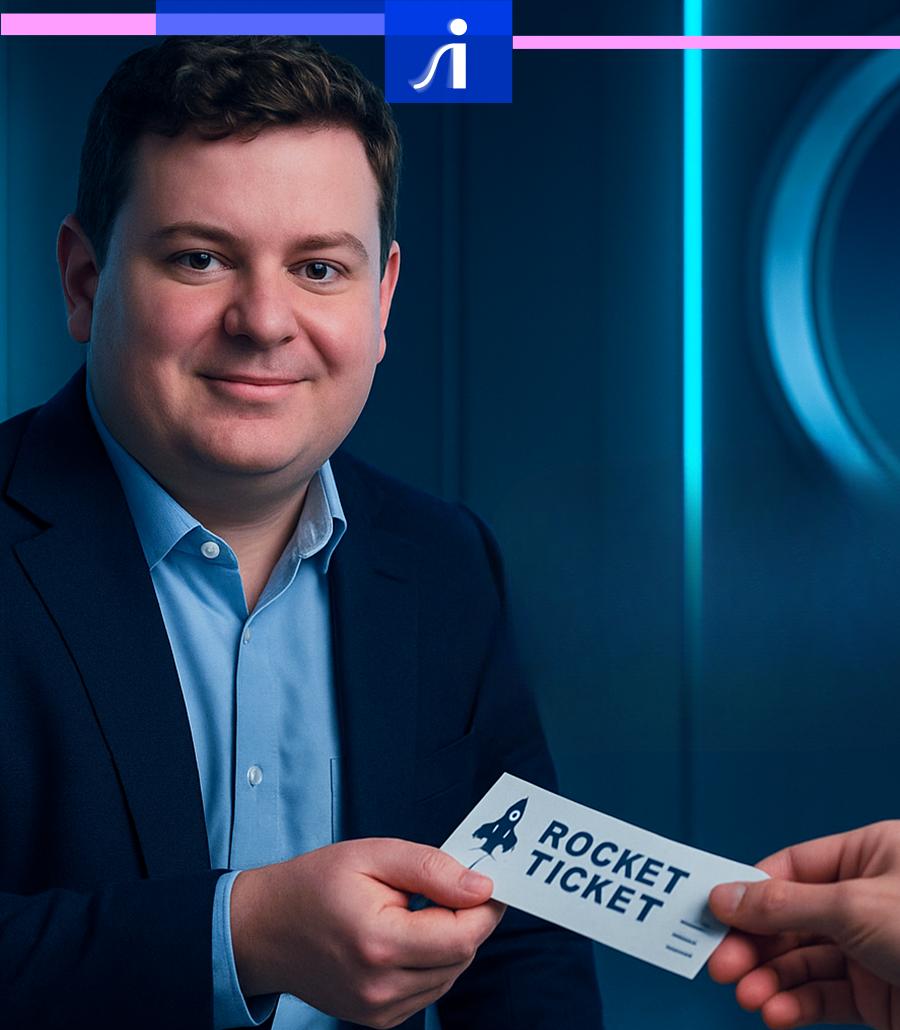
Nick Turley, the person in charge of ChatGPT: When someone hands you a ticket to a rocket ship, don't worry about where the seat is.
On August 8, 2025, after multiple "delays", OpenAI released its new flagship model, GPT-5. Once launched, GPT-5 topped the leaderboard in the large model arena and ranked first in all aspects such as writing and programming.
Meanwhile, Nick Turley, the head of OpenAI's ChatGPT, appeared on the podcast "Lenny's Podcast" and discussed with the host this large model that has sparked various controversies even before its official release. Nick Turley was previously the product head of Dropbox and Instacart. Now he has joined OpenAI and is in charge of perhaps the most important tech product in the world.
Nick Turley is a low - key person, and this is his first in - depth interview. During the conversation, he detailed the initial concept of GPT-5, its innovations, commercial design, and OpenAI's corporate business philosophy.
This interview was hosted by Lenny Rachitsky and compiled by the Future Human Laboratory. The following are the highlights of this podcast:
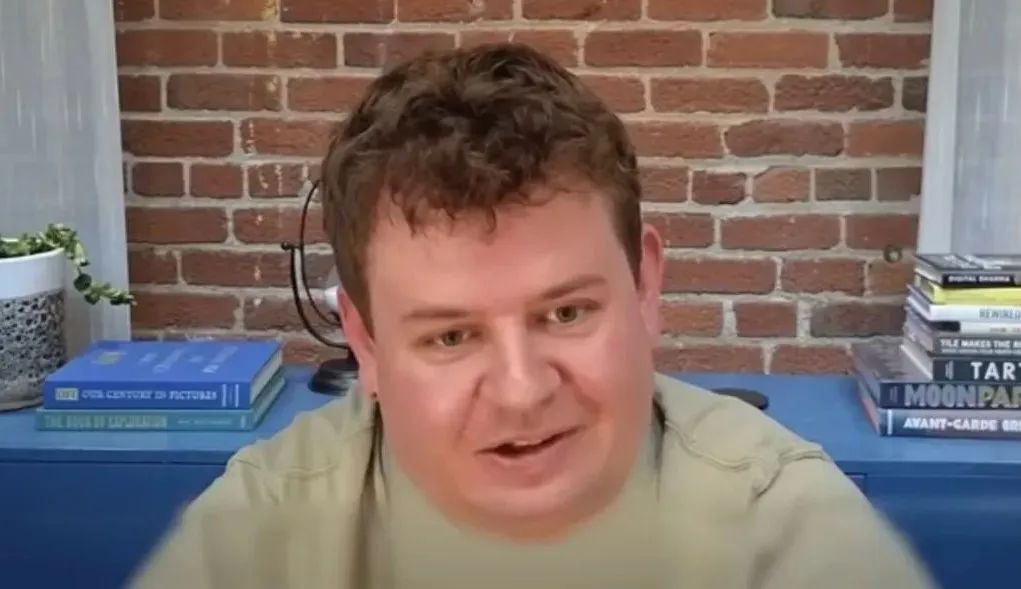
●Nick Turley
1. GPT-5: The Smartest AI Large Model So Far?
Host: Briefly introduce GPT-5 to the listeners. What breakthroughs does it have? What can ordinary people use it for?
Nick Turley: GPT-5 will be a qualitative leap. Most of the current 700 million users are still using GPT-4o and don't even care about the underlying model. But GPT-5 will make them clearly feel the difference. The specific parameters are not important. What matters is the user experience - it is smarter and more user - friendly.
For me, the most obvious improvement is in writing ability. I recently used GPT-5 to edit a blog post published on Monday, and its text aesthetics far exceed those of the old models. Its programming ability has also been greatly improved, especially in front - end code. It responds faster and can independently determine when it needs to "think". The best part is that we will offer it for free - other companies would definitely put a model of this level behind a paywall.
●Promotional image of GPT-5
Host: How long does it take to develop such a model?
Nick Turley: It's hard to define the starting point. GPT-5 integrates multiple technologies: inference architecture, post - training methods... It can be said to be the culmination of years of research.
2. GPT-5 Under Controversy: Still the Same Old Story?
Host: Some people think that your products always follow the same pattern (conversation form). I'm curious about its future direction.
Nick Turley: Currently, 10% of the world's population is using our products, and we have about 5 million business customers. It seems mature now, but in the early days, our goal was to build a super assistant. In fact, the codebase we used at that time was called the SA server (SA server), which was supposed to be a codebase for a hackathon. To some extent, it did limit the mental model we were trying to create. You would imagine it as a very anthropomorphic human - like thing, but it's not perfect.
Actually, what we envision is a product that can help you meet your needs in any scenario. It understands what goals you want to achieve. Different from the current chat mode, you no longer need to describe your problem in detail because it already understands your overall goal and has grasped the background information of your life. This is the direction we are trying to take, to build a product that can really understand you over time.
3. What's the Significance of Rapid Product Iteration?
Host: What exactly is the "maximum acceleration" culture you've created?
Nick Turley: This meme comes from me always asking, "If this is the most important thing on earth, how soon can we finish it?"
I just want to get straight to the point - why can't we do it now? Why not tomorrow?
In the field of AI, you can only truly understand a product's possibilities and users' needs after you release it. Many things can't be pre - deduced. You have to shoot first and then aim.
But it's not about being recklessly fast - the security review should be slow. The key is a powerful thinking tool that can force the team to distinguish between real obstacles and processes that can be bypassed.
✅ Product iteration: It's best to release a new version every day.
❌ Model security: The processes such as red - team testing must be strictly completed.
●Image source: IC - PHOTO
4. What Are the Product Visions and Interesting Development Stories of ChatGPT?
Host: Can you talk about the long - term vision of ChatGPT? Now everyone thinks it's just a chatbot.
Nick Turley: We'll have to change the name "ChatGPT" sooner or later (laughs) - either remove "Chat" or remove "GPT".
Natural language interaction will always exist, but the current turn - taking conversation mode is just the starting point. Think about it: GPT-5 can already automatically generate front - end interfaces. Why be limited to the chat box? I don't want all software in the future to become WhatsApp - style conversations.
Host: So is your initial concept of the "super assistant" still being promoted?
Nick Turley: Essentially, yes, but the word "assistant" has limitations - only Silicon Valley executives think about bossing around assistants all day. What we really want to do is:
Understand you: It can understand your long - term goals without you having to describe your needs in detail.
Take action: It's like having a considerate computer - savvy friend to handle everything for you.
Build a relationship: The "memory function" launched this year is just the beginning. Just as you don't deliberately "use the Internet" now, in the future, AI should exist as naturally as water and electricity.
5. The Beginning of a Successful Product: A Lightning - Fast Decision?
Host: I heard it only took 10 days from the decision to release to Sam's tweet?
Nick Turley: To be precise, it took 10 days to productize it. We had done a lot of prototype testing before - like a meeting note robot and a programming tool, but users always used them for other purposes. This is the mystery of AI: You have to really release it to know how people will use it. We didn't even have time to develop the chat history function. The first version was just a bare - bones research demonstration. The first user feedback the next day was: "Why isn't there a chat history?!"
Host: Has this become the most successful hackathon project in history?
Nick Turley: (Laughs) Now I always use this story to inspire internal hackathons. Back then, our team had engineers who worked on supercomputers temporarily writing iOS apps, and researchers doubling as back - end developers. Many of them are now working on GPT-6.
●Image source: IC - PHOTO
6. The Dramatic Inside Story of the Industry - Leading Product Pricing
Host: How did you come up with the pricing of $20 per month? Now the whole industry is copying this price.
Nick Turley: You may not believe it - at that time, the servers kept crashing, and we were in a hurry to use a paywall to filter users. At three o'clock in the morning, I called a very respected friend for help. He is very knowledgeable about pricing. We talked a lot, but I didn't have time to digest most of his suggestions. As a result, we only had time to post a Google questionnaire on Discord and used the classic "four - question pricing method" (Note: VanWestendorp price sensitivity test). The next day, the media reported: The ChatGPT team solved the pricing problem with four genius questions...
Actually, we almost set a higher price. Thinking about it now, we might have made the whole industry lose tens of billions (laughs).
Host: What about the enterprise version at $200 per month?
Nick Turley: It was purely accidental - too many companies started to ban employees from using it, so we urgently developed the enterprise version. Now we have 5 million enterprise users, and 2 million new users were added in the last month.
7. Behind the Great Success, What's OpenAI's Product Philosophy?
Host: You're working on consumer products, enterprise services, and developer platforms simultaneously. How do you allocate your energy?
Nick Turley: "The model is the product" is the core concept. For example:
One - third of the energy is used to optimize the core model (to make writing and programming more user - friendly).
One - third is used for "product - oriented research" (such as real - time search and memory function).
One - third is used for basic user experience (for example, the login - free function has skyrocketed the retention rate).
Host: Why does the user retention show a rare "smile curve"?
Nick Turley: Because "delegating to AI" is counter - intuitive - ordinary people need time to learn how to collaborate with AI. Just like when people first used search engines, they didn't know what keywords to enter.
Host: One last question - What does ChatGPT feel like now?
Nick Turley: It's like a browser in 1995 - people use it to touch the Internet for the first time, but they haven't seen the revolutions of social networks and smartphones yet. What we're building is an infrastructure that allows everyone to access intelligence equally.
Compiled by | Zhao Siqi
Cover image source | AI - generated
What kind of "super assistant" do you think GPT will become in the future?
Welcome to share your thoughts in the comments section!
This article is from the WeChat official account "Future Human Laboratory", author: Zhao Siqi, published by 36Kr with permission.