The first batch of middle-class people who went back home to open "village coffee shops" have returned to work.
01
In the scorching August, I met my best friend Ruolan at a Starbucks in Wangjing.
She was my former colleague when I worked at a media company in Hong Kong and was also a "rural coffee shop entrepreneur". From the south to the north, we had similar career trajectories.
It wasn't until more than two years ago that she escaped from the high - intensity urban work life in Beijing. With a longing for rural life, she returned to her hometown in Shanxi and opened her first "rural coffee shop", which set our lives on different paths.
Before starting her business, Ruolan told me passionately, "Maggie, I'm going to make a cup of coffee in the countryside and pursue an idealistic career."
However, sitting across from me today, she had changed back into her professional suit and high - heels, with a hint of helplessness in her smile.
"Look, I'm back," she said with a smile, pointing at the iced Americano in front of her. "This isn't the coffee of my dreams, but at least it can help me pay the bills every month."
From Ruolan's intermittent descriptions, I later got a general understanding of her entrepreneurial experience.
Since the day she entered the "rural coffee shop business", she lasted for 26 months in total, with a book loss of over 650,000 yuan. It wasn't an astronomical figure, but it was enough to make Ruolan lose hope.
Comparing the Americano in front of me with the scene where she had put her heart and soul into every cup of hand - brewed coffee in her rural shop last year, it really left a bittersweet feeling.
"At first, I thought that as long as there was coffee, an ancient village, and caves, I could succeed," she said. "But in reality, this industry is far more complex than I imagined, and the troubles behind it far exceeded my expectations."
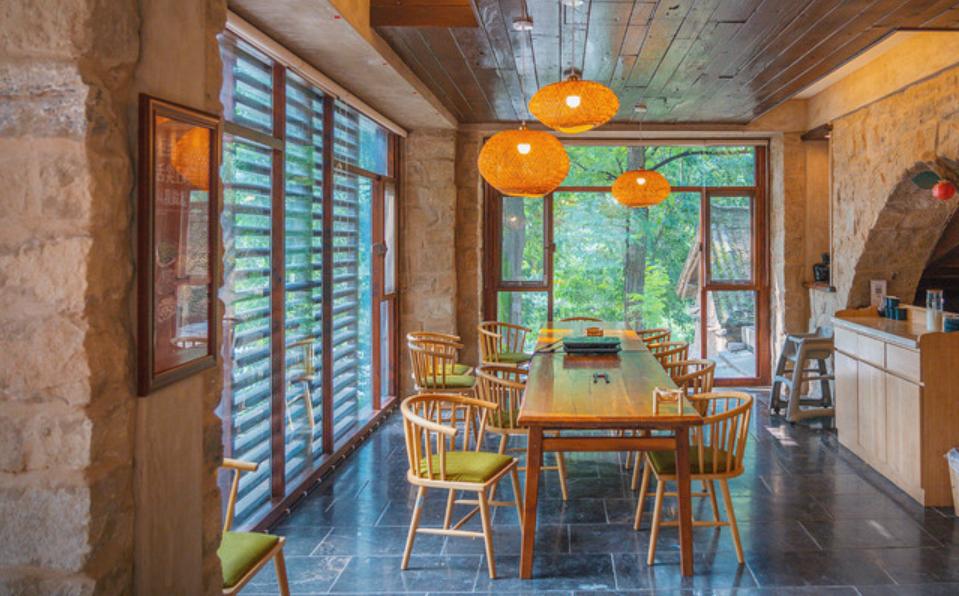
Two years ago, when the pandemic restrictions were just lifted, the trendy urban coffee shops suddenly fell out of favor. More and more people started to explore new ways in the surrounding rural areas - the "rural coffee shops".
Those coffee shops in the countryside were either hidden in tea gardens and terraced fields or stood in ancient village mansions. They carried both the fragrance of the soil and the charm of coffee. The first - generation "internet - famous rural coffee shops" like Waterfall Coffee and Deep Blue Project once generated over a billion yuan in revenue for Anji, Zhejiang in a year.
Ruolan's ancient kiln rural coffee shop was located in a small village at the junction of Shanxi and Hebei. It was next to a national highway and was about a two - hour drive from both Taiyuan and Shijiazhuang. The transportation was quite convenient, and there were also several newly - opened homestays in the village, so the overall environment was good.
She was personally involved in the decoration, painting the walls, moving tables, and pasting menus. She invested nearly 700,000 yuan, including equipment, soft furnishings, outdoor floor paving, and a bunch of Instagram - style greenery photo - taking installations.
"Who didn't dream of growing flowers while selling coffee at that time?" she said.
The coffee shop was really popular when it first opened. During the Tomb - sweeping Festival and May Day, many people in her WeChat Moments were showing off her coffee shop. She told me at that time that she could sell 2,000 yuan worth of coffee a day, with a net profit of at least 70%.

The problem was that she only calculated the profits during holidays and ignored the reality of the remaining 300 days.
The permanent population of her village was less than 1,000. Most of the young and middle - aged people had gone to work in other places, and the remaining were mostly the elderly and children. Almost no one consumed coffee on a daily basis.
The real customers were young people from the surrounding cities who drove there. But they only came during holidays. After taking pictures, they rarely came a second time.
"In essence, what I'm selling is a scene, not a product, nor an experience," Ruolan said. "It's like building a stage set. Once the actors have performed, the show is over."
The business started to decline in June of the opening year. There was a heavy rain in July, and she closed the shop for a whole week. In August, there were very few customers left. "I couldn't sell five cups a day, and the ice cubes melted for nothing," she said.
After the National Day Golden Week that year, she started to subsidize the business, relying on subsidies, her savings, and the illusion that things would get better next month.
Finally, in June this year, she couldn't hold on anymore.
02
On the night when Ruolan closed her coffee shop, she posted a message on her WeChat Moments: "Thank you to the friends who came and also to the customers who didn't. The wind blew through the ancient kiln and woke me up."
There were a lot of pity comments in the comment section, but this wasn't an isolated case of a single "rural coffee shop". It was a collective dilemma of the entire industry.
When "rural coffee shops" became a new synonym for internet - famous traffic, they also became a projection of urban fantasies onto the rural land.
It sounded like there was nostalgia, poetry, and a business model, but after the actual implementation, many people found that the reality was much colder, even more indifferent than the filtered pictures.
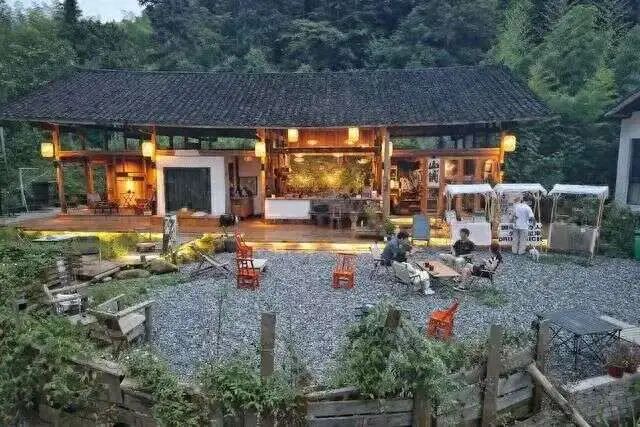
Ruolan and I summarized the three major blind spots of her failure:
First, the positioning was wrong.
She thought that opening a rural coffee shop was a combination of "coffee + retro and rough texture + emotional value", but she didn't expect that coffee wasn't a necessity, there was no way to monetize the rural landscape, and emotions couldn't pay the rent.
Before starting the business, Ruolan thought that the core model of many successful rural coffee shops was very simple: coffee + white walls + local scenery + swings = photo - taking economy.
There were numerous successful cases on Xiaohongshu, but from the perspective of actual business operation, this was a typical fragile traffic model. Once the novelty of taking pictures wore off, customers had no reason to come back.
She was very honest: "Many people came to see my coffee shop, not to drink coffee."
Second, the business model was too single.
Ruolan started with photo - taking traffic, but she didn't have the ability to generate repeat customers. She didn't build a community, organize local activities, or link with agricultural products, and didn't form any ecological closed - loop.
Except for coffee, there were almost no repeat purchases of other products, no in - depth services, no community connections, no linkage with homestays, no sales of agricultural products, no local handicrafts, and she didn't even offer simple afternoon tea platters.
As a result, a customer would only consume one cup of coffee at most, with an average customer spend of 50 yuan. No matter how high the profit margin was, it couldn't cover the venue and labor costs.
Those well - run rural coffee shops, such as Waterfall Coffee, Deep Blue Project, or the pottery coffee shop in Anji, had already embarked on a composite scenario path of integrated operation of coffee + research and study + agricultural products + cultural and creative products + short - form content + community.
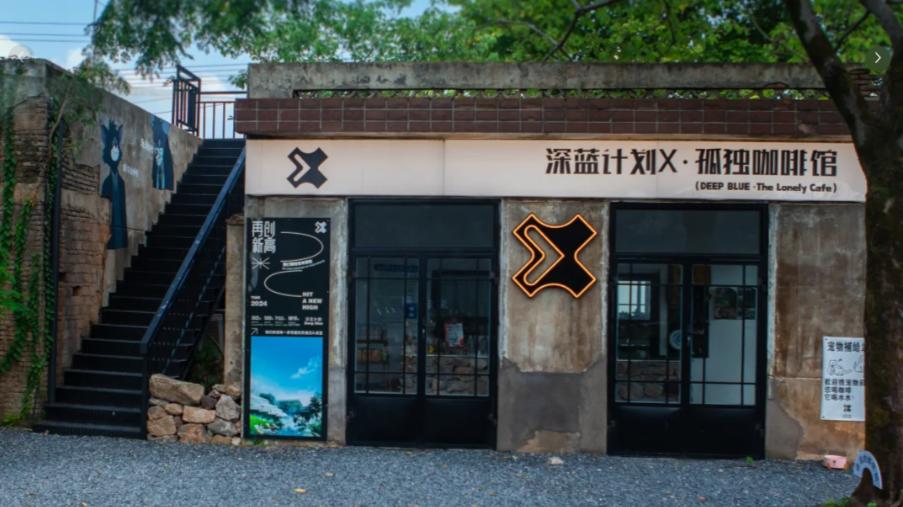
The third and most crucial problem was the mismatch of demand.
Ruolan said that many "rural coffee shop" investors still thought, "I've built a terrace that looks great for taking pictures, so naturally people will come."
But in reality, there were significant differences in coffee culture between North China and the Yangtze River Delta region. The demand for coffee was never a necessity, let alone a rigid daily consumption. Once the demand was mis - positioned, the business model could only rely on the sparse traffic during "weekends + holidays".
She said, "Looking back now, I shouldn't have thought that 'going back home' was a cost - reducing strategy. The result was low income, high uncertainty, and high operation and maintenance intensity, which were completely disproportionate."
I nodded.
Ruolan was one of the first middle - class people to go to the countryside to open rural coffee shops, but obviously she wasn't the last one to fail.
The experiences of these pioneers were essentially an experiment of briefly testing the urban entrepreneurial dream in the rural soil. On the surface, it was about scenery, relaxation, and a slow life, but at the core, there was still an unproven cash - flow logic, a mismatched consumption structure, and a business model lacking long - term repeat customers.
Ruolan sighed and said that on the day she closed the shop, she couldn't even sell the equipment because there were three newly - opened rural coffee shops nearby, just like her, relying on holidays to sustain the whole year.
03
Before the gathering ended that day, she gritted her teeth and said, "Maggie, I wasn't wrong to open a rural coffee shop. I just made the wrong choices in direction and location."
I thought there was some truth in this statement.
Let's start with the direction. When everyone uses the template of literary filters + scenism, consumers will quickly become numb.
At the end of 2024, the Lvjie team surveyed more than 30 popular rural coffee shop clusters in counties across the country. We found that more than 60% of rural coffee shops were barely making ends meet, and some had even closed within half a year.
New shops were opening faster and faster, and there were more and more pieces of equipment for transfer. In fact, only a very small number of them could achieve long - term success. They didn't rely on one - hit wonders but on an ecological system.
There's nothing wrong with the coffee shop business itself. The mistake was that too many people thought that as long as there were rice fields, swings, and a hand - brewing kettle, they could capture the rural sentiment of a generation.
There were indeed some successful cases, such as the Deep Blue Project in Anji, the pottery coffee shop in Mawangxi, and the rice milk coffee shop in Hubei Village, Jiangxi. They became popular because of their natural scenery, unique scenes, and industrial linkages.
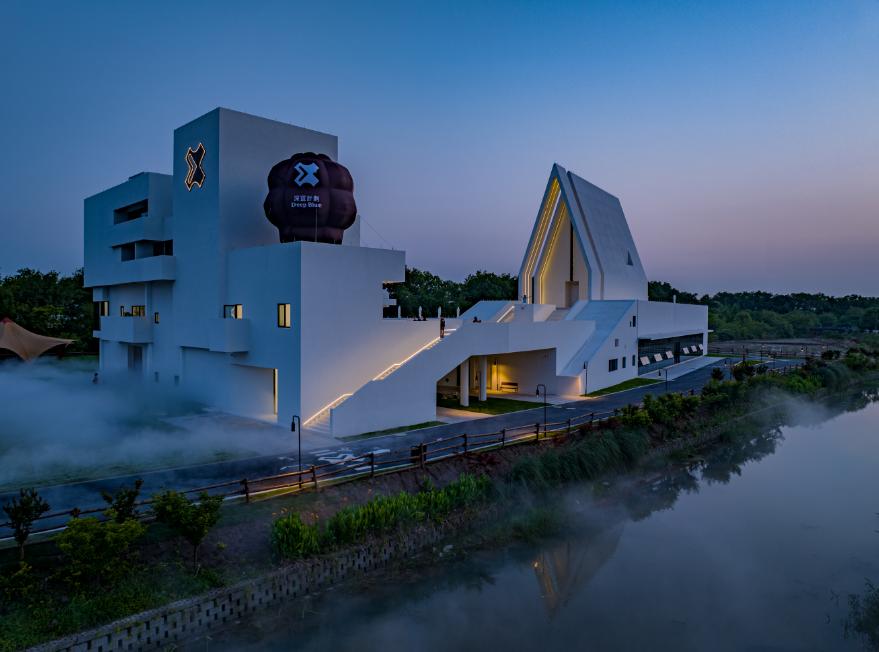
The new rural - cultural - tourism format of the "Auditorium" created by the Deep Blue Project
But this doesn't mean that if you build a white - walled swing at any village entrance and hang a couple of strings of light bulbs, you can replicate their success.
What we see is the Waterfall Coffee, but what we don't see is the underlying natural resources, the urban radiation circle, and the entire supply chain.
Secondly, there was the issue of "choosing the wrong location" that Ruolan had realized.
Why was Anji successful?
It wasn't because the words "rural coffee shop" had some magic power. It was because it had the following underlying capabilities:
It's less than 1.5 hours away from Hangzhou, so there is an abundant source of urban customers;
The county has a solid foundation in cultural and tourism, so it can handle the tourist flow;
The industrial structure of the villages has already been modernized, and the villagers are willing to participate in the co - construction;
More importantly, the natural resources are scarce, and you can't replicate the "deep - mountain waterfall".
To put it simply, what succeeds isn't the label of "rural coffee shop", but those few people with long - term vision, organizational ability, and resource integration ability.
At the same time, the current problem is that the "rural coffee shop" industry has started to become highly competitive.
If you shoot a video of a rice field, others will take an aerial photo of a terraced field. If you put up a white - walled swing, others will add a glass dome and a rotating hanging chair. If you show off your hand - brewed latte art, others will live - broadcast the process of grinding beans and measuring the acid value. As soon as you finish writing your copy, there will be 50 similar posts on Xiaohongshu.
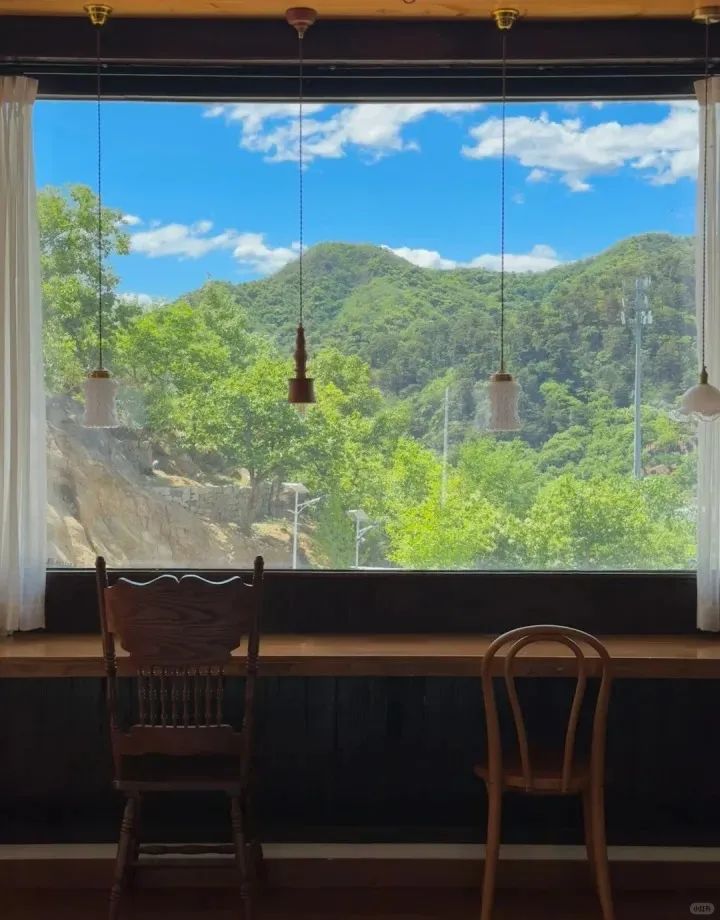
So, with such intense competition, does the "rural coffee shop" really have no future?
Not entirely.
It can no longer rely on the model of replicating Starbucks next to the rice fields. Instead, it should adopt a new logic of integrating into the village, serving the village, and connecting with the village.
I summarize it into four keywords, which are also the basic model of the future "Rural Coffee Shop 2.0":
1. Product diversification
A cup of coffee isn't the end, but an entrance to the "rural product economy".
For example, the rice milk coffee shop in Hubei Village, Jiangxi, turned the self - produced rice in the village into a drink. The price increased from 3 yuan per catty to 28 yuan per cup, and they also sold rice milk gift packages, with the orders increasing tenfold.
This isn't just selling coffee; it's "selling stories + selling the origin".
2. Space localization
It's not about grafting a bourgeois aesthetic but about activating the cultural texture.
Like the pottery coffee shop in Mawangxi, which doesn't demolish old houses or paint the walls white. Instead, it retains the adobe bricks, wooden beams, and old porcelain pieces, which is more touching. Beyond the decoration, it allows people to see the historical rhythm of the village.
The more real the