Third - generation succession, Hang Lung makes a turn
In the second year of leading Hang Lung, Chen Wenbo presented a report card that he was satisfied with.
On July 30, Hang Lung announced its first - half results. As of June 30, the total revenues of Hang Lung Group and Hang Lung Properties were HK$5.202 billion and HK$4.968 billion respectively, down 18% and 19% respectively. This was mainly due to an 87% plunge in property sales revenue.
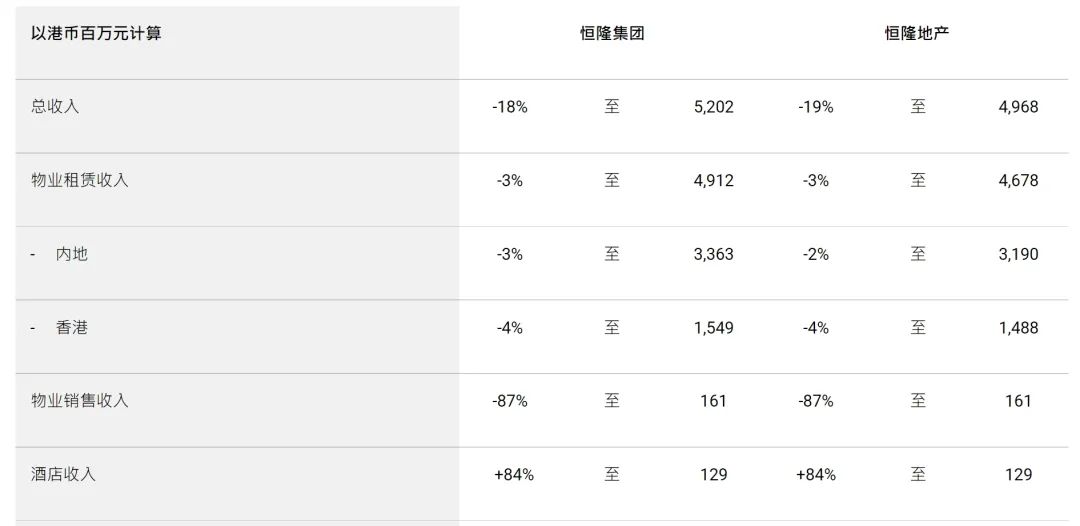
Source: Hang Lung official website
Meanwhile, the increase in financial expenses led to a 7% and 9% decline in the basic net profit attributable to shareholders to HK$1.191 billion and HK$1.587 billion respectively; the total operating profit also decreased by 6% and 5% to HK$3.408 billion and HK$3.255 billion respectively.
Although the data such as revenue is still falling, Hang Lung decided to change its strategy from conservative to aggressive.
At this results briefing, "seeking progress while maintaining stability" in expansion became the main theme. Compared with the "preserving capital and ensuring survival" mentioned many times in previous results briefings, Hang Lung has changed a lot this year.
The stability lies in the property leasing business. The income from this business dropped by 3% in the first half of the year. In the current weak market, this decline can be ignored. Moreover, in the shopping mall segment, which accounts for the largest proportion, rents in 70% of the projects are rising, and the overall occupancy rate remains at a high level of 94%. "In the first half of this year, Hang Lung demonstrated a robust business model under continuous market pressure, and the performance of its property portfolio is gradually stabilizing," said Chairman Chen Wenbo at the results briefing.
The progress is targeted at Hangzhou. Hangzhou Hang Lung Plaza will start to open in phases from the second half of the year. With the newly leased part of the department store, the scale of Hangzhou Hang Lung Plaza will directly expand by 40% in the future. It aims to compete for the right to speak in the Wulin business district and even the high - end luxury market in Hangzhou, safeguarding Hang Lung's future competition.
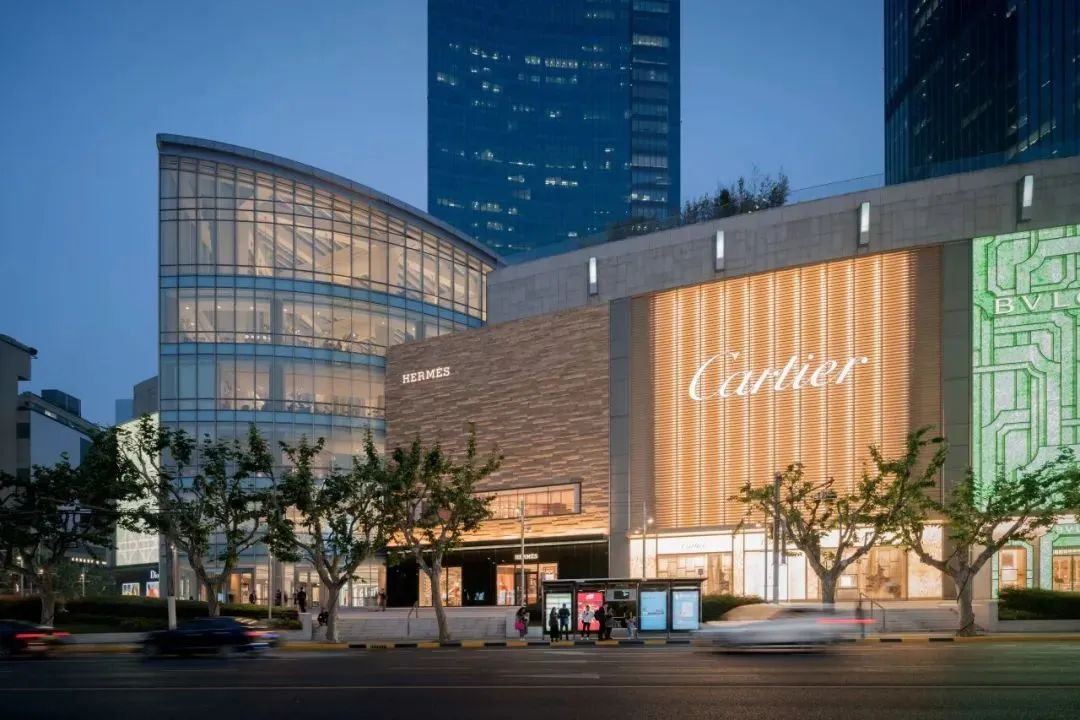
Shanghai Hang Lung Plaza (Source: Project official)
01 The worst is over
Hang Lung's performance mainly depends on the Chinese mainland market.
Although it is a Hong Kong - funded enterprise, since 2005, the Chinese mainland has gradually become Hang Lung's main battlefield. In terms of property leasing income, the Chinese mainland accounts for 69%, while Hong Kong only accounts for 31%. Moreover, for both Hang Lung Group and Hang Lung Properties, the decline in income in the Chinese mainland market is lower than that in the Hong Kong market. It is worth mentioning that the only rising business among Hang Lung's three major business lines, the hotel business, with an 84% increase, is also due to the room revenue of the Grand Hyatt Kunming on the Chinese mainland.
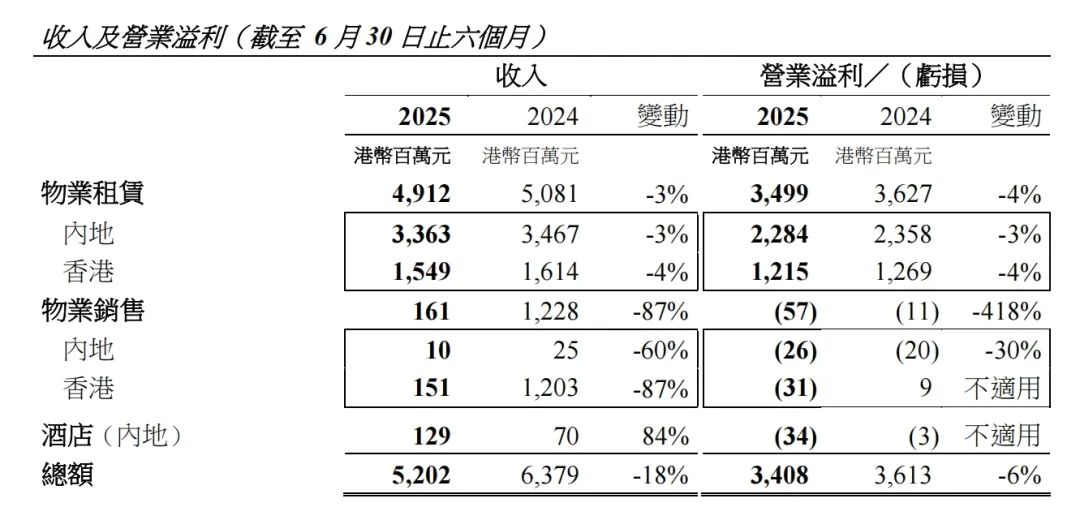
Source: Hang Lung's financial report
On the Chinese mainland, its core product, Hang Lung Plaza, is the key.
Although affected by the decline in consumer confidence, the rent has changed, but the overall performance and income have remained stable. In the first half of the year, the total income of the shopping malls was HK$2.412 billion, basically the same as the same period last year. In terms of occupancy rate, among the 10 shopping malls owned on the Chinese mainland, except for Wuhan Hang Lung Plaza and Shenyang Fucheng Hang Lung Plaza, which have an occupancy rate of around 87%, the occupancy rates of other projects are all above 94% and mostly show an increasing trend.
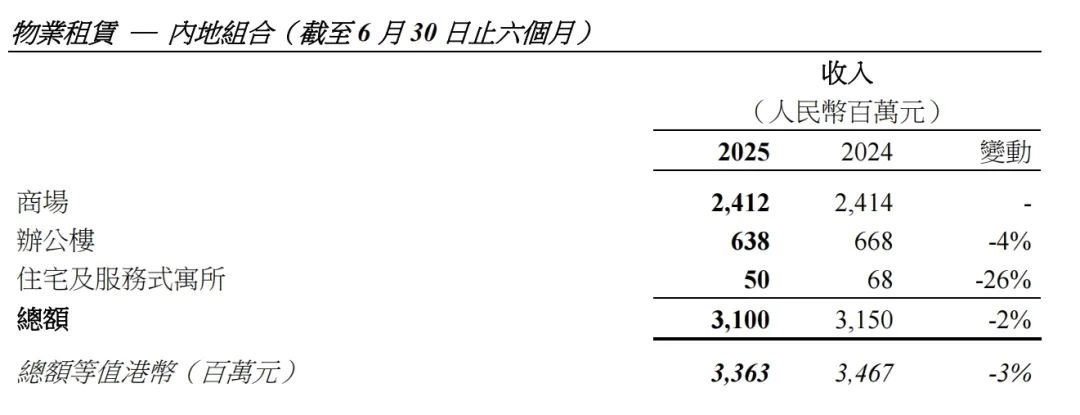
Source: Hang Lung's financial report
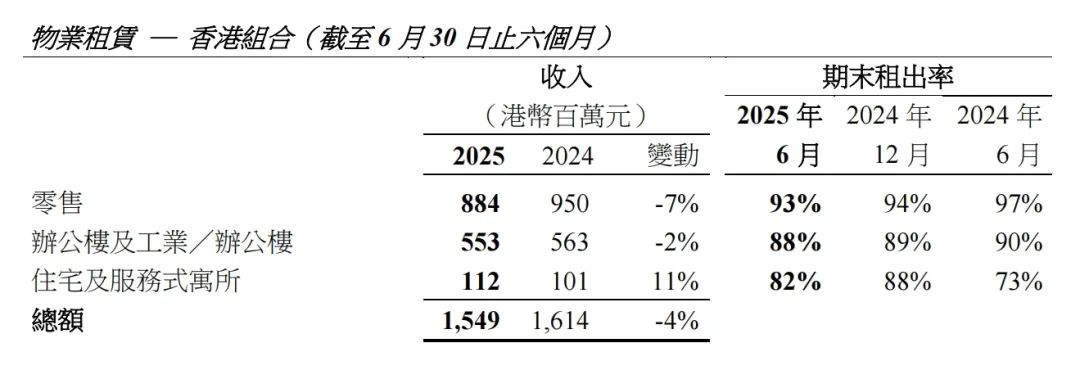
In the Hong Kong market, the overall property leasing income decreased by 4% to HK$1.549 billion. The largest retail business performed sluggishly due to changes in the consumption habits of tourists to Hong Kong and local residents. The income dropped by 7% to HK$884 million, and the tenant sales decreased slightly by 2%. The retail income in the main commercial and tourist areas dropped by 9%, while the occupancy rate remained at 95%.
Source: Hang Lung's financial report
Residential and serviced apartments are the only business with positive growth in the Hong Kong market. The occupancy rate increased by nine percentage points compared with the same period last year, and the income increased by 11%. The newly implemented talent admission scheme by the Hong Kong government is the main driving force.
Regarding the report card for the first half of this year, Lu Weibo, the Chief Executive Officer of Hang Lung Group and Hang Lung Properties, said that Hang Lung survived the most difficult times by various means and believes that the worst is over.
02 The third - generation successor
At the beginning of last year, 75 - year - old Chen Qizong announced his retirement and handed over the position of chairman to his eldest son. Since then, Hang Lung Group has officially entered the era of Chen Wenbo.
In the first year of his tenure, Hang Lung's performance was mediocre. In 2024, the total income of Hang Lung Group was about HK$11.76 billion, a year - on - year increase of 8%; the total property leasing income was about HK$10.033 billion, a year - on - year decrease of 6%. Embarrassingly, the rent income of Wuhan Hang Lung Plaza, the first project that Chen Wenbo followed through from start to finish after joining Hang Lung, dropped by 19% in 2024, ranking last in the group. However, the projects he participated in, such as the one in Dalian, performed well.
Similar to most successors of family - owned enterprises, after Chen Wenbo joined Hang Lung Group in 2010, he also started from the grassroots level. He first worked in the leasing management department and then gradually rose to positions such as administrative assistant, senior manager, and assistant director. He became an executive director of the group's board of directors in 2016. In the 2016 "Letter to Shareholders" of the group, the then - chairman highly praised him: He has excellent strategic thinking and is good at operational management. He is wise, good at making business decisions, and has excellent interpersonal relationships, which are his greatest advantages.
Judging from Hang Lung's overall performance in the past two years, the third - generation successor Chen Wenbo has initially withstood the test.
Like Hang Lung, the inheritance of most family - owned enterprises in China basically follows the path of "sons succeeding fathers". In Hong Kong, there are Henderson Land and Sun Hung Kai Properties, and on the Chinese mainland, there are New Hope and Country Garden. However, not all of the second - or third - generation successors who have taken over the baton are suitable for the job.
Cheng Chi - kong, the third - generation successor of New World Development, has set an example.
In 2017, 38 - year - old Cheng Chi - kong became the Chief Executive Officer of New World Development and the third - generation helmsman of the family. After that, New World began aggressive expansion. It spent more than HK$50 billion to acquire projects in Hong Kong, and also purchased land and projects on the Chinese mainland, actively replicating the K11 product. Although its influence has increased, the consequences are also serious: poor performance and rising debt. During his tenure, the market value of New World evaporated by more than HK$72 billion. Finally, more than a month ago, Cheng Chi - kong resigned from all positions in New World and completely faded out of the family - owned enterprise.
This situation is not uncommon in China. According to statistics, 60% of Chinese family - owned enterprises decline due to failed succession, mainly because the successors are not suitable and there are many internal family struggles.
Looking back at Hang Lung, the harmonious Chen family at least allows Chen Wenbo, who is currently at the helm, to have no worries. Having been in power for just over a year, it is too early to evaluate whether he is suitable. However, the Hangzhou project led by this third - generation successor may be a strong proof.
03 Adjustment and optimization
As an early - entrant Hong Kong - funded enterprise in the Chinese mainland market, Hang Lung officially started its commercial layout on the Chinese mainland with Grand Gateway 66 in Shanghai one month before the new millennium. So far, it has opened a total of 10 Hang Lung Plazas in 8 cities, including Dalian and Wuxi. High - end luxury is its characteristic.
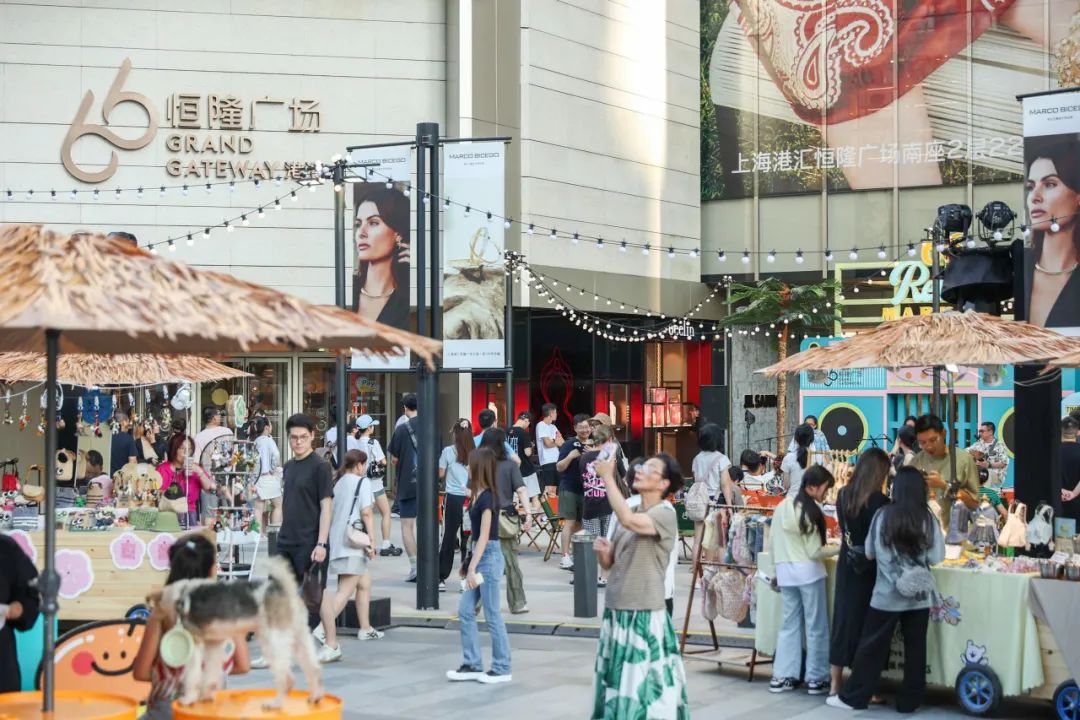
Event site of Grand Gateway 66 in Shanghai (Source: Project official)
The two projects in Shanghai support half of Hang Lung's business. The rent income accounts for about 59%, and the occupancy rate remains at around 99%. The projects in Dalian, Wuxi, and Kunming also performed well. The rent increase was up to 10%. The occupancy rate of Kunming Hang Lung Plaza was as high as 99%. Hang Lung Plaza has become the well - deserved representative of high - end luxury in the three cities.
Where there is good news, there is also bad news. The nearly 40% decline in rent income of the projects in Wuhan and Shenyang has dragged Hang Lung into trouble. Lu Weibo admitted that such performance is "related to factors such as local market competition and mall positioning".
Take Wuhan Hang Lung Plaza as an example. In the three years after its opening, the rent income increased by about 64%, and the sales also increased at a high rate every year. The performance started to decline last year, and the biggest threat came from Wushang Mall, a "local powerhouse" just across the road. As the largest shopping mall complex in Wuhan, Wushang Mall ranked first in Central China with sales of 18.9 billion yuan last year, and its influence is obvious. Hang Lung Plaza, which entered Wuhan in 2021, is inferior in terms of business format richness and brand penetration. Competing directly with Wushang Mall, Hang Lung naturally does not have an advantage.
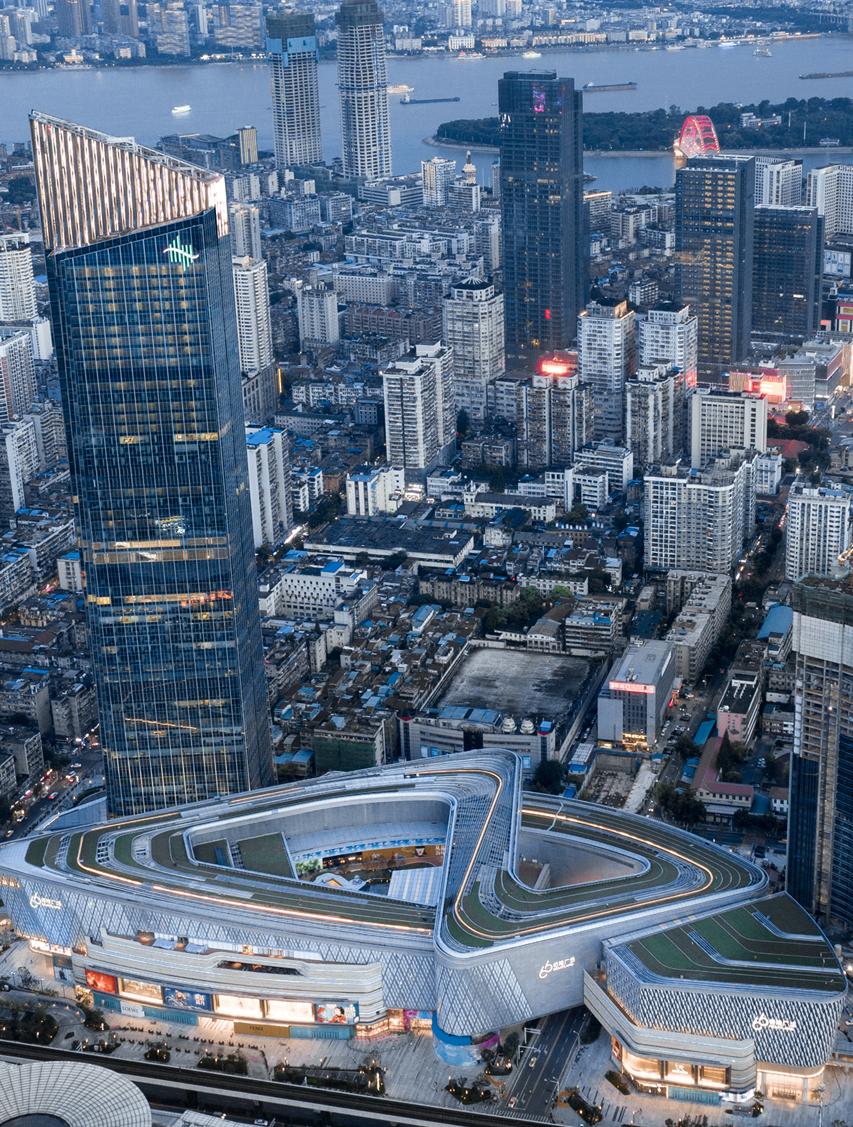
Wuhan Hang Lung Plaza (Source: Project official)
This situation is often caused by multiple factors. One is the location. The economic vitality of second - tier cities such as Wuhan is not as good as that of first - tier cities, so there is less development space for high - end luxury shopping malls. The other is the timing. Shenyang Fucheng Hang Lung Plaza opened more than a year later than MixC. It was already at a disadvantage in terms of timing. Coupled with the decline of the business district after the relocation of the municipal government, it was helpless that the passenger flow could not be maintained.
More importantly, in the past decade or so, the pattern of the high - end luxury business in China has changed dramatically. Shopping malls such as MixC, IFC, and SKP have emerged one after another. Relying on measures such as product upgrading, unique business ecosystems, and the integration of culture and art, they have won a place in the high - end luxury field. Although Hang Lung has its own advantages in terms of brand, service, and hardware and has tried cross - border cooperation, it is becoming increasingly difficult to break through in the current highly competitive environment.
Hang Lung under the leadership of Chen Wenbo is actively responding by making timely adjustments and optimizing the layout.
It can be seen that the expansion of Phase III of Shanghai Hang Lung Plaza and Phase II of Wuxi Hang Lung Plaza is accelerating; Shenyang Fucheng Hang Lung Plaza is expanding its catering options, and Phase III has been changed to a "city park" to activate the surrounding environment and stimulate passenger flow.
At the same time, Hang Lung is opening up a new battlefield - Hangzhou.
Hang Lung first acquired the Baijingfang plot in the Wulin business district. In July this year, it leased the 20 - year operation right of Hangzhou Department Store (Wulin Intime Department Store B and C) for 3.3 billion yuan. So far, the total floor area of Hangzhou Hang Lung Plaza is close to 150,000 square meters. Chen Qizong, the former chairman of the group, had high hopes for the Hangzhou project. He hoped to build it into the best Hang Lung Plaza on the Chinese mainland outside of Shanghai.
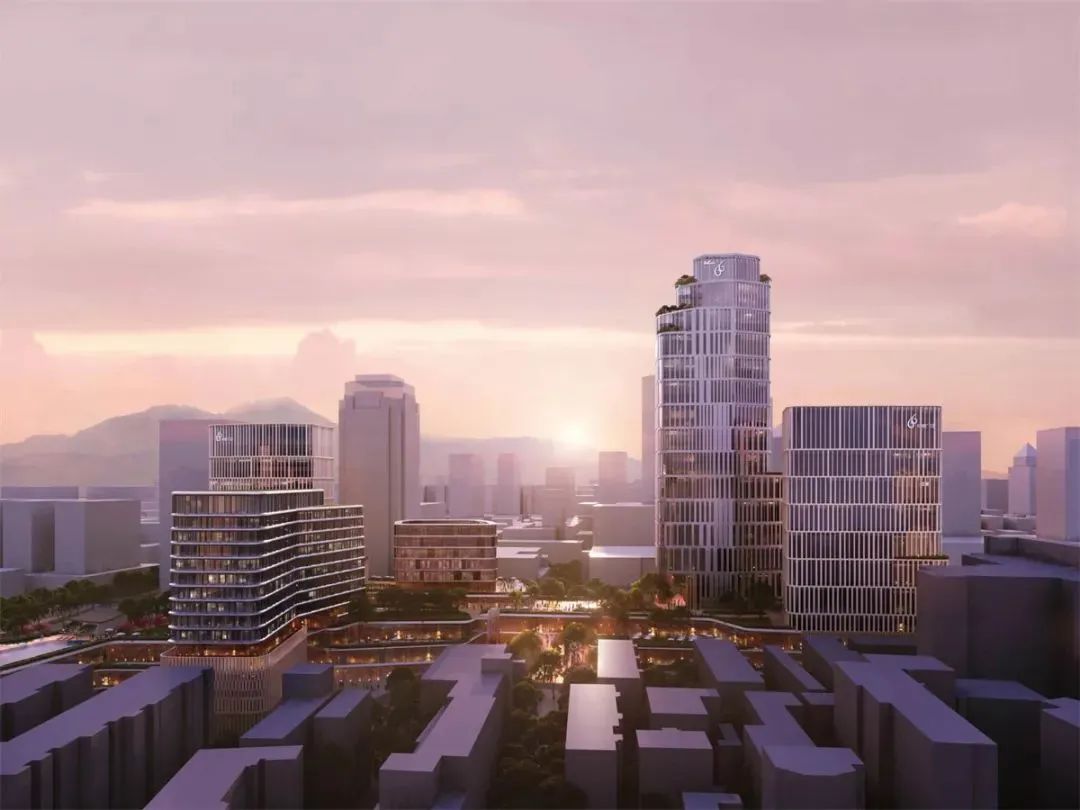
Rendering of Hangzhou Hang Lung Plaza (Source: Project official)
Hang Lung values Hangzhou for its strong consumer power. Among the top 20 shopping malls in China in terms of sales last year, three were from Hangzhou. In terms of quantity, only Shanghai could compete with it. Moreover, the sales of all three