Starting with the "Quest for Carbon" and delving deep into the industries: The first stop of the 4th Carbon Neutrality Star Species event visited the industrial belt in Zhengzhou Airport Economy Zone.
From July 23rd to 24th, an unprecedented "Double Carbon Star Species" initiative quietly kicked off in Zhengzhou Airport Economy Zone.
This time, there was no judging and scoring under the spotlight, nor was there a fierce competition based on business models. The first on - site visit under the new mechanism of the 4th "Double Carbon Star Species · Carbon Exploration Plan" was themed "Future Transportation" and took place at the industrial belt.
Jointly organized by 36Kr, Orient Securities and its subsidiaries Orient Securities Innovation and Orient Securities Capital, in collaboration with Zhengzhou Airport Economy Zone, they delved into the new energy supply chain. At the Zhengzhou D Space · New Energy Vehicle Science Museum, guests such as Zhang Hongjun, Deputy Director of the Zhengzhou Airport Economy Zone Management Committee, Zhao Yajun, Deputy Director of the Financial Bureau, Xu Ming, Deputy Director of the Science and Technology and Industry Bureau, Li Zheng, Partner and Vice - President of 36Kr, Liu Zhigang, Head of the Office of Orient Securities, Liu Xiaokang, Deputy Director of the Executive Committee of Orient Securities Capital, and Xiao Meijuan, Brand and Public Relations Director of BYD's Brand and Public Relations Department, attended the event to jointly discuss new ideas for double carbon and new industrial logics. Meanwhile, a themed round - table discussion titled "The Double Carbon Report at the Mid - term Node: New Logics of Industrial Origin" and a special roadshow for innovative enterprises in the new energy vehicle industry chain were also held.
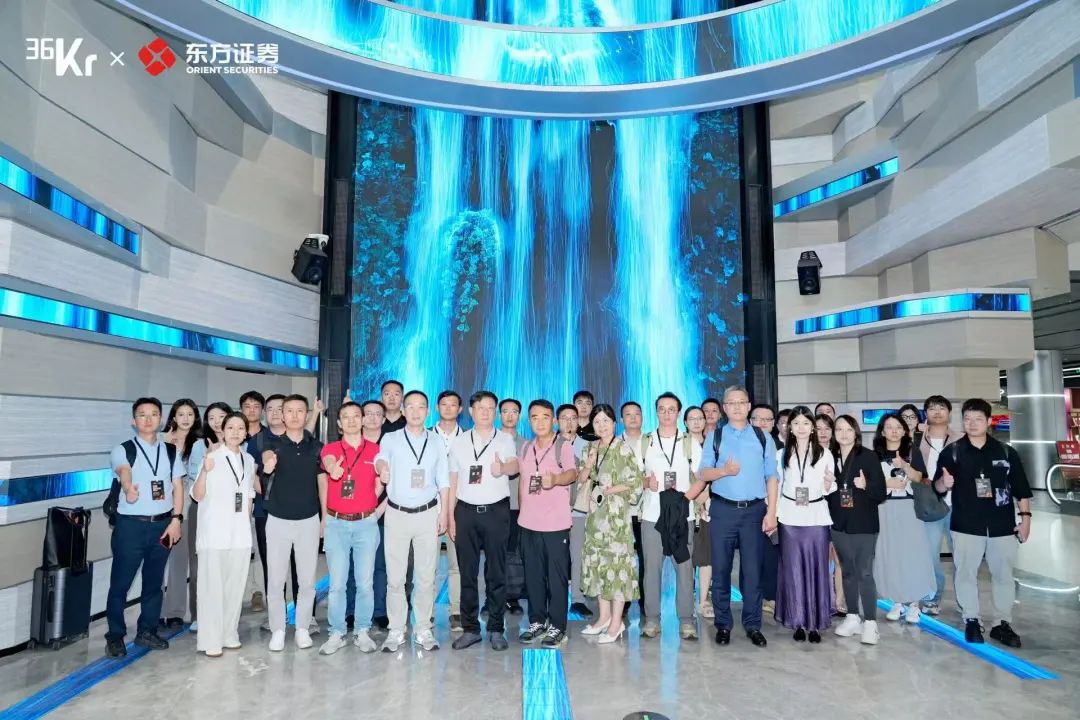
If the previous three sessions of the "Double Carbon Star Species" mainly emphasized technology evaluation and capital connection, then this year's "Carbon Exploration Plan" chooses to return the "double carbon" issue to the real industrial scene.
In 2025, when the "3060 Goals" enter the mid - term assessment node, we have seen an encouraging new report.
01
As the Node Approaches: What Does the Industrial Chain Really Need?
In 2025, there are less than five years left until the "carbon peak" in 2030. This is not just a numerical countdown but also means that China's green transformation has entered a substantial stress test. For the "Double Carbon Star Species", this year's mechanism transformation is also in line with the trend - from the selection logic of "who can tell a good story" to the structural verification of "who is really on the path".
At the round - table forum held at the D Space · New Energy Vehicle Science Museum, participants from different links of the industrial chain gave the industrial consensus for this stage around the topic of "The Double Carbon Report at the Mid - term Node".
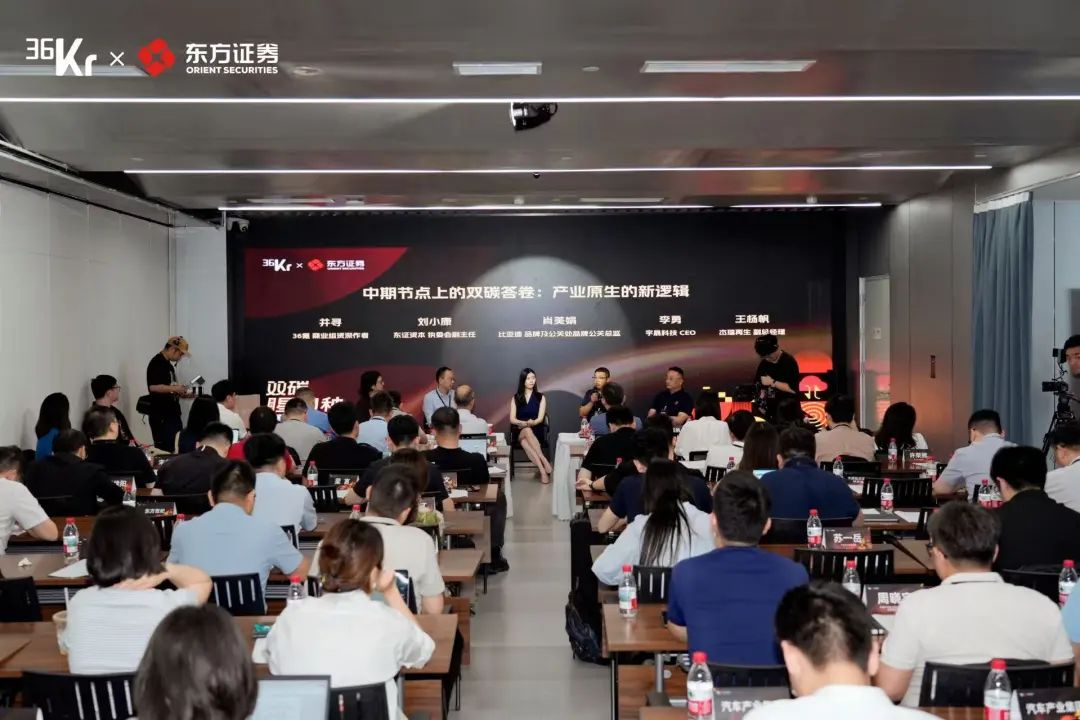
Liu Xiaokang, Deputy Director of the Executive Committee of Orient Securities Capital, proposed: "In the past, when we evaluated projects, we focused on technological highlights. Now, we also need to see if they are embedded in the structure. 'Led by the chain - leading enterprise' is not just a slogan but an important starting point for judging structural opportunities." His words precisely revealed the underlying change in the "double carbon" logic.
In the past three years, the "Double Carbon Star Species Competition" jointly organized by 36Kr and Orient Securities has attracted more than 400 projects in total, witnessing how the double - carbon theme has evolved from a policy buzzword to an industrial agenda. However, after entering 2025, this round of systematic transformation has entered the "construction period". The requirements for the industry are no longer limited to indicators such as "sustainability" and "innovation" but are more realistic "system capabilities", "collaboration capabilities", and "structural adaptability".
Therefore, starting this year, the "Double Carbon Star Species" did not continue with the competition mechanism but launched the "Carbon Exploration Plan" - each stop will take participants into real industrial scenarios, led by chain - leading enterprises and targeting industrial belts, shifting from the "track" logic to the "path" logic.
"This is not a competition but a re - establishment of consensus." Li Zheng, Partner of 36Kr, said at the event site. "We have seen too many projects with technologies but no implementation, with ideals but no paths. With five years left on the countdown, what is most scarce is no longer explosive technologies but 'collaboration capabilities' - the ability to integrate into the middle of the chain, to fit into the production system, and to achieve cost - reduction and efficiency improvement in real scenarios."
Chain - leading enterprises are also changing their logics simultaneously. Xiao Meijuan, Brand and Public Relations Director of BYD's Brand and Public Relations Department, frankly stated: "For us, green is not a KPI or a compliance obligation but a direction for efficiency improvement." In her view, the green strategy has essentially shifted from a "cost center" to a "technology center". Whether it is energy - saving and emission - reduction is not the most core issue. The key is whether this process brings organizational agility, product stability, and resource recycling ability.
For collaborative parties in the industrial chain, such as upstream and downstream enterprises like Jierui Recycling and Yusheng Technology, the reverse - forcing mechanism of "double carbon" is also reconstructing their product design, technological routes, and customer collaboration models.
"What we are doing now is not just providing a product but co - building a green verification closed - loop with the chain - leading enterprise." Li Yong, CEO of Yusheng Technology, mentioned that they adjusted the design of multiple sensors and electronic modules to adapt to the dynamic iteration of new energy vehicles' requirements for electronic control accuracy and energy consumption indicators. "This is the chain - leading enterprise really defining the upstream with'structural indicators'," he said.
At the lithium - battery recycling end, Wang Yangfan, the Zhengzhou person in charge of Jierui Recycling, put forward a key point: "For green to be established, it's not just about doing well in energy - saving and emission - reduction. The closed - loop mechanism must run through the entire chain, including standard construction, data traceability, and the business model of recycling."
These changes may seem scattered, but they all point to a consensus: Double carbon is no longer an additional task but a core business. It is no longer a compliance item but an efficiency engine.
This also means that in the next three years, it will be a critical window for whether green capabilities can be transformed into growth capabilities. As Liu Xiaokang said: "We are not looking for enterprises that can tell a good story but for those that can stand firm on the production line."
02
Future Transportation: The Zhengzhou Sample of the New Energy Industry
Why does the exploration of future transportation start from Zhengzhou?
In the industrial landscape, Zhengzhou is a "pressure point" with practical significance. In 2024, the output value of new energy vehicles in the airport economy zone exceeded 87 billion yuan, a year - on - year increase of 169.8%. Among them, the production of new energy vehicles reached 545,000 units, accounting for more than 80% of the province's total, making it the core growth pole of Henan's new energy industry.
From BYD, Yutong, SAIC Zhengzhou to supporting enterprises like Tengmei, Fudi, and Yierfu, and then to after - market enterprises like Youxin and Jierui Recycling, a closed - loop ecosystem from "components to complete vehicles, from assembly to recycling" has quietly taken shape in Zhengzhou.
Therefore, it is not accidental that the "Carbon Exploration Plan" chose Zhengzhou as its first stop. As a representative area of the "complete vehicle + core supporting + application promotion" trinity in China's new energy industry landscape, it has the triple capabilities of policy implementation, chain - leading enterprise guidance, and industrial collaboration, providing an ideal entry point for observing whether the "green transformation has become systematic".
As a leading enterprise in the new energy vehicle industry, BYD can be regarded as a representative of this chain leap. Since the first vehicle rolled off the production line in April 2023, in just one year, its Zhengzhou base has produced more than 700,000 complete vehicles. During this visit, we also witnessed the actual production process of its production base and its systematic green capabilities.
Among the roadshow enterprises, a group of representatives that are deeply involved in real scenarios and have structural thinking have emerged, covering multiple key links from core components, material R & D to intelligent cockpits, sensing platforms, power systems, and after - market services, reflecting three major trends in the current industrial chain innovation: rooting in underlying technologies, focusing on structural nesting, and connecting with scenario requirements.
Aite Robot brought collaborative robots in the form of robotic arms, which have been widely used in multiple automated scenarios in the automotive production line and are important technological interfaces for intelligent manufacturing and automation upgrades.
Haizhibo focuses on the domestic substitution and precision manufacturing of core automotive components, breaking the foreign monopoly in key areas such as the braking system and is supporting multiple vehicle manufacturers.
Tujian Technology demonstrated an intelligent cockpit electronic skin solution. Its "multi - modal flexible touch" technology is being used by leading vehicle manufacturers for high - end intelligent interaction design in the driving space.
Zhongke Weigan focuses on high - precision gas odor sensors and digital technology platforms, providing "olfactory perception nerves" for new energy vehicles and is a representative of the trend of domesticating key components of intelligent vehicles.
Guoci Power started with permanent - magnet motor technology, solved core problems of power density and efficiency, and expanded its application in high - end equipment and new energy vehicle drive systems.
Yusheng Technology continued to deepen its modular design capabilities of the thermal management system, demonstrating the system engineering capabilities of "joint verification between the upstream and the chain - leading enterprise" in multi - platform collaborative adaptation.
Botrue Recycling is committed to providing a complete set of solutions for the recycling of key battery materials. Through the development of new separation systems and intelligent equipment manufacturing, it enables recycling - responsible entities such as domestic and foreign recycling enterprises, vehicle manufacturers, energy storage companies, battery manufacturers, and battery operators to achieve a short - range closed - loop of battery materials.
Quantum Alumina provides a new quantum alumina material with independent intellectual property rights, which has the potential to make breakthroughs in new energy battery thermal management and lightweight structures.
Hengyi focuses on the new energy service field, helping traditional automotive maintenance and repair enterprises transform and upgrade into the new energy vehicle after - market service.
Most of these projects do not carry "conceptual labels" but are targeted at "real scenarios" and "structural nesting". As the on - site guests commented, "They may not be in the hottest tracks, but they are players that can survive."
In this high - density new energy ecosystem in Zhengzhou, they can not only understand the real needs of chain - leading enterprises but also gain real opportunities to connect with policies and capital.
This is precisely the core of the design mechanism of the "Carbon Exploration Plan": Let the chain - leading enterprise stand out to "raise questions" and let the projects enter the field to "solve problems", thus bringing the discussion of "double carbon" back from concepts to structures and from visions to paths.
"Orient Securities has always regarded green finance as a strategic priority. We are well aware that the achievement of the double - carbon goal requires not only the 'hard power' of technological innovation but also the'soft support' of capital empowerment," Liu Zhigang, Head of the Office of Orient Securities, summarized. "Zhengzhou, connecting the eastern and western regions, is a good sample for exploration."
03
Setting Sail from Zhengzhou, the Map of Carbon Exploration is Unfolding
As the "Double Carbon Star Species" enters its 4th session, the Carbon Exploration Plan has shifted from the competition arena to the front - line of the industry. Zhengzhou is just the beginning, a sample area for future transportation and the first testing ground for a structural capability verification mechanism.
"In the future, we hope to use the 'Carbon Exploration Plan' as a link to integrate resources from the government, industrial parks, and enterprises, providing full - chain services from financing to industrial implementation for high - quality projects, so that innovation results can truly be transformed into productive forces for sustainable development," Liu Zhigang said.
Next, the Carbon Exploration Plan will focus on practices such as "flexible energy storage", "distributed energy supply", and "source - network - load - storage coordination" in future energy scenarios. After that, it will explore the "low - altitude economy" in future urban scenarios to observe how the double - carbon logic further penetrates into emerging industries.
In different scenarios, there is the same question: Can China build a truly localized path system in this global green competition? The answer will not be on PPTs but in on - site verification. The inspiration we got from this visit to the new energy vehicle industry in Zhengzhou Airport Economy Zone is that only when technologies are no longer isolated, projects no longer talk to themselves, and chain - leading enterprises and affiliated enterprises are no longer separated, can green growth truly become part of industrial capabilities.
With five years left on the countdown, challenges are in front of us, and opportunities are also at hand. The carbon exploration journey continues, and the path still needs to be jointly drawn.