Finally, AI applications also want to be pre - installed, but mobile phone manufacturers are not willing...
It's quite funny to say that even in the AI era, the emerging AI applications regarded as the "light of tomorrow" still rely on "pre - installation" to promote themselves. Recently, Perplexity, which focuses on generative search, was exposed to be lobbying Android phone brands to pre - install its AI browser, Perplexity Comet, into new phone systems to seize the first entrance of AI terminals.
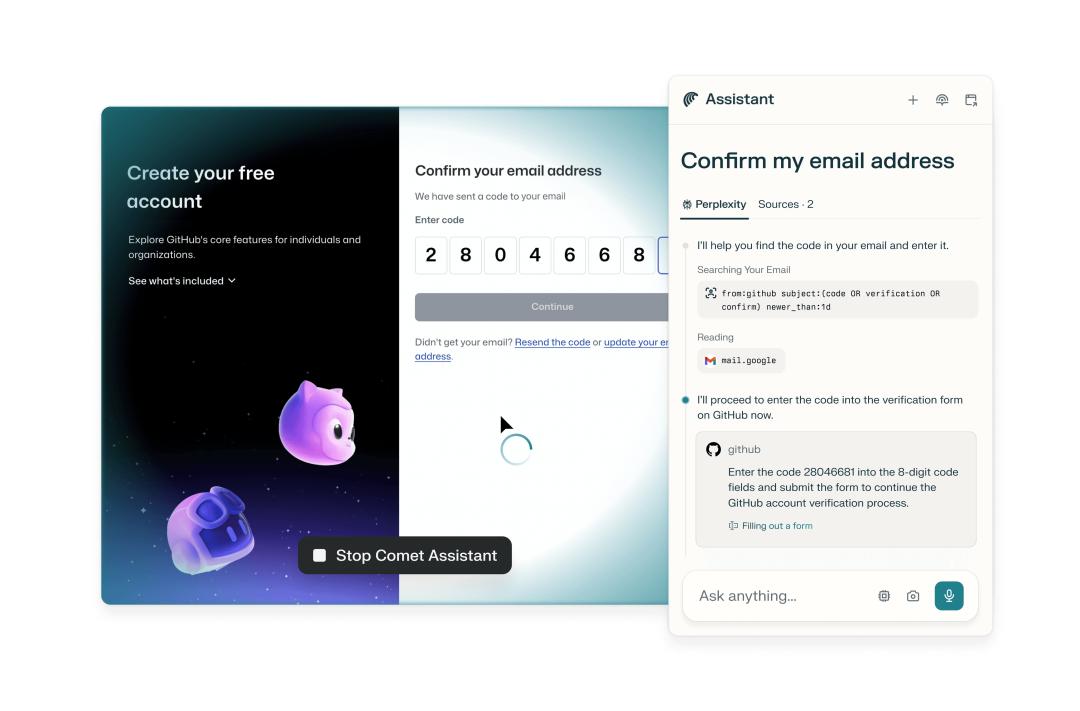
Image source: Perplexity Comet
However, phone brands are unlikely to agree to such a "letting the wolf into the house" behavior: In the era of AI phones, whether it's domestic brands like Xiaomi and OPPO or overseas brands like Samsung and Google, all hope to use their phones as AI entrances to "retain" all users' AI interactions within their controllable content ecosystems. Even Apple, which lags far behind in AI, knows to keep core data and models in its own hands and only passes a very small number of requests to the external AI supplier, ChatGPT.
Under such circumstances, who would be willing to hand over the core of their AI battlefield - the browser entrance - to an uncontrollable external AI supplier?
However, although Perplexity Comet's attempt ended in failure this time, from the perspective of industry development, Perplexity Comet's "rash" attempt actually reveals a problem that the current AI hardware industry will inevitably encounter: the supply - demand game between AI suppliers and AI hardware.
Coexistence of AI Suppliers and AI Hardware Manufacturers in Competition and Cooperation
On the surface, there is a simple supply - demand relationship between AI application manufacturers and mobile phones: one side has advanced large models and interaction technologies, while the other side controls user entrances and hardware terminals. Their cooperation for mutual benefit and win - win results sounds like a natural progression. But the reality is far more complex.
Taking Perplexity mentioned above as an example, in Perplexity's view, mobile phone manufacturers provide the hardware carrier, and it provides the AI capabilities. There is no direct conflict between the two. As long as the Comet browser is pre - installed on the phone, users will naturally regard it as the main search and Q&A entrance, thus bringing a positive cycle of interaction data and market share.
The problem is that mobile phone brands don't think so at all.
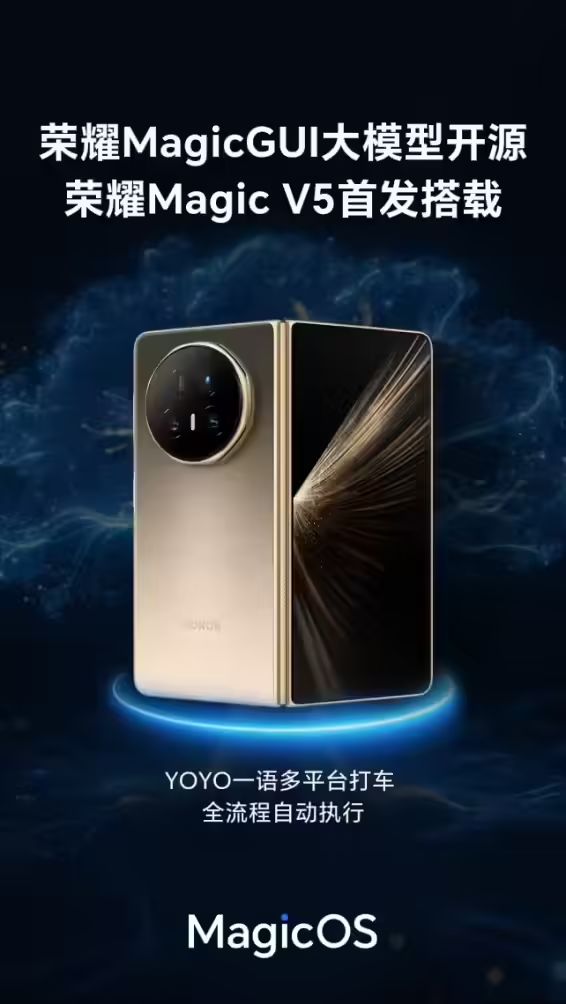
Image source: Honor
Domestic manufacturers represented by Xiaomi, vivo, and OPPO have been vigorously developing their own large models in recent years, such as Xiaomi's MiMO, vivo's BlueHeart large model, and Honor's MagicGUI. These models are gradually being integrated into core entrances such as search, voice assistants, input methods, and even system settings. Pre - installing Perplexity is not an addition but a move that touches the foundation of these brands' AI strategies.
Even Samsung, which was not very aggressive in AI before, has found its rhythm in the binding of Galaxy AI and Google Gemini. And Google itself has extended Gemini to all Android system levels. Against this background, Perplexity's suggestion of "making the AI browser the default entrance" is equivalent to asking mobile phone manufacturers to give up their dominance - this is obviously not cooperation but more like a "takeover".
Moreover, the core competitiveness of AI lies not only in technology but also in data. Whoever controls user interaction data can train models faster and understand scenarios more accurately. Mobile phone manufacturers have long realized that even if their models are not as strong as external ones at the beginning, as long as they keep the data in their hands, there is still a possibility of turning the tables in the future. Once the entrance is occupied by external AI, this possibility will quickly disappear.
Therefore, what seems to be "AI applications looking for distribution channels" is actually a problem of external applications bypassing the system AI and competing for the way of user interaction.
Image source: Lei Technology
However, the contradiction is not only on the manufacturer's side. For AI suppliers, the mobile end is an unavoidable main battlefield. After all, mobile phones are the terminals with the most frequent user interactions and the richest data. And now the operating systems are still in the hands of mobile phone manufacturers. If AI applications want to break through the blockade, they can only cut in through external forms, such as plugins, independent apps, or direct pre - installation into the system.
It's just that today's mobile phone manufacturers have changed from "channels" to "ecosystem operators". The previous cooperation logic of boosting sales through content and getting advertising commissions through pre - installation no longer applies.
Seeing this, do you have a feeling of "déjà vu"? In the past, due to insufficient capabilities, brands needed external suppliers to "save the day" and didn't care about the data. But now, user data and user ecosystems are crucial, so each brand has started to make efforts on its own and no longer relies on external suppliers...
Yes, in Lei Technology's view, this is exactly the "CarPlay moment" of AI phones.
Are Smartphones Repeating the "Path to Abandoning CarPlay"?
Back then, CarPlay was able to quickly win the favor of car manufacturers because the intelligent level of in - car systems was low, and the user experience was poor. Apple provided a complete set of solutions such as voice navigation, music, and maps for traditional car manufacturers with limited capabilities through CarPlay. It seemed to be an "experience enhancer", but in fact, it controlled the key entrances and user data, firmly binding users to the iOS ecosystem and bypassing car manufacturers.
With the arrival of the era of smart cars, car manufacturers realized that CarPlay was not just helping but "taking over" user interactions and data assets. So they began to abandon CarPlay collectively, build their own OS, voice assistants, and cockpit systems, and then build their own controllable closed - loop intelligent experience. The cold reception of CarPlay Ultra is the most intuitive manifestation.
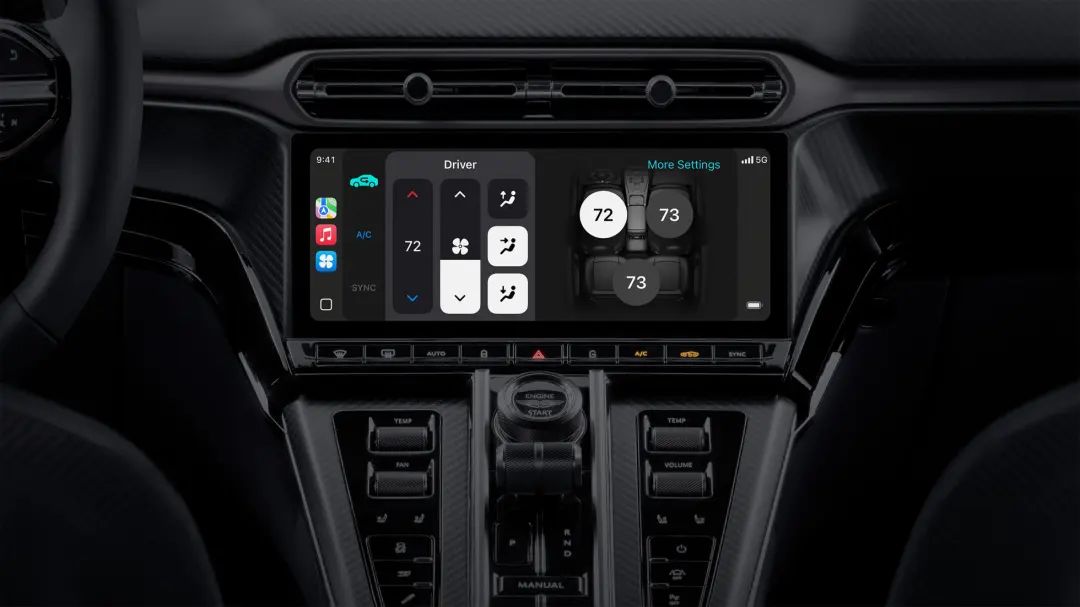
Image source: Apple
In Lei Technology's view, the same thing is happening again in the category of AI phones:
In the past, mobile phone manufacturers lacked AI capabilities and needed to rely on external models to improve the experience. Now, each mobile phone brand has launched system - level large models, and their control and capabilities are increasing (except for the iPhone, which is still painting the "liquid glass" pie). If an external AI application like Perplexity tries to deeply occupy the entrance through pre - installation or default browsers, the result will be like CarPlay Ultra - it's no longer "helping" but "seizing power".
Facing this situation, mobile phone manufacturers will of course choose to stand on their own and control data independently. After all, whoever controls the entrance can control users and long - term business value.
Does the AI Entrance Determine the Survival of Mobile Phone Manufacturers?
If Perplexity wants to cut in through pre - installation to occupy the starting point of users' AI interactions, what mobile phone brands really reject is not the "outsider" status but the intention behind it - the transfer of the right to define.
In the early stage when system capabilities were not yet perfect, external AI applications seemed to be just to complement functions. But once it becomes the starting point of users' high - frequency interactions, it will naturally take over the source of answers, the way of information organization, and even users' cognitive structure of the entire AI capabilities in the future. And this is the bottom line that manufacturers will not allow to be violated:
It's not about whether you can do AI, but that you can't represent us to define the user experience.
As the saying goes, what Perplexity wants to compete for is the browser entrance, but in essence, it is proposing a new ecological model that builds users' behavioral habits around its own capabilities. If it is pre - installed, then in the future, when users have problems, they will ask, trust, and remember not the mobile phone system.
WeChat has long been called a "state within a state" in iOS. Isn't it because it bypasses iOS' most core application distribution channel, establishes its own mini - program ecosystem, and controls tens of thousands of mini - program entrances?
In the AI era, making users "unable to live without themselves" is the most important thing.
This article is from the WeChat official account "Intelligent Pro". Author: Tian Xing. Republished by 36Kr with permission.