Lei Jun is going all out. What should NIO, XPeng and Li Auto do?
On June 26th Beijing time, Lei Jun, standing under the spotlight on the stage, hit all participants in the Chinese auto market hard in the gentlest tone, proving what it means to "go on a rampage" with real results.
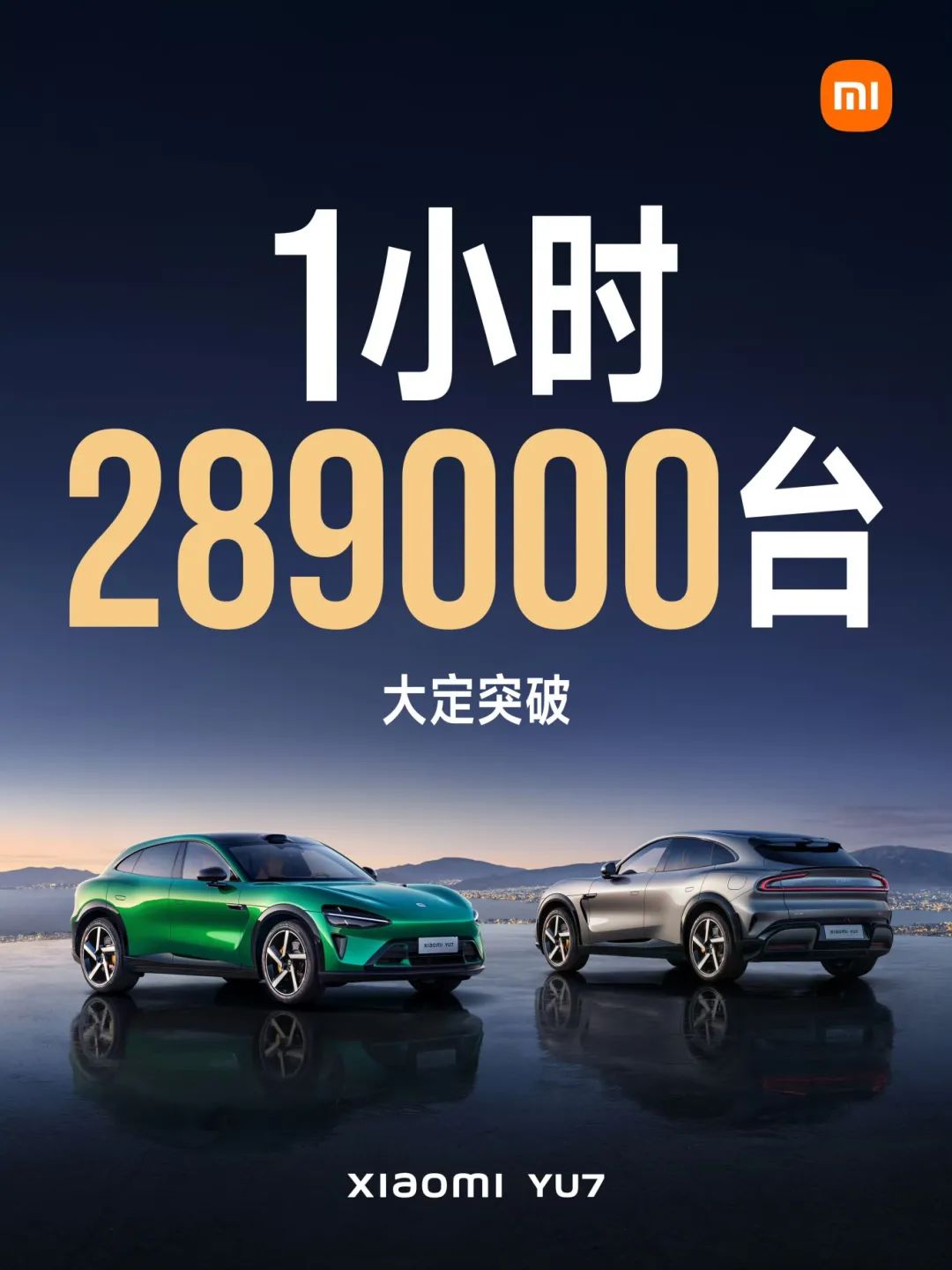
The Xiaomi YU7, with a starting price of 253,500 yuan, received 200,000 firm orders in 3 minutes and 289,000 in 1 hour... Even considering a certain amount of "inflation," as a media person with 6 years of experience in the industry, I've never seen such explosive numbers.
"There's a sense of powerlessness like facing the Trisolaran water droplet."
This isn't made up. Such a concise feedback truly came from a friend in a certain automaker around me. It must be admitted that the entry of the Xiaomi YU7 has made everyone feel a huge chill approaching.
What's even more terrifying is that, upon careful analysis of the attack strategy of this mid - sized pure - electric SUV, it's completely different from Xiaomi's previous approach with the SU7. The price difference between the standard version and the Pro version, which bear the main sales task, is only a little over 20,000 yuan.
In other words, there's very limited room for competitors to intervene and seize market share.
"The Xiaomi YU7 is Xiaomi's first SUV and also Xiaomi's first real step into the main battlefield of the automotive industry. We'll face the most powerful opponents head - on and also face the most brutal competition."
Shortly after the press conference, Lei Jun wrote such a passage on his personal Weibo. Word by word, on the one hand, we can feel his imminent determination and ambition; on the other hand, we can't help but worry for the brands that are in a competitive relationship with Xiaomi.
In the following part, I mainly want to talk about "NIO, Xpeng, and Li Auto," which most readers are very concerned about. Facing the rampaging and best - selling Xiaomi YU7, how should these three "both friends and foes" respond?
NIO: A Do - or - Die Battle
"We must achieve profitability in the fourth quarter."
On many previous public occasions, Li Bin, the helmsman, reiterated the goal at the beginning of this paragraph. Whether we admit it or not, NIO has truly reached a dangerous cliff edge at this moment.
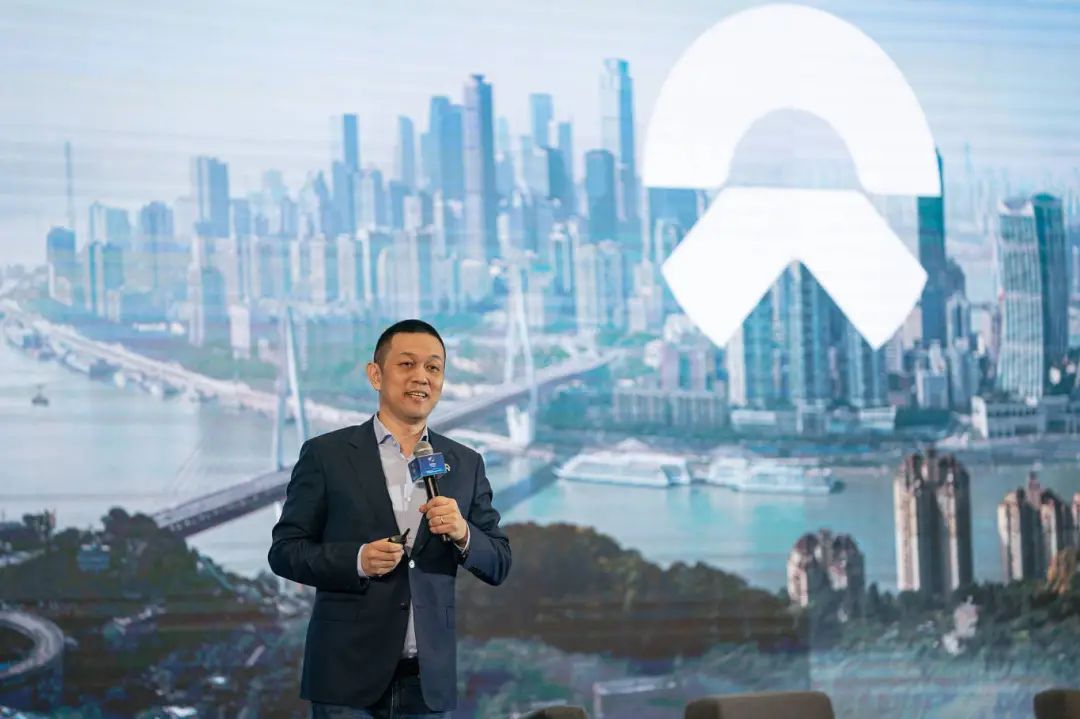
To achieve profitability, Li Bin gave his solution: "The total monthly sales of the three brands should reach over 50,000 units, the gross profit margin should be controlled between 17% - 18%, the sales and management expense ratio should be maintained at around 10%, and the R & D expense ratio should be maintained between 6% - 7%."
On the product side, the second new car under the LeDao brand, the L90, will be launched in the third quarter. Li Bin claims that it will change the landscape of the three - row SUV market and become an important turning point. In the fourth quarter, the all - new ES8 born from the NT3 platform will also enter the market. Li Bin calls it a "comeback of the king."
But in my opinion, it has the meaning of a do - or - die battle.
Firstly, the arrival of the Xiaomi YU7 will surely have a relatively large impact on the 2025 models of the "5566" with overlapping price ranges; secondly, although the LeDao L60 has shown the dawn of increasing sales, it's far from reaching the expected level; thirdly, looking at the Firefly, the early introduction of the BaaS battery - vehicle separation policy undoubtedly confirms from the side that the order pool of this high - quality pure - electric small car is gradually weakening.
The pressure on NIO to achieve a monthly sales volume of 50,000 units in the fourth quarter is clearly there.
Precisely based on this background, the LeDao L90 arriving in the third quarter has an even heavier burden on its shoulders. There's no room for negotiation; it must be a best - seller.
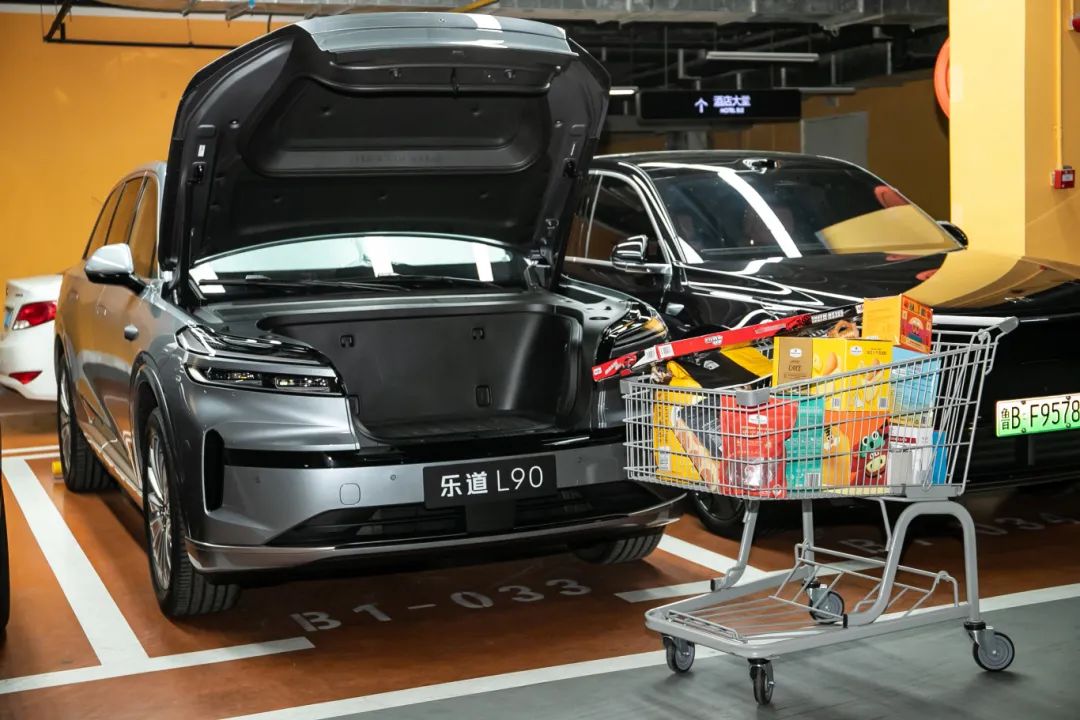
Regarding this product, a small - scale static evaluation was carried out not long ago. Without exaggeration or understatement, in terms of parameter configuration alone, it's definitely at the top in the "large six - seat" market.
One particularly crucial point is that thanks to the support of the positive pure - electric platform and a high degree of electronic and electrical integration, its loading and seating space have truly solved the pain points of users.
More specifically, when six people are traveling in a six - seat full - load situation, with the support of the large front trunk and the still considerable loading capacity of the trunk in the three - row mode, it can completely hold everyone's luggage.
It's more considerate than all the "large six - seat" models on the market.
Anyway, from the LeDao L90, you can feel that NIO has given up some of its previous obsessions and started to truly listen to the actual needs of car owners and build cars with the so - called "C - end" thinking.
Of course, entering the "large six - seat" market full of extended - range competitors, the LeDao L90, which solely bets on the pure - electric technology route with rechargeable and swappable capabilities, is a breath of fresh air.
Fortunately, NIO's increasingly mature energy replenishment system gives it the confidence and capital to convince users. Of course, it also needs the support of policies like "temporary free battery swapping."
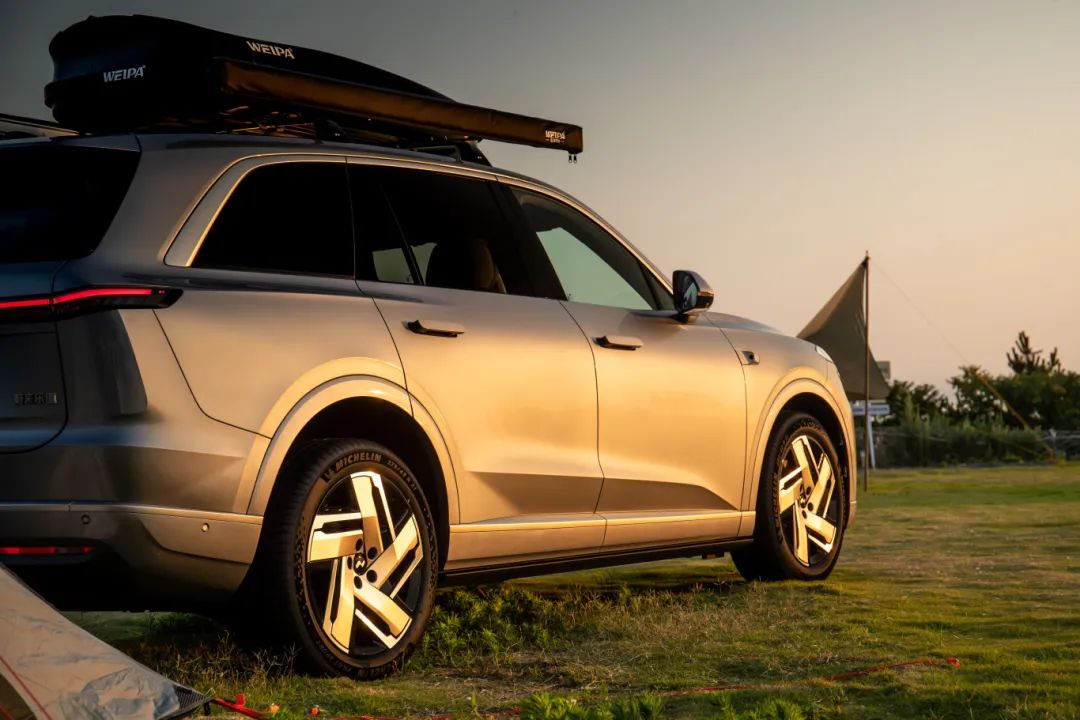
Currently, the LeDao L90 is like: "Everything is ready, only the price is missing."
However, this is also what I'm most worried about, fearing that it won't be priced right away. In a recent communication, the LeDao official has always emphasized that the L90 is positioned in the 300,000 - yuan class.
But I think the starting price should be lowered to around 279,900 yuan, similar to the Xiaomi YU7 Pro version, and enter the market below 200,000 yuan after adopting the BaaS battery - vehicle separation plan for a staggered competition.
As for the "large five - seat" version of the L80 entering the market in the fourth quarter, the price anchor should be the standard version of the Xiaomi YU7.
Objectively speaking, in today's environment, only by showing irresistible sincerity to end - consumers can one find a way out in this jungle of the weak being preyed on by the strong. Don't be so high - and - mighty anymore.
Considering the output of the even more explosive Xiaomi YU7 compared to last year's SU7, due to limited production capacity, there will definitely be an overflow of orders.
How to undertake this part of potential customers will be a key question for NIO in this do - or - die battle.
Xpeng: Recognize Yourself
"The difficulty for Xpeng to move upmarket has increased by more than one level. It's estimated that it has to be prepared for a long - term close - combat with Leapmotor in the price range below 200,000 yuan."
Shortly after the launch of the Xiaomi YU7, I saw such a view on Weibo. I deeply agree with it.
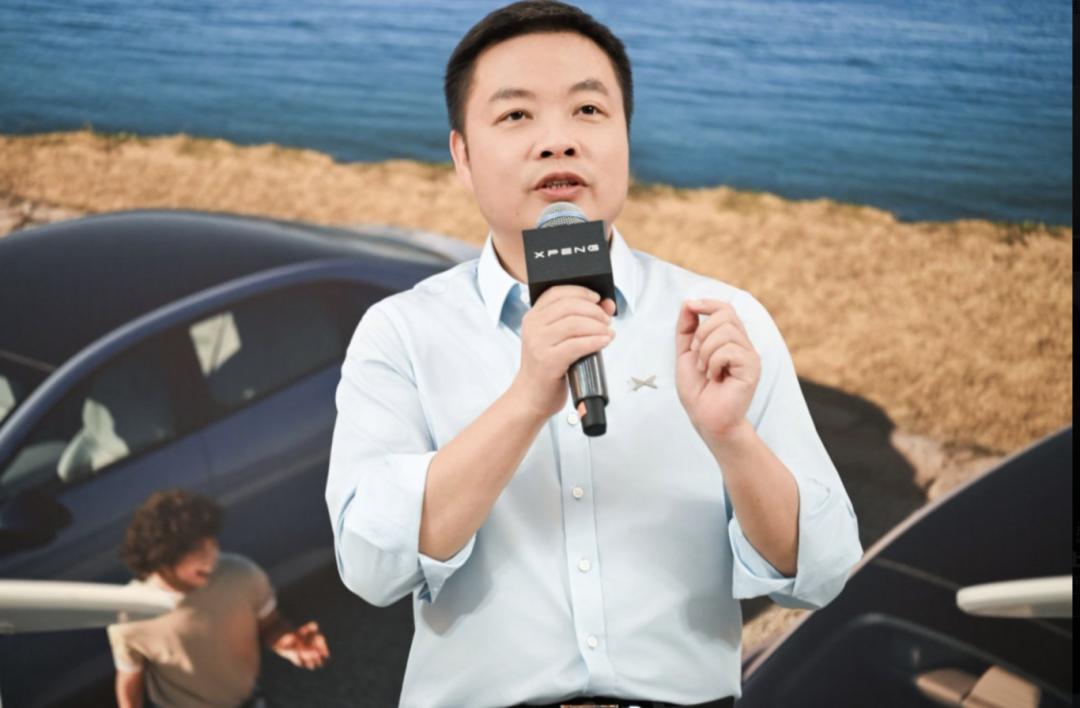
Actually, since last year when Xpeng rebounded from the bottom with the MONA M03 and the P7 +, two pure - electric sedans focusing on cost - effectiveness, the problem of how to move the brand upmarket has always haunted Xpeng.
Unfortunately, Lei Jun's powerful move has made the little spark that had just been ignited instantly become precarious.
The starting price of the Xiaomi YU7 at 253,500 yuan essentially draws an insurmountable baseline for all mid - sized pure - electric SUVs. The subtext is: "Either compete with me in a staggered way, or sell your cars cheaper than me."
This approach really makes Xpeng uncomfortable.
This week, this new - energy vehicle startup is about to launch another product that bears the heavy responsibility of driving sales volume - the G7. As a model on the same platform as the P7 +, it has almost no major shortcomings in terms of parameter configuration.
With the installation of three self - developed Turing chips and a comprehensive computing power of over 2200 TOPS, it can well use intelligence as a selling point. The second - row seating space and loading capacity are also the strengths of the G7.
As for the pricing, referring to the refreshed Xpeng G6 and G9 this year, it will probably be maintained between 200,000 yuan and 240,000 yuan to fill the gap between them.
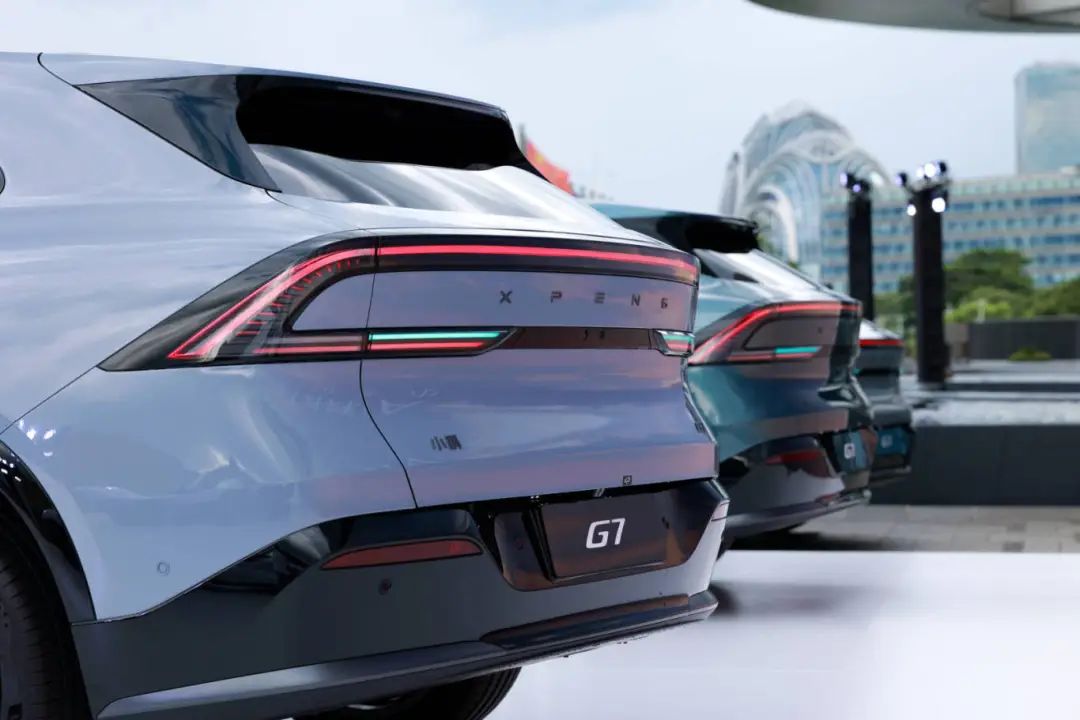
But even so, the G7, also a mid - sized pure - electric SUV, will inevitably be affected by Xiaomi. After all, the latter's influence is really huge.
Xpeng should secretly be glad that the 75 - kWh battery version of the YU7 hasn't arrived. Imagine if the starting price of this product is lowered to around 230,000 yuan?
Lei Jun has given everyone a break for now.
Of course, as mentioned at the end of the previous paragraph, the overflow of Xiaomi's orders will also be an opportunity for Xpeng. With the big "monster" leading the charge, the "cake" in the corresponding market is getting bigger.
It's not shameful to follow behind and have a big sip of the soup. This also requires the G7 to have sufficient attractiveness in the launch policy.
Considering the current situation and the subsequent plan, I always think that Xpeng should further recognize itself, try its best to meet the expectations of the outside world, and steadily do a good job in what is called the "Redmi car."
After all, the competitor of the all - new P7 will inevitably be the SU7. Xiaomi's third "large six - seat" extended - range SUV will probably arrive next year, which will also happen to face Xpeng's family flagship unveiled at the end of this year.
On the surface, the relationship between the two seems harmonious, but the behind - the - scenes competition is destined to only increase. As for moving the brand upmarket, Xpeng can only make slow and steady progress and can't be impatient.
Thankfully, Xiaomi has set an example.
Li Auto: No Room for Error
About a little over a month ago, the news that Li Auto lowered its annual sales target from 700,000 units to 640,000 units was reported. At that time, one could already feel the challenges faced by this new - energy vehicle startup.
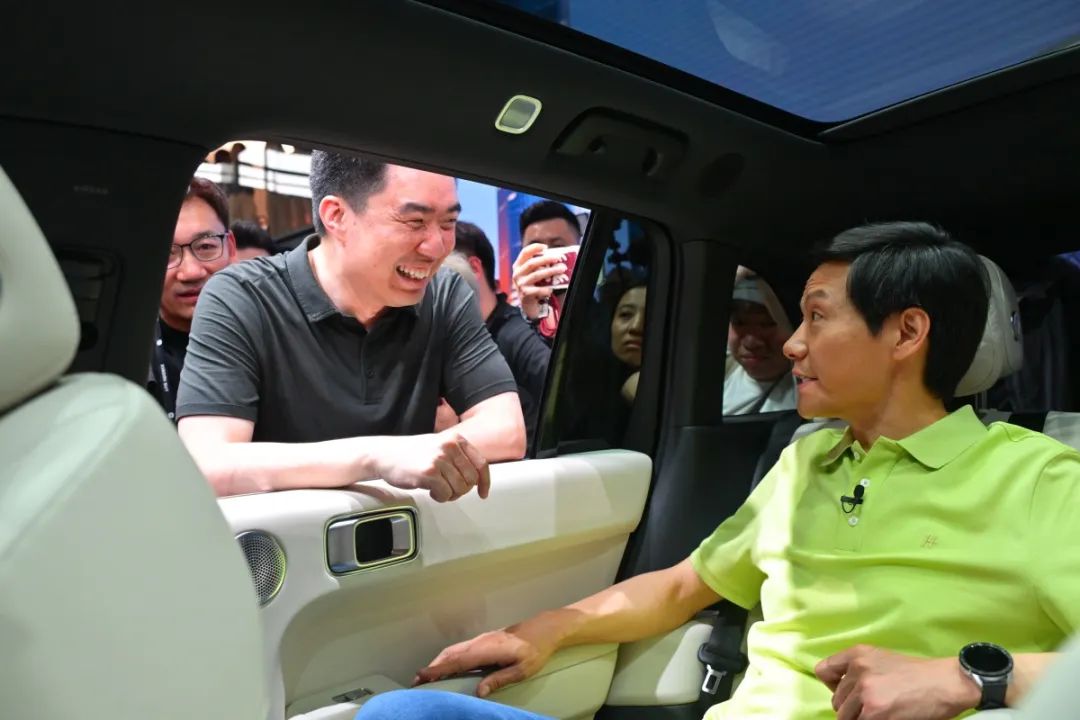
On the eve of the launch of the Xiaomi YU7, Li Xiang, the helmsman of the company, had a friendly interaction with Lei Jun. They respectively took the opportunity to promote the i8 and i6 that will enter the market one after another in the second half of the year.
In my opinion, these two models are destined to be a battle that Li Auto can't afford to lose.
Because, looking at the current situation, the L series in the extended - range segment is being besieged, and the situation is getting worse. Especially with the entry of the Wenjie M8, Li Auto is under great pressure.
Therefore, it's extremely urgent to develop the pure - electric segment. This new - energy vehicle startup must find a new breakthrough to relieve its anxiety.
The i8 and i6 are the answers it has given.
Objectively speaking, after the "failure" of the MEGA last year, Li Auto is undoubtedly more fully prepared in selling electric vehicles at present. The construction of over 2,500 self - built super - charging stations at a huge cost of manpower, material resources, and financial resources is the best proof.
Although I haven't experienced the real cars yet, based on my understanding of this new - energy vehicle startup, the i8 and i6 will surely vividly interpret what "car and home" means and be extremely close to family users.
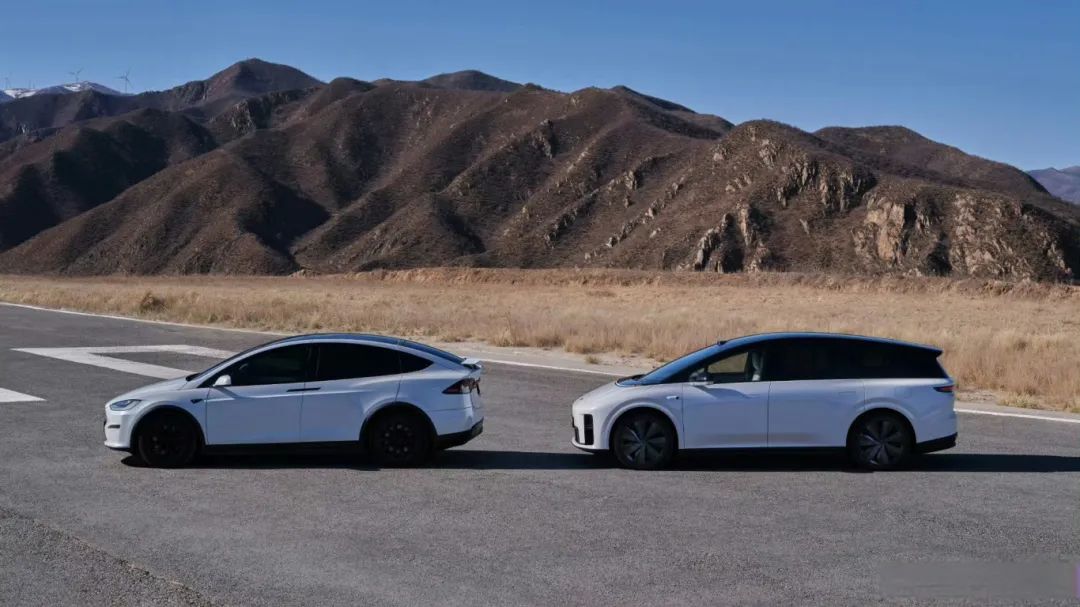
But the problems are also very prominent: for example, the unconventional SUV shape will challenge people's aesthetics again. In the end, how many people will be willing to pay for it?
For example, in terms of vehicle positioning, the i8 and i6 will inevitably have a serious internal competition with the company's own L8 and L6. How can a brand clearly promote and sell both pure - electric and extended - range vehicles at the same time?
Another example is that according to the current industry logic, the pricing of pure - electric models at the same level is generally slightly higher than that of extended - range models. So, if this is used as a standard, the i8 and i6 are destined not to be sold cheaply.
Assuming that the main sales versions of the two models are priced in the 350,000 - 400,000 yuan and 250,000 - 300,000 yuan price ranges respectively, they will directly compete head - on with the Wenjie M8 and the Xiaomi YU7. Will the final result be unfavorable?
Anyway, all these mysteries are waiting to be solved, and they also test Li Auto's systematic ability.
Last week, this new - energy vehicle startup