Trump signed multiple executive orders that are detrimental to the US electric vehicle industry. CATL has a major cooperation project in Europe in 2025. | Overseas Daily
"Top 3 News"
Trump Signs Multiple Executive Orders Adversely Affecting the Development of the US Electric Vehicle Industry
Key Points:
On his first day in office, Trump signed executive orders. In the orders related to "Unleashing American Energy", he claimed to cancel the fictional "Electric Vehicle Mandate" and hinted at subsequent actions against electric vehicles in many aspects. This includes removing regulatory obstacles to vehicle access, creating a fair regulatory environment for vehicle consumption choices, terminating state emission exemptions that limit gasoline vehicle sales as the situation dictates, considering canceling subsidies and market-distorting policies that favor electric vehicles, under the pretext of promoting "true consumer choice".
At the same time, he mentioned considering canceling electric vehicle subsidies, which was a campaign promise, but its implementation requires waiting and depends on congressional support. He also instructed various agencies to suspend the allocation of funds from the Inflation Reduction Act of 2022 and the Infrastructure Investment and Jobs Act, including funds for electric vehicle charging stations, and to review the relevant funding processes. In addition, he instructed various agencies to identify regulations that slow down the "development or use of domestic energy resources", specifically naming multiple energy sources such as oil, but not mentioning solar energy.

Trump's Inaugural Speech (Source: Electrek)
Opinions:
Trump's policies towards electric vehicles, ostensibly under the guise of promoting consumer choice, are likely in essence to safeguard the interests of the traditional energy industry and promote the concept of "vigorous exploitation", which may further damage the environment. In terms of feasibility, the "Electric Vehicle Mandate" that he claims to cancel does not actually exist, and the previous attempt to terminate the CARB state plan has failed, making this attempt likely to be unsuccessful. The cancellation of subsidies is also uncertain as it requires congressional support. Some comments point out that if true fair competition is achieved, although electric vehicles are slightly more expensive, gasoline prices will rise significantly, and in fact, all parties are paying for the price difference. In this case, electric vehicles will prevail and most people will be more prosperous. Overall, these measures have not caused serious damage so far.
Tesla App to Offer Restaurant Ordering Service and Provide Insurance Discounts for FSD Users to Encourage FSD Usage
Key Points:
The latest update of the Tesla mobile application brings many new trends. In terms of infrastructure, the construction of the Supercharger at the Los Angeles restaurant is nearing completion and will be integrated into the application, possibly adding an in-app ordering function. From the perspective of the connection between insurance and technology, the application code suggests that discounts will be provided to more insurance customers who use the FSD function.
Vehicle reminder information indicates that only when connected to the network can the battery life be calculated based on the age and mileage, so that users can know the data source of the battery life estimate. The application update also reveals the characteristics of the rear-wheel drive version of the Cybertruck, which has a reduced number and capacity of motors and batteries, is equipped with a manual rear compartment cover and an optional compartment socket, and is expected to be launched later this year. In addition, the application will now inform users of the time required to preheat the battery before charging.
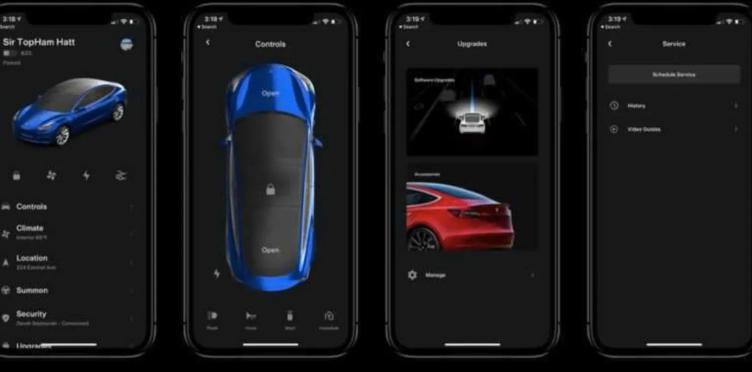
Tesla App (Source: Electrek)
Opinions:
These updates show Tesla's multi-dimensional development ideas. In terms of services, the integration of restaurants shows innovation, creating a one-stop service and enhancing user stickiness. Encouraging the use of FSD through insurance discounts reflects confidence in the technical safety and promotes the popularization of technology and data accumulation. And providing the basis for battery life calculation, battery preheating time prompts, and revealing the characteristics of the Cybertruck indicate that Tesla attaches great importance to the user experience and strives to meet the user's demand for vehicle information and give more accurate expectations. Overall, this series of updates highlights Tesla's positive trend of continuous optimization and expansion at the product and service levels.
Volvo's New 2025 EX30 and EX90 Electric SUVs Arrive in the US
Key Points:
The highly anticipated Volvo 2025 EX30 and EX90 electric vehicles have revealed their US market prices on Tuesday. Among them, the EX30, as Volvo's smallest and most cost-effective electric model, has achieved remarkable results in the European market. Since the delivery of the first batch of vehicles in December 2023, the sales volume last year approached 100,000, driving Volvo's sales in the European market to climb by 28.4% to 369,689 vehicles, leading the growth rate among many automakers. After several twists and turns, the EX30 is finally set to land in the US market at the end of 2024.
Its dual-motor high-performance version has a starting price of $44,900, and an additional $1,700 is required to upgrade to the Ultra version, which adds practical configurations such as parking assistance, 360-degree 3D view camera, and Pilot Assist. This model has a strong performance, with the dual-motor high-performance version having a maximum power of 422 horsepower, a 0 - 60 mph acceleration of only 3.4 seconds, a battery life of up to 253 miles, and a maximum charging power of 153 kilowatts, which can complete a fast charge in more than 25 minutes. And the 2025 EX90, as Volvo's first three-row electric SUV, has a starting price of $79,995, and the vehicles sold in the US will be produced in South Carolina.
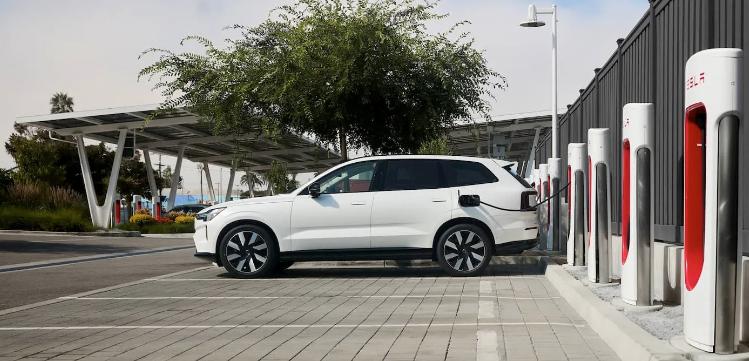
Volvo EX90 (Source: Electrek)
Opinions:
From the perspective of product strategy, Volvo's launch of the affordable EX30 and the high-end positioned EX90 comprehensively covers different consumer levels, enriches its own electric vehicle product line, and effectively meets the diversified market demands. The hot sale of the EX30 in Europe and its significant boost to Volvo's European sales demonstrate its precise product positioning. Now that the two models are entering the US market, they are expected to further expand Volvo's territory in the global electric vehicle market. The EX90, as the opening work of the new era, integrates the iconic Scandinavian design and advanced technology, highlighting Volvo's continuous pursuit of the perfect integration of technology and aesthetics in the field of electric vehicles, and continuous innovation, thereby enhancing the brand's competitiveness.
"Big Events"
Hyundai IONIQ 5 and IONIQ 9 Lose $7,500 Electric Vehicle Tax Credit
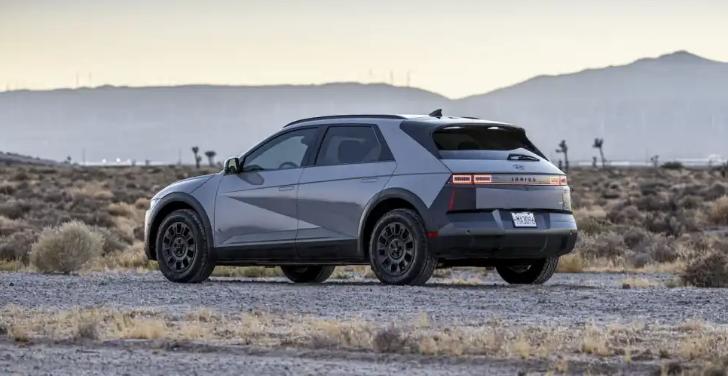
Hyundai IONIQ 5 (Source: Electrek)
The new Hyundai IONIQ 5 and IONIQ 9 electric vehicles originally qualified for the US $7,500 tax credit policy, but the situation suddenly reversed and they no longer enjoy this benefit, which is a major blow to Hyundai, one of the best-selling electric vehicle brands in the US. Last year, Hyundai set a new US retail sales record for the fourth consecutive year, and its North American CEO Randy Parker was originally confident of increasing production in 2025 with new models such as the IONIQ 9 and the new factory in Georgia.
Earlier this month, Hyundai also announced that the 2025 IONIQ 5 and IONIQ 9 produced in the US are eligible for the federal electric vehicle tax credit. This is the first time Hyundai has met the standards since the Inflation Reduction Act of 2022 was passed. The upgraded 2025 IONIQ 5 and the three-row IONIQ 9 in early January are also among the 25 electric vehicles that are eligible for the credit. However, the updated list from the US Department of Energy last week shows that Hyundai no longer has eligible electric vehicles. Only the 2025 Kia EV6 and the 2026 Kia EV9 of the Hyundai Motor Group (including Kia and Genesis) are eligible, and Hyundai's luxury brand Genesis has also lost its eligibility. Hyundai's new $7.6 billion electric vehicle factory in Georgia started production in October, with the 2025 IONIQ 5 being the first to roll off the assembly line, and the three-row IONIQ 9 will also be produced here.
CATL Expects to Take a Major Step in Europe in 2025
CATL occupied a significant leading position in the electric vehicle battery market last year, with a global usage share of more than one-third. This global largest electric vehicle battery manufacturer expects to announce a major cooperation project with a new European electric vehicle factory by the end of 2025, which is independent of the cooperation announced with Stellantis last month.
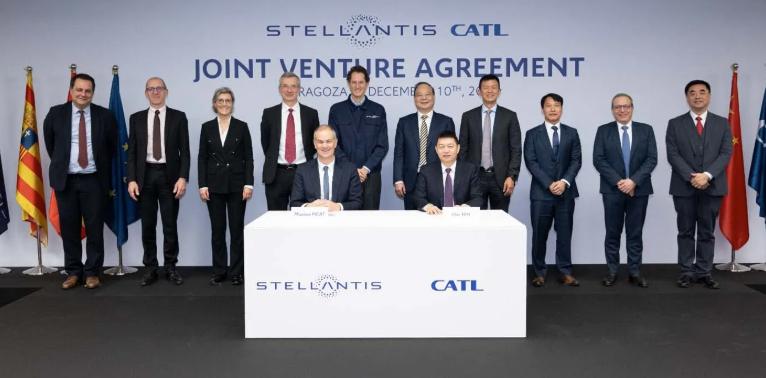
CATL and Stellantis (Source: Electrek)
At the World Economic Forum on Tuesday, CATL Vice Chairman Pan Jian said that the company expects to cooperate with another European automaker to open a new joint-venture battery factory. According to Jiemian News, this factory is another layout in addition to the cooperation project announced with Stellantis in December last year. CATL already has two electric vehicle battery factories in Europe, located in Germany and Hungary. Last month, it announced the third one with the Jeep manufacturer Stellantis, which will produce lithium iron phosphate batteries for Stellantis in Spain. It is expected to start production at the end of 2026 with an annual production capacity of up to 50 gigawatt-hours. The two sides will invest up to 4.1 billion euros (about 4.25 billion US dollars) to build this large European lithium iron phosphate battery factory.
CATL dominates the global electric vehicle battery market. Data from SNE Research shows that as of November 2024, its market share is 36.8%, and it is still growing despite the intensified competition. In November 2023, its market share was 36.2%. BYD from China ranks second, with its market share rising from 15.9% in the previous year to 17.1%, and BYD is also actively expanding in Europe with new electric vehicles tailored for local buyers.
Alpine A290 Electric Vehicle on Sale in the UK
The annual model Alpine A290 is now available for reservation, and the on-the-road price (OTR) of this pure electric hatchback hot hatch starts at £33,500. For its Personal Contract Purchase (PCP) price, taking the GT model as an example, based on a representative annual interest rate of 2.9%, customers need to pay a deposit of £5,054, and the annual mileage limit is 9,700 kilometers (6,000 miles), with a monthly payment starting from £345.
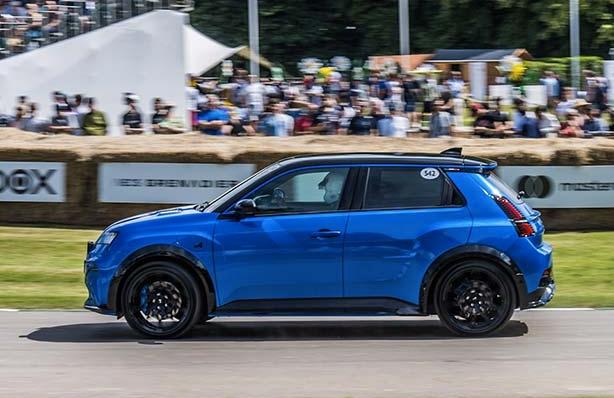
Alpine A290 Electric Vehicle (Source: ElectricCarsReport)
In addition, early buyers of the A290 can enjoy a number of benefits, including up to three years of free maintenance services through Mobilize Financial Services (only for retail finance customers), and the option to choose one from a series of VIP experiences. These VIP experiences include a track experience driving the A110 at Thruxton or Knockhill, tickets and hospitality at some of the UK's major events where Alpine is exhibiting, or a visit and race viewing experience at the Alpine F1 team in Enstone.
US Department of Energy Invests in Innovative Heavy-Duty Electric Vehicle Charging Solutions
The US Department of Energy is continuously committed to the electrification of commercial road transportation and has announced an investment of $68 million to design, develop, and demonstrate innovative electric vehicle charging stations near key ports, distribution centers, and major transportation corridors. These projects are selected and funded through the Department of Energy's "SuperTruck Charging" initiative, aiming to accelerate the deployment of large-scale public charging infrastructure suitable for medium and heavy-duty electric vehicles to enhance the resilience and reliability of the power grid.
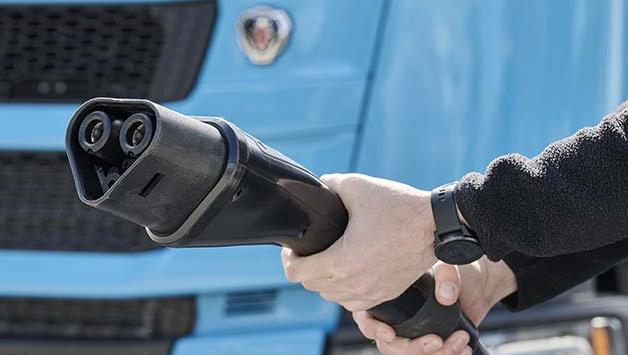
US Department of Energy Invests in Innovative Heavy-Duty Electric Vehicles (Source: ElectricCarsReport)
The Department of Energy's "SuperTruck" program was launched in 2009, and multiple industry participants have successfully demonstrated new and efficient technologies suitable for Class 8 tractor trucks, and some have been commercialized. "SuperTruck 2" has more than doubled the efficiency of Class 8 tractor trucks and significantly improved the engine brake thermal efficiency. The "SuperTruck 3" project is planned to be completed in 2027, which will reduce greenhouse gas and air pollution emissions from medium and heavy-duty trucks by 75% (based on the life cycle) and reduce the overall ownership cost of trucks, with a focus on electric and hydrogen fuel cell trucks.
Jeff Marootian, Chief Deputy Assistant Secretary for Energy Efficiency and Renewable Energy at the Department of Energy, said that the "SuperTruck" program has greatly promoted the development of energy-saving technologies for freight trucks, and the new "SuperTruck Charging" project will build on this by demonstrating replicable models to provide cost-effective high-power charging for electric trucks, while enhancing the resilience and reliability of the power grid when deploying medium and heavy-duty electric vehicles.
Each "SuperTruck Charging" project focuses on large-scale, replicable high-power charging facilities to serve medium and heavy-duty electric vehicle fleets with dozens to hundreds of vehicles. It will develop and demonstrate high-capacity charging infrastructure to meet the needs of medium and heavy-duty electric trucks for long-distance transportation (more than 500 miles per day) in major transportation corridors and rural areas with limited grid capacity. As the momentum of electrification of medium and heavy-duty vehicles increases due to the decline in technology costs, continuous innovation will expand the scale of infrastructure, improve air quality, enhance the reliability of commercial road transportation, and establish the United States' global competitiveness and leadership in