After the super rate cut, the rich have made their choices.
Since the implementation of the reform and opening-up policy, China has witnessed four large-scale interest rate reductions:
The first one took place in 1998. Within one year, the benchmark interest rate dropped from 10.53% to 7.56%.
The second occurred in 2008. In response to the global financial crisis and to stimulate the economy, the interest rate was cut five times within a year, and the benchmark interest rate was lowered from 7.74% to 5.94%.
The third emerged in 2014 - 2015. It is the most memorable one where the benchmark interest rate was lowered by 125 basis points to 4.9%. Coupled with the monetization of shantytown renovation, it has driven a new round of real estate, entrepreneurship, and investment boom.
The most recent one is now. There have been three consecutive interest rate cuts within this year, and the benchmark interest rate has dropped by 60 basis points to 3.6%. The market anticipates that the LPR will be further lowered once before the end of the year. It is expected that there will be a total of four cuts throughout the year, totaling 80 basis points.
Each round of large-scale interest rate cuts will bring an asset feast. Choosing when to buy and what type of assets to buy has become the main reason for the wealth gap among people.
This super interest rate cut has some characteristics that are different from the past: the economic growth rate is shifting + the long-term decline in the social average interest rate + an unprecedented low interest rate. The overall investment return is falling, and the investment fault tolerance rate is decreasing. High-quality assets that are accessible to most people have become even more scarce.
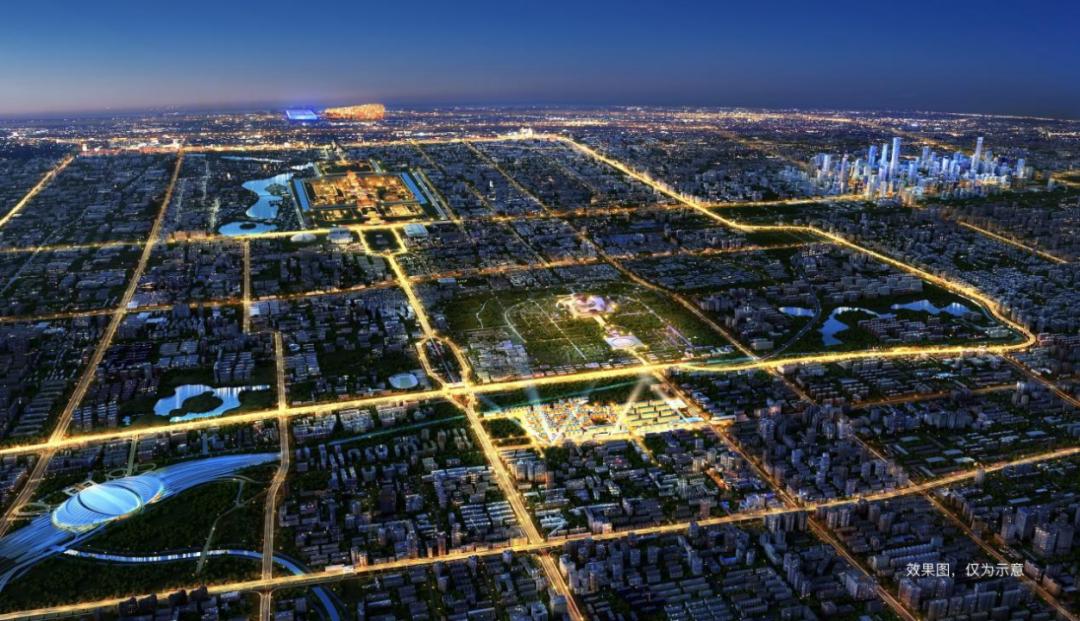
Schematic diagram
01 Reduced dividends, scarcer high-quality assets
The fundamental reason for the increased difficulty in investment is the reduction of the entire society's dividends, and some of the original investment channels are beginning to fail.
The most obvious is that the current deposit and loan interest rates have dropped to the historical lowest level. The annualized interest rate of deposit products of national banks has fallen below 2%. With the interest rate cut process, high-quality financial assets are rapidly decreasing.
Entering the super interest rate cut period, what high-quality assets are available for investment? Currently, for the mainstream high-quality assets targeting the social elite and the middle-class group, the most highly concerned ones are only high-quality equity assets and high-quality real estate in core cities.
In the real estate field, although it has just experienced a decline stage, high-quality real estate in the core areas of core cities (such as Beijing, Shanghai, Guangzhou, Shenzhen, Hangzhou, Chengdu, etc.) still has a relatively high investment value. Because:
First, core cities represented by first-tier cities have a solid economic foundation, industrial development potential and momentum, and population absorption capacity. At the same time, they also gather better high-quality education, medical and other resources. This means that high-quality real estate in the core areas has the comprehensive attributes of living and investment, and also comes with the function of sharing the dividends of urban development.
Second, real estate is a pillar of the national economy and also a major area where policy resources are inclined. From the Politburo meeting on September 26 to the present, the top leadership has made intensive statements, and a package of policies has been introduced. Real estate occupies an important position in it. "Policy dividends, capital dividends, and local resource support" will continue to promote the real estate market until the goal of "stopping the decline and stabilizing" is achieved.
From historical experience, after the first three large-scale interest rate cuts, real estate assets have all shown an upward curve. This time, the historically lowest loan interest rate + 1 million sets of shantytown renovation monetization + 4 trillion "white list" credit + the historically lowest down payment ratio for buying a house, has also formed a new opportunity for asset price adjustment.
Especially in first-tier cities where the financial and technology industries are vibrant, the market is rapidly heating up.
According to the official data released by the Ministry of Housing and Urban-Rural Development, the national new commercial housing online signing transaction volume increased by 6.7% month-on-month in October. Among them, first-tier cities led the increase. The new commercial housing online signing transaction volume increased by 14.1% year-on-year, and the second-hand housing online signing transaction volume increased by 47.3% year-on-year. Among them, high-end residences with both excellent locations and products performed the best.
For example, in the Beijing market, the projects that topped the annual sales champion in 2023 and the monthly sales champion in 2024 are both high-end residences. In October after the new policy was released, 4,184 new commercial residential units were sold in Beijing, with a month-on-month increase of 76.17%, and the transaction area was 525,600 square meters, with a month-on-month increase of 76.49%, both setting a new high this year. At the same time, due to the increase in the proportion of high-end projects, the average transaction price in the market increased by 18.2% month-on-month.
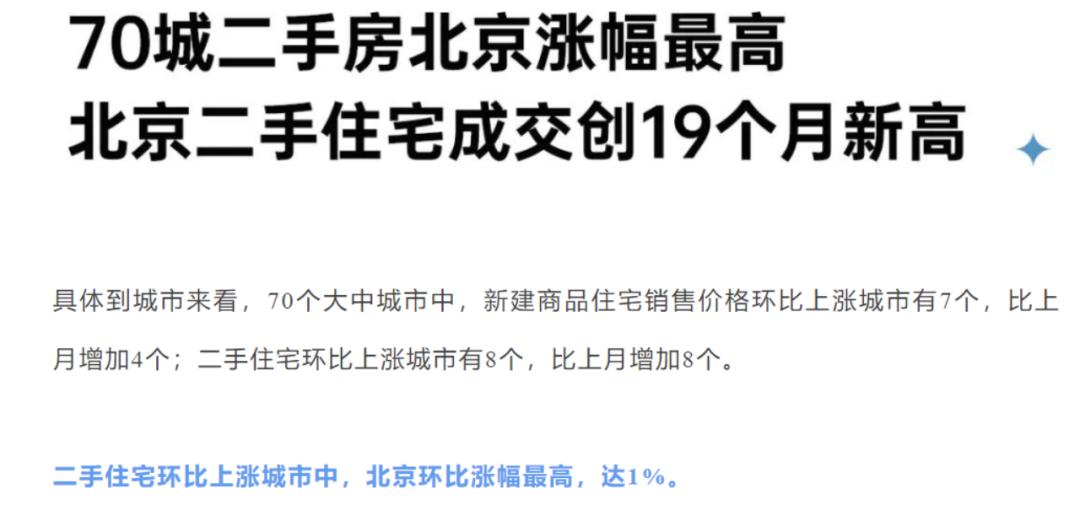
Source: Ding Zuyu's Comment on the Real Estate Market
The Shanghai real estate market is also booming. The new housing inventory in the whole city has dropped below 45,000 units, and four 10-billion-yuan-level large-scale projects have emerged this year. It is expected that there will be seven 10-billion-yuan-level large-scale projects throughout the year. All these projects are benchmarking real estate projects in high-quality locations.
In Shenzhen, 4,153 first-hand residential units were signed online in October, with a month-on-month increase of 146.3%, setting a new high in 35 months. The subscription volume exceeded 13,000 units, and the inventory dropped rapidly. The "sold out in one day" phenomenon has reappeared in some high-quality projects in core locations.
Beijing, Shanghai, and Shenzhen are the core cities with the most developed financial and technology industries in the country and the largest number of financial technology practitioners. Recently, this group has begun to actively purchase core assets in high-line cities as a ballast option for asset allocation.
This group of people has rich investment and multiple property purchase experiences, so they will make comparisons across industries and asset categories and make quick and accurate decisions at the right time.
However, different from the past when they paid more attention to the "profitability" of investment, this year, due to reasons such as the economic growth rate shift, their order of investment requirements has changed to: safety, profitability, and stability, and they pay more attention to the anti-cycle ability of assets.
In real estate assets, the safest and able to obtain a better investment return is undoubtedly the high-end residential in the inner city. Because high-end residential in the inner city has the following main characteristics:
Occupying the core location, on the one hand, it has exclusivity. On the other hand, the earliest built-up areas in first-tier cities are often the areas where infrastructure, education, medical care, enterprise headquarters and other resources are most concentrated, and the resources attached to the real estate are the most.
The inner city of first-tier cities was built earlier, and the proportion of existing residential buildings with a long history is large. The products of new commercial housing are of better quality, which can form a differentiated competitive advantage in the same area.
The holders and purchasers are mostly social elites such as financial technology practitioners. Their economic situation is more stable, and they are more long-term in treating assets, making the housing prices in the communities they hold more stable and firm.
In the Beijing market, due to the requirement of "reduced development", the supply of new houses in the inner city has been very limited. The new house products in Dongcheng and Xicheng, the "inner cities" within the inner city, are even more scarce. It can be said that one less set is sold.
When it comes to new houses in the inner city of Beijing, the Beijing Urban Construction · Tiantan Mansion, which has been the "champion" in sales performance in the past two years, has to be mentioned. It can be called the ceiling project of the 20-million-yuan-level improvement products in the inner city.
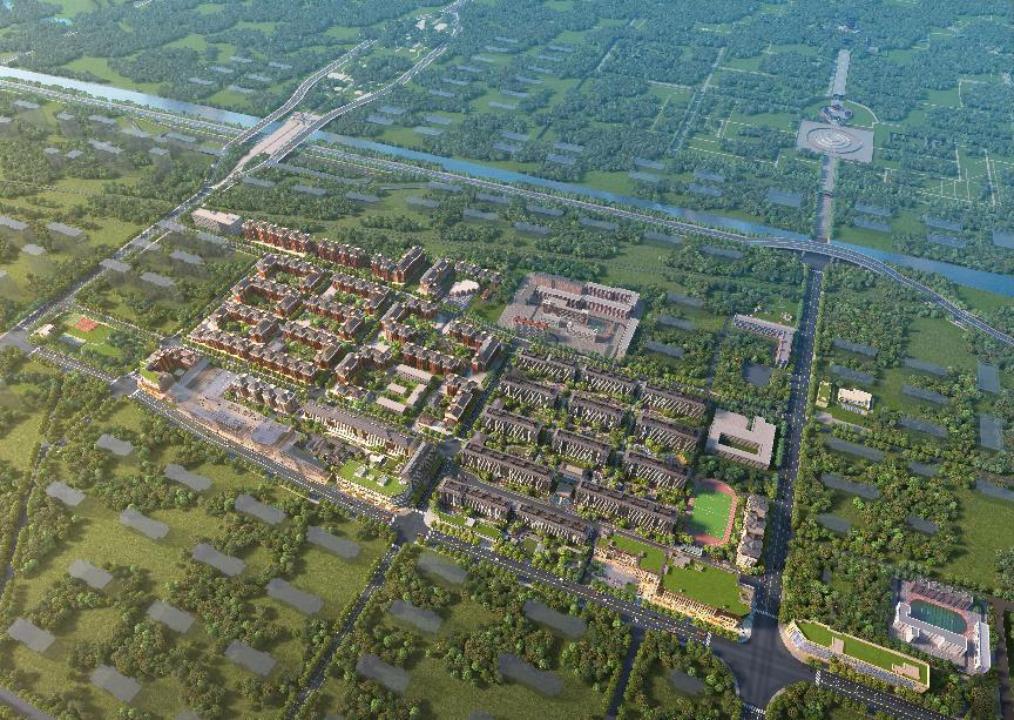
Aerial view and renderings of the Tiantan Mansion project
02 Golden location in the Second Ring Road, highlighting advantages of the core location and industrial upgrading
The higher the level of property purchase, the more crucial the asset safety is, and the location gene determines the "asset safety bottom line" of luxury housing projects.
In the past year, the average listing price of second-hand houses in Beijing has dropped by 17.5% (data from Anjuke), but high-quality communities represented by Dongcheng District, Xicheng District, and Haidian District have become "hard currency" for value preservation. Therefore, dual-excellent real estate with a core location and high-quality products is the "non-sale item" for many homeowners. If you want to buy high-quality assets in the inner city, you can only look for opportunities in the new housing market. Therefore, as soon as new projects such as Tiantan Mansion are launched, they will trigger a rush to purchase.
Beijing Urban Construction · Tiantan Mansion is located in the Second Ring Road of Dongcheng District. In Beijing, which has a strong historical and cultural atmosphere and intensive industrial and educational resources, the "Second Ring Road" means urban assets with a higher resource density.
Tiantan Mansion, which occupies the "Second Ring Road", is in the same circle with about 90% of national ministries and commissions, about 60% of national central enterprise headquarters in Beijing, 65% of famous schools in Beijing, 37% of national-level cultural relics protection units, and 56% of historical and cultural protection areas.
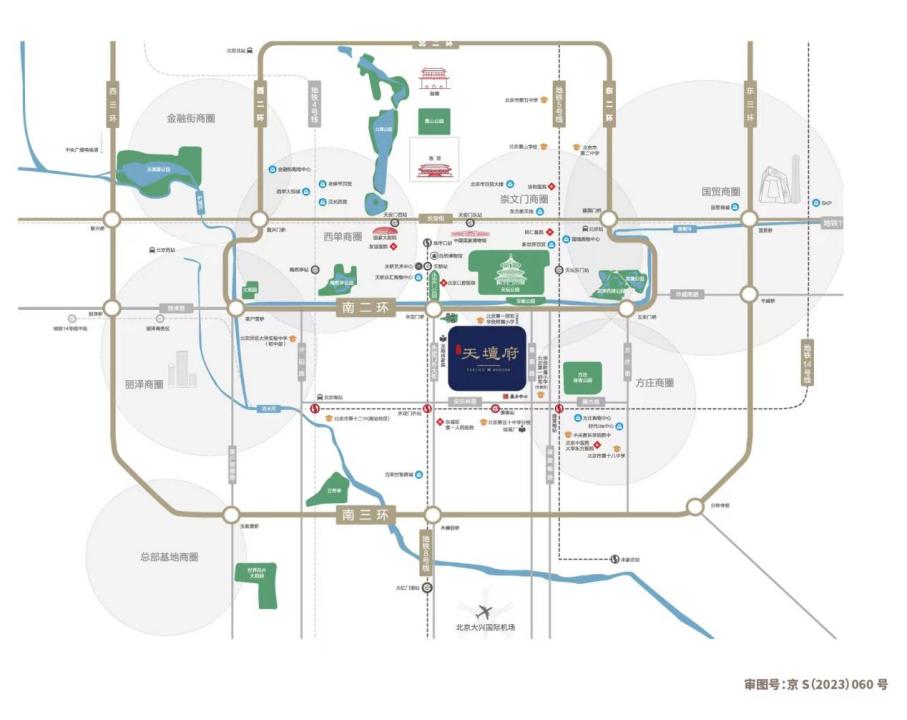
Location map of the Tiantan Mansion project
Even the out-of-print World Heritage Site - Tiantan Park is within the walking range of "taking a walk after dinner". The distance between the two is 800 meters, which can easily realize living near the Tiantan and taking a pleasant walk in the Tiantan, experiencing a livable life on the historical and cultural highland, and maximizing the integration into the rich and beautiful Beijing heritage, collecting a development microcosm of the inner city renewal.
However, having only the location advantage is not sufficient to become an out-of-print asset with high value-added potential for the future. Entering the stage of high-quality economic development, it is also very important whether the residence can be in the same frequency with the industrial development and obtain the dividends of the urban industrial development.
Although Beijing has proposed the "reduced development" in the core area, the core logic is still "quality development". As an important area for the headquarters economy, Dongcheng District has been exploring a new path to promote the high-quality development of industrial clusters.
According to the official data, in 2023, the eight industrial clusters in Dongcheng District achieved a district-level tax revenue of 6.57 billion yuan, accounting for nearly one-third of the total in the district, with a year-on-year growth of 12.7%. 111 leading enterprises, high-growth enterprises, and major related enterprises in the subdivided fields have been newly landed. Exploring the "return of technology to the city", strengthening and optimizing strategic emerging industries, and vigorously promoting the construction of a global digital economy benchmark city, Dongcheng District has deeply learned from the "Silicon Alley" model in New York, which started from the Flatiron Building and spread into an urban science and technology innovation belt, and built its own "Silicon Alley".
Industrial development means more resource aggregation. Since the "Catalogue of Prohibited and Restricted New Industries in Beijing" was announced in 2018, prohibiting the construction of new real estate development and management residential projects in Dongcheng District and Xicheng District, it means that the opportunity to buy high-quality real estate in the inner city is reduced. Assets like Tiantan Mansion, which comes with "core location + historical context + industrial empowerment", are particularly scarce.
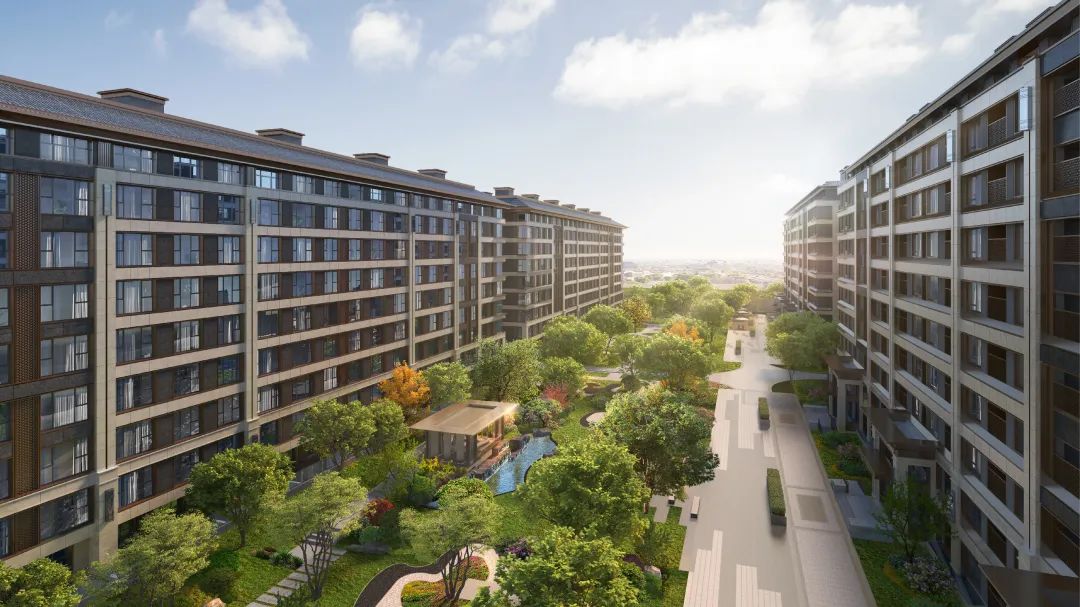
Renderings of the Tiantan Mansion project
03 High-quality products, scarce low-density humanistic mansions
How to create high-quality products that live up to the inner city?
As an established developer in Beijing, Beijing Urban Construction has always been the builder of Beijing's landmarks, participating in the construction of more than 40 national-level landmark buildings such as the Bird's Nest, the National Grand Theatre, Daxing Airport, and the Ice Ribbon. This time, on this inner-city land adjacent to Tiantan Park, Beijing Urban Construction has once again demonstrated the experience and determination to build a landmark.
Tiantan Mansion specially invited Mr. Liang Zhitian, an internationally renowned architect and product designer, and Mr. Li Baozhang, a landscape design master, to polish the product. In terms of architectural concept, the project draws on the essence of ancient Chinese architecture, absorbs the three-segment structure of the Huangqian Hall in the Tiantan and the hip roof structure of the Taihe Hall in the Forbidden City. With the design concept of the royal hip roof, the central axis ritual symmetrical entrance, the stone and metal fashion facade, and the innovative interpretation combined with the new residential needs, it creates a beautiful residence landmark that takes into account both cultural charm and unique visual value.
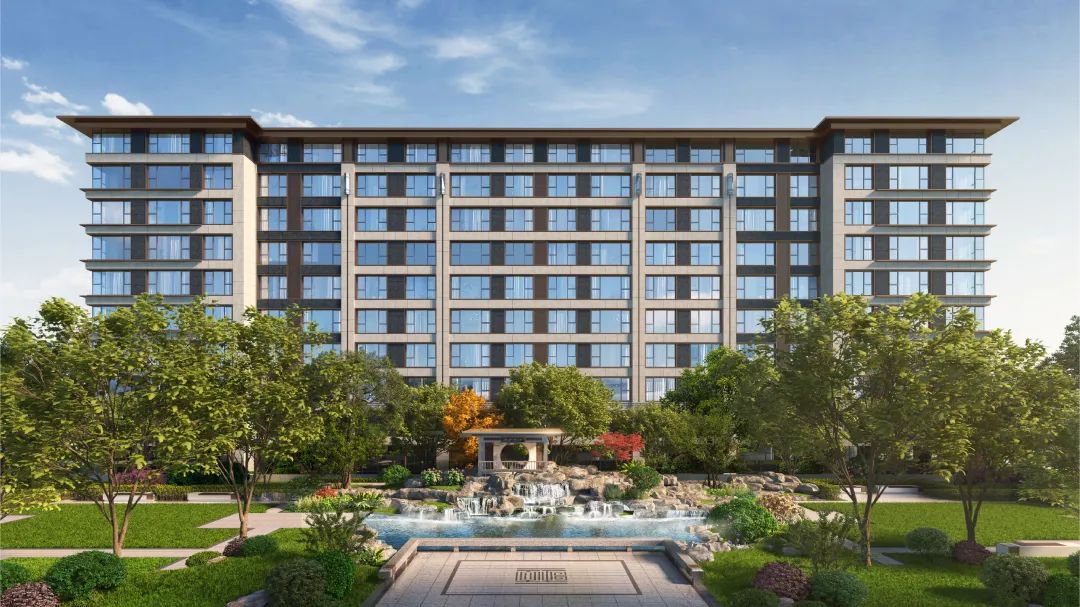
Renderings of the Tiantan Mansion project
In terms of landscape design, Tiantan Mansion traces the cultural context of the royal gardens such as the Imperial Garden and the Summer Palace, gathering the essence of thousands of gardens, and reproducing the traditional Chinese ritual and regulations, making the landscape and the architecture reflect and integrate with each other.
