Ford's German executive team downsizes again, while Tesla steps up the construction of Supercharger stations | Overseas Daily
"Top 3 News"
Tesla Plans to Build More "Mini Oasis" Supercharging Stations with Solar Panels
Key Points:
Tesla is increasing its investment in its new "Oasis" supercharging station concept, which is a large charging station powered by solar and microgrid battery systems. Last month, Tesla announced the "Oasis Project", which is expected to be one of Tesla's largest supercharging stations, providing multiple through-drive parking spaces for trucks and trailers. The real difference lies in the large solar array and battery system, which enables the charging station to operate off-grid for most of the time. Since 2016, CEO Elon Musk has been saying that the goal of the Supercharging network is to use solar and batteries and operate off-grid for most of the time, but Tesla has not yet made this the norm. The announcement of the Oasis Project gives us hope, and now it seems that Tesla is planning a mini Oasis.
Marco RP, who tracks the Supercharging station project, reported the new construction plan of the Coalinga station in California. The project is located about 50 miles north of the Oasis Project and also on Interstate 5 between Los Angeles and the Bay Area. We call it a "mini Oasis" not because it has fewer charging stations than the Oasis; in fact, it plans to have the same number of parking spaces as the Oasis, which is 168, but because it has less solar and battery power and cannot be used off-grid. The Oasis Project plans to have 11 megawatts of solar power generation capacity and 39 megawatt-hours of energy storage capacity. The new project in Coalinga has less than 1 megawatt of solar power and 15.5 megawatt-hours of energy storage capacity. In the Oasis Project, the grid supplements Tesla's microgrid, while in this new project, Tesla's microgrid supplements the grid connection. However, Tesla may eventually expand its solar array and battery energy storage system at the new station.

Tesla Supercharging Station Project (Source: Electrek)
Opinions:
This move by Tesla is undoubtedly another important step in the field of sustainable energy. By integrating solar and battery systems into the Supercharging stations, Tesla can not only reduce its reliance on the traditional power grid but also improve its energy self-sufficiency, which is of great significance for promoting the global transition to clean energy. From an environmental perspective, the construction of this mini Oasis Supercharging station is a manifestation of Tesla's commitment to reducing its carbon footprint. Through solar power generation and battery energy storage, Tesla can reduce the use of fossil fuels and lower greenhouse gas emissions, which is crucial for addressing global climate change. In addition, the construction of this charging station also shows Tesla's leadership in technological innovation and infrastructure construction. By integrating solar and battery systems into the charging stations, Tesla not only improves the efficiency of the charging stations but also provides users with a more convenient and environmentally friendly charging option. However, we should also note that although this mini Oasis Supercharging station is a positive development direction, to achieve a truly large-scale off-grid operation, further technological breakthroughs and cost reductions are needed. Tesla needs to continue to innovate in solar power generation efficiency, battery energy storage technology, and cost control to achieve its ambitious vision of green energy. In general, this new project of Tesla is an important milestone in its promotion of sustainable energy development. It not only demonstrates Tesla's technical strength but also sets a new benchmark for the global electric vehicle industry. With the continuous progress of technology and the reduction of costs, we have reason to believe that more such Supercharging stations will appear around the world in the future, providing more green and efficient energy solutions for electric vehicle users.
Ford Shrinks Its German Leadership Team Again as Restructuring Continues
Key Points:
Ford Motor Company's leadership team in Germany has been further reduced, with two experienced executives leaving their positions. This is part of Ford's global business restructuring. In June of this year, Ford lost its top executive in Europe, Martin Sander, who moved to Volkswagen. As part of Ford's reduction of personnel in the region, this position was eliminated. From July 1, 2024, the number of members of Ford's management committee has been reduced from the previous nine to four. Ford stated that these changes are part of a broader transformation of its European business. Kieran Cahill, the chairman of the supervisory board of Ford Germany, said that reducing the management layer "simplifies" the company's management structure and "increases the speed of action" as Ford seeks to reshape its brand image.
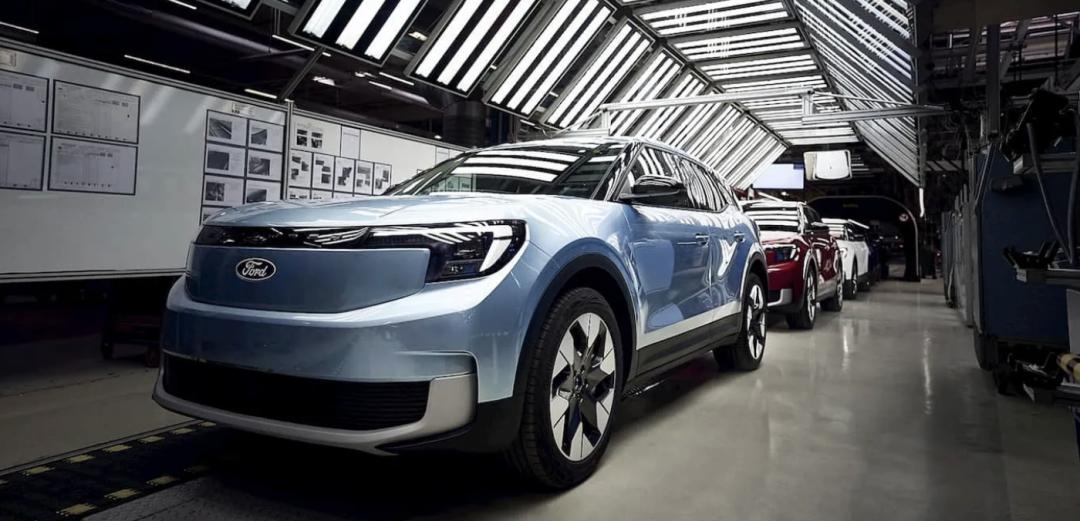
Ford Factory (Source: Electrek)
Starting this month, Ford will lose two more management committee members. According to the German media "Automobilwoche", Ford will be left with only two directors: Dave Johnston and Marcus Wassenberg, both of whom were appointed in July. At the same time, Christian Weingärtner and Rene Wolf resigned on November 1, 2024, but they will continue to work operationally in the company. This restructuring comes after Ford began delivering its new Capri EV last month.
The Capri is Ford's second electric model based on the Volkswagen MEB platform, following the electric Explorer. Ford began producing the all-electric Explorer at its new EV center in Cologne, Germany this summer. The new Capri EV starts at $48,800 (about €44,950) in Germany, slightly lower than the electric Explorer, which costs about $52,700 (about €48,500). In the United States, Ford will suspend production of the F-150 Lightning electric truck for nearly two months. Ford spokesperson Jessica Enoch said in an email to Electrek: "We continue to adjust production to achieve the best combination of sales growth and profitability." The first day of production suspension at the Rouge EV Center in Michigan will be November 18, and production will resume on January 6, 2025. The production suspension includes the holiday break week for all Ford factories in the United States starting from December 23.
Opinions:
The reduction of Ford's leadership team in Germany and the business restructuring reflect the transformation pressure that the automotive industry is facing globally. With the rise of electric vehicles (EVs) and the strengthening of environmental regulations, traditional automakers must adjust their business models and organizational structures to adapt to market changes. From a strategic perspective, Ford's reduction of the German leadership team may be to improve decision-making efficiency and response speed, which is crucial in the rapidly changing automotive industry. By simplifying the management layer, Ford may hope to implement its electrification strategy more quickly, while reducing internal bureaucracy and improving the organization's flexibility and agility. In addition, Ford's restructuring in Germany also shows the company's emphasis on the European market. Europe is an important market for the global automotive industry and one of the regions with the fastest growth in electric vehicles. By strengthening its electric vehicle product line in Germany, Ford can not only better serve the European market but also utilize Germany's expertise in automotive technology and engineering to enhance its global competitiveness. However, the reduction of the leadership team also brings challenges, especially in terms of talent retention and organizational stability. The departure of executives may affect the company's continuity and employee morale. Ford needs to ensure that during the restructuring process, it can maintain the loyalty and motivation of its employees while attracting new talents to join. Overall, Ford's restructuring in Germany is part of its global electrification strategy, aiming to improve the company's competitiveness and market adaptability. Although this may bring short-term uncertainty and challenges, in the long run, this may be a key step for Ford to maintain its industry-leading position.
Lucid Sets Records for Two Consecutive Months in the German Luxury Electric Vehicle Market
Key Points:
Lucid is gradually emerging in Germany, the home of luxury car manufacturers such as Porsche and BMW. According to the latest data released by the German Federal Motor Transport Authority (KBA), Lucid's new car registrations in October reached 129, setting a record for the second consecutive month after 41 registrations in September. Although the number may seem small, it is a significant increase compared to September, and Lucid's sales in Germany last month exceeded the total of the entire third quarter. Up to now, Lucid's registrations in Germany have reached 256. Despite the overall electric vehicle registrations in Germany falling by nearly 5% in October compared to the same period last year to 35,491, Lucid's growth momentum has not been affected. After opening its latest showroom in Hamburg last month, Lucid announced that its expansion in Europe is continuing. This new showroom is another move following the opening of the Frankfurt showroom a month ago. Currently, Lucid has four showrooms in Germany and eight showrooms in Europe, accelerating its overseas expansion.
Last month, Lucid also signed an agreement with SIXT to add its luxury Air sedan to the German fleet. Former CEO Peter Rawlinson said that more customers will be able to "experience this unique electric vehicle that is equally excellent on highways and city streets". Lucid's mobility service network covers 15 European markets including Belgium, Luxembourg, France, Austria, Italy, Spain, the United Kingdom, Sweden, Denmark, Poland, and the Czech Republic. The Lucid Air Pure starts at approximately $93,000 (€85,000) in Germany, with a WLTP range of up to 464 miles (747 kilometers). The starting prices of Lucid's Air Touring and Air Grand Touring models are $108,200 (€99,000) and $141,000 (€129,000), respectively. Lucid plans to continue its expansion in Europe, with new service and delivery centers opening in Munich and Zurich. In the United States, the company is preparing to launch its first electric SUV - Gravity. Lucid will begin accepting Gravity SUV orders from American buyers on November 7, 2024.
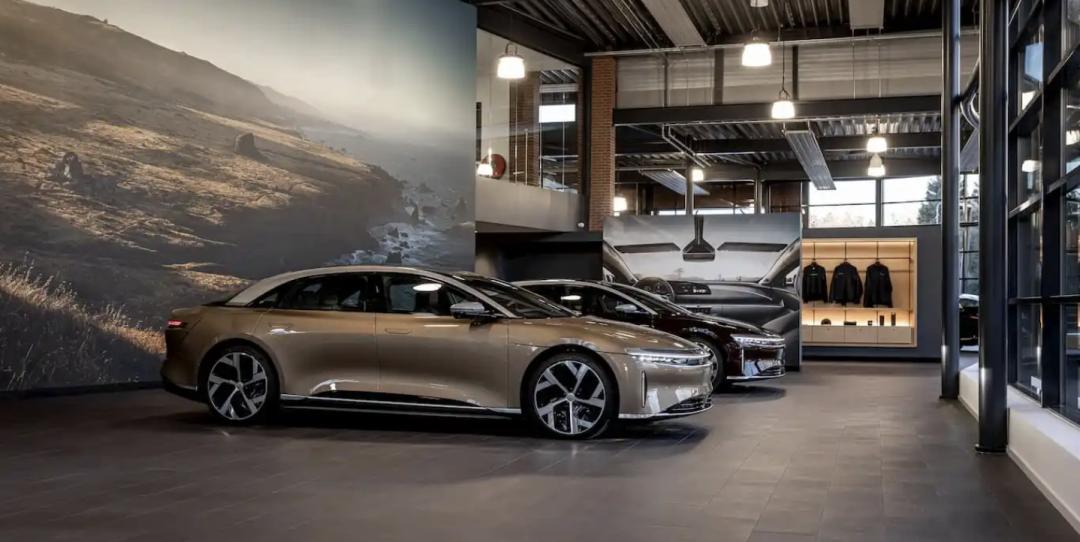
Lucid German Studio (Source: Electrek)
Opinions:
Lucid's growth in the German market indicates that the American electric vehicle manufacturer is successfully promoting its luxury electric vehicles to the largest automotive market in Europe. This achievement not only demonstrates Lucid's competitiveness in product quality and performance but also reflects the effectiveness of its global expansion strategy. Lucid's growth momentum benefits from its continuous investment in product performance, range, and customer experience. In a mature automotive market like Germany, consumers have higher expectations for the performance and luxury of electric vehicles, and Lucid meets these demands with its excellent technology and design. In addition, Lucid's expansion strategy in the European market, including the opening of new showrooms and service networks, has also laid the foundation for its success in the region. However, Lucid's success in the European market also faces challenges. The European market is highly competitive, with both traditional automakers and emerging electric vehicle brands competing for market share. Lucid needs to continue to invest in technological innovation, brand building, and marketing to maintain its competitiveness. At the same time, Lucid also needs to pay attention to the regulatory changes and the evolution of consumer demands in the European market to ensure that its products and services can meet the requirements of the local market. Overall, Lucid's growth in the German market is a positive signal, indicating that it has a strong competitiveness in the global luxury electric vehicle field. With the continuous expansion of the electric vehicle market and the increasing demand for sustainable travel solutions, Lucid is expected to achieve greater success in the European and even global markets.
"Big Events"
Honda's First Electric SUV Prologue Sees Surging Sales in the US Market

Honda Prologue (Source: Electrek)
Honda's first electric SUV, the Prologue, has quickly become one of the best-selling electric vehicles in the US market. With the growing demand, the Honda Prologue is expected to become a popular model in the market. According to the data from "Cox Automotive", the Prologue sold more than 12,600 units in the third quarter, becoming the fifth best-selling electric vehicle in the US. This achievement is only behind Tesla's Model Y, Model 3, Cybertruck, and Ford Mustang Mach-E. Considering that Honda did not sell any electric vehicles in the US last year, this performance is particularly impressive. In October, the Prologue sold more than 4,100 units in the US, continuing to outperform several competitors, including the Ford Mustang Mach-E (which sold 3,313 units in the US in October). As of October 2024, the Prologue's sales in the US have reached 18,309 units, compared to zero in the same period last year. Honda began delivering the Prologue model in March this year.
ChargePoint's New Basic Cloud Plan Enables Small Businesses and Multi-Family Residences to Use Electric Vehicle Charging
ChargePoint, as a leading provider of connected electric vehicle charging solutions, has announced an easier way to provide electric vehicle charging. This new plan, called the ChargePoint Essential Cloud Plan, represents an alternative to the traditional cloud subscription model. The ChargePoint Essential Cloud Plan offers a competitive software fee, which is paid by the charging driver. All revenue exceeding this fee is returned to the charging station owner monthly, and there is no additional fee to activate a site under the Essential Cloud Plan.
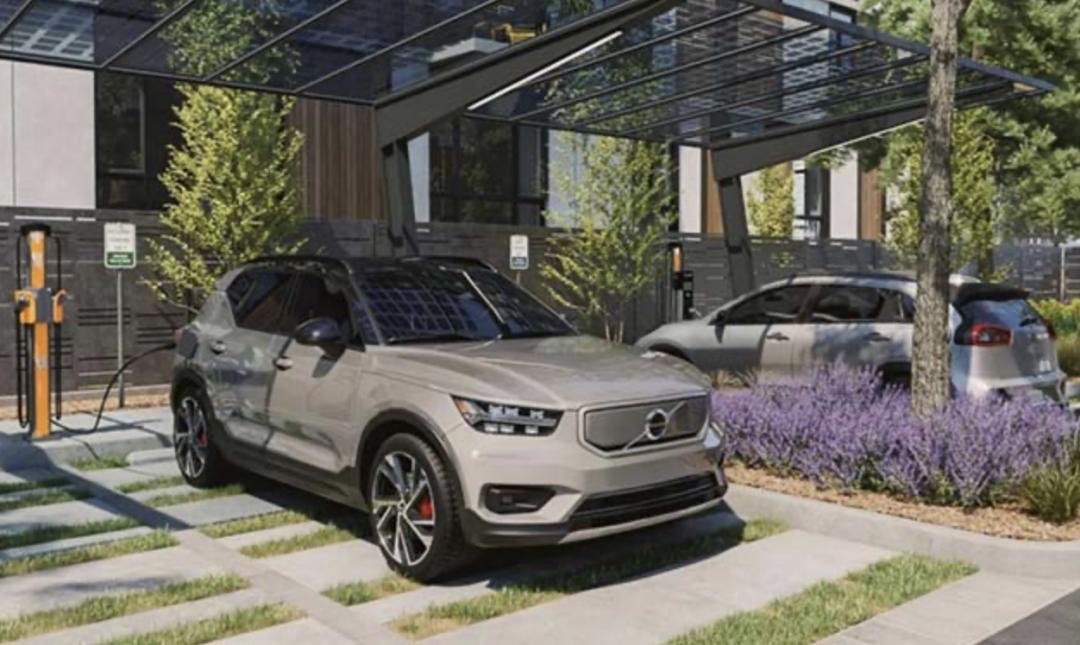
Charge Point (Source: Electriccarsreport)
With the ChargePoint Essential Cloud Plan, currently offered with the company's lowest-cost Level 2 charging solution, the CPF50, customers can enjoy the benefits of ChargePoint's leading software platform while eliminating the need for a software subscription or renewal. The ChargePoint Essential Cloud Plan is suitable for charging scenarios that are limitedly open to the public, including multi-family residences, hotels, the hospitality industry, and workplaces. The ChargePoint Essential Cloud Plan covers the cost of the cloud plan by using charging revenue, thereby eliminating the need for a continuous subscription fee. This effectively provides a financing mechanism for those who wish to provide charging services, and any surplus revenue beyond the monthly cost is paid to the charging station owner. ChargePoint's CEO Rick Wilmer said: "ChargePoint wants small businesses to be able to provide electric vehicle charging services as seamlessly and easily as possible. Innovative new solutions like the ChargePoint Essential Cloud Plan lower the barrier to entry and minimize upfront investment by covering ongoing costs and deploying the $699 CPF50 charger. This plan is an excellent way to provide charging without sacrificing quality or scalability."
The Market Share of Pure Electric Vehicles in the UK Exceeds One-Fifth of New Registrations for Three Consecutive Months
According to the latest data from the Society of Motor Manufacturers and Traders (SMMT), the UK new car market experienced its second decline this year in October, with new registrations falling by 6.0% to 144,288 units. Despite a decline in demand from all types of buyers, pure electric vehicles (BEVs) have bucked the trend with a market share of 20.7%, exceeding one-fifth of new registrations for the third consecutive month. Despite the overall market decline, particularly a 1