The downward trend of office rental prices in Beijing remains unchanged.
"Rents for Grade A office buildings in Beijing continue to decline. In the third quarter of this year, they decreased by 3.1% quarter-on-quarter and 14.3% year-on-year. The rent reduction in the past year is comparable to the cumulative reduction in the three years of the epidemic," said Zhang Siliang, Senior Director of the Beijing Commercial Real Estate Department of Jones Lang LaSalle. In the fourth quarter of this year, the downward trend in office building rents will continue for some time.
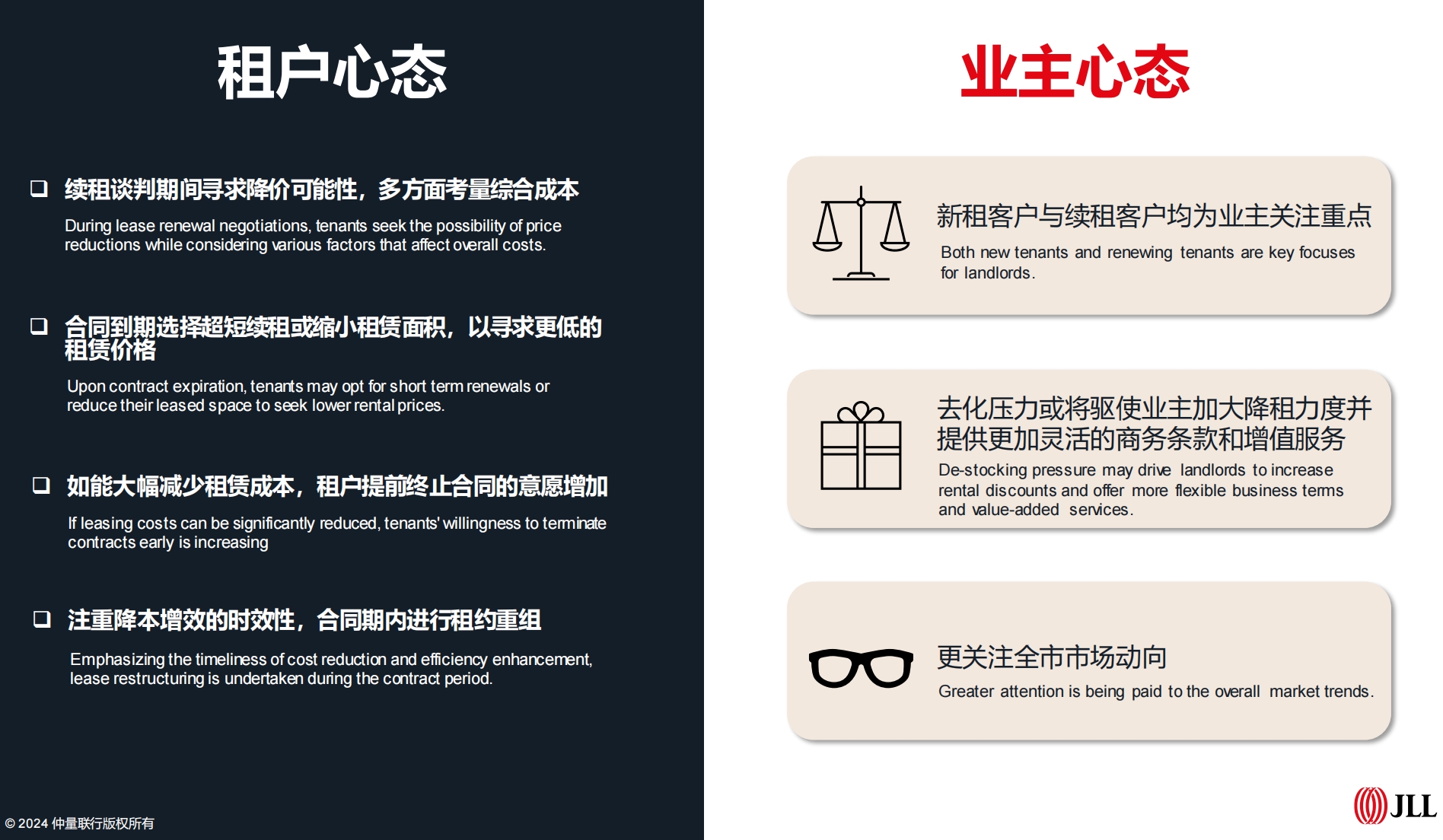
Currently, enterprises have a significant demand for cost reduction and efficiency improvement, and are highly sensitive to rent discounts, forcing some landlords to offer unprecedented discount intensity to facilitate transactions, resulting in intensified competition among projects and a further decline in overall rents.
"In order to attract enterprises to settle in and retain existing customers, a certain office building project even provides a catering consumption voucher of 10 yuan per employee per day for the settled enterprises," Zhang Siliang revealed. In the third quarter of this year, there was no new supply in the Beijing Grade A office building market, and the overall vacancy rate was 11.9%, slightly decreasing by 0.2 percentage points quarter-on-quarter, showing signs of stabilization. However, phenomena such as enterprises reducing their leased areas, terminating leases upon expiration, and even terminating leases within the lease period still exist, and some sub-markets still face certain destocking pressures, and the tenants' discourse power is constantly increasing.
Source: Jones Lang LaSalle
The demand for the Beijing Grade A office building market mainly comes from the technology internet, energy, and professional service industries. The demand in the technology internet sector continues to stabilize, and leading enterprises are increasing their investment in the artificial intelligence track, contributing a large area of leasing transactions. Energy enterprises led by central and local state-owned enterprises have performed outstandingly, with the non-renewal lease transaction area accounting for 20%. In addition, the demand resilience in the professional service industry has emerged, and the favorable policies for the education and training industry have promoted the recovery of the market activity of education enterprises.
According to statistics from Jones Lang LaSalle, the overall net absorption volume of the Grade A office building market in the third quarter turned positive, recording 24,694 square meters, mainly due to the support of the self-use demand in the Zhongguancun sub-market. It is expected that there will be a supply of 120,000 square meters in the market at the end of the year, and the rent of Beijing Grade A office buildings in 2024 will decrease by 13.6%.
In the retail commercial real estate sector, the demand recovery is slowing down, but the momentum of new store openings has not been affected. Catering retailers are facing increased costs and intensified competition, resulting in a decline in profits, and the expansion demand in the future has slightly decreased. However, the new catering, fashion, and lifestyle stores that signed contracts in the first half of 2024 still continued to open in the third quarter, effectively reducing the vacant area, especially in new projects. Therefore, the net absorption volume in the urban area market reached 86,471 square meters, maintaining a healthy level. Four new projects entered the market in the third quarter, bringing a new supply of 220,000 square meters to the market. Thanks to the active demand during the pre-lease period, the average opening rate reached 70%. The effective destocking of the incremental area helps to stabilize the vacancy level in the city. The vacancy rate in the urban area only increased by 0.3 percentage points to 4.8%; while the vacancy rate in the suburbs decreased by 0.2 percentage points to 7.6%.
"The new supply of Beijing retail real estate in 2024 is expected to be 1.63 million square meters, reaching a historical peak. However, the supply and demand pattern remains balanced because mature developers start pre-leasing three quarters in advance, and the strong pre-leasing results in the first half of the year ensure a considerable opening rate. However, the slope of the demand recovery is slowing down, and the expectations of the lessor and lessee in the existing projects are slightly imbalanced, which will lead to a slowdown in rent growth. The year-on-year growth rate in the urban area market in 2024 is expected to be 2.5%, and 2.0% in the core market," said Ji Ming, Director of the Research Department of North China Region of Jones Lang LaSalle.