Sie haben 30 Jahre lang Autos repariert – und verlieren nun gegen die Elektromobilität
„There are no costs. 40,000 yuan per day, that's quite good, isn't it?“
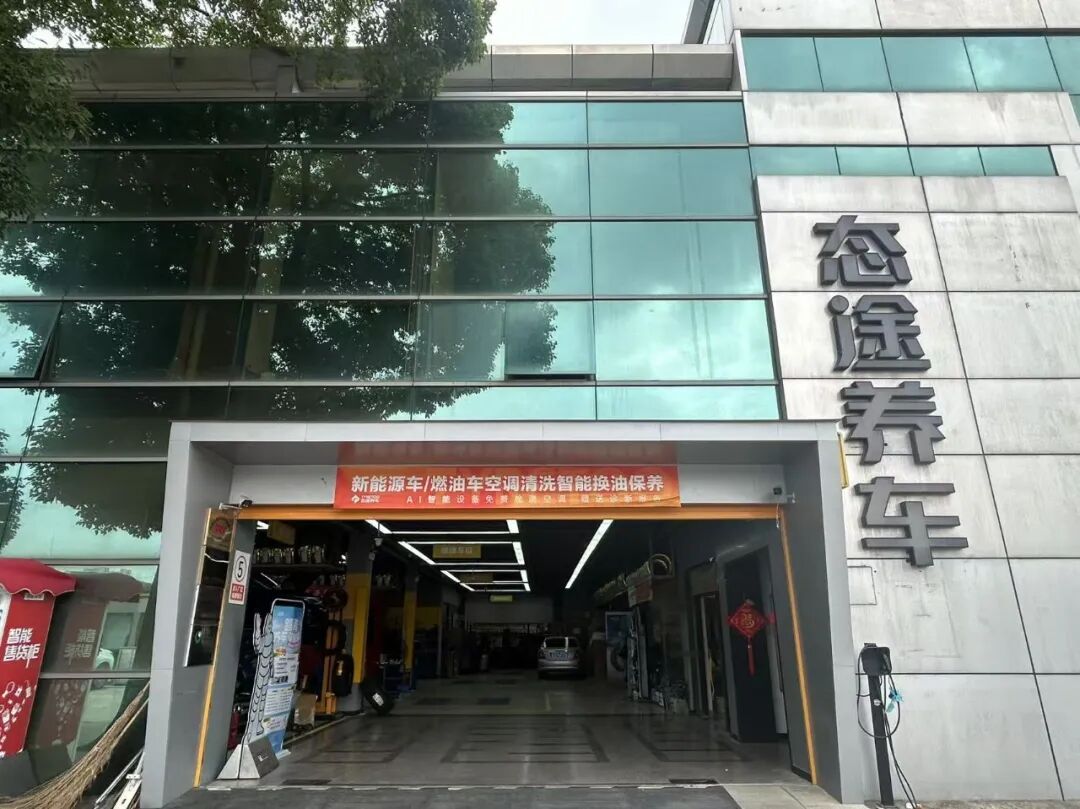
In the office on the second floor of Taitu Car Care on Siemens Street in Nanjing, the eyes of the founder Lü Yanqing obviously lit up when he talked about a new business branch he had recently found –
Without the approval of any electric vehicle manufacturers and without complicated skills, just by buying some not-too-expensive devices, vehicle owners who suffer from reduced range are willing to pay hundreds of yuan to restore the battery performance.
Taitu Car Care is a chain brand of auto repair. There are almost 10 branches in Nanjing alone. Most of its auto repair colleagues can hardly believe that there is still such a good business today. They sense a completely different atmosphere.
Wang Fei has been running an auto repair workshop in Nanjing for over 20 years. He told us: „With the increasing number of electric vehicles, I'm in a situation where ‘there are no more cars to repair’:“
Previously, there were always a dozen cars waiting for repair and maintenance in front of the workshop. Today, there are only three or four orders per day, and the monthly income has dropped to a quarter. There are only three people left in the business, and they take turns lying on the couch and „lazing around“.
Statistics show that between 2023 and 2025, more than 80,000 traditional auto repair workshops across the country have closed, which is almost one-fifth of the entire industry. But Wang Fei thinks this number is too conservative.
He took the area north of Chaiyuan Street in Nanjing as an example. Originally, there were two dozen small and large auto repair shops here. Today, only six are still in operation. Even the old mechanics who have managed to hold on have to work as drivers for Didi or delivery drivers for Huolala in their free time to supplement their income.
„This is very common,“ said Lü Yanqing, whose Taitu Car Care also originated from traditional auto repair and is responsible for the livelihoods of hundreds of employees. He understands very well the difficulties of old auto repairers like Wang Fei. When asked how many of the more than 400,000 auto repair shops across the country would still remain in the future, Lü Yanqing first said „half“. After a short pause, he retracted his statement: „Maybe even less.“
In order to be one of the few survivors, he has to motivate himself with the idea of „Survival of the Fittest“ and hope that he can get through the most difficult years of the electric vehicle era through innovation. The new business branch is one of the results.
But the problem is that no one knows how long this cold season will last.
And even less does anyone know how much market share the traditional auto repair workshops, which are built on the experience of old mechanics, will have when the electric vehicle manufacturers finally loosen the restrictions on the repair system, software permissions, and access to users.
1. When vehicle owners no longer trust traditional auto repair workshops
All day long, Wang Fei lay on the couch with nothing to do.
He stretched out his wrinkled hand – a result of the severe dehydration of the skin caused by years of corrosion from engine oil – and pointed at himself: a medium-sized, 49-year-old man with a short haircut and a helpless expression, as well as his equally idle business partner.
„In total, there are only three or four cars per day. There are only us and a young mechanic left in the business, and we're still so bored that we ‘sleep’ all day.“
Wang Fei entered the industry in 1995 and has been repairing cars for over 30 years.
He has seen with his own eyes how the number of cars on the road has grown from a few to an uncountable amount in the last 30 years and how they drove into the auto repair workshop he and his business partner bought by selling two apartments due to various malfunctions.
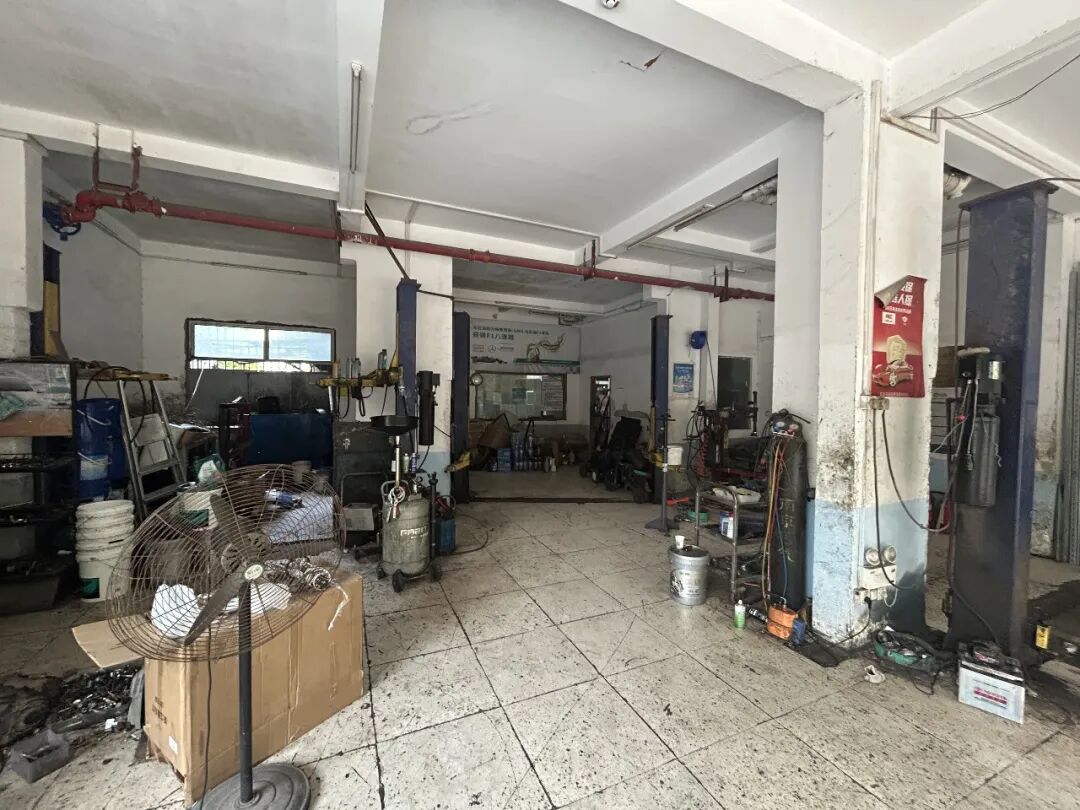
In the best years of the business, the eight employees in the shop were not enough, and it was no problem for Wang Fei to earn a million yuan per year. At that time, he loved to say again and again: „A craftsman will never starve to death.“
But now, when the „hungry time“ has actually arrived, his opinion has changed.
„I see no hope.“ Wang Fei got up from the couch, tugged at his black T-shirt with the Petronas logo, and walked through the unlit repair hall – the hoist was empty, and there was only one car being repaired – and pointed at a grain and oil wholesale store nearby.
„Previously, they had five gasoline cars and came to me for maintenance every month. They spent at least 30,000 yuan per year. Since they've all switched to electric vehicles, I haven't seen them for almost a year.“
In Wang Fei's opinion, there are many reasons for the „lack of cars to repair“, but the most direct change is that the demand has disappeared.
On the one hand, many of his old customers are from traditional industries such as the real estate industry. „They can't do business anymore and don't drive on the road. Naturally, I don't have any business either.“ On the other hand, Wang Fei agrees that electric vehicles break down less frequently. The three-in-one system (battery, electric motor, electronics) tightly enclosed by a metal shell doesn't require maintenance as often as an internal combustion engine or a transmission.
But what really makes Wang Fei helpless is that even if there are problems with electric vehicles, it's most likely not up to him to repair them.
„It's already a luxury to talk about the three-in-one system.“ Wang Fei gave an example: Last year, the owner of a BYD vehicle came to the workshop because the heater wasn't working. Wang Fei diagnosed that the problem was with the heater water pump and suggested replacing it.
It wasn't a complicated operation, but the vehicle owner hesitated for a long time and finally drove to a more expensive 4S workshop. The reason he gave left Wang Fei helpless: He was afraid that the vehicle manufacturer would void the warranty if it found that the repair by a third party had affected the electrical circuits.
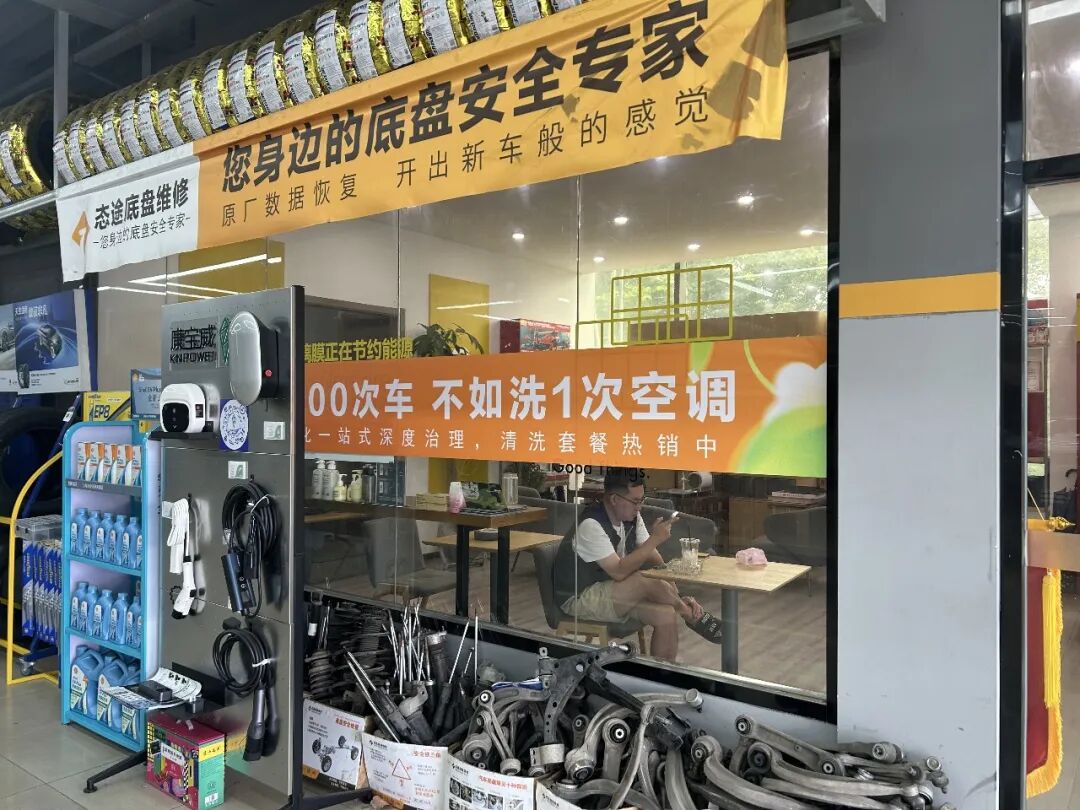
„This is actually a trust problem.“ Taitu Car Care is now taking on a large number of air conditioning repair jobs for electric vehicles. After many conversations with vehicle owners, Lü Yanqing has found that the perception of vehicle owners about „auto repair“ has fundamentally changed in the era of electric mobility.
In the era of internal combustion engines, most vehicle malfunctions were mechanical in nature. One found the defective part, replaced it or repaired it, and the problem was usually solved.
In the era of electric mobility, on the other hand, vehicle owners are increasingly of the opinion that they're driving a large electronic device and are willing to believe the „statements“ of vehicle manufacturers:
Electric vehicles are equipped with over a hundred ECUs (Electronic Control Units), and the entire vehicle system can be updated via OTA. In case of external illegal access, there is a risk that the firmware will be manipulated, the functions will fail, or even accidents will occur.
Therefore, an electric vehicle owner often decides not only based on the driving experience whether a vehicle is really repaired, but also on whether the system accepts the repair.
„Simply put, many vehicle owners don't trust that an old mechanic who used to repair internal combustion engines can repair an electric vehicle 100%.“ said Lü Yanqing.
This is perhaps the „most painful wound“ of the traditional auto repair industry in the wave of electric mobility –
In the past, the growth of this industry was based on the experience of old mechanics, the teacher-student relationship, and the trust of vehicle owners in certain mechanics. But today, this trust is no longer based on certain individuals, but on brand authorization, system certification, and manufacturer warranty. And many old mechanics like Wang Fei can only watch as this happens.
„There are actually many old mechanics in our industry who are highly dependent on their accustomed ways of working,“ said Wang Fei. He believes that old auto repairers like him will be left behind by the times like old shoemakers. He and Lü Yanqing both said:
If everyone learns to repair electric vehicles from scratch, some people who used to repair computers or mobile phones may learn faster than many old auto mechanics because they're more familiar with electrical circuits.
2. Do vehicle manufacturers really want to take over the repair market?
„But there are other backgrounds.“ The example that Wang Fei gave now revealed the subtle side of electric vehicle repair.
„For example, when you change a headlight, you'll even be told in the 4S workshop that you can do it outside the workshop.“
But the problem is that the error messages in the vehicle system that remain after the headlight change can often only be cleared with devices authorized by the manufacturer. If the error messages aren't cleared, the error warning light on the dashboard will flash continuously.
„How many car drivers can stand that?“
And when you come to the workshop, you may be told: The light is fine, but the installation process doesn't meet the manufacturer's standards. It has to be reinstalled so that the error messages can be cleared.
So an additional labor fee is incurred.
„In the end, the vehicle owner calculates and comes to the conclusion that it would have been better to repair the car directly in the 4S workshop.“
In the opinion of many independent repair workshops, the lack of disclosure of permissions, the limited supply channels for spare parts, and the high authorization requirements are the biggest obstacles to providing repair services for electric vehicles.
Some even assume that vehicle manufacturers „monopolize“ the repair market through technology and authorization systems.
But is that really the case? Maybe it's much more complicated than one thinks.
Whether vehicle manufacturers intend to „monopolize“ the market depends on a crucial question: What is the central position of vehicle manufacturers in after-sales repair? Is it a profitable business or a part of the customer service system?
Vehicle manufacturers mostly remain silent on this question. We inquired with four electric vehicle manufacturers, but all of them rejected our request.
But Lü Yanqing told us that the electric vehicle repair market itself may not be as profitable as the outside world thinks. Even authorized 4S workshops or manufacturer service centers often don't make money from battery repair.
„Actually, only those who manufacture batteries have the right to repair batteries. Many vehicle manufacturers finally send battery problems back to battery factories like CATL or to authorized repair centers.“
„Currently, there are no big profits. Even if you invest in an authorized battery repair point, you often lose money. Because there aren't so many vehicles that need to have their batteries repaired yet.“ said Lü Yanqing.
If the profitability isn't fully there yet, then the question arises: Is the industry's ability already mature?
Actually, Wang Fei went to Changzhou, known as the „Capital of Electric Mobility“, in 2022 specifically to acquire skills in electric vehicle repair.
When asked if he can repair electric vehicles, Wang Fei first said definitely: „I can repair everything.“ But when asked in more detail what he had learned at that time, he said that he had „almost forgotten everything“ because he hadn't repaired any electric vehicles for a long time.
Lü Yanqing is facing a problem similar to the „chicken-and-egg dilemma“.
„We can hire mechanics who can repair electric vehicles, but can we guarantee that they'll have cars to repair after being hired?“ Lü Yanqing explained