Nast moment unterzeichnet International und ARC Group International eine Absichtserklärung über strategische Investitionen in Höhe von 50 Millionen US-Dollar, um Chinas KI-gestützter internationaler Lieferkette und der FinTech-Industrie bei der schnellen Expansion auf globale Märkte zu helfen.
After completing a wholesale deal, sellers and buyers often need to spend several more weeks determining who actually owns the goods.
This is not an isolated case. In the Chinese raw material wholesale market, which has a scale of several trillion yuan, there have long been three problems: lack of information, weak coordination in the supply chain, and low efficiency in contract fulfillment.
In the past ten years, the B2B platform has solved the problem of finding goods. Sellers and buyers can find each other online, but this is only the first step. The real problem lies in the "steps" after finding the goods.
After the order is signed, buyers worry about whether the quality of the goods is okay and whether the goods could be misused. Sellers are also concerned about whether the payment will arrive on time and whether there will be price drops during transportation. Logistics companies have their own problems: What happens if the warehouse does not accept the delivery statement? Banks are extremely cautious: Have the goods already been used as collateral?
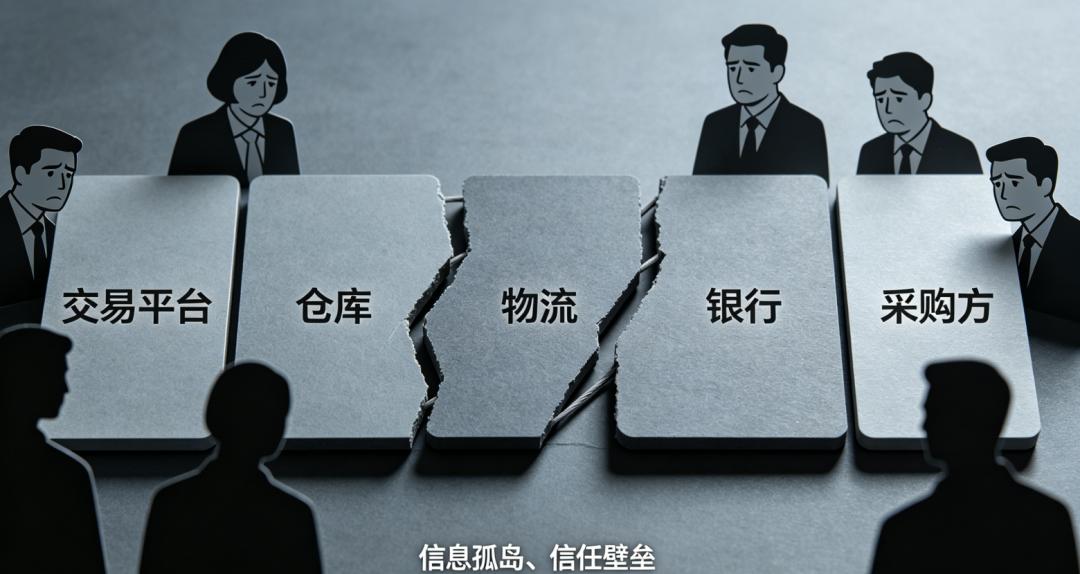
Everyone defends themselves, and every concern is legitimate. The transaction becomes slow, expensive, and vulnerable in this atmosphere of mistrust.
After the decline of the traffic dividend, the central theme of the industrial Internet industry is gradually becoming clearer: How can we ensure that every step of the transaction, from presentation to delivery, is trustworthy, efficient, and cost - effective?
This theme has attracted many companies. Some bet on electronic signatures, others develop logistics tracking platforms, and still others offer SaaS solutions for supply chain finance. Each company approaches from a different angle, but most can only solve one problem in a certain step. Even if the information is transparent, the coordination remains blocked. When the coordination works, the contract fulfillment is still slow.
Among these start - up companies, NashiKe (Wuxi) Smart Technology Co., Ltd. wants to create an integrated system and a technological foundation that covers transactions, contract fulfillment, the Internet of Things (IoT), and data.
Recently, NashiKe received an investment intention of $50 million from the ARC Group International. For NashiKe, this strategic investment not only means an influx of capital but also accelerates its expansion in the foreign market through the cross - border network of the ARC Group.
The ARC Group is a global investment bank and corporate consulting firm that specializes in connecting Asian and Western markets. Its services include comprehensive financial solutions such as initial public offerings (IPO), mergers and acquisitions (M&A), financing, venture capital investments, and SPACs. The firm has an independent consulting department that focuses on helping companies with the specific challenges they face in operating in Asian and Western markets. Since its establishment in 2015, the ARC Group has already had more than ten years of operating experience. Its headquarters is located in Hong Kong, China, and it has offices in China, the United States, Malaysia, Indonesia, Vietnam, India, Sweden, and the United Arab Emirates. It has thus built a solid ability in cross - border financial and consulting services. In 2024, the ARC Group received the Frost & Sullivan Company of the Year Award and the M&A Worldwide Deal of the Year Award, which further consolidates its leading position in the financial service industry.
Behind the intensification of the capital market and the honorary titles lies NashiKe's promising industrial Internet concept.
1. Knock down the "three walls"
The starting point of NashiKe Technology comes from a very specific question:
The founding team worked at a leading trading platform in the Chinese stainless - steel sector in previous years. At that time, they found that the transaction data of the platform and the management systems of customers were independent of each other. If customers wanted to use the financial services offered by the platform, they had to connect to another system.
For each new function, a new service provider from a different area had to be added, such as connecting to bank payments, integrating logistics tracking, and implementing warehouse management. The development costs were high, and the iteration cycle was long. Even when the system was launched, the user experience might not be good because no provider really understood the entire business.
At this time, the NashiKe team realized that the industrial Internet industry lacked a foundation that could integrate these business parts. After the approach was clear, they had to first work on the three walls in the industry.
Let's first look at the first wall: the lack of information. For most people who buy something on an e - commerce platform, it is clear that the goods are theirs as soon as the shipment arrives. However, in wholesale deals, the logic is completely different. A batch of steel can be used as collateral, converted, or partially exchanged from storage to retrieval. Who owns the property rights to these goods? Sometimes, even the warehouse manager cannot answer this question.
Moreover, this is not a problem of a single company. In the stainless - steel sector, the entire industry still uses the technological basic logic from more than ten years ago. The individual modules of the system have long been separated from each other: the order data is on the trading platform, the warehouse data is in inventory management, the financial data is at the bank, and the logistics data is at the transportation company. Since the systems cannot communicate with each other, employees have to spend a lot of time every day making phone calls, sending messages, filling out forms, and reconciling documents.
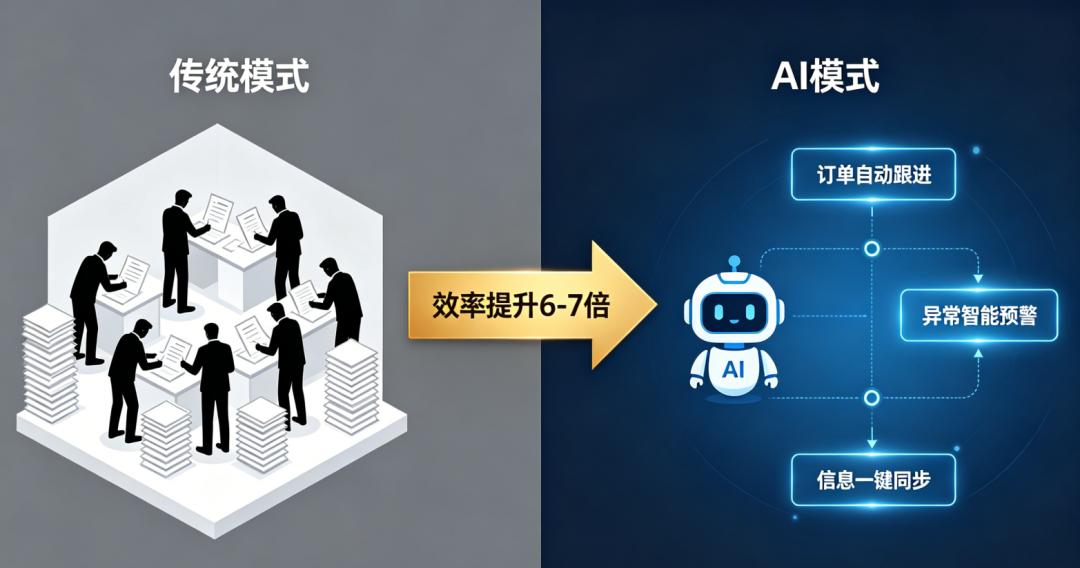
On average, seven or eight people and more than ten communication rounds are involved in completing an order from signing to completion.
The second wall is the weak coordination in the supply chain. If a customer wants to change the order details, the order tracker may have to change the contract, notify production, and update the customs declaration. Since the systems are not connected, everything has to be transferred manually.
The third wall is the low efficiency in contract fulfillment. After the contract is signed, it is sometimes unclear when the goods will be shipped, arrive, and the payment will be made. Buyers have to send someone on - site to check the goods and then notify the finance department to make the payment. Sellers have to notify the warehouse to deliver the goods after receiving the payment. The capital turnover rate is surprisingly low.
Many companies try to knock down these three walls, but most solutions are piecemeal. When one problem is solved, another one appears.
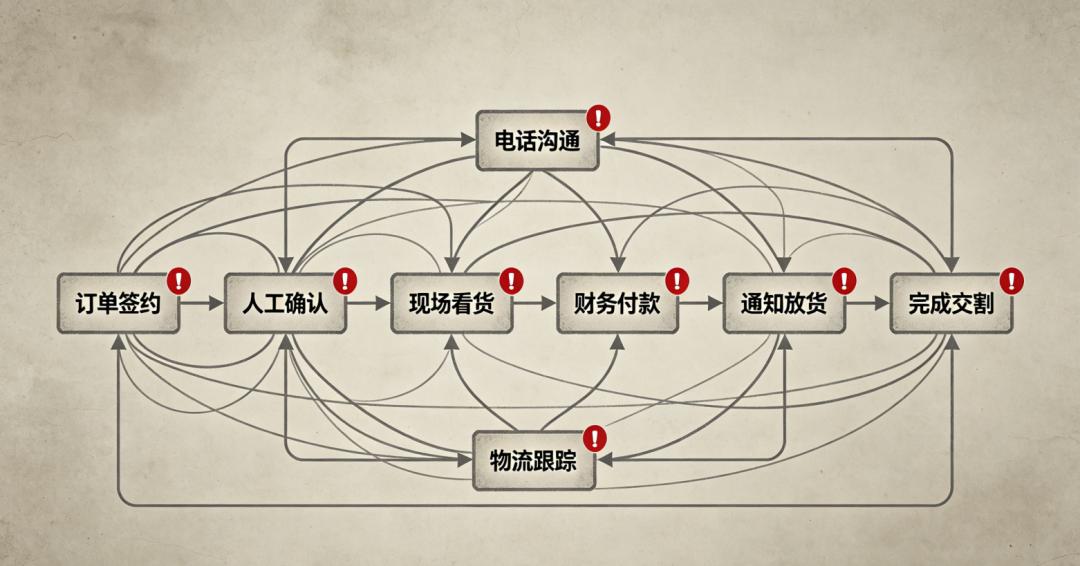
From years of practice on the previous platform, the NashiKe team has gained the insight that it is better to build a modular technological middleware rather than constantly adding individual functions. In this way, one can connect the data foundation and make the system architecture universal.
NashiKe Technology's solution starts with this insight. The trading monitoring system is the first building block of this foundation. It requires that all transaction data be fully recorded. The five lines of contract, payment, invoice, logistics, and information are automatically reconciled and verified in the system. Only when the information is transparent are banks willing to grant loans, and customers are willing to place orders.
In addition, NashiKe Technology's modular technological middleware does not replace the existing systems of customers but instead builds a "middle layer" that enables independent software programs to "communicate" with each other. This connects transactions, storage, financing, and logistics, and the coupling between processes no longer requires extensive manual intervention.
The intelligent warehouse management system extends its sensors into the physical world. In the warehouse, infrared detection, industrial cameras, RFID tags, intelligent scales, and other devices are installed. When the goods are stored, a digital certificate is automatically created, and when they are retrieved, the authorization is automatically checked.
This industrial Internet system is not only for large state - owned and central enterprises. Private warehouse and logistics companies can simply connect to the basic IoT devices. The overall costs are low, and they can thus connect as part of an intelligent financial warehouse. For example, a connected stainless - steel warehouse can be automatically certified and used by other steel trading platforms.
By combining these three solutions, the information becomes transparent, the systems are connected, and the contract fulfillment becomes visible. The three walls are knocked down simultaneously.
2. Anchor in the industry and "polish" the technological foundation
To implement the solution, one needs the ability. The capabilities of NashiKe Technology come from the cooperation of two subsidiaries: Xinjiedian builds the technological foundation, and Qiyoutong conducts the scenario operations. One writes code, and the other runs the business. Both are indispensable.
Xinjiedian has built a six - in - one platform architecture that includes spot transactions, the order system, BOSS operations, data analysis, data monitoring, and artificial intelligence support. Each module solves a specific problem and can be applied individually or in combination.
The competitive barrier in the industrial Internet industry depends highly on in - depth knowledge of the business. When designing the architecture, NashiKe's engineers stay on - site with customers for a long time. They work with warehouse managers on order creation, invoice reconciliation, and error handling and follow the logistics vehicles to understand the difficulties in the transportation process. The problems reported by employees in using the system are directly used as the basis for process optimization.
For example, the engineers found that warehouse managers need two hours every day to manually enter the storage and retrieval documents, and errors often occur. The reason is that the original system interface was too complex and had too many fields. On this basis, NashiKe Technology redesigned the input interface for mobile devices by reducing the number of fields from 30 to 8. With the automatic recognition of the scanner, the input time is reduced from two hours to 15 minutes, and the error rate approaches almost zero.
These seemingly small improvements add up to a qualitative change in efficiency.
Another advantage of the modular design is flexibility. 60% - 70% of the requirements of a new customer can be met by quickly combining the existing modules. The remaining 30% - 40% are solved through customized adaptations or the addition of new functions.
In this way, NashiKe avoids two "start - up pitfalls". One pitfall is the development of standard software that cannot be adapted to industry differences. The other pitfall is pure customized development, where each project starts from scratch. The company would then lose the opportunity to develop a universal and scalable solution. The modular middleware enables NashiKe to meet the individual requirements of each customer while maintaining efficiency in delivery.
The intelligent IoT and digital storage are the other pillar of NashiKe Technology. Through the three - level coupling of devices, platform, and data, the traditional warehouse is upgraded to an intelligent financial warehouse that can be remotely monitored, dynamically authorized, and connected to financial services. Since not all warehouses can afford the expensive automation devices, NashiKe adopts a phased implementation. Large warehouses get the full equipment, while small and medium - sized warehouses use the basic equipment. This minimizes the costs, and the functions remain "sufficient".
The data middleware and the industry decision - making engine are the third piece of the puzzle. They include models for predicting commodity price trends, corporate credit evaluations, predictions of supply - and - demand relationships in the supply chain, and the detection of deviations in contract fulfillment. These functions help companies with dynamic pricing and risk warning.
Based on Xinjiedian's six - in - one architecture, Qiyoutong transforms the technological foundation into feasible solutions for vertical scenarios, such as collective procurement platforms for petrochemical equipment, material supply platforms for shipyards, and industrial e - commerce platforms for industrial goods. The technological foundation provides universal capabilities, and the scenario operations adapt the solution to the "last mile".
It can be seen that digital technology in the industry does not emerge out of nowhere. The important thing is to anchor in the industry and immerse in it.
3. Go beyond digitization into intelligence
After the three walls are "knocked down", NashiKe Technology moves into a higher dimension: Artificial intelligence is to become the new engine of the industrial Internet industry. The $50 million...