Wollen die Kerningenieure von Windsurf, die während des gesamten Prozesses auf AI Coding getroffen haben, sogar die M&A-Anreizprämie aufgeben und DeepMind verlassen?
From Codeium to Windsurf and all the way to Google DeepMind. Now he has decided to leave.
His name is Ronak Malde. In the field of artificial intelligence, he is not yet well - known, but in the area of AI coding, he is a young and central engineer who is being watched by the technological community and the VC sector.
In the past two years, he has hit almost the hottest strand in the field of AI coding:
He started at Codeium, was involved in the launch of the Windsurf IDE, and trained the leading Agentic Coding model SWE - 1. Then he switched to Google DeepMind with the team to continue the research in the field of Agentic Coding.
And now he has quit.
Not only has he left DeepMind, but as he himself says, he has also left behind the acquisition money, that is, the subsequent economic incentives from the transaction.
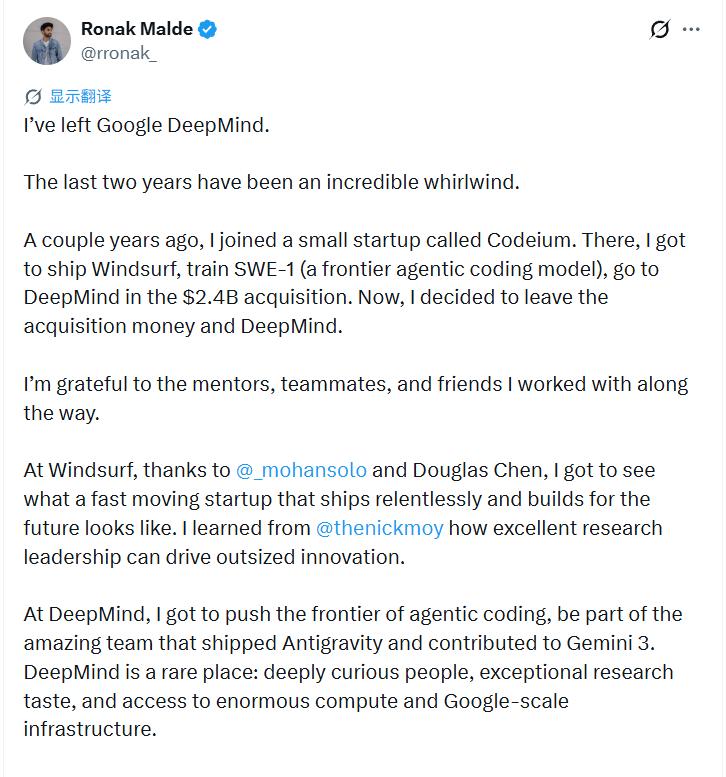
Looking back on this period, he calls it an "incredible whirlwind ride".
During his time at Codeium, he was involved in the development from Codeium Extension to the Windsurf IDE and all the way to SWE - 1.
In the official documentation of Windsurf, SWE - 1 is referred to as the "first agentic coding model", which is part of a self - developed model series for software development projects. In Ronak Malde's public career description, he also lists "trained SWE - 1 @ Windsurf" as a core experience.
In a tweet, he wrote that at Windsurf he saw how a fast - paced startup team works: continuous delivery, rapid iteration, and the development of products for the future.
He especially thanked @_mohansolo, Douglas Chen, and the research leader Nick Moy and said that he had learned from them how good research leadership can boost innovation.
In July 2025, Google acquired a non - exclusive license for some technologies of Windsurf for $2.4 billion. At the same time, the CEO of Windsurf, Varun Mohan, the co - founder Douglas Chen, and parts of the R & D team switched to Google DeepMind to work on projects in the fields of Agentic Coding and Gemini.
Ronak Malde wrote in a tweet that he switched to DeepMind with the Windsurf team to continue the research in the field of Agentic Coding, was involved in the release of Antigravity, and also contributed to Gemini 3.
In his opinion, DeepMind is a unique place: There are people with strong curiosity, first - class research taste, enormous computing power, and Google - level infrastructure.
As one of the most promising engineers in the field of AI coding, Ronak Malde was included in the Exceptional 100 list of Exceptional Capital for the year 2025 last year.

This list refers to the first - line pioneers in high - growth enterprise software and AI companies: people who are actually involved in the development of products, models, and infrastructure and have a lasting impact on complex technical problems.
In this list, he is described as "Software Engineer at DeepMind, formerly at Windsurf".
Even earlier, Ronak Malde's career path was already predictable.
In 2018, he was admitted as an outstanding young student from South Carolina to the prestigious and competitive National Youth Science Camp in the United States. This program aims to train the best future science leaders in the United States.
Official information shows that his plan at that time was to study at Stanford University, choose the Computer Engineering major, and his career goal was simply "Entrepreneur".
In hindsight, this foresight has a special meaning.
Later, he actually attended Stanford University and studied Computer Engineering.
When leaving his position, Ronak Malde summarized some insights.
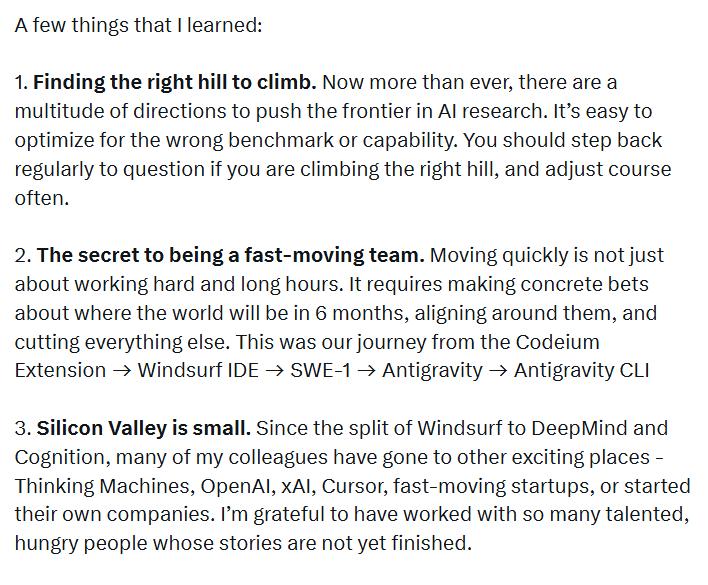
First: Find the mountain that is really worth climbing.
Nowadays, there are too many research directions in AI, and it seems that progress is possible everywhere. The more this is the case, the more likely one is to be distracted by false benchmarks or individual skills.
He believes that researchers and teams need to regularly take a step back to check if they are climbing the right mountain and constantly adjust their direction.
Second: Speed doesn't just mean hard work.
The secret of a fast - paced team lies not only in overtime and long - term work. The key is to make concrete predictions for the next six months, reach a consensus on these predictions, and then push aside all the unimportant things.
From Codeium Extension to Windsurf IDE, from SWE - 1 to Antigravity, and finally to Antigravity CLI, that's how they've done it so far.
Third: Silicon Valley is small.
After the Windsurf team was split up and parts went to DeepMind and Cognition, many colleagues have found new jobs: at Thinking Machines, OpenAI, xAI, Cursor, various fast - growing startups, or have founded their own startups.
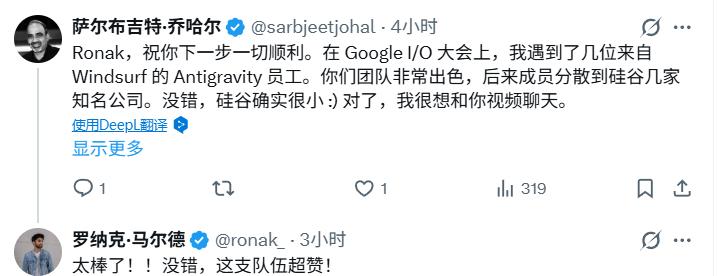
It seems that in the AI coding industry, the personnel movement is becoming more and more like a dense network. Colleagues today, perhaps founders of the next successful company tomorrow. So, after his departure from DeepMind, the outside world is not so much interested in why he left, but rather what his next goal is.
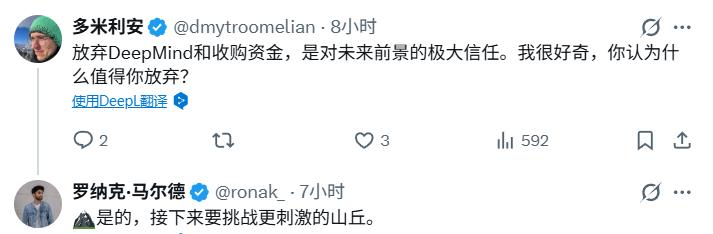
He hasn't revealed anything in advance about it, but only said one sentence.
We are in one of the most exciting and powerful times in human history. Just as software development has already been transformed, in the future, every industry and every workgroup will be transformed, democratized, and accelerated.
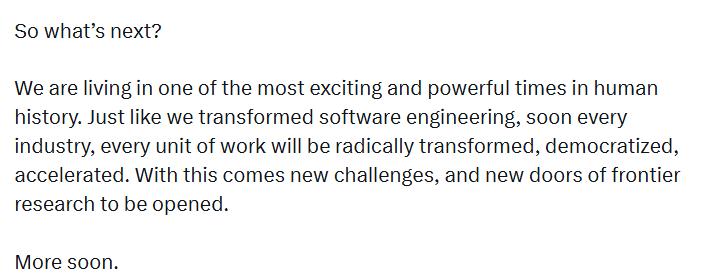
Finally, two words remain: More soon. It seems that the next goal will be announced soon.

This article is from the WeChat account “Machine Heart” (ID: almosthuman2014), edited by Sia. Published by 36Kr with permission.