Google überarbeitet die Suchleiste und verändert die Surfergewohnheiten von 5 Milliarden Menschen
After enjoying the “appetizer” Android Show, the main attraction, the Google Developer Conference Google I/O 2026, has finally begun.
As expected, Gemini took the absolute C-position in the nearly two-hour event.
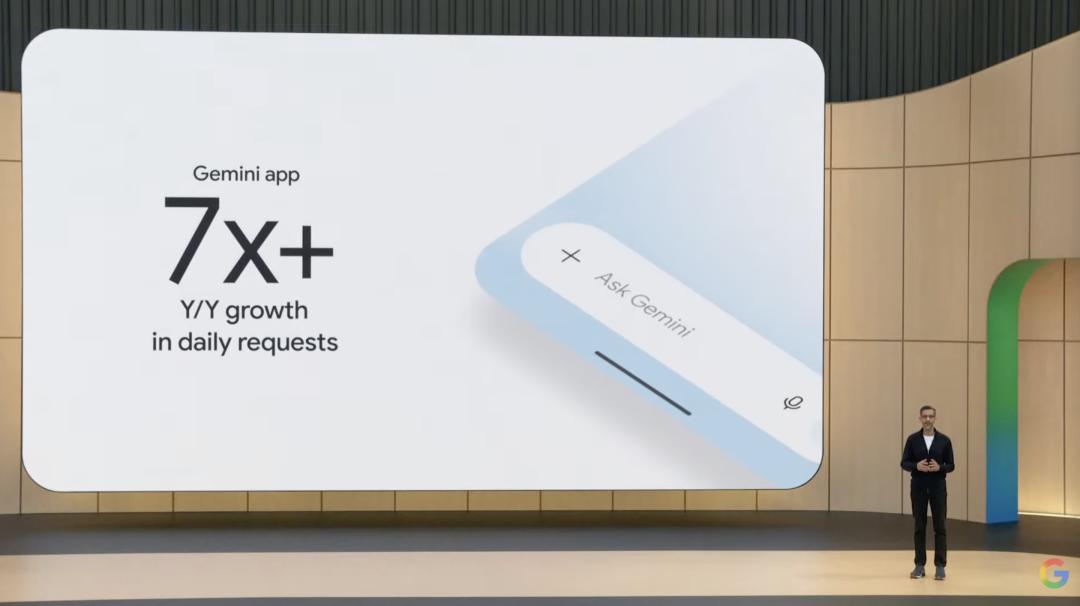
Image | Google
Besides the update of the base model and the surrounding capabilities, Gemini has also been more deeply integrated into the Google app package and has even brought some updates for iOS and macOS.
It's a bit regrettable that the Googlebook and Android 17 introduced last week were not mentioned at the opening ceremony of this I/O.
The only hardware product we've seen is the smart glasses co-developed with Samsung:
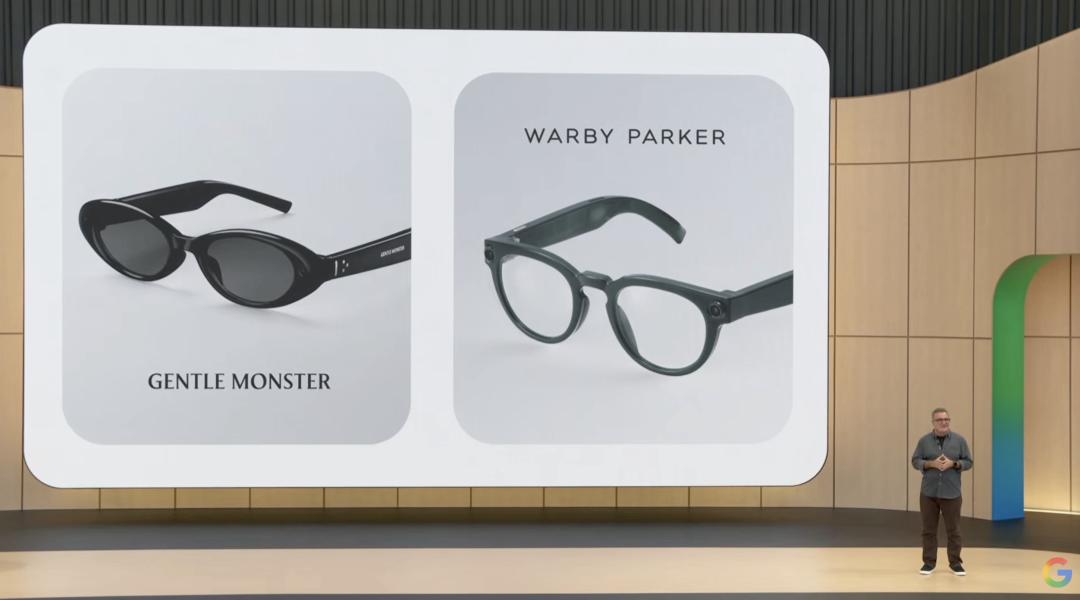
Image | Google
All in all, the message Google conveyed through this I/O conference is very clear:
The capabilities of Gemini are getting stronger, its presence is getting higher, and its integration into the “physical lives” of billions of Google product users worldwide is getting closer.
Putting it exaggeratedly – Gemini only lacks a humanoid robot to take over the daily work of most people.
Base Model Update
The highlight of the entire event was the update of some base models around Gemini.
First, the official version of Gemini 3.5 was released. The version that users can test first is Gemini 3.5 Flash.
It shows capabilities in multiple dimensions comparable to those of the previous 2.5 Pro and maintains the speed of the Flash series:
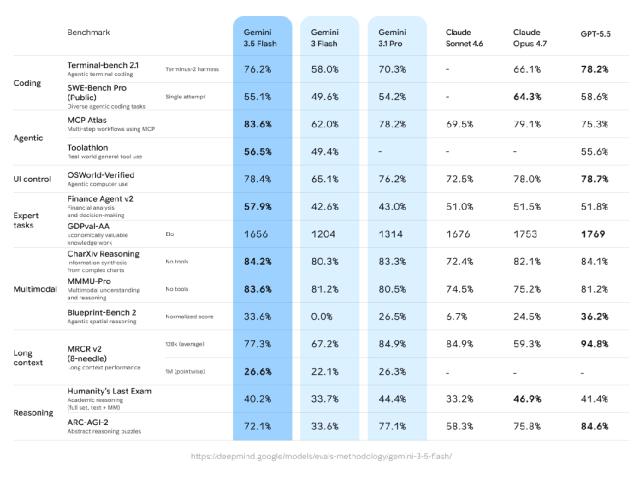
Image | Google
Thanks to the balance between speed and performance, Gemini 3.5 Flash is able to handle long and extensive intelligent tasks while saving a lot of token costs.
In addition, the latest Antigravity integration of Gemini 3.5 Flash also enables more diverse output forms –
Executing classification code, writing games based on papers, converting old code libraries, creating 3D scenes, interactive web interfaces, and so on.
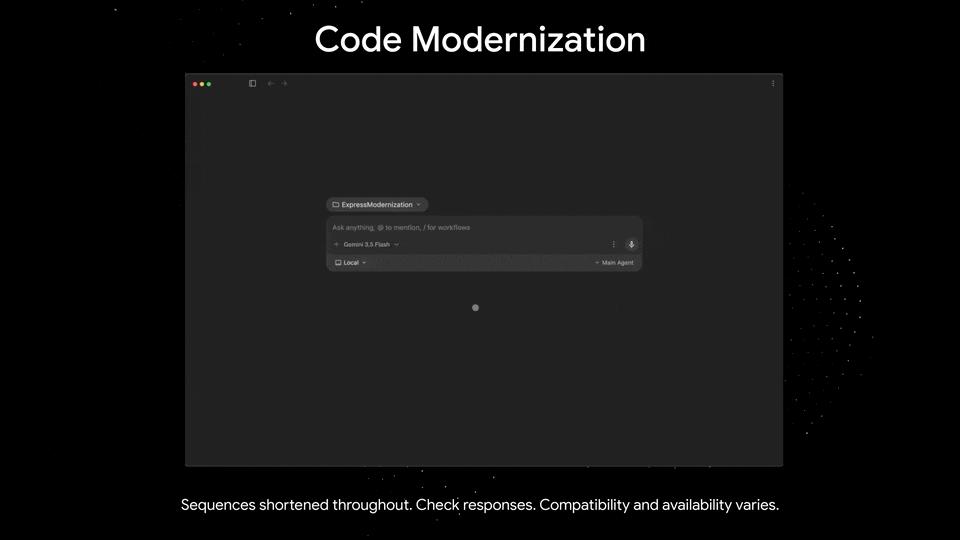
Converting an old code library to Next.js | Google
Moreover, there is the largest “world model” Gemini Omni. With Google's vision for Gemini Omni, we can say:
It can generate any output you want with any input.
The first model product of Omni is Gemini Omni Flash. Besides the Gemini app, it is also integrated into Google Flow and YouTube Shorts, allowing users to generate “realistic” videos with natural language.

Image | Google
Accordingly, Google has also adjusted its Google One subscription model and added a new category of $100 per month to the highest AI Ultra offering so far.
This new subscription also belongs to the AI Ultra level and includes preferential access to Gemini 3.5 Flash, Antigravity 2.0, and other new features.
Naturally, it also includes the traditional 20-TB cloud storage and YouTube Premium permissions, which are mainly targeted at developers and advanced authors.
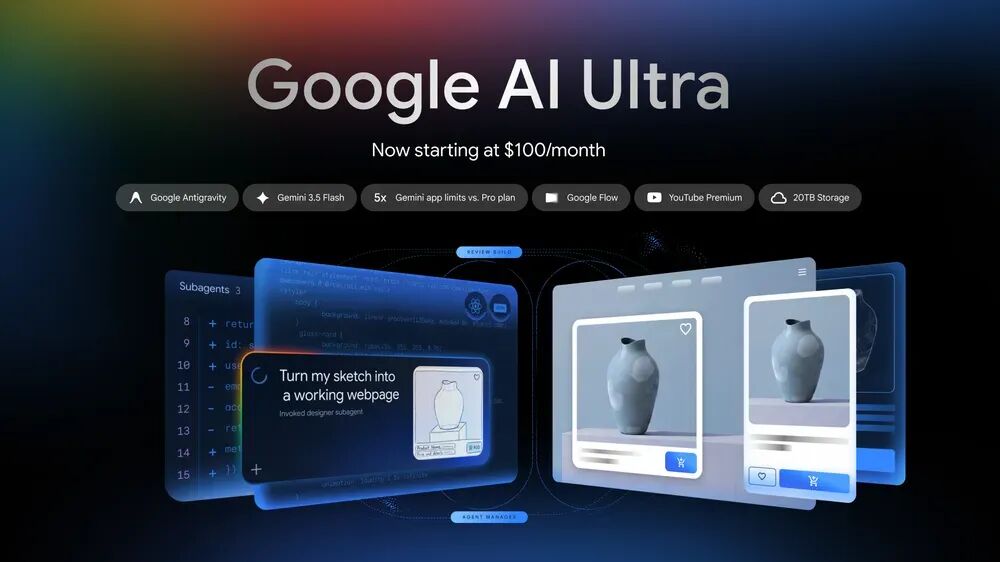
Image | Google
At the same time, the previous $250 subscription of the highest AI Ultra level has received a price reduction. Now you can enjoy privileges such as up to 20 times the usage compared to AI Pro for only $200 per month.
Another significant change in the billing model concerns the Gemini app itself.
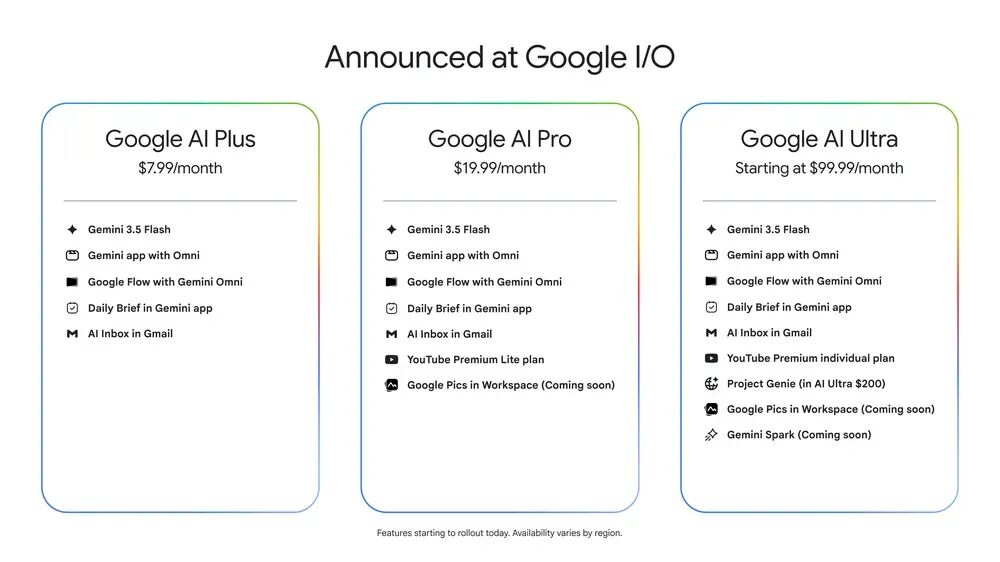
Image | Google I/O
In a press release, Google announced that the daily limit of Gemini will be changed from “number of input words” to “usage calculation”.
As a result, the consumption of images, videos, and code increases, while the consumption for text tasks decreases. Overall, it is a more flexible billing model for computing power.
Practical Application
In contrast to companies like OpenAI and Anthropic, Google is mainly characterized by the fact that it actually has a product ecosystem that can directly reach billions of users worldwide.
Besides the above-mentioned base models, the focus of Google's strategy shown at this event is to integrate the “abstract” capabilities of AI models into the apps that people use daily.

Image | SlashGear
This integration can be roughly divided into three steps: Transformation of the traditional search service, Intelligence of the mobile operating system, Integration of visual AI.
As Google's founding business, the “search engine” has undergone a comprehensive AI transformation at this I/O, which Google calls the “new era of AI search.”
The logic behind this business transformation is simple: Compared to 20 years ago, when people only entered words or phrases into the search bar, they now enter complex composite commands.
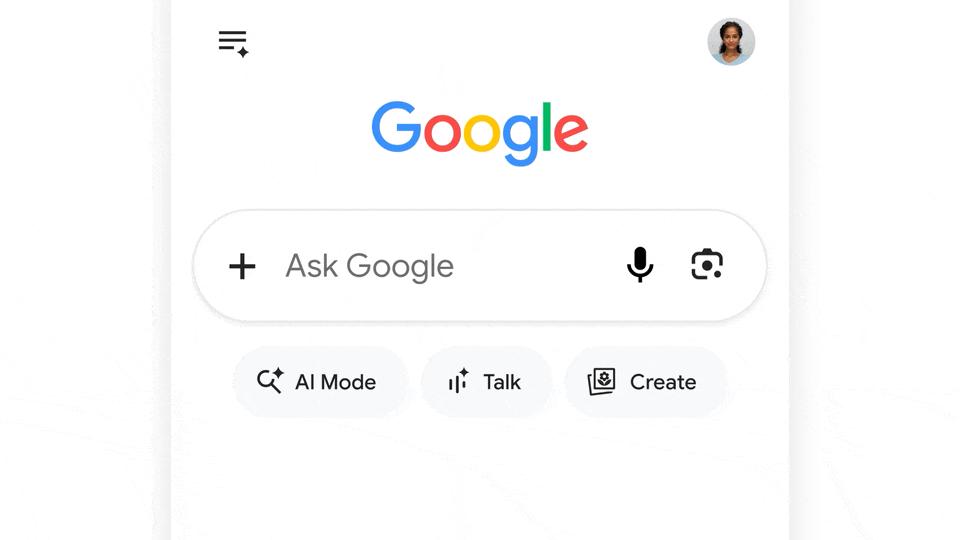
Image | Google
In other words, Google has transformed the traditional search box into a universal chatbox.
Besides search, users can ask for any kind of content in this chatbox.
This is also the focus of the updates at this I/O event – search with agent capabilities.
First, the base model of AI Mode is updated to Gemini 3.5. Its search bar will automatically display suggestions and completions for your input to make your search terms more detailed or comprehensive.
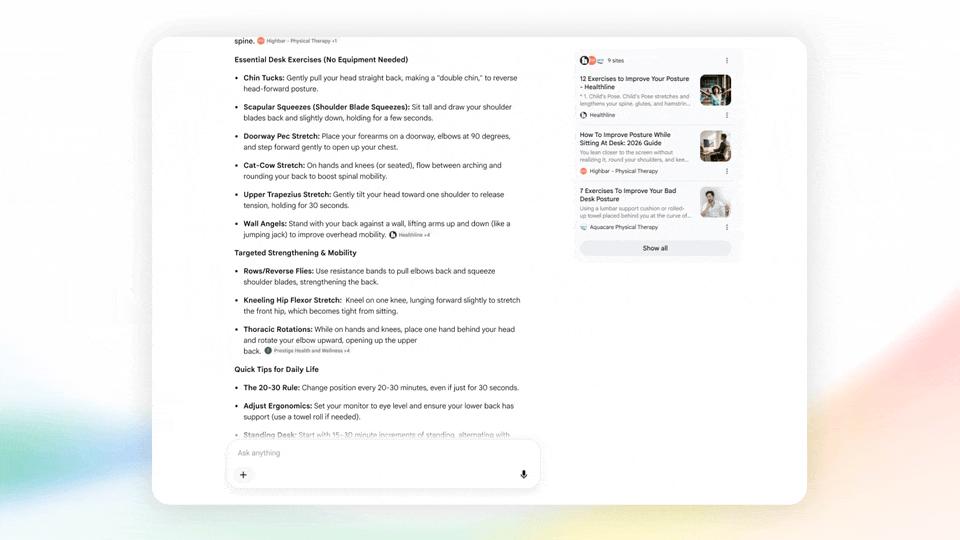
Image | Google
In addition, there is a new generative user interface (Generative UI), with which Google can intelligently generate the most suitable answer form according to your request.
For example, when searching for stock prices, the answer not only shows text but also a line chart. When asking for decoration ideas, images are generated...
You can even use Antigravity to quickly create an interactive web demo for a physics question:
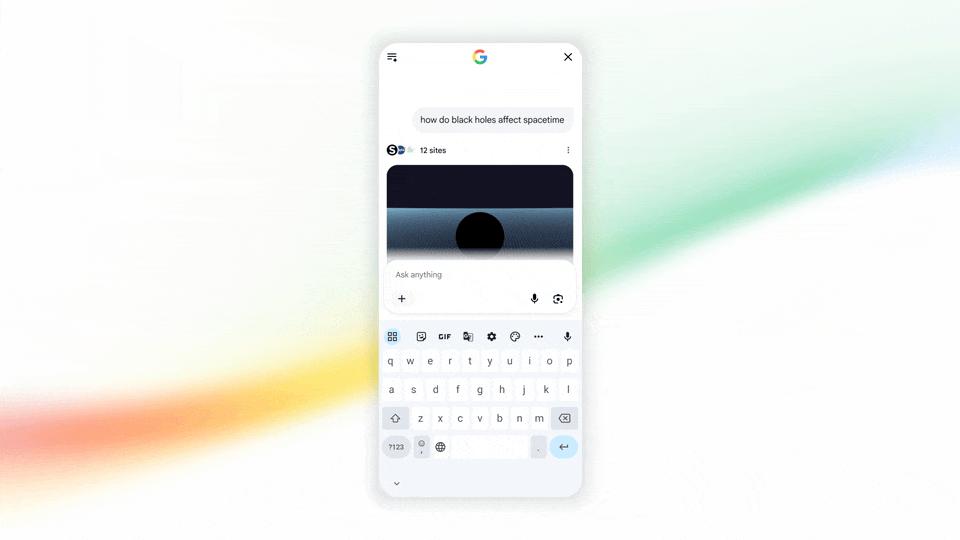
Image | Google
After so many years of “multimodal search,” we have finally entered the era of “multimodal answers.”
The capabilities of Google Search combined with Antigravity go even further. It can even generate a web dashboard or tracker in real-time based on your input in the search bar.
In simple terms, Google Search directly writes a special app for your request.
These multimodal capabilities are very impressive and could potentially change the way people search for information –
After all the time we spend searching for things, we usually use the search results for other tasks. With the new Google Search, you can have these next steps done directly.
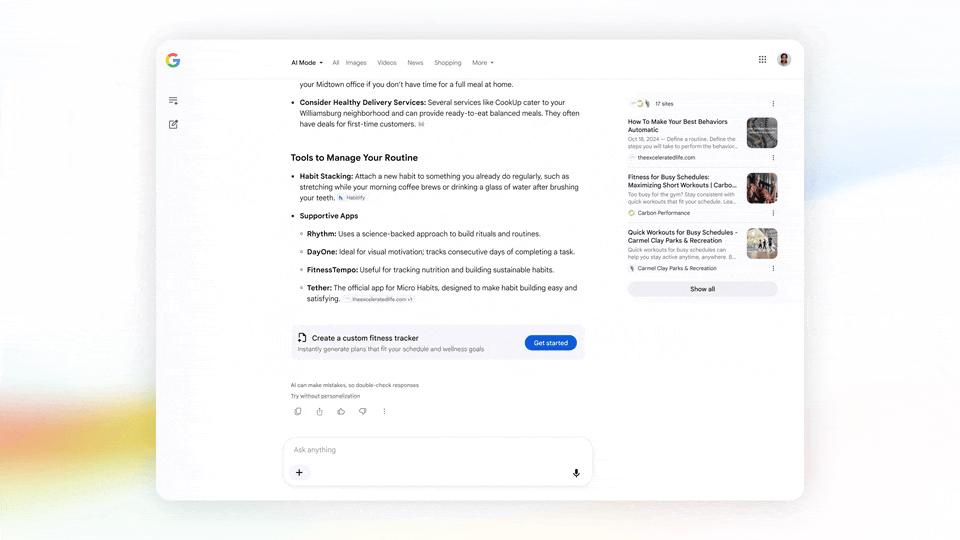
Image | Google
The specific way of “preparing” is enabled by Gemini Spark.
Simply put, Gemini Spark is essentially a function similar to OpenClaw's “Semantic Understanding - Automatic Execution,” a Google Claw.
Based on the latest Gemini 3.5 model, Gemini Spark supports 24/7 operation.
Since it runs on Google Cloud, it can also perform cross-platform proxy operations – you can create tasks on your mobile phone and retrieve the results on your computer.
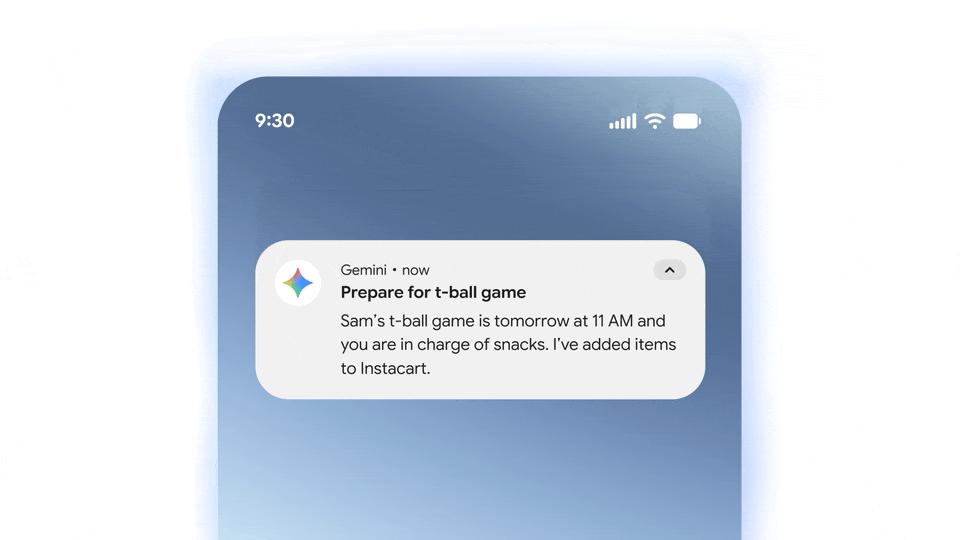
Image | Google
Currently, Gemini Spark supports all Google Suite apps. Later, the MCP platform will be expanded to support the internal functions of third-party apps, and users will be allowed to upload their own skills.
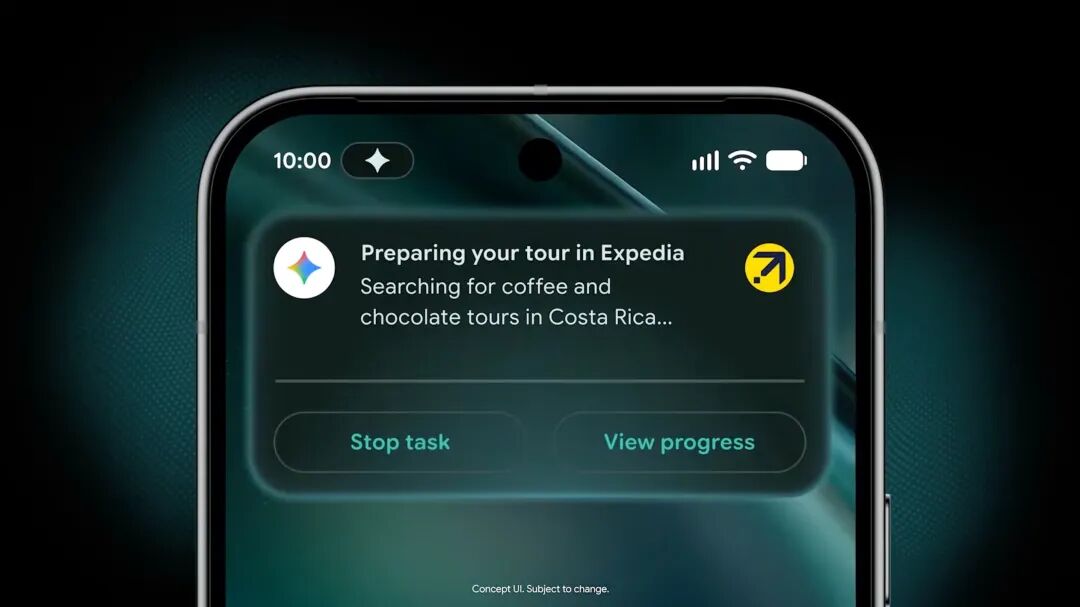
Google has also announced that Gemini Spark will be integrated into Chrome and Android Halo later to equip the browser and the mobile phone with agent functions for automatic operations.
Android Halo | Google
The last step is the integration of Gemini with visual AI.
At this I/O event, Google introduced the first product co-developed by Samsung and Google, the “pure audio smart glasses.” There are versions with Gentle Monster and Warby Parker frames:
