Claude Token-Ranking: Disney, der "Nummer-1-Supporter", hat 460.000 Mal in 9 Tagen genutzt, Meta verbrennt monatlich 60 Billionen Tokens.
Disney has recently done something that is “not very Disney.”
It has launched a dashboard on its intranet page, whose name sounds so straightforward that it's hard to believe it's the company that produced Snow White – “AI Adoption Dashboard”.
Three numbers scroll on the dashboard: The frequency with which each employee calls the AI, the number of requests, and the token consumption. Claude is the main target of the monitoring.
The real - time token consumption ranking list: Those who consume more are ranked higher.
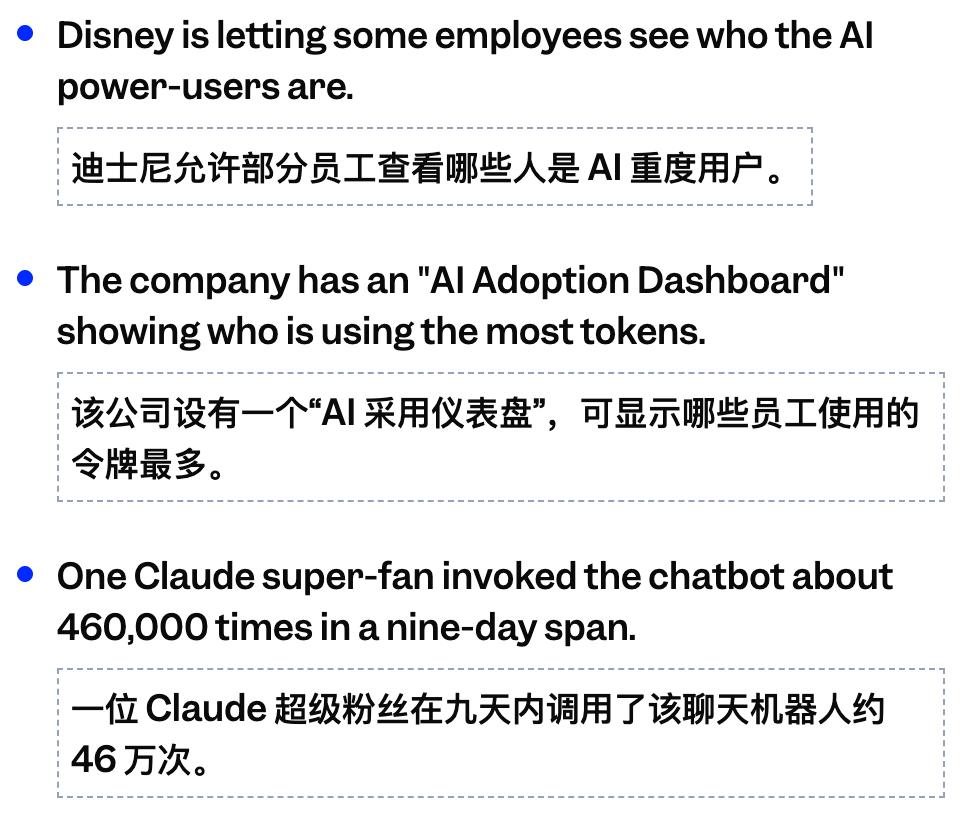
The most prominent line of data looks like this –
An employee has called Claude about 460,000 times in 9 working days.

On average, 51,000 times per day.
Once every 1.7 seconds.
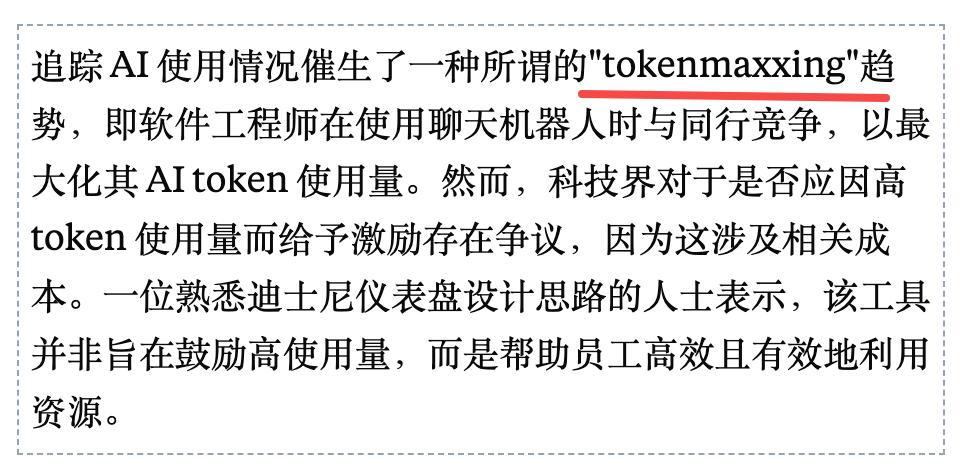
When BusinessInsider revealed these numbers, the first reaction in Silicon Valley was not shock, but a new word emerged –
tokenmaxxing.
It means: Maximize the token consumption. Those who consume more are the “top sponsors” of the AI era.

What's even more black - humored is the context.
Just a few weeks ago, the new Disney CEO Josh D'Amaro approved a round of 1,000 layoffs. Mainly employees from the marketing and branding departments were fired, and even the entire PR team of Marvel was dissolved.
On the one hand, they lay off 1,000 real people; on the other hand, they increase the quota for the AI ranking list.
An employee told Bridge Chronicle: “They're celebrating now. Let's see how long it lasts.”
The entire Silicon Valley strives to be the top sponsor of Claude
But if you think only Disney is in this competition, you're underestimating Silicon Valley.
Let's take a look at the Bay Area: The entire Silicon Valley is doing tokenmaxxing.
Meta's story is even more absurd.
In early April 2026, a Meta employee wrote an internal tool and named it with the joking name “Claudeonomics” – specifically to record the Claude token consumption of all 85,000 employees of the company.
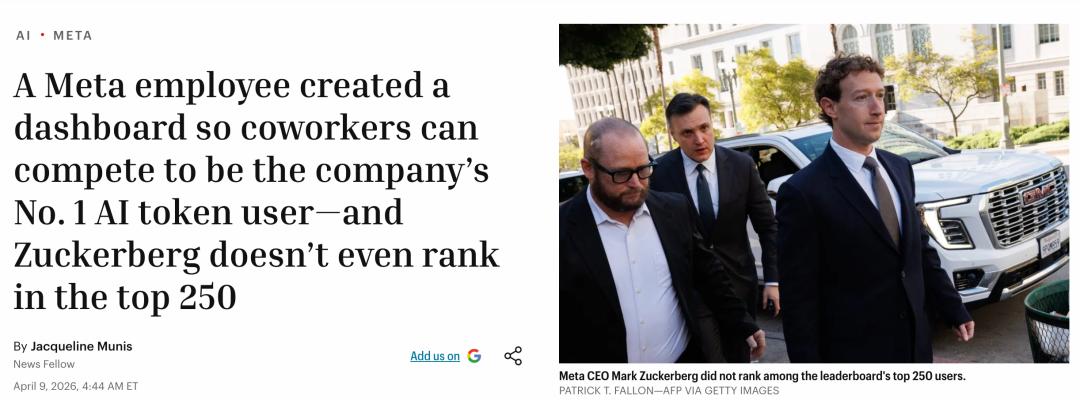
When the data was released, the entire company was in an uproar.
Within 30 days, all Meta employees consumed 60 billion tokens – calculated at Claude's public API prices, that's about $9 billion.
The top - scorer consumed 281 billion tokens in 30 days, which is worth about $1.4 million.
The funniest Easter egg is that Mark Zuckerberg himself is not in the top 250.
Meta's CTO is also not among them.
The two people in the company who advocate the loudest for “AI priority” consume less tokens themselves than a fraction of a normal engineer.
48 hours after the news was released, Claudeonomics was stopped internally, with the reason “data leak.”

But this word has spread from Meta's intranet page to the entire Silicon Valley.
It's even more extreme at Uber. The annual AI budget in 2026 was $3.4 billion, but it was used up in 4 months. The majority was spent on Claude Code.
Huang (Jensen Huang) has supported the entire “tokenmaxxing” scene. He said at an event:
“If an engineer with an annual salary of $500,000 doesn't consume $250,000 worth of tokens for AI tools, I'd be very worried.”
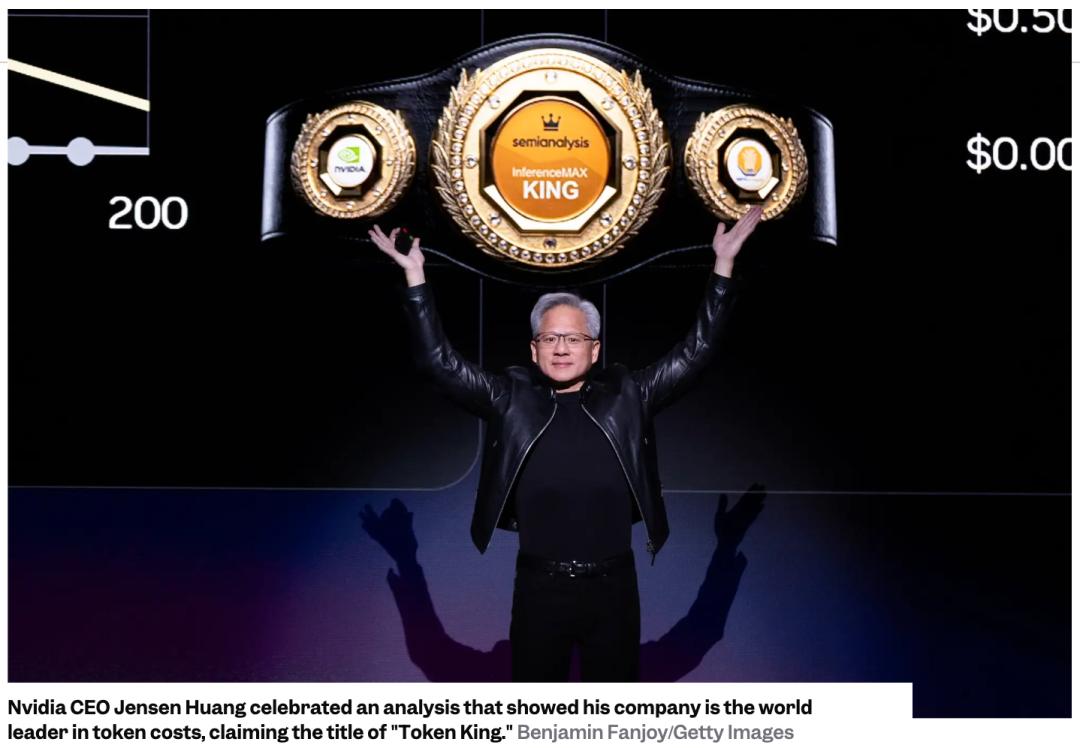
This sentence quickly became the new doctrine in Silicon Valley in spring 2026.
The numbers at Anthropic are even more exaggerated.
In April 2026, the annual sales forecast reached $30 billion and exceeded OpenAI's $25 billion for the first time.
8 out of the Fortune 10 (the top 10 companies in the Fortune list) are Claude customers.
The number of corporate customers who pay more than $1 million annually has directly doubled from 500 two months ago to over 1,000.
Everything points to the same result: Programmers are using Claude as a productivity aid with unprecedented intensity.
It's not just programmers who use Claude
But! If you only focus on programmers, you're only seeing the tip of the iceberg.
The truth is: Those who write code are only a small part of Claude users.
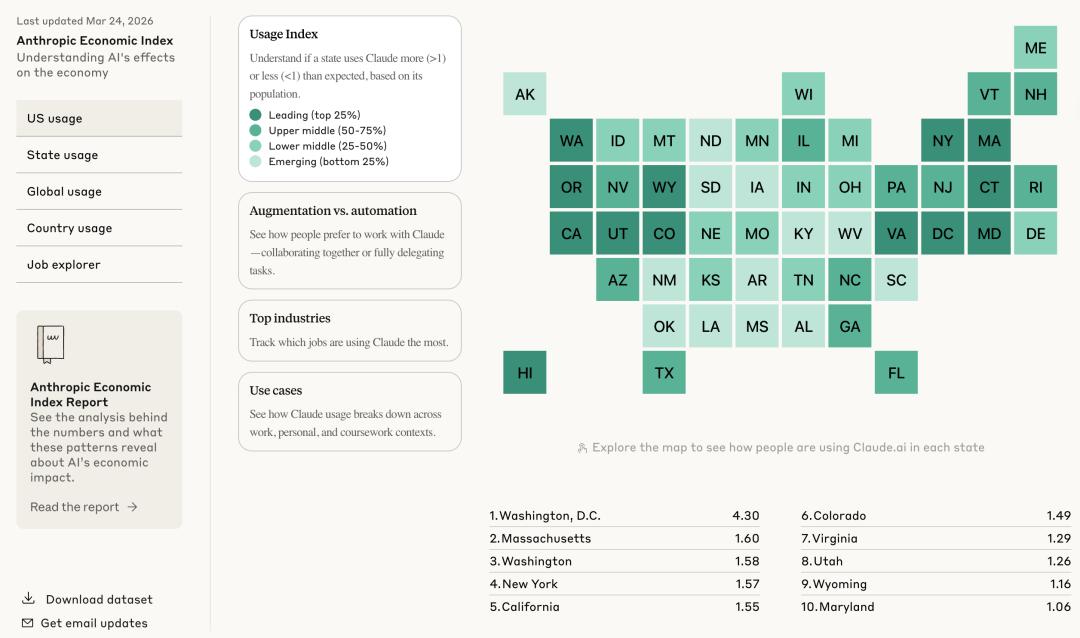
Anthropic itself has published a report called “Anthropic Economic Index,” which statistically records what real Claude users do with it.
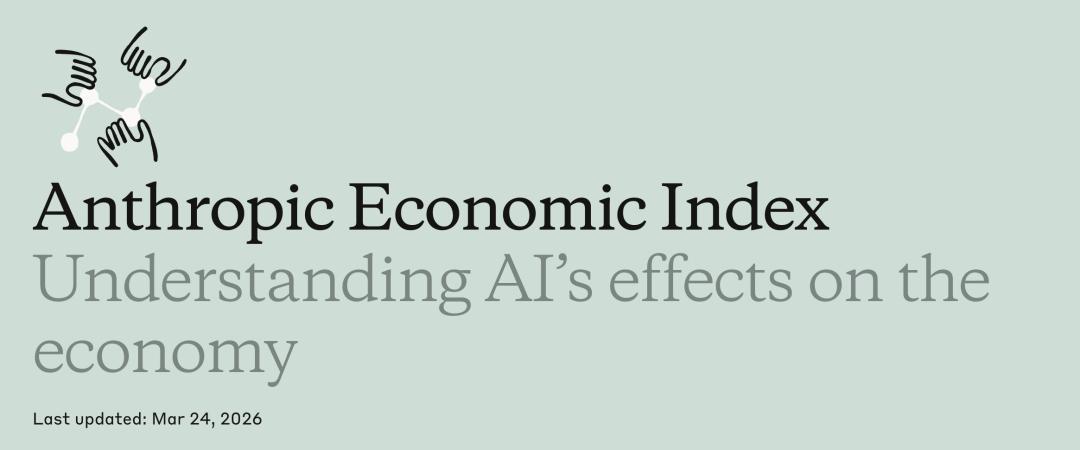
The first report shows: Software development is the largest single application area, but non - programming applications such as education, writing, business strategy, customer service, and management together – already clearly exceed half.
In the following updates, the proportion of software development slowly decreased.
Not because there are fewer programmers, but because other people have joined in.
Who are these people?
Let's take a look at them one by one.
Lawyers
It's 2 a.m. in a law firm in New York.
The corporate lawyer Sarah is staring at 300 pages of contract clauses – the client wants to see the first version in six hours.
She opens Claude and inputs the entire file so that it can compare the Chinese and English clauses, mark the risks, and summarize the most important clauses.
Two hours later, the first version is ready. She can finally sleep for three hours.

This was the first corporate takeover night in which she could sleep for three consecutive hours since she started working at A&O Shearman.
A&O Shearman – a world - leading law firm that emerged from the merger of Allen&Overy and Shearman&Sterling – has provided Claude to thousands of lawyers as part of the standard workflow. Other top - tier law firms will follow suit soon.
Legal tech platforms like Harvey and Lex also use Anthropic in the background.
“The efficiency of contract review has been reduced from 30 hours to 3 hours” – you've surely heard such statements often in the past three years.
But the reality in 2026 is: Law firm partners are no longer discussing whether they should use AI, but whether a young lawyer who can't handle Claude should be hired at all.
Education
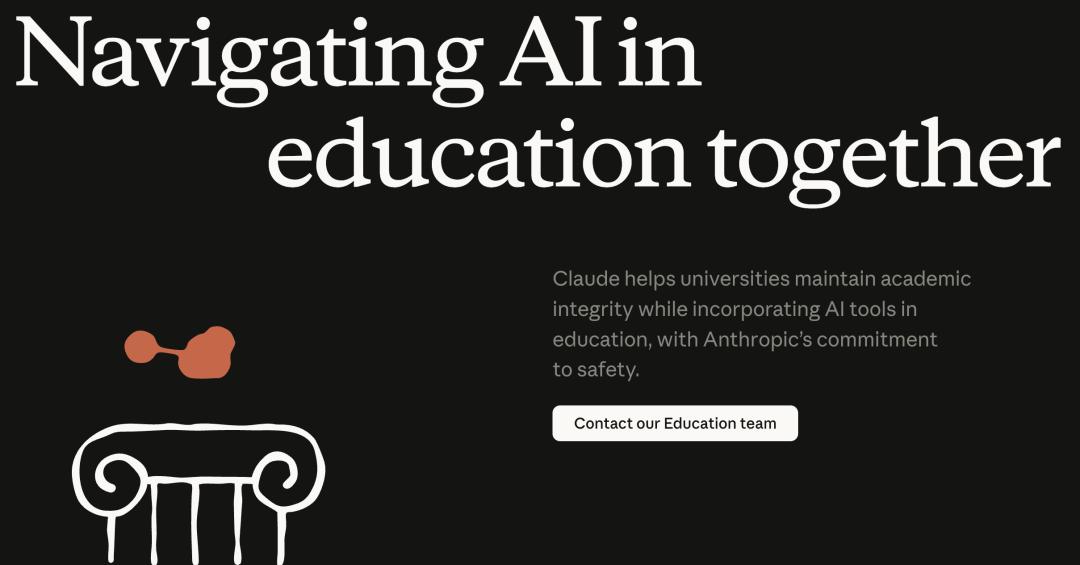
Anthropic has developed Claude for Education and established partnerships with several Ivy League universities in the US.
But the more interesting story is: College teachers are starting to use Claude themselves to prepare their courses.
The real workflow of an Ivy League professor:
Every Sunday evening, he gives Claude the teaching plan for the next three classes.
Claude creates five versions of lecture materials with “different approaches” for him.
He selects two versions and then edits them manually.
The total preparation time has been reduced from 8 hours to 1.5 hours.
Students use Claude to write essays, and teachers use Claude to correct homework.
This creates a subtle cycle: An essay written by AI may be graded by another AI, and both AIs run on the same Claude API.
According to the data of the Anthropic Economic Index, “education and teaching” is the second - largest application area on Claude.ai, only behind programming.
Hollywood and Creativity
The famous strike wave of Hollywood screenwriters in 2023 and the clause in the contract stating that “AI cannot be listed as the author” did not prevent AI from entering screenplay development.
It just changed the rules of the game.
The real workflow in 2026 is as follows:
The screenwriter summarizes the character profiles, the world view, and the first 30 episodes into a prompt and gives it to Claude. He asks it to try 5 different introductions for the 31st episode.
Then he selects the most interesting one and edits it manually to publish it as a human work.
Claude doesn't replace the screenwriter. Claude is the “spiritual assistant” of the screenwriter, who doesn't sleep, doesn't have mood swings, and doesn't get paid.
Journalists also use it. Independent writers also use it. Some writers on Substack who have hundreds of thousands of subscribers openly admit that Claude is their second editor – they first give Claude the draft to correct and then edit it themselves.
A new writing...