Die große Explosion der KI verstärkt die Angst der Normalbürger. Kevin Kelly antwortet auf die Stimmung der Zeit.
Before the start of the dialogue, employee Kevin Kelly handed over an AI hearing aid. He skillfully tested the microphone: "testing one, two, three."
The other AI hearing aid came into the hands of Qin Wen. He also tested it: "One, two, three." During an interview by a Chinese business blogger, Kevin Kelly spontaneously replied with a sentence in Chinese: "One, two, three, one, two, three, four, five."
Qin Wen burst out laughing.
An intercultural dialogue began with this AI hearing aid.
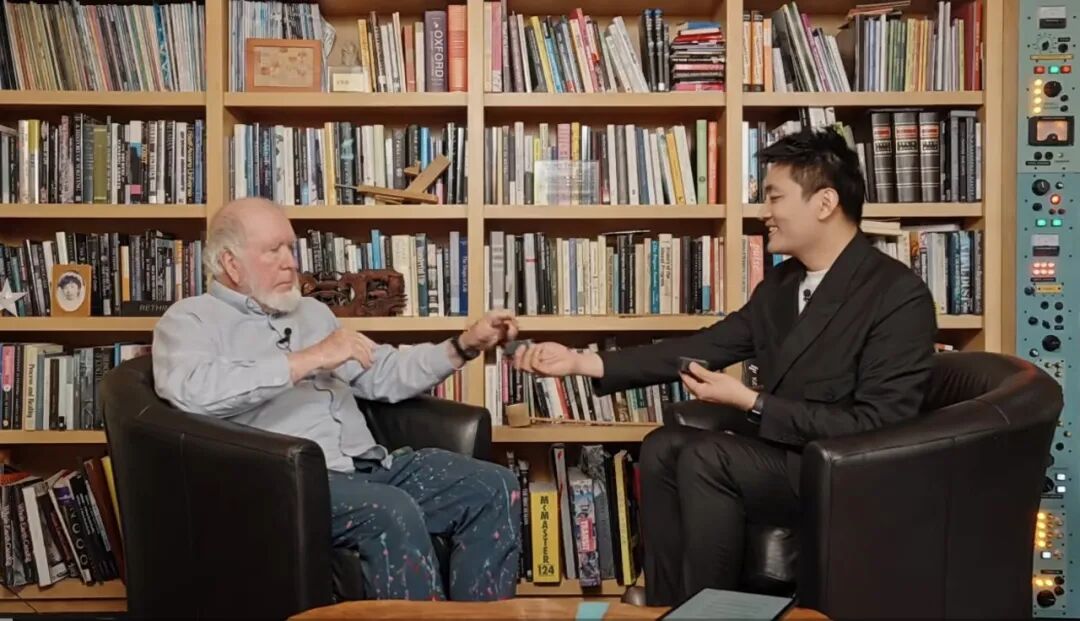
Before the start of the dialogue, Qin Wen handed Kevin Kelly the Times Pot AI hearing aid.
In the evening of March 12th, the talk show "How should individuals behave in the AI era?", in which Kevin Kelly and business blogger Qin Wen collaborated, went live on platforms such as Douyin, Video Account, and Xiaohongshu. Kevin Kelly is the founder of the magazine "Wired" and the author of works such as "Out of Control", "The Inevitable", and "2049: The Possibilities of the Next 10,000 Days". Qin Wen has long been engaged in business - related topics and contemporary issues. In January of this year, he specifically traveled to the United States to talk with Kevin Kelly. After the show was released, it quickly attracted great attention.
The reason why this conversation was noticed so quickly is not complicated. Nowadays, there is too much information about AI. Every day, someone is discussing models, computing power, financing, and substitution. The enthusiasm continues, but the uncertainty of ordinary people does not disappear. Because although AI sounds technical, it ultimately becomes an existential problem in our daily lives.
That's exactly why what's really striking about this conversation is not only that Kevin Kelly talked about AI, but also that it touches on the fears that many people today can't avoid.
For several hours, the two talked from AI anxiety to education, from work to the future, and about how an individual can find a place in the new technological environment. At the end of the dialogue, Kevin Kelly took off the AI hearing aid, and Qin Wen did the same. This intercultural exchange was supported by this hearing aid from start to finish. In a way, this interview is about the question of how AI penetrates into reality, and it has itself become a live answer to this question.
01
The Fear Comes
In the past two years, the perception of AI among many people has changed from admiration to fear.
First, people observed how the models became more and more powerful. Writing, translating, summarizing, and programming advanced, like a high - level technological race. Now it's different. AI begins to penetrate into companies, processes, and workplaces, and also into the daily judgments of ordinary people. What really scares people is never just "it's powerful", but "it penetrates into my life".
This fear is not fake. A global survey by McKinsey in 2025 showed that 88% of the respondents said that their organization used AI in at least one business process. The proportion of regular use of generative AI increased from 65% at the beginning of 2024 to 71%. The technology spreads quickly, and the questions also change. People no longer ask so often, "who uses it?", but are more interested in the question, "how is it really used?"
The uncertainty in the workplace is especially direct. In 2025, the Swedish fintech company Klarna implemented AI at the customer service and operational levels. The number of employees decreased from 5,000 to 3,800. In February 2026, the fintech company Block led by Jack Dorsey also announced a massive lay - off of over 4,000 employees and at the same time accelerated the integration of AI into internal operations. In March 2026, Atlassian announced the lay - off of about 1,600 employees, with the shift to AI also being a background factor.
When looking at these companies, the signal is clear: after AI penetrates into reality, it first creates not abstract discussions, but tensions in workplaces, processes, and among people.
The root of this tension lies in the fact that the real world is much more complex than the technological demonstration. A model can write an impressive project and give a seemingly good answer. But as soon as things actually progress, someone has to make the decision, bear the consequences, and deal with the gray areas. The frame of reference changes immediately. In the real world, the most difficult part often lies not in giving the answer, but in who takes the responsibility.
Kevin Kelly assesses that one of the most important differences between humans and AI lies here. Humans are not only hired to complete tasks, but also to be responsible for the results.
This is also where the real value of Kevin Kelly in this conversation lies. He didn't further intensify the uncertainty, but broke it down piece by piece. He repeatedly mentioned that today's large language models mainly deal with the language of the world. The more important step for AI is to penetrate into the real world, form concrete actions, develop concrete processes, and build concrete relationships.
In other words, the fear intensifies not because the model has set a new record, but because it penetrates into positions where humans used to bear the consequences.
The economic index published by Anthropic in January 2026 gives an additional explanation for this reality. By November 2025, the proportion of "extended use" on Claude was 52%, and the proportion of "automated use" was 45%. This shows that the dominant form in reality is still "humans working with AI". AI first enters into a cooperative relationship and then gradually approaches delegation. It is precisely in this process that people's fear intensifies. Because what people really fear is not only whether the machine can work, but also whether they can still retain their judgment, experience, and position in the processes.
The reaction of organizations also shows that this is the case. A survey published by KPMG in January 2026 showed that 60% of the surveyed companies had taken measures to restrict the access of AI agents to sensitive data without human supervision. 75% of the respondents named security, compliance, and auditability as the most important conditions for implementing agents. The more companies bring AI to the implementation level, the more they pay attention to boundaries, responsibility, and consequences.
In China, this sentiment is also obvious. A survey by Yicai in cooperation with the research team of the Cheung Kong Graduate School of Business on 11,814 employee respondents showed that 85.53% of the employees feared that they would become unemployed due to substitution by AI in the next three years. 67.57% of the respondents believed that they could be completely replaced by AI within five years. Another workplace survey also mentioned that in positions such as administrative support and finance, where AI is more frequently used, the proportion of fear of "workplace substitution" was over 70%.
So, after its implementation, AI first creates people's fear. Will work change? Will experience become worthless? Can people trust AI? Who will be responsible for the deviations? These questions are closer to people and hurt them more than model parameters.
That's exactly why Kevin Kelly's sentence "Don't be the best, be the only one" is especially important. AI is getting better and better at compressing average experiences and delivering impressive results that are applicable everywhere. The really rare part of humans shifts there. A sense of responsibility, judgment, experience, intuition, and the ability to drive things forward in a specific situation are becoming more and more valuable.
In Kevin Kelly's view, the more unconventional and unique a person is, the less replaceable he is by AI.
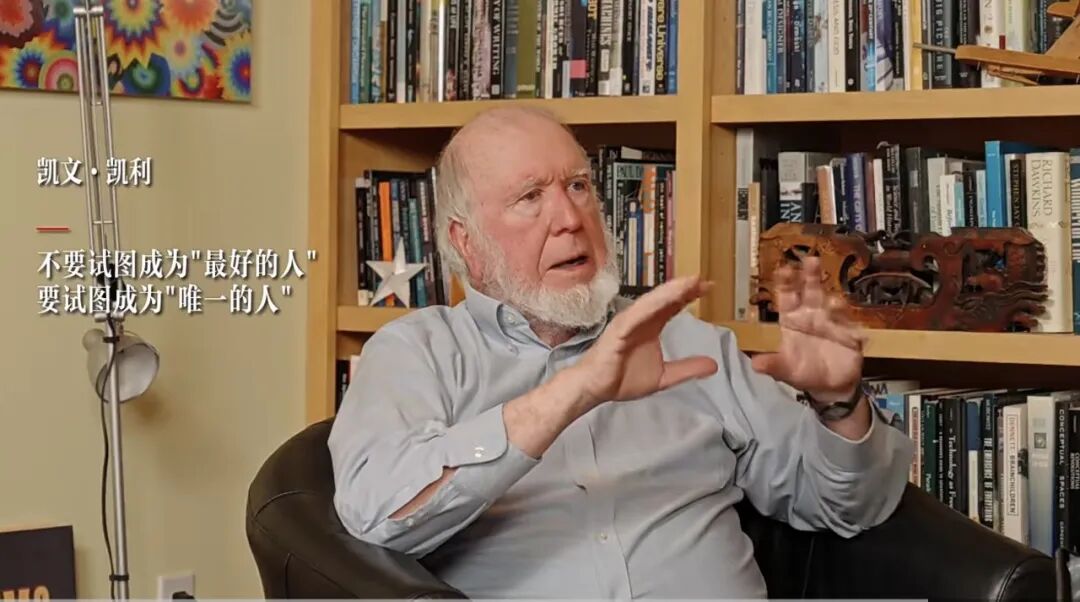
Kevin Kelly said in the show: "Don't try to be the 'best person', try to be the 'only person'."
This idea can be understood more concretely through Qin Wen.
The dialogue video separately published by Qin Wen was widely spread and commented on in a short time. Four days after the release of the one - hour in - depth conversation between the two, it had over 100,000 likes, 40,000 saves, and 20,000 new followers on a single platform. This result shows that in an era when there is more, faster, and easier mass - produced AI content, what really remains are still contents that carry personal judgments, questions, and interview skills.
In a way, this is also the reason why Qin Wen's in - depth interview was noticed, that it is different from others.
02
Communication Changes First
When AI penetrates into real life, it often doesn't encounter grand scenarios, but daily moments. Asking for directions, participating in a meeting, conducting an interview, entering into a partnership, ordering a coffee in a foreign country, or simply passing on a sincere word to someone. Many things usually don't seem so important, but as soon as the language is different, the rhythm is disrupted and emotions are interrupted.
It is precisely here that the fear of many ordinary people towards AI becomes especially direct. Language has always been regarded as a human ability. Expressing, understanding, asking questions, confirming - these are originally the most natural actions between people. As soon as the technology penetrates into the positions of translation, transcription, and dialogue, people naturally wonder whether their own expression is still important and whether the delicate feeling between people will increasingly depend on machines.
Corresponding surveys show that 50% of the respondents perceive the penetration of AI into daily life as "more worry than enthusiasm", and only 10% say they feel "more enthusiasm than worry". Another survey also shows that almost three - quarters of teenagers have used AI companion products, and one - third of them have chosen AI over humans in serious conversations. At this point, the fear is no longer just a technological imagination, but has been reflected in the change of the communication mode.
Therefore, communication is especially important in today's era. It seems simple, but it has great significance. Communication is not just converting a Chinese sentence into an English sentence or transmitting information from one end to the other. In real communication, there are pauses, hesitations, confirmations, corrections of misunderstandings, and the slight reaction on the other person's face after a sentence is spoken. It is close to people's emotions and also to the formation of relationships.
This is also the reason why communication is a threshold that AI must first overcome. This scenario is common enough, urgent enough, and sincere enough. Whether a tool is really valuable becomes clear quickly when it is brought into communication. If it goes smoothly, it goes smoothly; if it gets stuck, it gets stuck. Users hardly give any opportunity for explanation.
The demand for secure communication is still growing today. Data from the National Bureau of Statistics shows that in 2025, a total of 154.5 million foreigners entered China, an increase of 17.1% compared to the previous year. Among them, there were 35.17 million foreigners. The total expenditure of foreign tourists reached 131.1 billion US dollars, an increase of 39.2% compared to the previous year. After the revival of tourism, intercultural, inter - linguistic, and inter - regional contacts have increased. Communication is not only an efficiency problem, but also directly affects whether a person can enter a new environment, conclude a partnership, and build a relationship.
This change is often first perceived by business organizations that are closest to users. Many companies first focus their energy on communication scenarios because here they are closest to users, closest to business results, and most easily able to verify value. If the experience is smooth, users will feel it immediately. If it gets stuck, users will also leave immediately.
When considering this reality in the conversation between Qin Wen and Kevin Kelly, many details become clearer. Superficially, they are talking about AI, but in essence, they first have to solve a fundamental problem: How can the two really talk to each other? Only when communication goes smoothly can the questions go deeper and views penetrate from the surface into more complex areas.
This is also the reason why communication can relieve people's fear earlier than many grander narratives. When technology enters here, it doesn't necessarily mean that the relationship between people is lost. In many cases, it simply picks up the interrupted communication and gives understanding the opportunity to grow further.
Kevin Kelly said in the conversation that in the future, AI will increasingly penetrate into hearing aids, cars, robots, and other carriers. Many abilities will first penetrate into daily life in a more limited way.
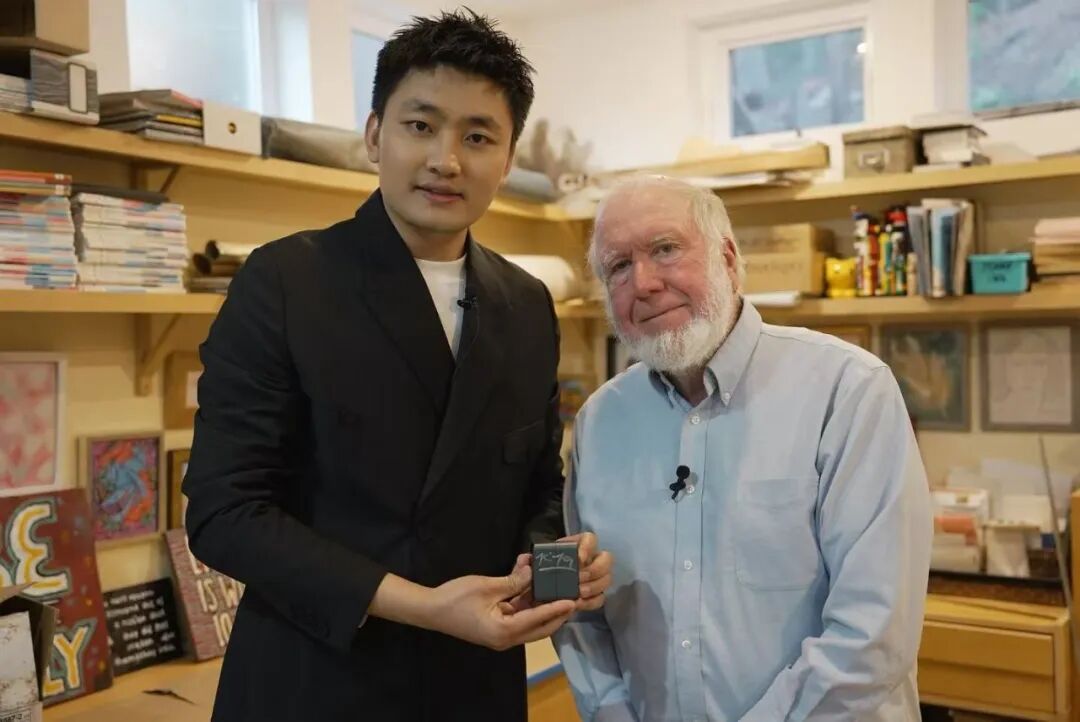
Qin Wen