Panoramablick auf die AWE 2026: Künstliche Intelligenz kreuzt Branchengrenzen, vier Branchentrends tauchen auf
After the exciting time of 6G and high - end smartphones at MWC 2026, the Chinese technology scene has received another important event: On March 12, 2026, the AWE (China Appliance & Electronics Expo) officially began in Shanghai.
This year's AWE has once again reached a record in size. The exhibition area is over 170,000 square meters. Thousands of companies such as Haier, Huawei, Hisense, TCL, Sony, LG, Bosch, Siemens, and BYD have participated in the fair. The 13 halls cover almost the entire industry, from household appliances and consumer electronics to robots, AI chips, and intelligent mobility solutions.
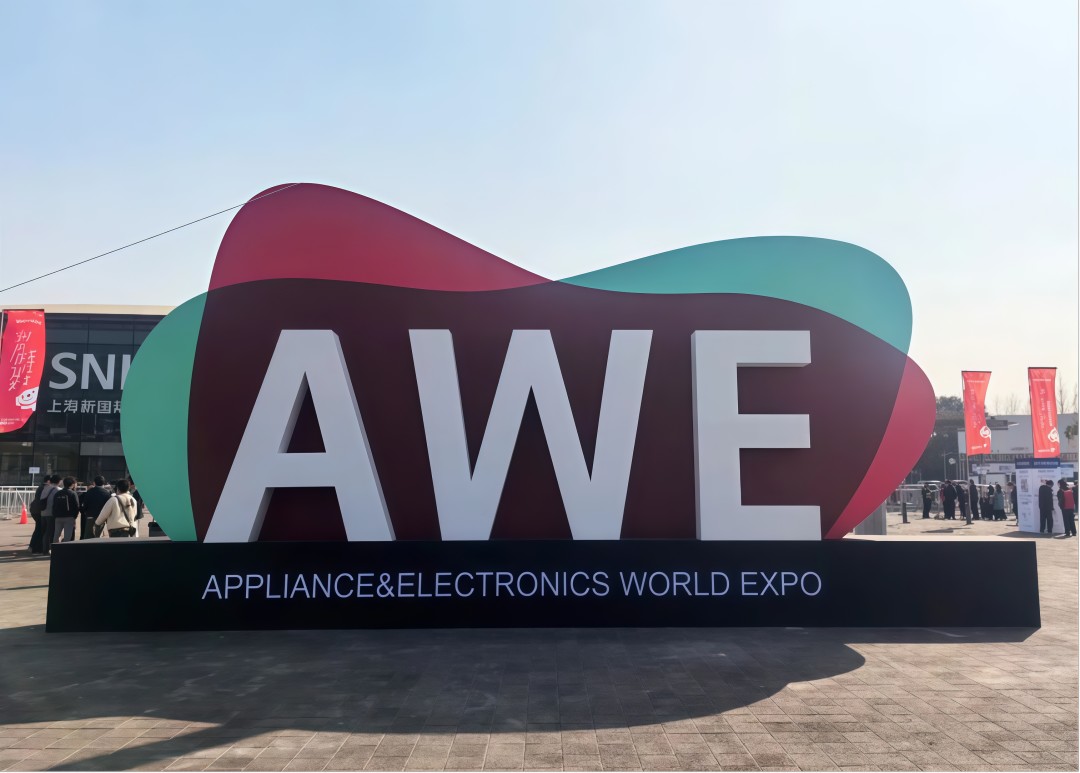
In contrast to previous fairs, which mainly focused on the improvement of individual products, this year's AWE has introduced the concept of "One Fair, Two Zones" for the first time. The Shanghai New International Expo Center and the Dongfang Hub International Business Cooperation Zone will be connected. Under the motto "AI technology, an intelligent lifestyle for the future", over 1,200 companies on an area of 170,000 square meters have made the fair a real "testing ground for the implementation of AI in our daily lives".
While MWC focuses on the future of 6G and mobile devices, AWE 2026 answers the question that is closer to our daily lives: What happens when AI comes into our homes, kitchens, living rooms, and vehicles? What changes will this bring to the consumer electronics and household appliance industries? We analyze the fair from three perspectives: new developments, technological announcements, and industry trends.
Forum: AI should be put into practical use - a consensus in the industry
The main AWE forum on the first day of the fair not only talked about the "visions of AI" but also focused on a very practical question: How can AI actually help users?
Ren Xue'an, the secretary of the Party cell of the General Directorate of the China Media Group, has made it clear that the core of industry development is based on the implementation of AI and the development of the ecosystem. AI innovations must not deviate from the main requirements of users. Only when technology and ecosystem are combined can the Chinese consumer electronics industry stand on the world stage.

Xu Chi, the founder of XREAL, has presented a central thesis: AR glasses are the natural end - devices for AI. In the future, the ultimate form of AI will be the entity of an intelligent agent, and the hardware is the carrier medium. He has admitted that the industry still has to face four major challenges such as the miniaturization of hardware and the standardization of the ecosystem. But Chinese companies have the chance to dominate the global market for AI glasses due to their advantages in the supply chain and product development. Therefore, AR is the biggest surprise success in the consumer electronics industry at this year's AWE.
During the round - table discussion, the companies shared their practical experiences. Li Ying, the vice - president of the Baidu Group, has emphasized that the concept of "Scenario + AI + Hardware" is the key to success. Any kind of intelligence that does not target the needs of users is a wrong requirement. With the OpenClaw framework, Xiaodu has enabled the integration of devices to bring AI from "passive reaction" to "active service". Miao Wei, the president of Anker Innovations in China, has identified a new trend in the industry: AI is changing the product logic. Professionalism will become accessible to the masses, and users are increasingly buying "abilities" instead of "products". This is the new orientation for consumption.
The guests from Yanshan Technology and Ninebot have unanimously pointed out that the implementation of AI at the device level, collective intelligence, and the scenario ecosystem will be the future focuses. They want to completely abandon "intelligence for the sake of intelligence" and ensure that "real AI" becomes perceptible to users.
New developments at the fair: AI penetrates all areas of life - from smart homes to robots
The consensus reached at the forum has been realized in concrete products at the fair. The AI innovations at this year's AWE go beyond the improvement of individual functions. They cover four scenarios: smart home, consumer electronics, mobility, and physical robots. Highlights such as AI - supported lobster farming, battles between humanoid robots, and the possibility to test Dreame's high - end smartphones have taken social media by storm. Platforms such as JD.com and Tmall have also created unconventional scenario experiences. Each new product shows how AI improves our lives. The core of the change is that the implementation of AI in the smart home has shifted from the passive execution of commands to active perception and independent decision - making.
Smart Home: From remote control to an active way of thinking - household appliances become "household helpers"
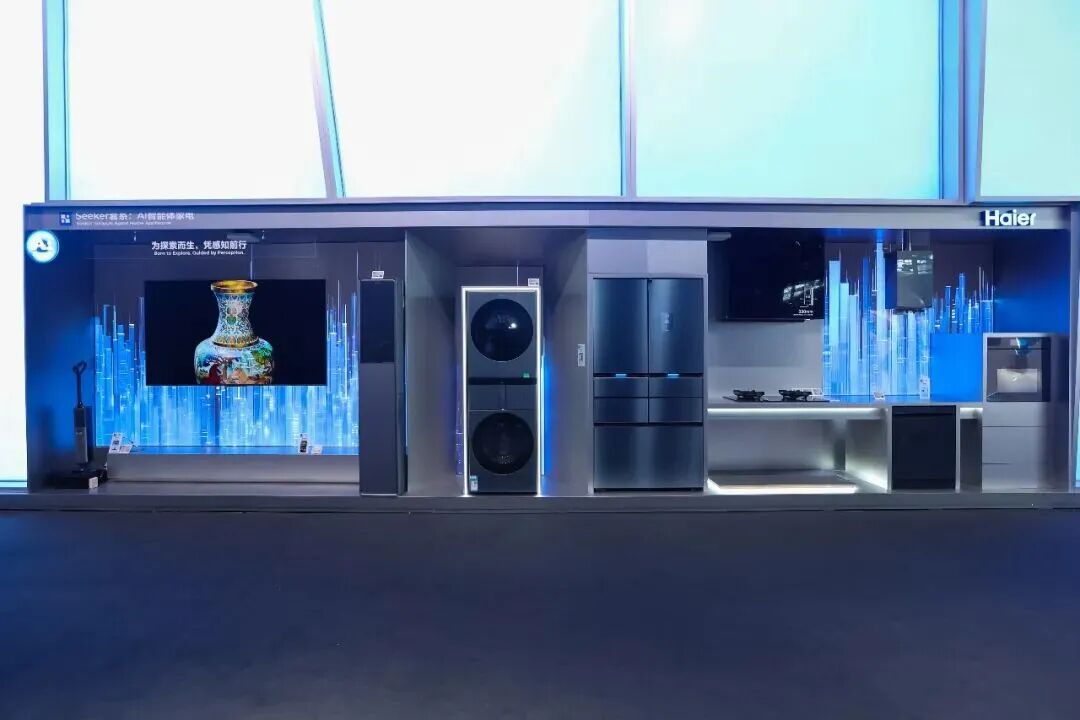
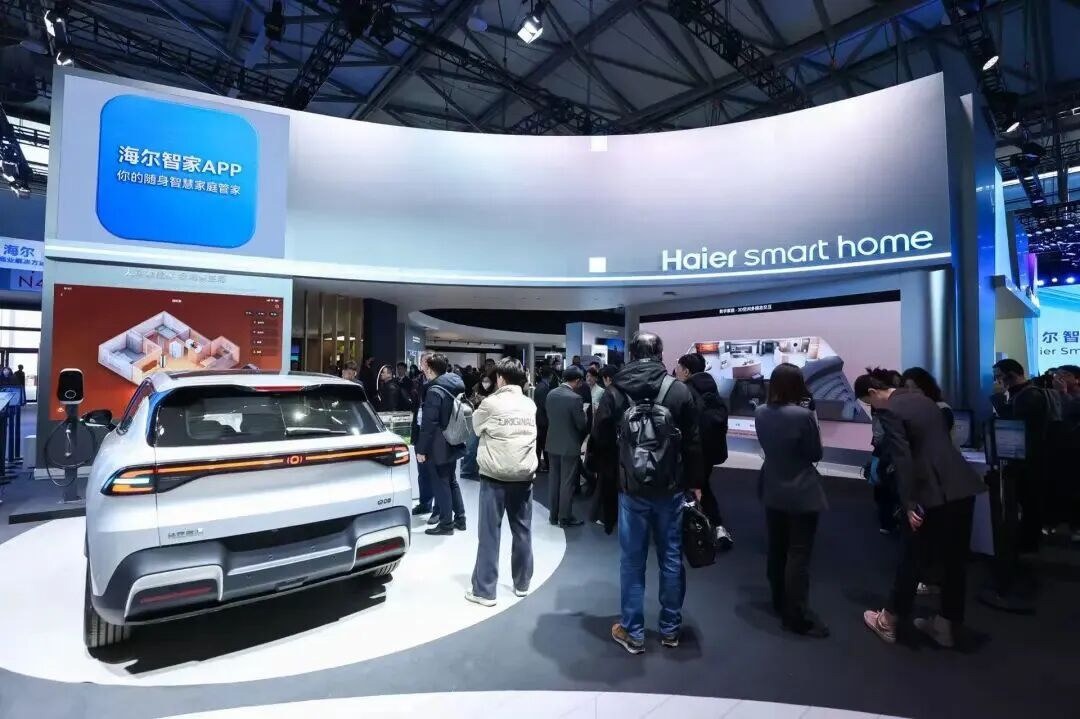
Traditional household appliances have entered the era of active AI perception. The new developments of various brands focus on the practical implementation of AI technologies. Haier has shown new progress in the field of smart homes, especially the development from device intelligence to "space intelligence" and "system intelligence".
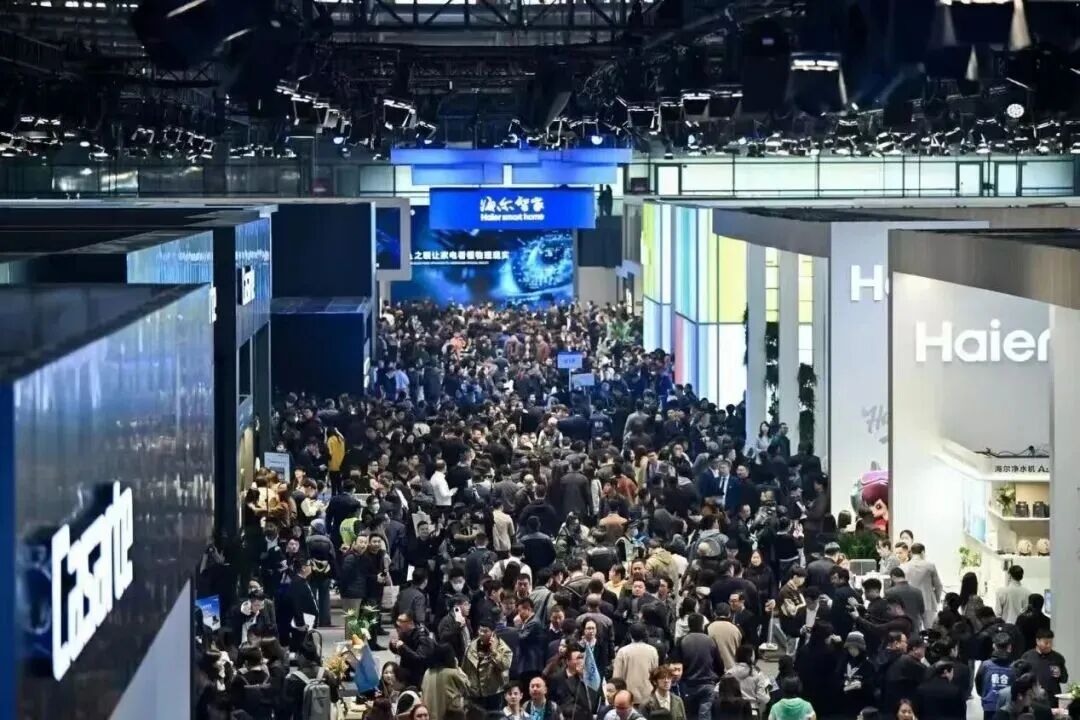
From the perspective of industry development, the smart home has gone through three phases: network control, device integration, and scenario - based household appliances. Now, AI technology, represented by large language models, is the key driver that develops the home from a loose "collection of devices" to an "intelligent system" with complete perception, decision - making, and execution capabilities.
Haier's core system for the smart home can be summarized as the "eye, hand, brain", which clearly represents the core logic of system intelligence. The AI Eye 2.0, as the "eye" of the system, has greatly improved the visual recognition ability. Household appliances can now actually "see" the real world. For example, the refrigerator can automatically recognize food and optimize storage, the stove and range hood can monitor the cooking process and automatically adjust the settings, and the air conditioner can recognize the position of people and adjust the air direction and volume. Thus, the transition from "passive reaction" to "active participation" is fully achieved.
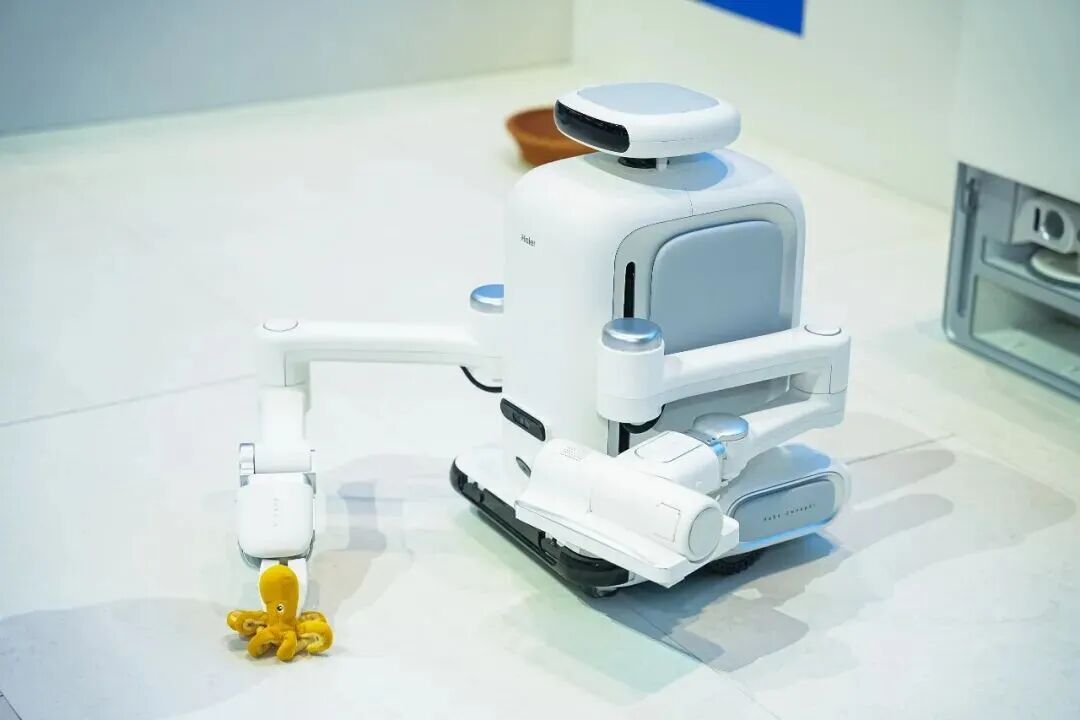
As the "hand" of the system, Haier has presented three types of household robots to relieve human labor: The Haiwa household robot can perform delicate tasks such as fetching and placing food and tidying up meals. The Haiwa cleaning robot can tidy up 3D spaces and clean both dry and wet. The Haiwa companion robot, specially developed for the elderly, can recognize falls, give medication reminders, and provide health companionship. Together, these three robots cover the daily household and companionship needs.
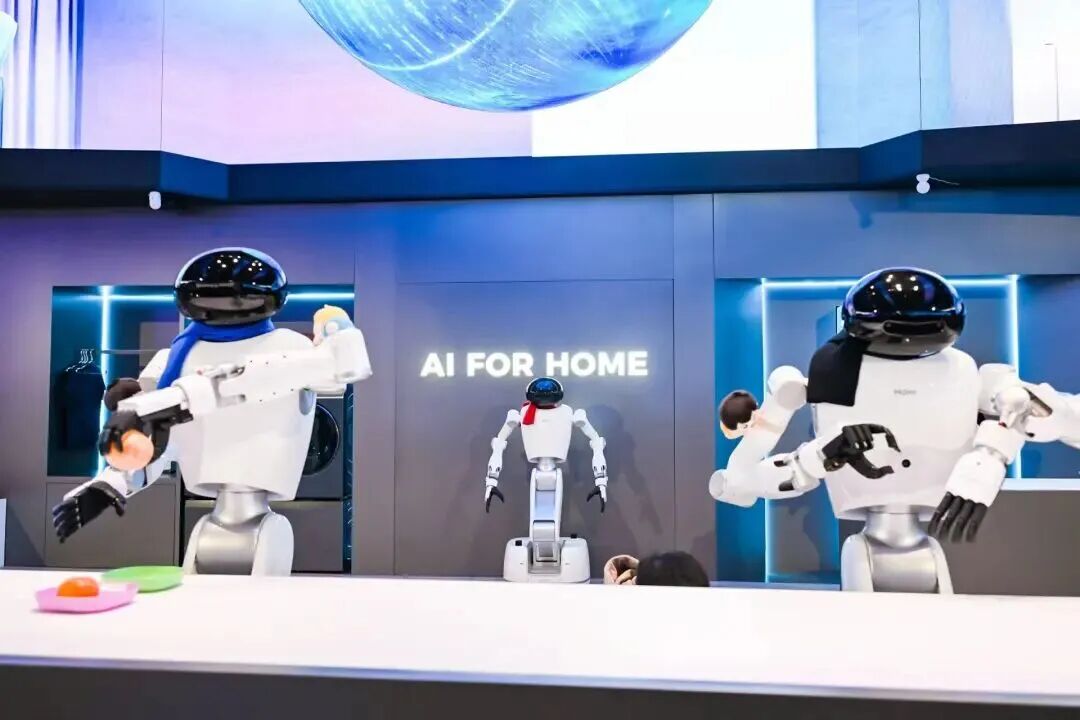
The smart home brain, as the "brain" of the system, has the task of understanding the needs of users and planning task processes after the new update. By creating a 3D digital twin space for the home, the interaction with users becomes more intuitive, and the entire system can better coordinate different devices based on the space data and thus function efficiently.
At the same time, Haier is constantly expanding the boundaries of the smart home and extending it from the family to a larger living ecosystem. The concept of "Human - Car - Home - Community - City" is proposed to make the home system the core access for different living scenarios.
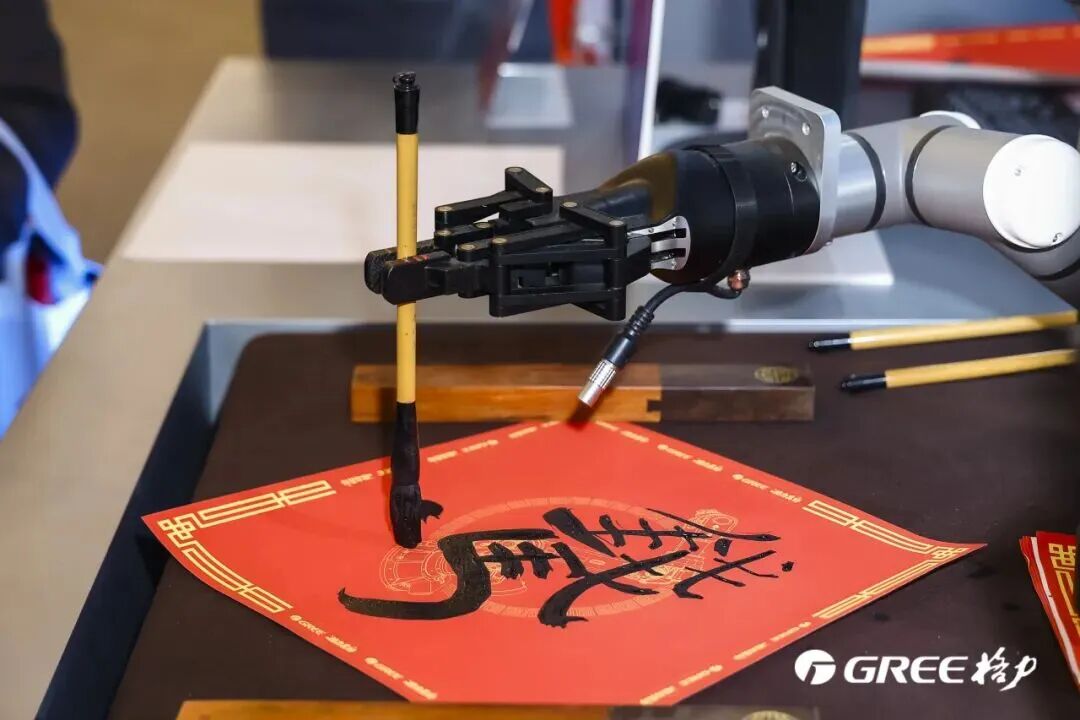
Gree has chosen the theme "Real AI, True Love". The Gree Cool King AI refrigerator is equipped with a self - developed AI model for household appliances and can seamlessly connect different devices as an intelligent center for the entire home. It works stably even without an Internet connection. Thanks to the learning ability of the large language model, the Star5 AI central air conditioner can optimize the parameters in multiple rooms and predict the habits of users. This is a step from the application of AI in individual functions to an overall scenario experience.
The Gree EAI chip is equipped with advanced AI algorithms and can control the devices with low energy consumption and high efficiency. It has received the world's first TICK - MARK certificate and is used in many fields such as energy - saving control, UI interaction, image, and speech processing.
Brands such as LG, Siemens, and Robam have also presented AI - supported dishwashers and digital kitchen appliances. Household appliances have developed from "executing commands" to "predicting needs", and the daily household life is completely redesigned.
Consumer Electronics: AR glasses make a name for themselves, AI smartphones aim for the top
AR glasses are the big attraction at this year's AWE. Thanks to the self - developed X1 chip, the XREAL One Pro AR glasses have reduced the latency to less than 3 milliseconds. At a distance of 10 meters, it is equivalent to a 556 - inch screen. This solves the problem of dizziness. The Aura project, developed in cooperation with Google, brings AI from "screen intelligence" to "space intelligence". Thunderbird has presented the world's smallest full - color MicroLED AR glasses, which means that AI glasses are moving from the concept phase to mass production.

There were also surprises in the smartphone segment. Dreame has, with the theme "Dreame Universe", for the first time occupied the entire Hall E7 of the Shanghai New International Expo Center. With a total exhibition area of 11,193 square meters in five halls, Dreame is the company with the largest presentation in the history of AWE. Dreame's world - first high - end smartphone AURORA is equipped with a magnetic additional lens, whose telephoto lens performance is comparable to that of a single - lens reflex camera. At the same time, Dreame has announced that it will invest one billion yuan in the research and development of AI systems and imaging technologies to...