Das erste Jahr der Roboter-“Abhebung”: Heißes Geld, Geschichten und eine überzogene Zukunft
When robots from four Chinese companies appeared on the stage of the Spring Festival Gala in the Year of the Horse, it was inevitable for the technology industry in 2026 to get caught up in the industry trends around "humanoid robots".
Since the beginning of the year, several robot companies have successively announced financing news, and the valuations of humanoid robot companies have risen sharply. At the same time, the "robot dance" has become a regular part of events such as Spring Festival fairs and business openings. It seems as if robots have suddenly stepped out of the laboratory and into factories, shopping centers, and public spaces.
However: Does the apparent hustle and bustle mean real industry prosperity?
Do the jump in financing figures and the increase in orders represent a mature technology, or is it the result of a temporary mood boost? When capital flows into the industry, companies position themselves one after another, and the public becomes more and more interested, perhaps we should calmly ask: Is the robot industry really at a turning point towards upward growth?
01 Capital Inflow: Humanoid Robots Become the Top Industry
As the saying goes: "The ducks are the first to sense when the water gets warm in spring." Before the Spring Festival Gala became a "robot gathering", the capital market had already "predicted" the continuous explosion of the robot sector.
Industry statistics show that from the beginning of 2026 to February 11th, in 42 days, there were 19 financing events in the field of embodied intelligence in China, that is, one financing event every 2.3 days on average. The disclosed financing amounts totaled over 7.6 billion yuan. The high media presence of the Spring Festival Gala has further strengthened the capital's confidence in the sector.
On March 2nd, Songyan Dynamics and Yinhe General, which successfully appeared on the Spring Festival Gala stage, announced their financing progress on the same day. Songyan Dynamics completed a Series B financing of nearly 1 billion yuan, while Yinhe General's new round of financing was 2.5 billion yuan. On the same day, UniX AI also announced that it had completed a new round of financing of nearly 300 million yuan.
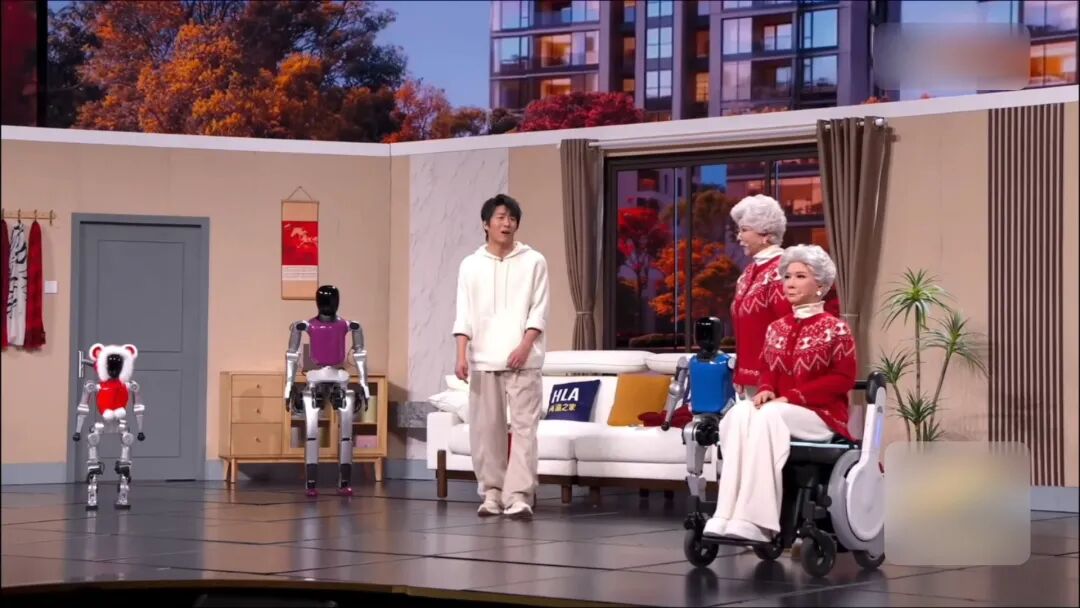
*The Songyan Dynamics robots in the short comedy "Grandma's Favorite Things" at the Spring Festival Gala
Further data from third - party sources show that as of March 4th, 2026, a total of 88 financing events in the field of embodied intelligence in China had been publicly announced, which is equivalent to an average of about 1.4 financing events per day. The total financing amounts totaled over 20 billion yuan.
If you look closely at this wave of financing, it is clear that the group of investors in robot companies includes not only top VC firms, industrial capital, and state - owned funds, but also first - tier institutions such as Sequoia Capital China, Hillhouse Capital, Yunfeng Capital, and Baidu Ventures. Even the state - owned artificial intelligence investment fund and several local - level state - owned platforms have actively participated and invested in top companies, which has led to a rapid increase in the valuations of many prominent companies.
The Jingzhe Research Institute found in its research of public reports that as of March 5th, 2026, nine companies in the field of embodied intelligence in China had a valuation of over 10 billion yuan, including Unitree Robotics, Zhipu Robotics, Zhipingfang, Xinghaitu, Lingxinqiaoshou, Shenji Technology, Qianxun Intelligence, Yinhe General, and Xingdong Jiyuan. Shenji Technology, Qianxun Intelligence, Yinhe General, and Xingdong Jiyuan have become new members of the "unicorn" group since February after accepting a new round of financing.
In addition, many young start - up companies that have been in existence for less than a year have successfully completed an angel round or a pre - A round and easily obtained hundreds of millions of yuan in capital. This speed and scale of financing are extremely rare in other hard - tech industries and inevitably remind people of the investment wave 10 years ago under the slogan of "Mass Entrepreneurship and Mass Innovation".
In fact, the enthusiasm of capital stems from the basic logic of technology investment and the infinite imagination for the future of the industry. Currently, the humanoid robot is generally regarded as the next disruptive hardware device after the smartphone. And it is optimistically assumed that humanoid robots can penetrate into industrial production, household services, commercial reception services, special work, and many other scenarios in the future. According to this grand vision, it is expected that the industry scale of humanoid robots will be no less than one trillion yuan in the future.
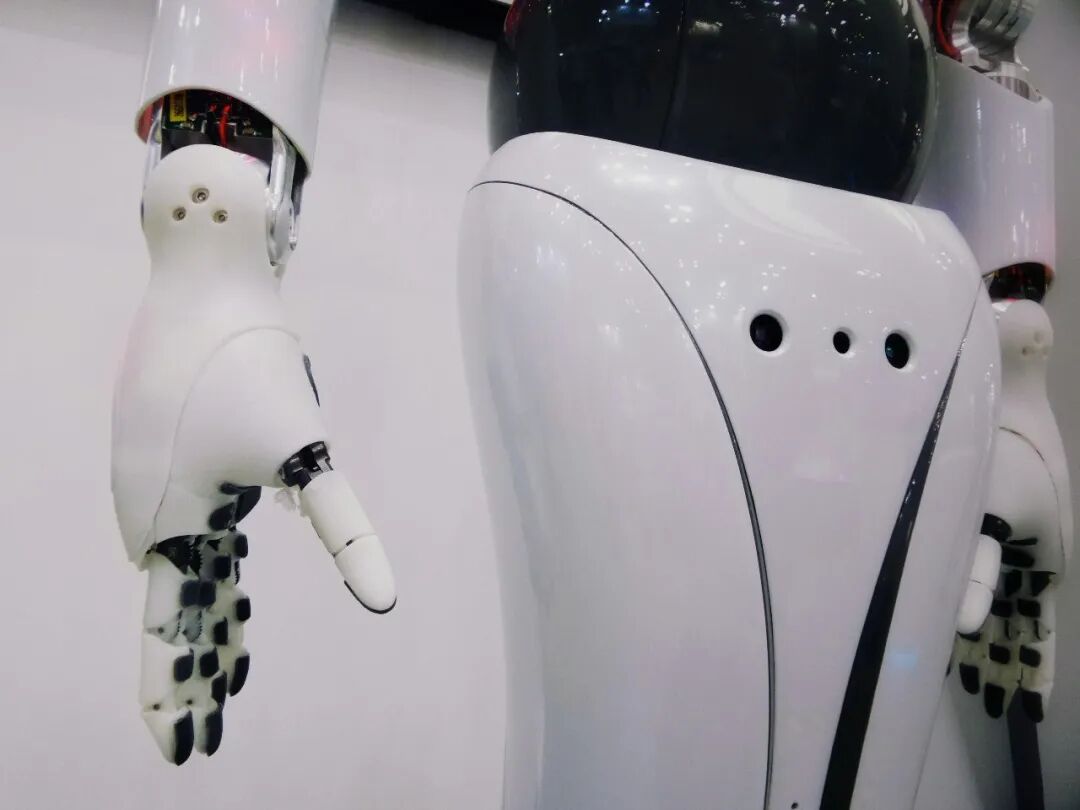
At the same time, the simultaneous enthusiasm for the AI sector and the continuous technological iteration create topics, so that embodied intelligence is regarded as an important support point and carrier for the implementation of the AI industry. The fact that large technology companies are accelerating their entry into the AI arms race has also led the market to fall into a FOMO (Fear of Missing Out) mood. As a result, millions are invested in humanoid robots as the "ultimate form of AI", even though it is still far from making a profit. People just want to take an early position and seize a chance for future success with an expensive "boarding pass".
But the celebration of capital can also easily cover up the essential problems of the industry. When everyone is talking about the future and dreaming of the prospects, only a few people are interested in the core problems: Have these robot companies that have received huge financing actually achieved scalable commercial implementation? Have they developed a stable and sustainable profit model? As the saying goes: "One minute on the stage requires ten years of practice off - stage." Besides the global media presence at the Spring Festival Gala and the high expectations of the capital market, how much real ability do humanoid robots actually have?
02 Profitable Robots "Don't Look Like Humans"
If we assume that the blind enthusiasm of capital is harmless to the general public, the "collective deviation" of the robot sector is a bit confusing. Under the guidance of the popular new concept of embodied intelligence, many companies have flocked towards "humanoid robots". But those that can actually achieve scalable mass production, stable profits, and real industrial values are actually non - humanoid robots.
The "World Robotics Report 2025" of the International Federation of Robotics (IFR) shows that China was again the world's largest market for industrial robots in 2024, accounting for 54% of the global new installation share. China not only newly installed 295,000 industrial robots, setting a new annual record, but Chinese manufacturers also sold more than foreign suppliers on the domestic market for the first time. Data from the National Bureau of Statistics show that in 2025, the production of industrial robots in large enterprises reached 773,000 units, a 28% increase compared to the previous year.
Before humanoid robots became stars at the Spring Festival Gala, non - humanoid products such as handling robot arms, welding robots, forklift robots, and AGV vehicles had already achieved mass production and commercial implementation in core areas such as automobile manufacturing, 3C electronics, logistics, and energy storage, and served as the core support for the transformation and modernization of the manufacturing industry.
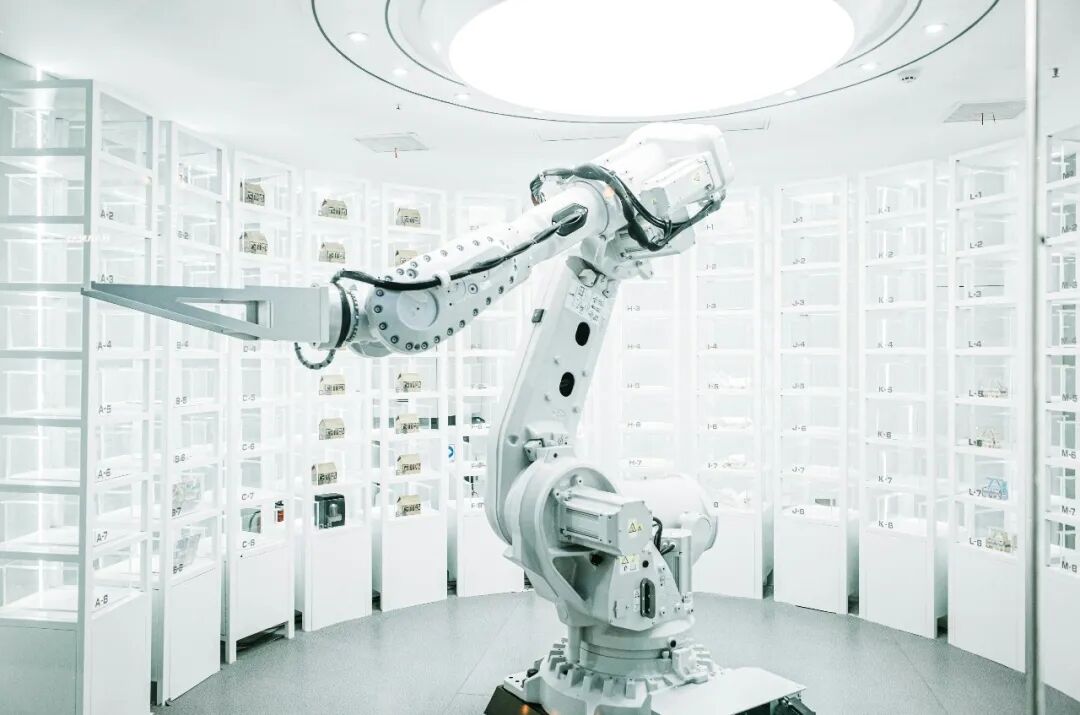
In comparison, the highly - praised humanoid robots in public reports mainly appear in research, education, or exhibition scenarios. This leads to two thought - provoking questions: What real value do humanoid robots actually bring? Does a robot have to be in human form to be an advanced product?
First of all, the strategic direction of humanoid robots is completely correct.
Since the Ministry of Industry and Information Technology issued the "Guidelines for the Innovative Development of Humanoid Robots" in 2023, which defined the route of "Large Model + Robot", the humanoid robot has become another popular technology trend parallel to artificial intelligence. In 2024, OpenAI, in cooperation with Figure, introduced the Figure 1, which was the concrete form of a humanoid robot with a large model and attracted the world's attention.
In 2025, embodied intelligence was included in the government work report for the first time and has thus become a core sector of the future national industry. At the same time, the participation of the state - owned large - scale fund is a clear confirmation of embodied intelligence as the state's strategic new productive force and marks the transition of the industry from the "R & D stage" to national strategic planning and large - scale implementation.
But after humanoid robots became well - known through the Spring Festival Gala and became a national topic, the water in the embodied intelligence community has also become murkier.
Amid the calls for "embodiment of artificial intelligence" and "revolution of the next productive force", there are companies that focus on making prototypes, attracting attention, and profiting from the popularity to pass themselves off as real robot companies. This speculative chaos is very similar to the situation in the field of large models in China after the rise of ChatGPT in 2023, when there was a "battle of a hundred models".

Recently, Fu Sheng, the chairman and CEO of Cheetah Mobile, said in an interview that robot startups are so popular, firstly because it is easy to raise capital, and secondly because it is not difficult. According to his description, in Shenzhen, with an investment of 2 million yuan, one can make a prototype of a humanoid robot with basic walking functions, put one's own brand logo on it, and then claim to be in the field of humanoid robots, and then create a PowerPoint presentation to raise capital.
The same is true for Jia Yueting, the founder of Faraday Future. In February this year, he also grandly introduced a so - called "self - developed humanoid robot". But at the whole press conference, only a 20 - second video of basic walking was shown, and no core technical parameters, mass - production plans, or real application scenarios were released.
After the press conference, several technology media found that the Master - series humanoid robot introduced by Jia Yueting is very similar to the Lingxi X2 of Zhipu Robotics, and the core parameters are almost identical. Therefore, it is suspected that the core goal is not to deepen technological development, but rather to profit from the trend wave, raise capital, and shift the debt burden, which exactly corresponds to the old method of the "PPT automobile".
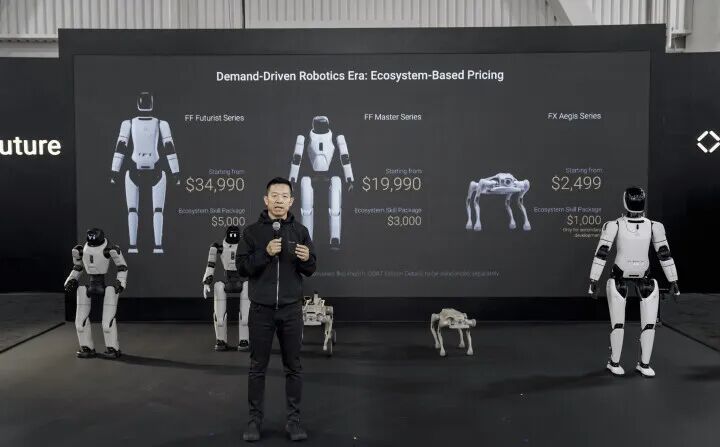
*Image source: Official website of Faraday Future
Some playful Internet users have also pointed out that the wholly - owned subsidiary of Faraday Future for robots was founded in January, and on February 5th, it had already introduced three robot products. It is likely that no work was done on technological development and testing this month, but instead, they just waited for the delivery of humanoid robots from Shenzhen and at the same time "self - developed" a PowerPoint presentation. Another netizen joked: "From a PowerPoint presentation to product implementation in one month, this is the limit of express delivery, not the limit of embodied intelligence."
03 "Forward - looking" Narrative: Creating an Industry Bubble
In fact, another reason for the enthusiasm for robot startups is that on the technology route of "Large Model + Humanoid Robot", compared with the development of large models, which requires huge computing power, long training time, and strict evaluations, the path of "kit - based startup" in the field of humanoid robots is too obvious. Therefore, the threshold for speculation was deliberately lowered, which led to chaos.
In addition, the current public perception of robots has deviated from the technological laws of the industry. Many ordinary people ignore the core message: A robot is not a simple hardware product, but a complex technical system that integrates technologies from various fields...