Die chinesischen Handys, die gezwungen sind, die Preise zu erhöhen, müssen sich auf schwere Zeiten einstellen.
There is a text that has frequently appeared in media reports recently: Starting from March 2026, the Chinese mobile phone industry will experience a wave of price increases across all brands, which is the largest and most widespread in the past five years. This affects leading brands such as OPPO, vivo, Xiaomi, and Honor.
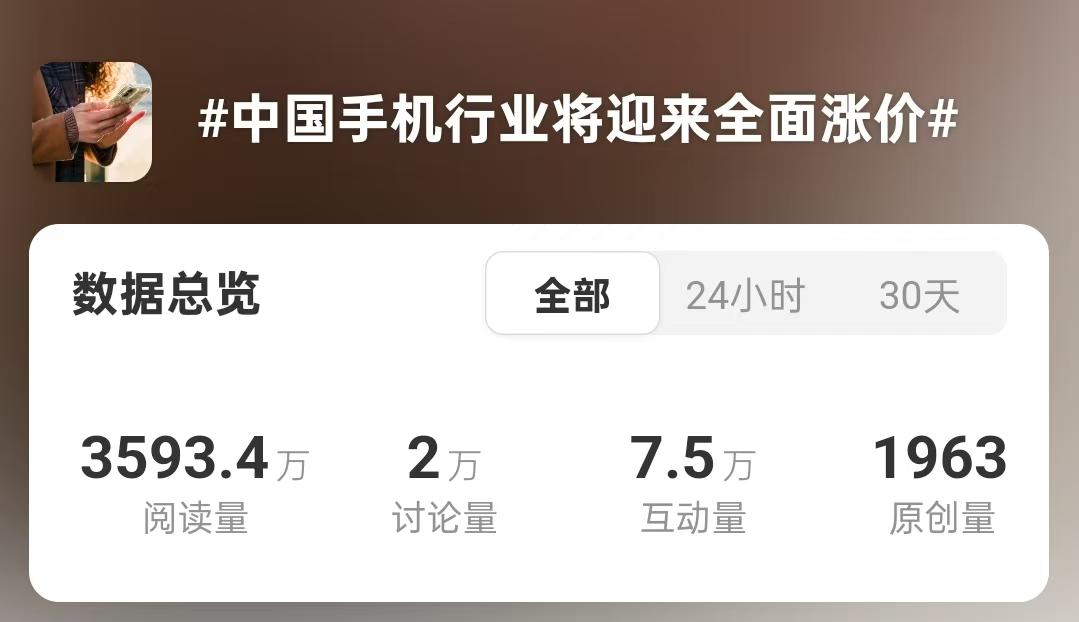
However, the reason why this wave of price increases is unprecedented lies not only in its wide scope.
The magnitude and duration of this price increase are also unprecedented.
Counterpoint Research estimates that the average price of new mobile phones in the Chinese market after March will be 15% to 25% higher than that of devices in the same category in 2025. That is to say, the prices of mid - and low - end devices could increase by a few hundred yuan, and the prices of high - end flagship models could even increase by 2,000 to 3,000 yuan.
Lu Weibing recently judged at the MWC conference that this price increase of storage media is a long - term process that will last from the second quarter of 2025 to the end of 2027, that is, almost three years.
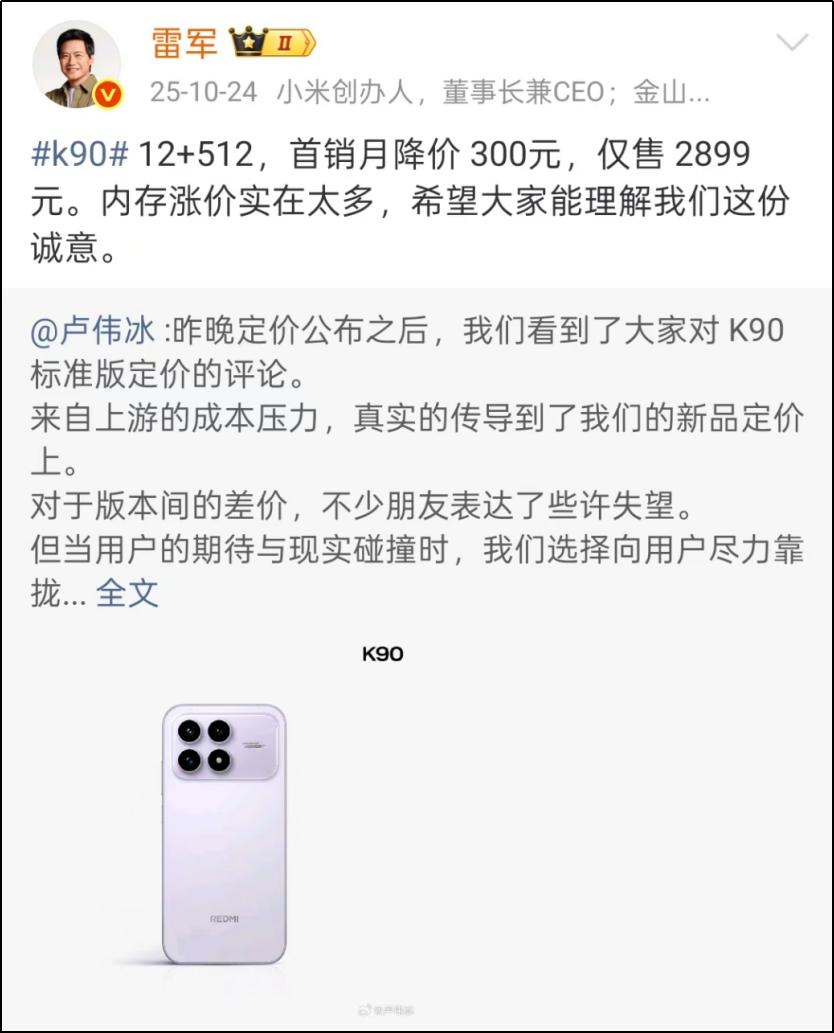
After the release of the Redmi K90 last year, Lei Jun reported angrily about the trend and reasons of the price increase.
Consumers, of course, are not happy about the price increase: "I actually wanted to change my phone, but now I'll replace the old battery and use it for another two years." "I can't buy a new phone for three years, but they can't not sell any for three years."
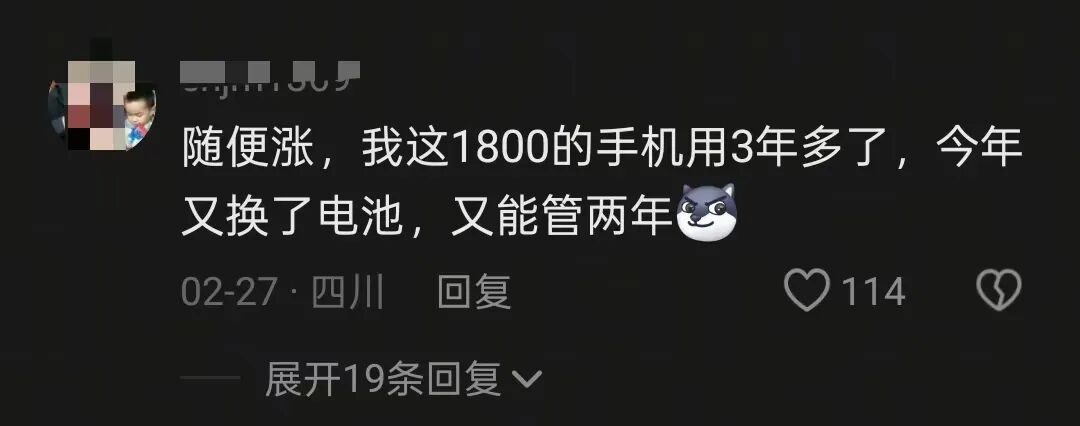
Such remarks reveal a cruel reality: Chinese mobile phone manufacturers have to prepare for "tough times".
Chinese Mobile Phone Manufacturers: From "Glorious Clients" to "Eager Contractors"
Just two years ago, the mobile phone industry looked completely different.
In 2024, prices in the storage market plummeted due to internal and external problems. Mobile phone manufacturers raised the banner of "storage equality", and inexpensive mobile phones with 512 GB or 1 TB of storage were everywhere. At that time, the manufacturers had absolute power and could feel like clients.
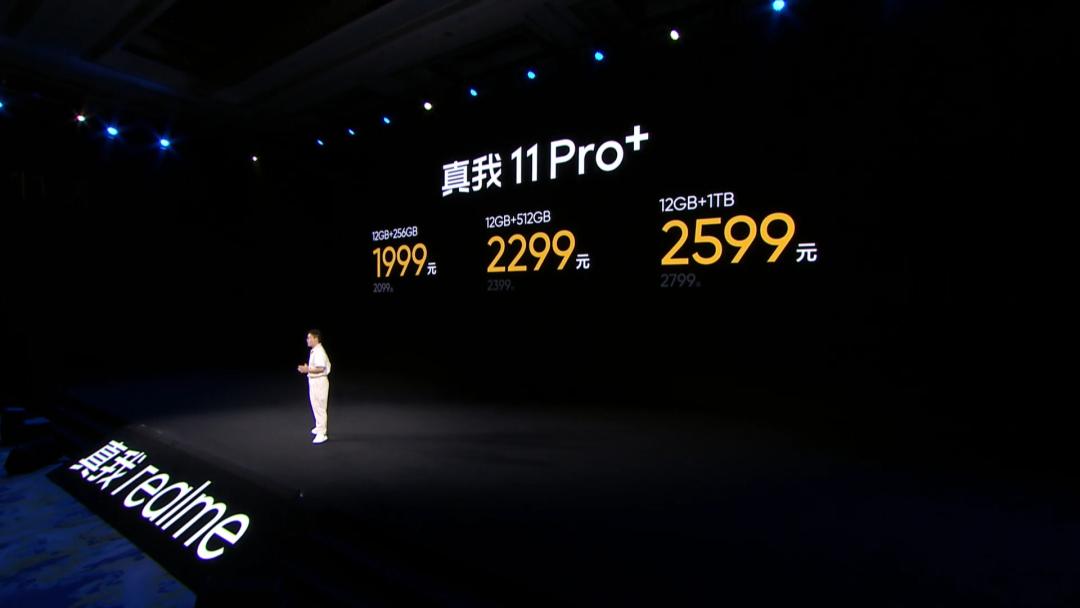
But now this scenario is completely over.
The rise of the AI industry has greatly affected the production capacity of storage media, and the production capacity of consumer chips is severely restricted. Just OpenAI has reserved the monthly production capacity of 900,000 DRAM wafers from Samsung and SK Hynix after their capacity expansion, which accounts for almost 40% of the global supply.
What is rare is expensive. In the worst - case scenario, it has been said that a box of memory is as expensive as an apartment in Shanghai.
Data from TrendForce in February 2026 shows that the spot prices of mobile phone storage media have increased by more than 300% in the past three months. A supply chain employee revealed that the current procurement costs have increased by more than 80% compared with last year, and the prices "are different in the morning and afternoon".
To maximize their profits, Samsung's Semiconductor division has even "abandoned" its own Mobile division and abandoned the long - term supply contract system. Instead, quarterly contracts are being signed.
Moreover, Samsung's Semiconductor division is also said to have hit Apple hard. Their original goal was to increase the price by 60%, but in the first negotiations, they directly proposed a 100% increase to test the reaction. Surprisingly, Apple accepted the double price almost without negotiation.

If even Apple accepts everything, what can Chinese manufacturers do?
They have to bear the costs themselves and keep reminding consumers that prices will increase.
But no matter how well - prepared Chinese manufacturers are and how much propaganda they have done, a market shock is inevitable. IDC predicts that the global smartphone market will shrink by almost 13% in 2026 and will reach the lowest level in the past ten years.

Naturally, the mid - and low - end market is the most affected.
The proportion of storage semiconductor costs in the total costs of mid - and low - end devices is already approaching 30%. If prices continue to rise, some low - end mobile phones will even fall into negative margins, which means that manufacturers have to pay out of their own pockets for each low - end mobile phone sold.
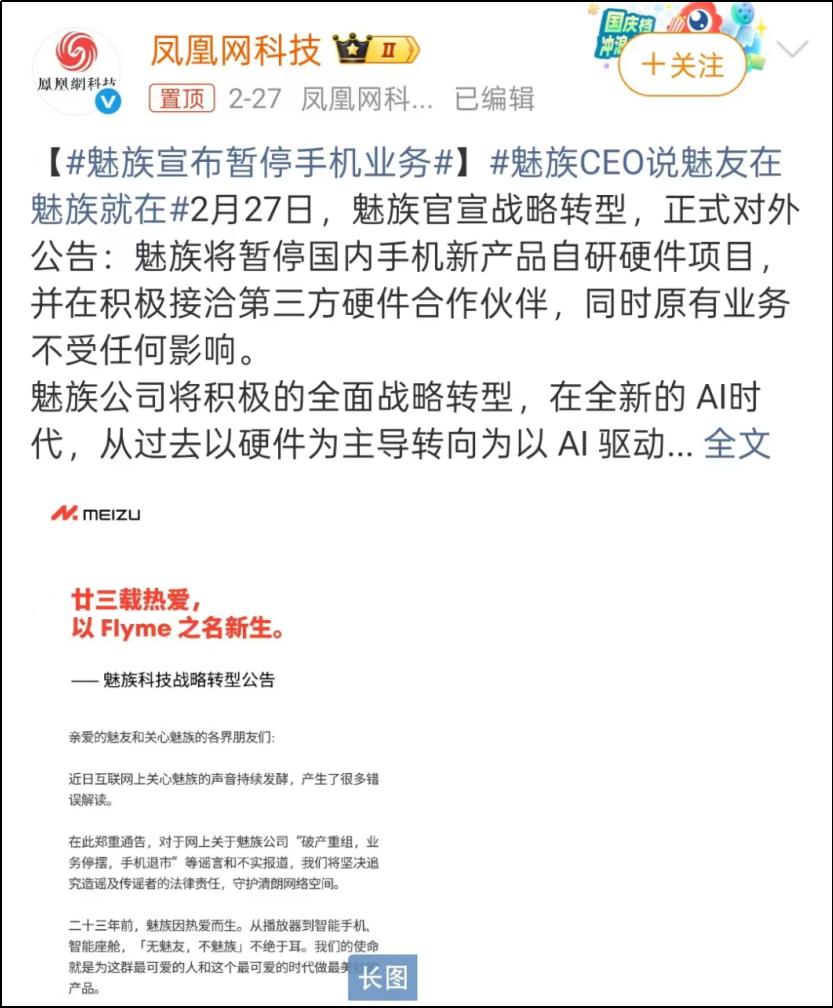
Therefore, Transsion, which is known for its low prices, achieved a turnover of 6.87 billion yuan in 2025, which only decreased by less than 5% compared with the previous year, but the profit was almost halved, a 54% decrease compared with the previous year. Meizu also abandoned the plan to introduce a new model at the beginning of the year. On February 27, Meizu officially confirmed in an announcement that it has stopped the self - development of hardware for new mobile phones in the Chinese market, stating that "the continuous price surge of storage media recently has made the normal commercialization of future new products impossible".
The mid - and low - end market is in turmoil, and manufacturers that do not rely on low prices are also under pressure. For example, the 12 GB + 256 GB version of the Honor Power2 initially costs 2,499 yuan, which is 500 yuan more than the previous generation. The base version and the plus version of the Samsung Galaxy S26 series cost 1,000 yuan more than before.
From "glorious clients" who give orders to "eager contractors" who rely on the mood of their suppliers and are not understood by consumers at the same time, mobile phone manufacturers have to bear their suffering.
The Forced Price Increase Reveals a Major Weakness
Manufacturers cannot ignore this wave of price increases.
The simplest reaction is to increase the prices of mobile phones.
Another option is to reduce orders. There are reports that Xiaomi, OPPO, and vivo have reduced their annual mobile phone orders by 15% to 20%, and mid - and low - end devices have become the focus of adjustment.
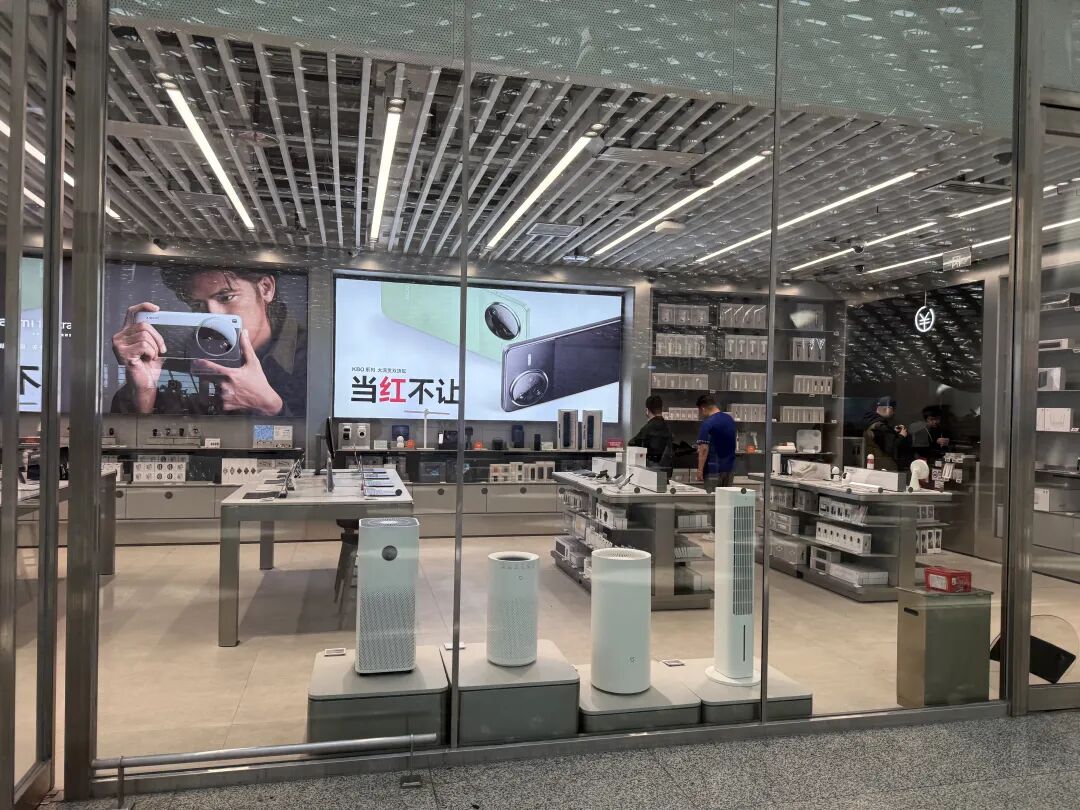
An even more hidden reaction is to reduce the configuration. Some mobile phone brands are starting to reduce the DRAM capacity per device and compensate for the configuration through software optimization. Some models use cheaper QLC storage instead of TLC flash storage.
But all this is only a symptomatic treatment. Even if they survive this wave of price increases in the supply chain, they may not be able to survive the next wave.
The real cause is: Why are Chinese manufacturers so sensitive to price increases in the supply chain? Why don't they have enough strength to offset cost fluctuations?
The answer points to a weakness of many manufacturers: The service ecosystem.
In the past, many mobile phone manufacturers had the idea that "the goat eats, the ram pays", and some even believed in the traffic thinking of "negative hardware margin, profit from Internet services".
There is nothing wrong with thinking this way, but in practice, it is not easy.
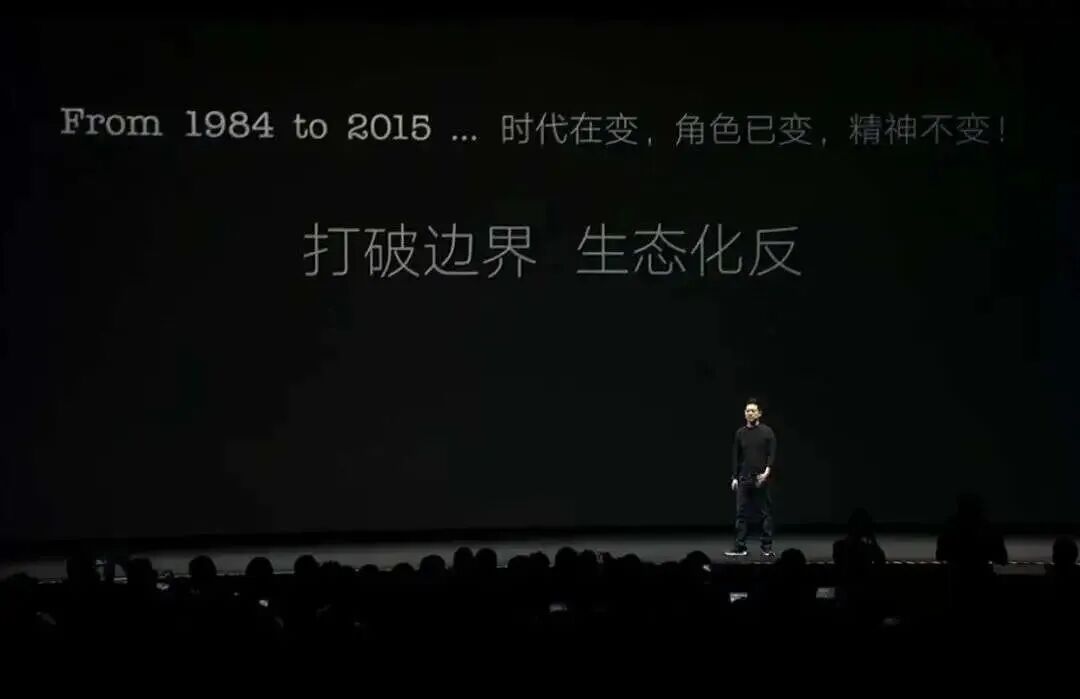
In April 2015, Jia Yueting shouted the slogan "free hardware" on stage. His logic was simple: When buying a LeTV 1 mobile phone and a five - year subscription (490 yuan per year), you can get the phone for free. In total, it costs 2,450 yuan - more than the phone alone, but the customer gets content services for five years. The calculation behind it was clear: Once customers enter the LeTV ecosystem, profits can be continuously achieved.
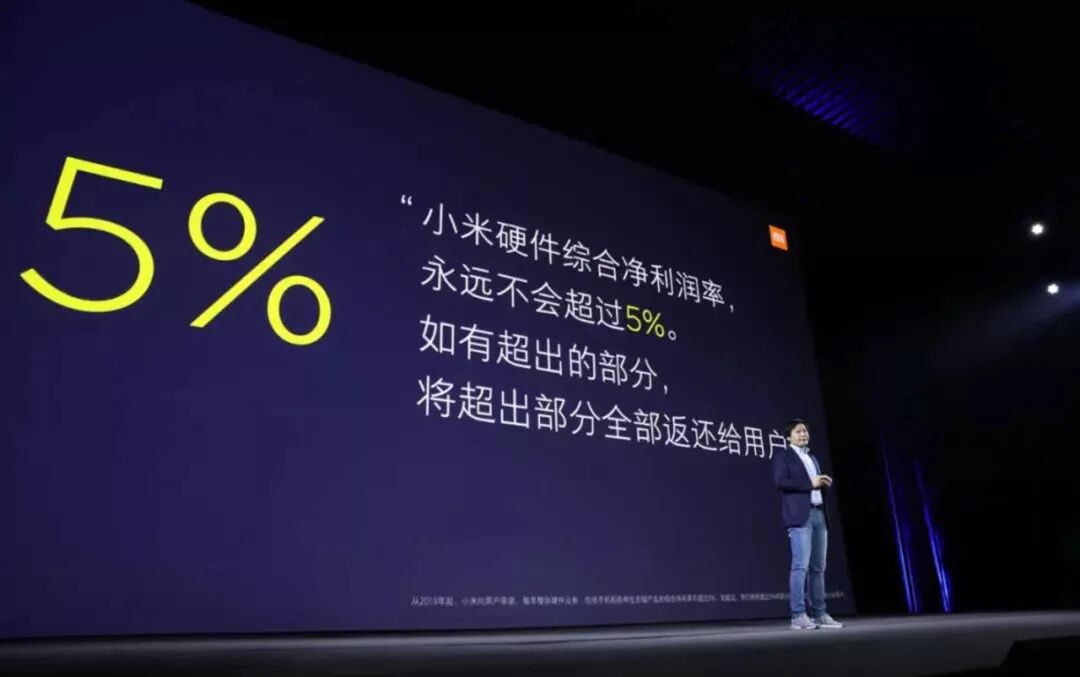
In 2018, Lei Jun promised that the total net profit margin of Xiaomi's entire hardware business per year would not exceed 5%. If it was more, the excess part would be returned to customers. In the annual report of the same year, the net profit margin of the hardware business was even less than 1%. Xiaomi's strength also comes from Internet services.
However, today, the service ecosystem of mobile phone manufacturers is not as perfect as expected.
Their income mainly comes from advertising, gaming, and cloud services. The value generated by behaviors such as watching short videos, scanning payment codes, watching short - and long - form series, listening to music, and reading books often has little to do with the manufacturers. Since the income from the service ecosystem is limited, it is naturally difficult to compensate for the large losses in hardware.
Therefore, they are helpless when suppliers raise prices too much.
Apple is an opposite example.
In the fourth quarter of fiscal year 2025, Apple's service business income was $2.88 billion, with a profit margin of 75.3%. Accounting for 28% of the total turnover, it contributed 45% of the company's total profit.
The "Apple tax" is collected everywhere, and even Tencent cannot escape it. Therefore, a hardware loss has far less impact on Apple than on its competitors.
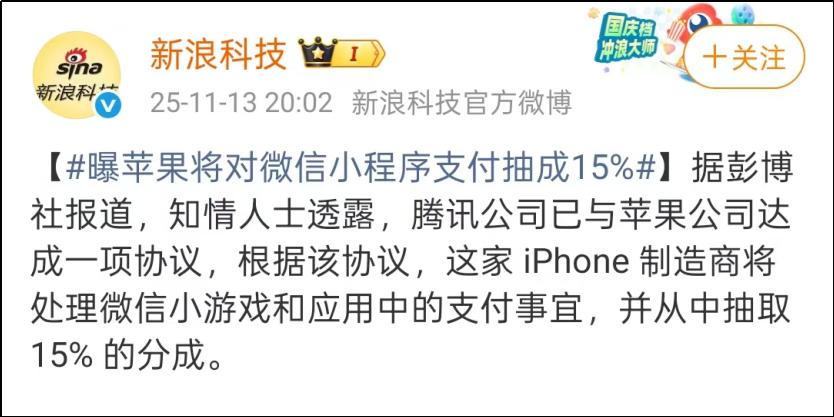
Since the storage in an iPhone only accounts for 8% to 10% of the total component costs, the iPhone could even become a good deal this year. Guo Mingji said that Apple will try its best to avoid raising prices. The starting price of the standard version of the iPhone 1