BYD kills the new energy vehicle competition
BYD made a significant move last night.
During the approximately two - hour press conference, the head of BYD took the lead and introduced three major technologies respectively: the second - generation Blade Battery, Super Flash Charging, and the DM6.0 Super Hybrid Technology.
Let's not look at those professional but complex parameter comparisons for now. Let's simply describe the core of these three technologies:
The second - generation Blade Battery solves the most contradictory issue in the industry currently: as the battery density keeps increasing and the cruising range gets longer, it generally takes 20 to 30 minutes to fully charge the battery. Different from fuel - powered cars that can be refueled and driven away immediately, the charging experience of pure - electric vehicle owners has always been poor.
However, the second - generation Blade Battery can achieve a cruising range of over 1000 kilometers. At the same time, it can charge from 10% to 70% in 5 minutes and from 10% to 97% in 9 minutes. It also performs well even in extremely cold regions.
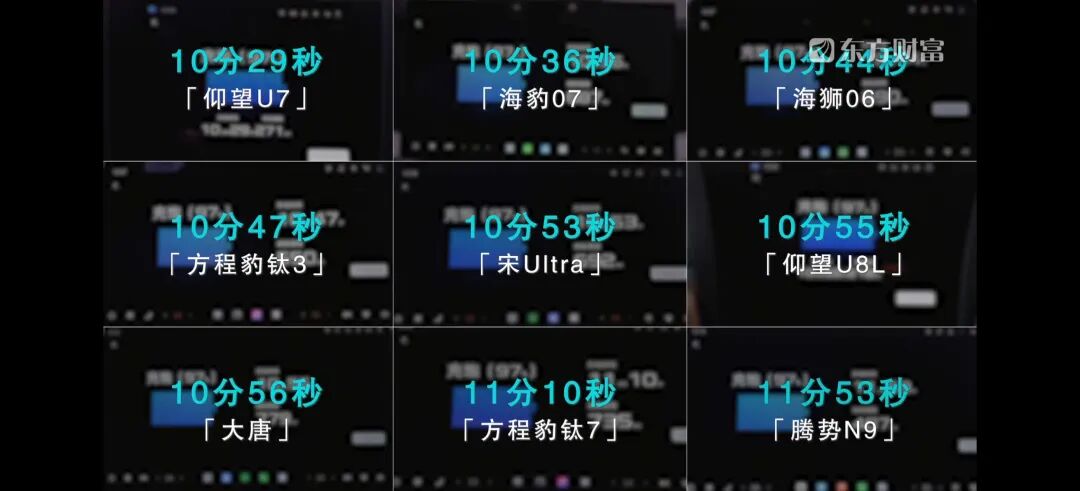
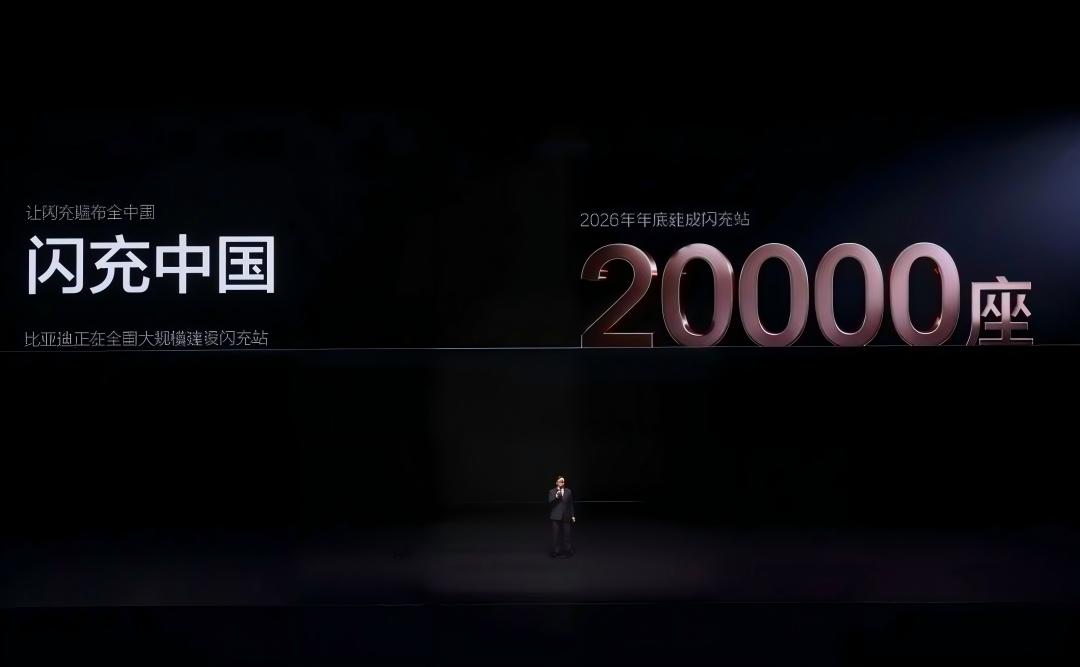
With a more powerful battery, a more powerful charging station and charging head are naturally needed. The head of BYD officially announced the "Flash Charging China" strategy. By the end of this year, about 20,000 flash - charging stations will be built across the country, and the scale will continue to expand over time until finding a charging station is as easy as finding a gas station.
For car owners still worried about the cruising range, the DM6.0 Super Hybrid Technology can solve the problem. Interestingly, the key point in the head's words is just one sentence - the fuel consumption per 100 kilometers under power - deficit conditions is about 1.8L, which is more than twice lower than the industry average.
To be honest, each of these three technologies is enough for other manufacturers to talk about for several months. The only purpose of BYD's three ace technologies is not only to create a stir in the public opinion field but also to completely rewrite the competition rules in the new - energy vehicle field with basic hardware.
A.
Actually, within two months before the release of the second - generation Blade Battery, the capital market and major manufacturers intensively hyped up "all - solid - state batteries".
We delved into this issue in the article "You'll Really Regret Buying a Pure - Electric Car Now". Our view is that "all - solid - state" batteries are indeed the core technology in the new - energy vehicle field, but it is not realistic in the next 3 to 5 years. After analyzing the promotional noise and word games of major manufacturers, the so - called all - solid - state batteries they claim can only be regarded as semi - solid, far from the ideal ultimate form.
The only reason for these car companies to intensively promote all - solid - state batteries is that, except for BYD, all other new - energy vehicle companies, and I mean all of them, are "kidnapped" by the battery. The upstream of the industrial chain takes the lion's share of the profits, and they have to follow the upstream's lead completely.
This is the fundamental reason why after BYD launched a price war in 2024, the Qin PLUS priced at 80,000 yuan made all manufacturers suffer and dominated the entire new - energy vehicle market. When BYD first entered the new - energy field, it had already made a move in the battery industry, keeping its battery technology at the international first - tier level. Other car companies didn't start to catch up until around 2023. Facing a huge generation gap and patent barriers, they can only hope that a technological breakthrough in "all - solid - state batteries" can eliminate their dependence and achieve a quantum leap.
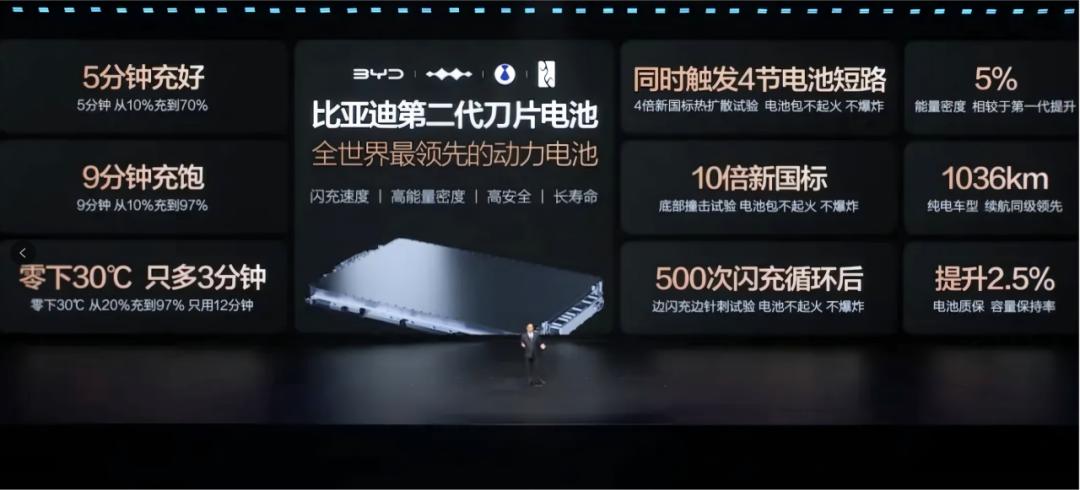
However, the second - generation Blade Battery released this time gave a resounding blow to some new - energy vehicle companies that were harboring illusions. It not only warned these companies that "you may not wait for all - solid - state batteries" but also raised a deeper question: in terms of input - output ratio and market acceptance, what kind of batteries do we really need at present and in the next ten or even several decades?
It should be noted that more than 90% of the current battery technologies are lithium iron phosphate and ternary lithium. The industrial scale is up to trillions, and the total investment, including the entire ecological adaptation, is immeasurable. But "all - solid - state batteries" are completely different in terms of process, materials, and production lines. Should we really force a technological iteration and let all these investments go to waste?
Moreover, lithium iron phosphate is not unusable. Look, the second - generation Blade Battery with a cruising range of over 1000 kilometers, a 10 - minute full charge, and normal performance in extremely low temperatures can meet the needs of most people. If we continue to explore this technological route, there may be even greater surprises.
As long as it is cheap, mature, and durable, the life cycle of this technological route will be unimaginably long.
B.
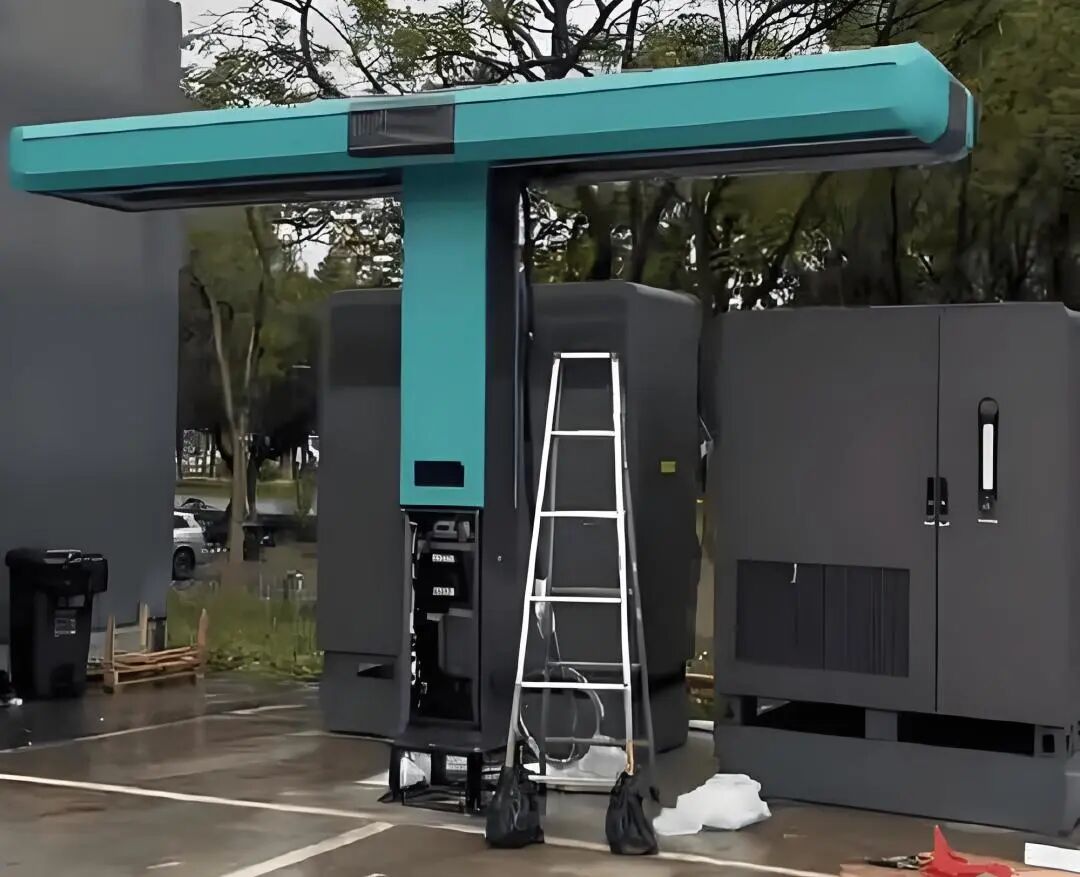
If the battery is the tomb - digger, then the super - charging pile is the root - cutter. Behind the head's words "charging is as easy as refueling" is actually a terrifying ecological crush.
According to public data, BYD sold a total of 4.6 million vehicles in 2025. Among them, 1.05 million were sold overseas and 3.55 million were sold domestically, which is approximately equal to the sum of Geely, Leapmotor, NIO, XPeng, Li Auto, Xiaomi, and AITO. This huge volume has formed a crushing advantage, which is more obvious from the users' perception.
Then, imagine that if a large number of BYD users can drive their cars and enjoy the pleasure of a 5 - minute quick charge and drive away, while you have to wait in line for charging and get stuck at the service area. This contrast of "others have it, I don't" is enough to crush all brand loyalty.
Moreover, this time BYD is not building super - charging stations from scratch. Instead, it is cooperating with existing charging stations for transformation to speed up the promotion. According to the head of BYD, as long as four car owners who have purchased the second - generation Blade Battery jointly apply and pass BYD's review, a super - charging pile will be built in your local area within a week.
The fans and audiences of various brands and the entire public opinion field will force car companies to follow up.
Here comes the problem. If a car company chooses to join this system, it will play right into BYD's hands. This is a snowball - like encroachment. The larger and healthier the ecosystem, the stronger the siphon effect will be, and more car companies will be incorporated into BYD's system, ultimately binding the entire industry completely.
This, in turn, gives BYD the confidence to promote and build super - charging stations and further expand the ecological scale.
If a car company chooses not to join and build its own ecosystem, let alone whether any car companies or capital are willing to make such a long - term and uncertain investment. Even if it succeeds, it will be difficult to compete with BYD in terms of scale, not to mention BYD's advantages in the entire industrial chain mentioned above.
The final result of a small ecosystem is to be annexed by a larger one and eventually become a stepping - stone for others.
C.
To be honest, the entire Zhentan editorial department is a firm supporter of pure - electric vehicles and is not very interested in DM6.0. However, we have to admit that under the current circumstances, hybrid and range - extended technologies do conform to the mainstream consumption habits of the Chinese market.
DM6.0 reduces the fuel consumption per 100 kilometers under power - deficit conditions to less than 2L. This is not just about pursuing a marginal improvement but a real benefit for the public. Especially in the current situation of extremely tense international geopolitics, the significance of this should be magnified.
This is also what the Zhentan editorial department appreciates most about BYD. Its focus is not only on the middle - class and wealthy people, shouting about design, quality, brand added value, cutting - edge intelligent driving, and human - vehicle interaction. Instead, it pays attention to the silent majority who are voiceless on the Internet, have limited purchasing power, and value cost - effectiveness highly.
In turn, these people are the foundation for BYD to build such a huge ecosystem.
Behind the three technologies of battery, super - charging, and DM6.0, there is always an invisible thread connecting them, which is also the underlying logic for BYD to choose its technological route - to promote scale growth with extreme cost - effectiveness and finally achieve a qualitative change from a quantitative one.
Therefore, BYD is changing the competition track with other new - energy vehicle brands in an open and above - board way. With its entire industrial chain, full self - research and development, huge scale, flawless system, and terrifying siphon effect, it is pushing forward in the market. Ultimately, it forces all players to participate in the rules it has set.
Does BYD have flaws? Yes, and there are too many.
According to a colleague in the editorial department, who is the owner of a 2021 Qin Plus, the car has extremely poor driving experience, comfort, and texture. It also back - stabs old car owners by cutting prices and is ridiculed as a taxi due to its lack of taste and personality. It's really "countless".
But it was once sold for as low as 60,000 yuan. What more could you ask for?
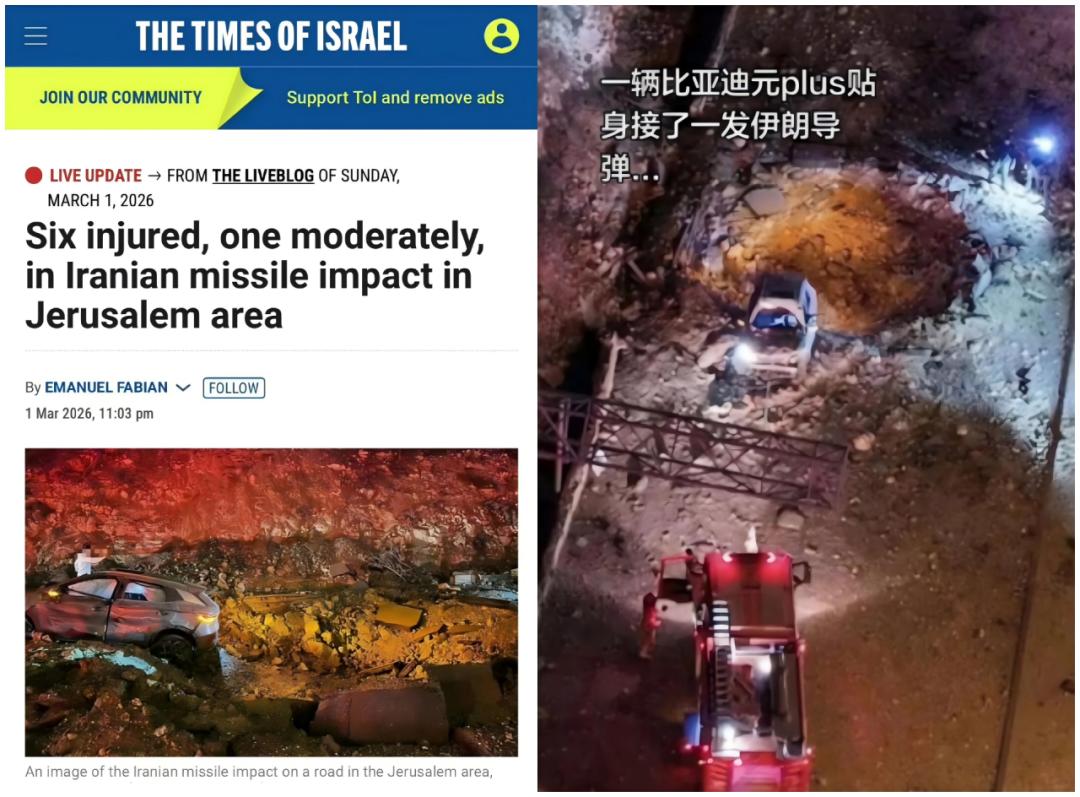
Coincidentally, in the most popular Middle - East battlefield these days, the most hardcore advertisement on the Internet was born: a BYD Yuan Plus took a direct hit from an Iranian missile. The front of the car was severely damaged, the windshield was completely shattered, and the airbags were deployed. Miraculously, the battery did not catch fire, the cockpit structure did not deform, and even the headlights were still on. The six people in the car only suffered minor injuries and all survived.
And this is just a car that sells for less than 150,000 yuan in China.
It is products like the Qin and Yuan that have enabled BYD to complete the century - long history of the automotive industry in just 20 years. It became the world's top - selling new - energy vehicle manufacturer in 2015 and the tenth - largest global car - selling manufacturer in 2023.
BYD has a typical and powerful industrial aesthetics. When it has a high enough production capacity and a large enough market, it is bound to become the leader in the industry and even the world, rewriting and reconstructing the game rules.
This article is from the WeChat official account "Zhentan STI", author: Yue Qing. Republished by 36Kr with permission.