Chinesischer kommerzieller Weltraumsektor: Der "Schlüsselmann" und das goldene Jahrzehnt
At the beginning of 2026, the industry experienced its first major hype: the commercial space business.
Politically speaking, the National Space Agency established the "Department for Commercial Space Business" in November 2025. In December 2025, the Zhuque - 3 successfully reached orbit, the Shanghai Stock Exchange issued the "Guideline No. 9", and on the secondary market, a wave of successive price increases broke out. In January 2026, five unicorns accelerated towards their stock market listings, and several historical records were broken.
The full development of political opportunities, technological breakthroughs, market demands, and capital conditions has taken China ten years in the commercial space business to reach this point.
Since its start in 2015, China's commercial space business has completed a journey from non - existence to existence, from weakness to strength. In these ten years, there have been technological breakthroughs in the commercial space business, the networks of near - orbit constellations have developed rapidly, there has been a "turning point" in the technology of reusable rockets, a global satellite communication network has been built, and the cooperation between production and investment has formed a force.
This was also a decade in which many heroes emerged. In these ten years, "key figures" such as Zhang Changwu from LandSpace and Wang Yang from Space - Time Constellation were engaged with dreams and dedication. They not only defined the race in the private space business but also built a cooperative ecosystem of "Rocket - Satellite - Application" and promoted the industrial process of China's commercial space business from single - point optimization to holistic integration.
This was the "Golden Decade" of China's commercial space business.
Ten Years of Breakthrough: From the Political Ice Cap to the Commercial Race
Everything started with a document from 2015.
In October 2015, the "Long - Term Development Plan for Civil Space Infrastructure (2015 - 2025)" by the National Development and Reform Commission, the Ministry of Finance, and the National Defense and Industrial Technology Administration explicitly called for the "participation of private forces", which officially gave the starting signal for China's commercial space business.
This was the first year of China's commercial space business, but to be honest, it was also a year in which China's commercial space business lagged behind.
As early as the 1990s, foreign communication giants began researching and developing the commercial satellite communication sector. After the establishment of SpaceX in 2002, the company continued its efforts in this area and launched the Starlink service in 2014 to provide commercial satellite - Internet broadband services worldwide.
In December 2015, when China's commercial space business was just breaking through the political ice cap, SpaceX's Falcon 9 had already successfully recovered an orbital rocket, which was a historical achievement for the global commercial space business.
Waiting is not a solution; only by taking action is there hope.
From 2014 to 2020, a large number of Chinese private space companies were established. A multitude of entrepreneurs such as OkeanTech, LandSpace, OneSpace, iSpace, and Space - Time Constellation rushed into the "uncharted territories". Some built rockets, some founded satellite constellations, some erected factories, some built systems...
Among them, there were both long - term aerospace engineers and continuous entrepreneurs who had switched from the state - owned institutions to the market economy. There were also cross - border leaders with rich backgrounds and industry experts who focused on specific niche markets.
Thanks to their efforts, China's commercial space business quickly got through the technical validation phase in the early development period.
In April 2020, the National Development and Reform Commission for the first time included satellite Internet in the category of "new infrastructure". The market experienced a rapid upswing, and the number of newly established companies reached a peak this year.
Meanwhile, as the technology became increasingly mature, the frequency of rocket launches in China increased significantly. Regular launches by private companies became possible. Niche projects such as the China National Space Network, the Qianfan Constellation, and the Space - Time Constellation began intensive networking.
In satellite manufacturing, the production cost decreased, and modular construction became widespread. The Space - Time Constellation introduced the design of the automotive industry in its satellite super - factory in Taizhou and reduced the manufacturing cycle of a satellite to only 28 days.
In the lower part of the value - added chain, there was even a small upsurge. Direct satellite communication for mobile phones was commercially used, the vehicle - infrastructure coordination system introduced high - precision positioning, and sectors such as finance, agriculture, and emergency management used remote sensing data. Even the 2023 Hangzhou Olympics and the 2025 Harbin Asian Winter Games used satellite services.
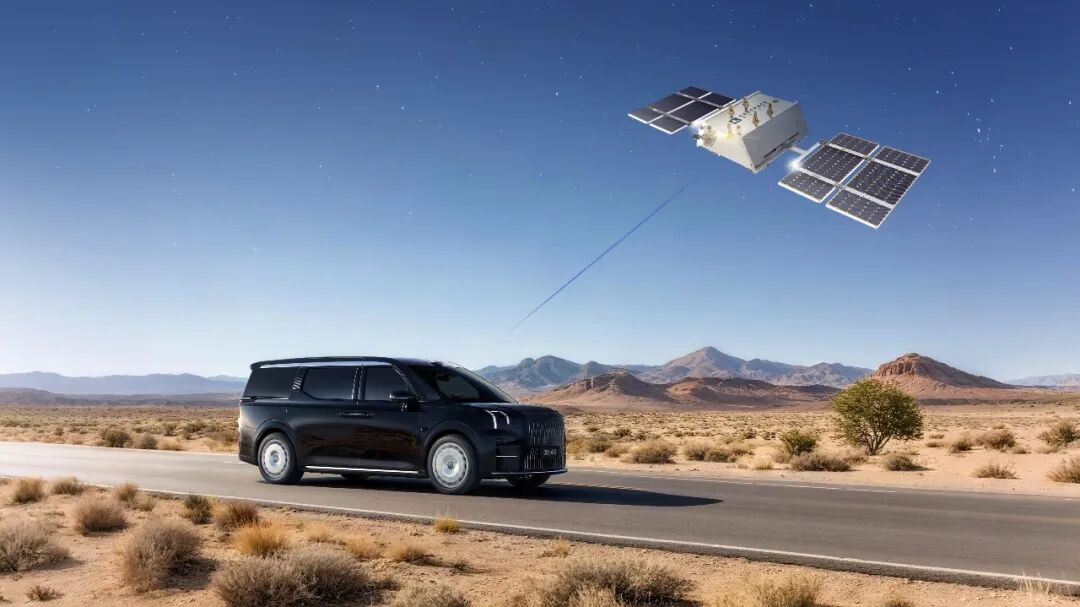
The Space - Time Constellation strengthens connected vehicles
Ten years ago, there were less than 10 Chinese commercial space companies. Today, this number has risen to over 600.
According to data from Huaxi Securities, the market volume of China's commercial space business increased from about 3.8 trillion yuan in 2015 to 23 trillion yuan in 2024, which corresponds to an average annual growth of 22%. If the growth continues at 25%, the market volume will reach 100 trillion yuan in 2030.
This is our real "starry sky".
Key Paths, "Key Figures"
In the ten years when China's commercial space business shifted from the political ice cap to the industrial race, it was not only the macro - economic policies but also a group of "key figures" who had the patience, clarity, and courage to trust in long - term values that shaped the industry.
Most of them came from state - owned research institutions but decided to jump into the deep waters of the market economy. They were facing a risky, long - term, and capital - intensive sector, but they blazed the trail from 0 to 1 in different ways.
Zhang Changwu, the founder of LandSpace, and Wang Yang, the founder of Space - Time Constellation, respectively represent the different survival logics of the two core directions of China's commercial space business: carrier rockets and the operation of near - orbit constellations.
First, about the "rockets into space".
In 2015, Zhang Changwu left the financial industry and founded LandSpace.
However, an early commercial decision of LandSpace seemed particularly "unusual".

Zhang Changwu, founder of LandSpace. Image source: Official website of LandSpace
At that time, China's commercial space business was just in its infancy, and most companies chose the path of solid - fuel rockets, which offered a low technical threshold, a short development period, and a quick return on capital. But Zhang Changwu emphasized liquid - fuel rockets with liquid oxygen - methane propellant from the beginning and started the corresponding development. At that time, there was no example of a successful liquid oxygen - methane - fueled rocket in the world. The technical path was complex, the costs of ground tests were high, and the error rate was extremely high.
This was a more difficult path but a sector with higher barriers. The reusability, low cost, and environmental friendliness of liquid oxygen - methane - fueled liquid rockets make them more suitable for frequent rocket launches.
In July 2023, the "Zhuque - 2" rocket successfully reached orbit and became the world's first liquid oxygen - methane - fueled rocket to reach orbit. This milestone not only confirmed the feasibility of the technical path but also proved to the market that Chinese companies are capable of mastering the most difficult aspects of spaceflight.
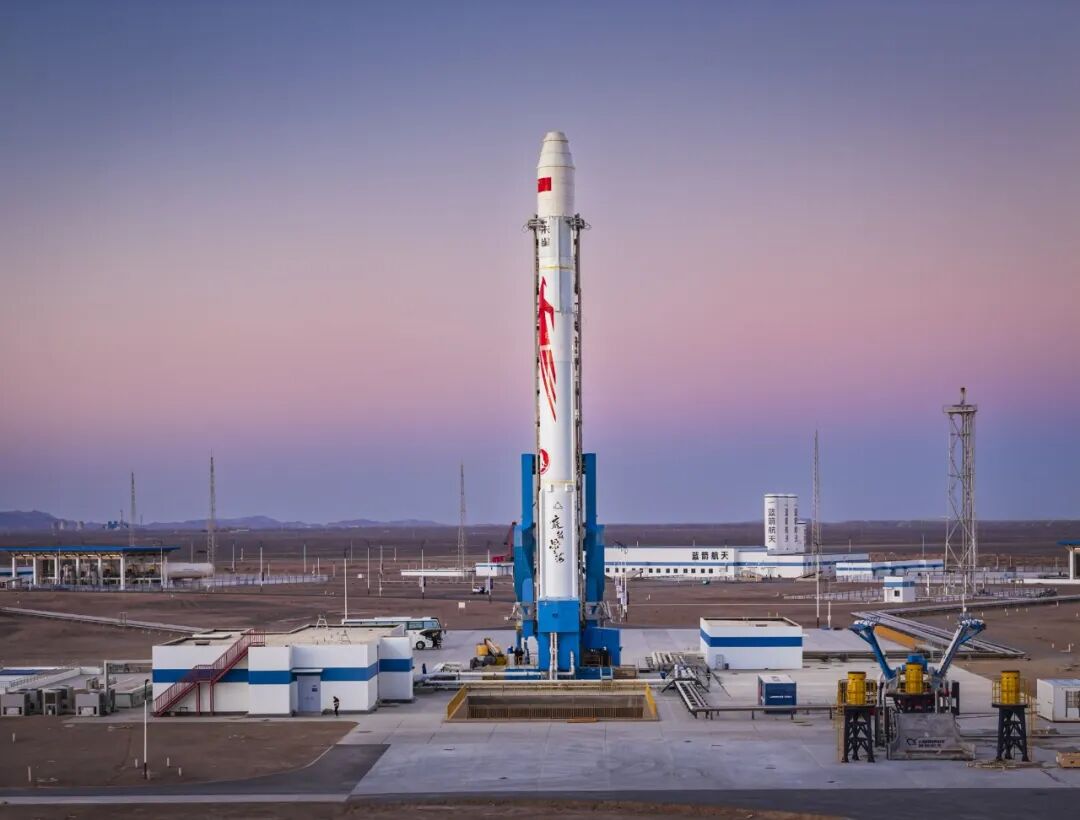
Zhuque - 2, Flight 3. Image source: Official website of LandSpace
More importantly, LandSpace did not stop at the "ability to fly". Around the liquid carrier rockets, LandSpace has built a complete value - added chain of development, production, testing, and launch. It has achieved several technical breakthroughs in areas such as liquid oxygen - methane engines and is transforming from a technical executor to a co - creator of the industry.
Zhang Changwu is taking an "extreme technological" march: his goal is not only a single success but the ability to conduct frequent and reliable regular launches.
After talking about the "rockets into space", let's talk about the "satellites on Earth".
In contrast to Zhang Changwu, Wang Yang, the founder of Space - Time Constellation, is fighting not only above the atmosphere but also in orbit and on Earth - in the near - orbit constellation of the satellite Internet of Things.
Zhang Changwu is a typical representative of cross - border players with a complex background, while Wang Yang has long been active within the space system and has a typical career path of state - owned space experts.
Previously, Wang Yang was involved in important national space projects at the Shanghai Engineering Center for Microsatellites of the Chinese Academy of Sciences. He was deeply involved in the overall construction and system integration of various satellite platforms such as remote sensing and communication and thus accumulated comprehensive experience in space technology.
As an engineer who had been active in technology and the industry for many years, Wang Yang recognized the structural opportunities created by the maturity of microsatellite technology, the decreasing costs, and the expansion of application scenarios even before the official political ice cap was broken.
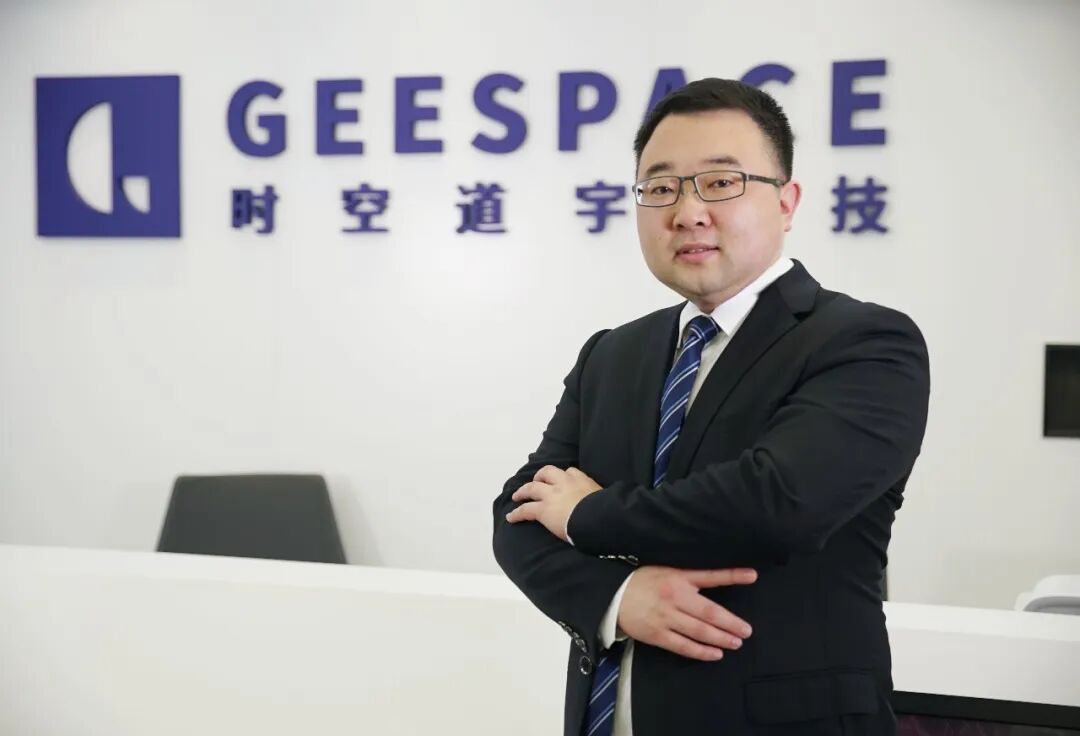
Wang Yang, CEO of Space - Time Constellation
In 2014, thanks to the flexible mechanisms of his institution that allowed him to retain his position and take a temporary leave, Wang Yang founded OkeanTech, one of the first Chinese commercial satellite companies. At that time, there were two voices around Wang Yang. One voice regarded it as "doing business", while the other voice believed that the business model might accelerate technological maturity and project execution efficiency.
OkeanTech focused on the production of whole microsatellites in the near - orbit constellation and confirmed the feasibility of the market - economic path. The "Jiading - 1" satellite was successfully launched into orbit by the Long March 2D in 2018 and became the first commercial communication satellite developed and successfully launched into orbit by a private Chinese company.
However, the delivery of a single satellite was only the beginning. Wang Yang gradually realized that the goal of the commercial space business is not only to "send satellites into space" but to "make satellite technology useful for people".
"Each generation of space experts has its own mission." Wang Yang has said this more than once.
In 2018, Wang Yang founded Space - Time Constellation and turned his attention to the more comprehensive path of the near - orbit constellation of the satellite Internet of Things. This time, he was not only a satellite developer but also a system architect, a manufacturing revolutionary, and a global service promoter.
In 2019, the construction plan of the Space - Time Constellation was officially launched, and it planned a global near - orbit communication network. In 2021, Space - Time Constellation built the satellite super - factory in Taizhou. It introduced the concept of flexible production lines in the automotive industry into satellite manufacturing and reduced the traditional manufacturing cycle from months or even years to only 28 days. On June 2, 2022, the first nine satellites of the Space - Time Constellation were successfully launched and reached orbit, which set a new record for Chinese commercial companies.
During this time, Wang Yang simultaneously built an operational ecosystem for the...