Aufdeckung des Datenbank-Rennfahrers mit Milliardenwert: ByteDance, Alibaba, Tencent, Microsoft und Tesla nutzen ihn alle.
Driven by the AI wave, an open - source database startup has increased its value by 2.5 times in seven months and now reaches $15 billion (about 104.5 billion yuan).
According to a report by Zhidx on February 5, 2026, the American open - source database startup ClickHouse officially received a new round of financing worth $400 million (about 2.79 billion yuan) at the beginning of 2026, which has pushed its value to over 10 billion yuan.
In the field of AI data analysis, ClickHouse is regarded as a strong competitor to two industry giants:
On the one hand, it is Databricks, which NVIDIA has repeatedly invested in; on the other hand, it is Snowflake, founded by experienced professionals from Oracle. ClickHouse, officially founded in 2021, has completed four rounds of financing so far, and the cumulative financing amount has exceeded $1.05 billion (about 7.31 billion yuan).
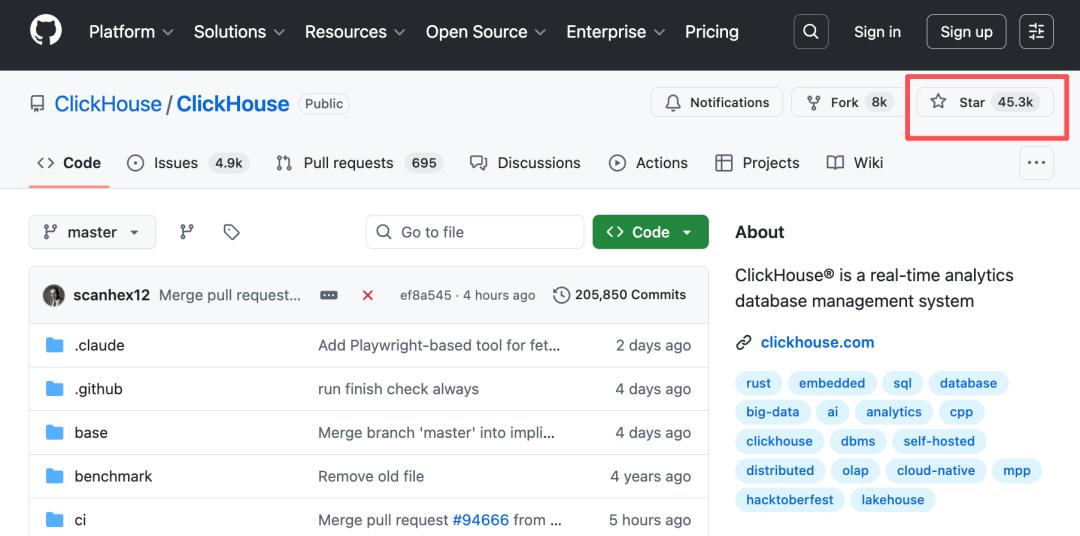
This startup has not only won the favor of the capital market but also achieved remarkable results in the open - source ecosystem. The open - source database project of ClickHouse has already reached 45,290 stars on GitHub and has won numerous well - known customers worldwide thanks to its strong performance. Its customers include ByteDance, Tencent, Alibaba, Meta, Microsoft, Tesla, Sony and other well - known companies at home and abroad. In addition, executives from OpenAI and Anthropic have praised ClickHouse for the release of GPT - 4o and Claude 4.
Data released by ClickHouse shows that compared with the currently popular Snowflake, the cost of ClickHouse is only a quarter of that of Snowflake, the query speed is 3 to 5 times faster, and the compression rate is 38% higher.
The story of ClickHouse dates back to the Russian internet giant Yandex, founded 28 years ago. Its founder Alexey Milovidov launched an experimental project within Yandex in 2009 and applied this database to Yandex's internal Metrica web - analytics platform in 2012.
In 2021, Milovidov, former Salesforce executive Aaron Katz, and former Google vice - president of technology Yury Izrailevsky officially separated ClickHouse from Yandex.
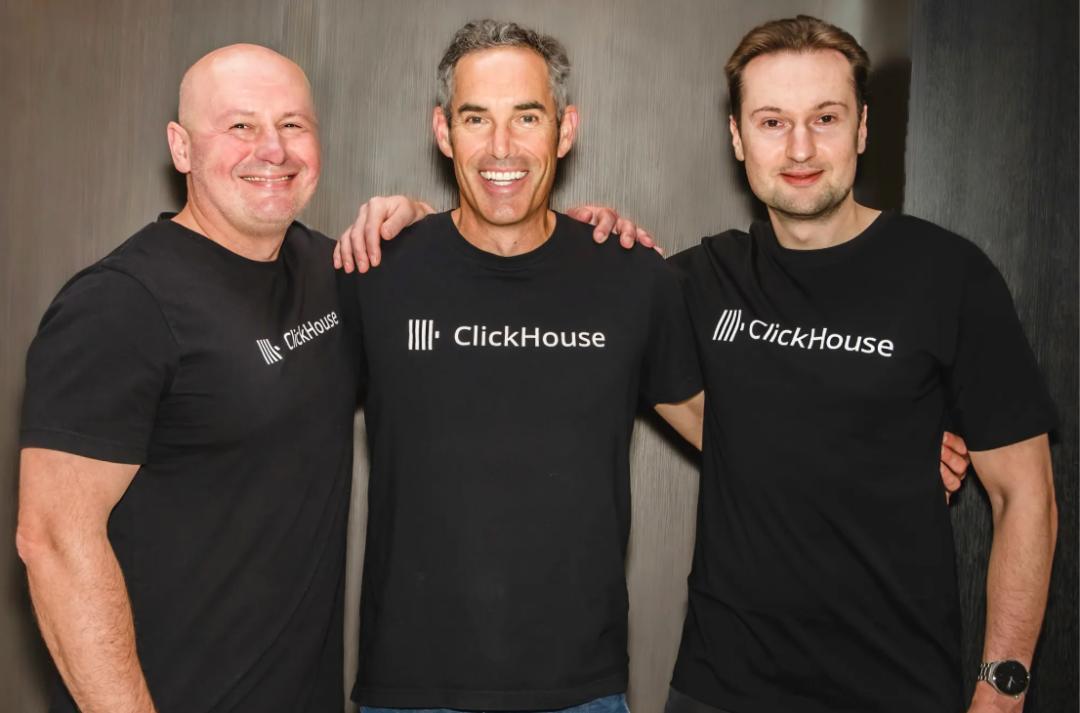
▲ From left to right: Yury Izrailevsky, Aaron Katz, Alexey Milovidov
Interestingly, Dragoneer, the lead investor in ClickHouse's latest financing round, has previously invested in ClickHouse's competitors such as Datadog, Snowflake, and Databricks. Christian Jensen, co - head of private - equity investments at Dragoneer, said after comparing different products that ClickHouse currently has the best "real - time analysis" ability.
What makes this open - source database startup, which has received a lot of financing and won numerous large customers worldwide in just four years, so special? We try to find the answer to this question by analyzing ClickHouse's business system and architecture.
01 7 billion yuan in financing in four years, ARR increase of over 250%
The founding of the open - source database ClickHouse dates back to 2009.
Alexey Milovidov, the founder and CTO of ClickHouse, joined the largest Russian search engine company Yandex in 2008 and, together with his team, launched an experimental project in 2009 to generate real - time analysis reports from non - aggregated data. This was the origin of ClickHouse.
In 2012, this database was officially introduced, but originally it was only used for Yandex's internal Metrica web - analytics platform, which was the second - largest web - analytics platform in the world at that time.
ClickHouse became open - source in 2016 and started independent operation in 2021. Currently, Milovidov works as CTO, Katz as CEO, and Izrailevsky as president of product management at ClickHouse.
The special feature of this database is its ability to extremely efficiently ingest and store hundreds of petabytes of data in the database and query this data for various analysis applications, with query results obtainable in milliseconds. Since its founding, ClickHouse has received a lot of financing and won large customers.
In the year it became an independent company, this startup announced that it had received a total of $300 million (about 2.1 billion yuan) in financing in two consecutive rounds, and its value rose to $2 billion (about 13.9 billion yuan), making it a unicorn. In August 2021, ClickHouse announced that it had received $50 million (about 350 million yuan) in the Series A financing round, and two months later, it completed a new round of financing worth $250 million (about 1.7 billion yuan), in which well - known venture capitalists such as Benchmark and the Russian search engine giant Yandex participated.
Since June 2025, the company has received two large - scale financings in half a year, in which well - known investment companies worldwide such as Dragoneer and BVP participated. At its first OpenHouse user conference in June 2025, it announced that it had received $350 million (about 2.4 billion yuan) in the Series C financing round, and on January 17 this year, it announced a new round of financing worth $400 million (about 2.8 billion yuan). Today, ClickHouse has reached a value of $15 billion (about 104.5 billion yuan).
The startup has also made rapid progress in commercialization. Its business model is to earn money by selling managed cloud services. Katz revealed that the company's annual revenue currently amounts to several hundred million US dollars and that the annual recurring revenue (ARR) in 2025 increased by over 250% compared to the previous year.
02 260 times faster than MySQL, query response in milliseconds
Strong product performance is the foundation of ClickHouse.
Generally, OLAP and OLTP are the two core architectures for data processing in the database industry, developed for different business scenarios. For example, the established database MySQL is an OLTP database, while ClickHouse is an OLAP database.
The difference between the two is that OLTP uses row - based storage to meet the needs of high - frequency transactions, while OLAP uses column - based storage to enable efficient data analysis. Today, the ability of real - time query analysis, which can help companies make real - time decisions and reduce costs, has almost become a must for databases. Therefore, OLAP databases currently have greater application potential.
Previously, processing data with a traditional OLTP database with row - based storage might have taken minutes or even hours to get a response, while an OLAP database can get the response in milliseconds. According to a report by the analysis company Marko Medojevic, the query speed of ClickHouse when analyzing a dataset with 11 million records is about 260 times faster than that of the OLTP database MySQL. This also reflects the advantages of OLAP databases to some extent.
Specifically, ClickHouse is an open - source OLAP database with column - based storage, with functions similar to those of Google Analytics. Its goal is to quickly execute analysis queries while processing billions of rows and petabytes of data.
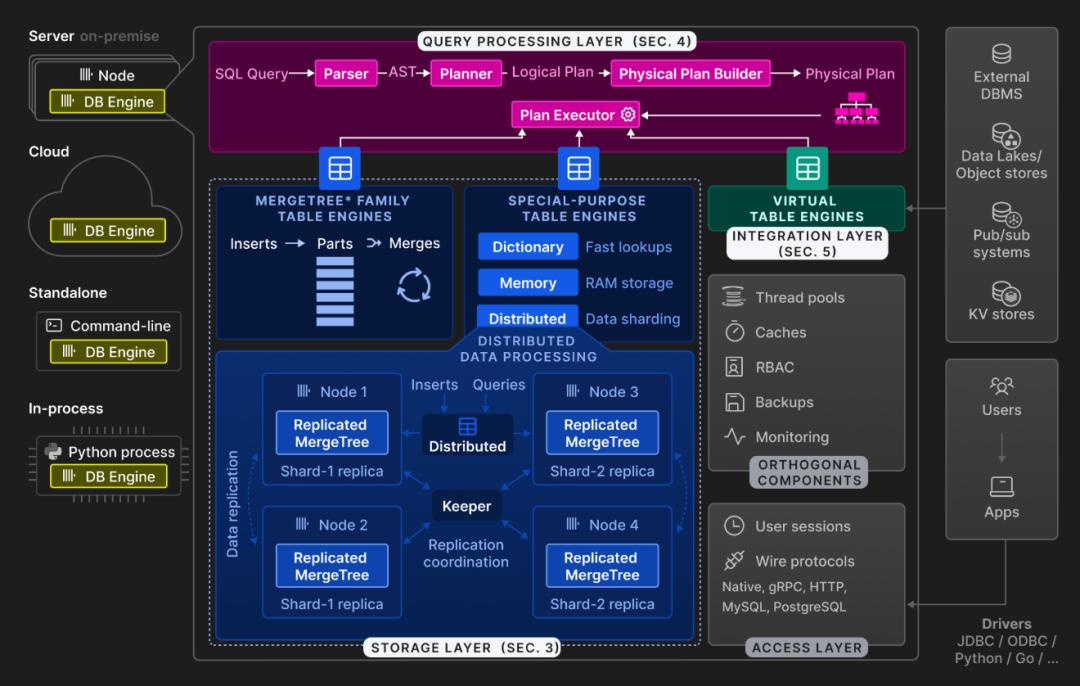
▲ The overall architecture of the ClickHouse database engine
ClickHouse has compared various common databases on its official website. The comparison with the AI data - analysis platform Snowflake shows that the cost of ClickHouse is only a quarter of that of Snowflake, but the query speed is 3 to 5 times higher.
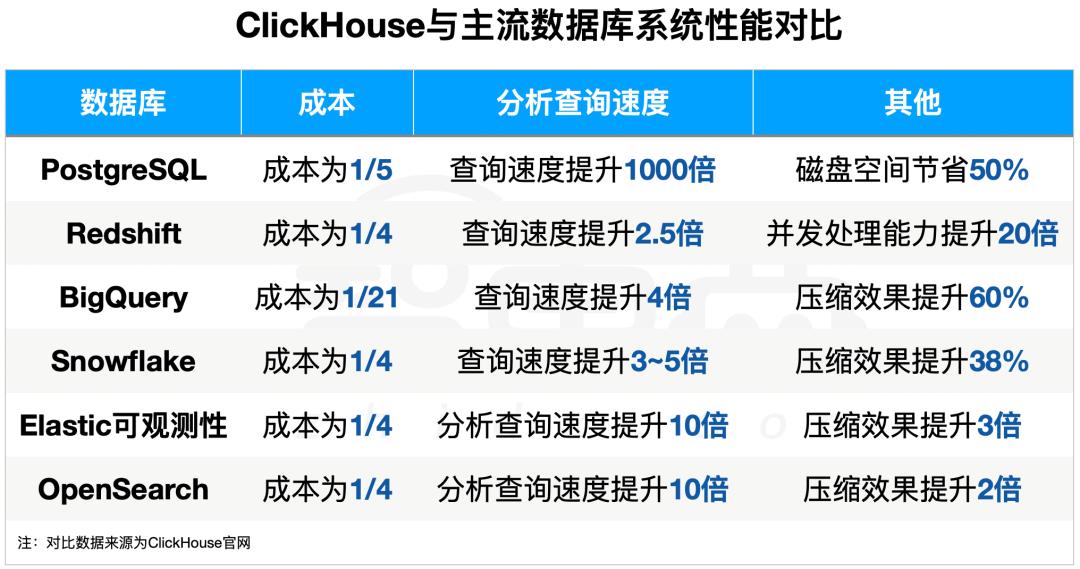
▲ Comparison of ClickHouse's performance with common database systems (Data source: ClickHouse official website, graphic by Zhidx)
For the corporate business system, the database must enable efficient integration and processing of large - scale and multi - source data, as well as real - time and complex analysis and decision - making support. Given the many challenges in this process, the key features of ClickHouse can effectively improve the comprehensive processing ability of the database.
For example, the database supports a high ingestion rate, is suitable for high - concurrency and low - latency query scenarios, and is highly open to support different database storage systems, storage locations, and formats. It is equipped with an easy - to - use query language that also supports performance analysis and can be flexibly operated on various hardware devices from old laptops to high - performance servers.
These are the key pain points of modern analytical data management systems, and ClickHouse is a database that supports multiple database storage engines. It can import almost any data source into the ClickHouse database and supports fast and flexible drill - down analysis. In addition, Katz revealed in the first financing round that the core difference of ClickHouse also lies in the fact that most open - source database tools are based on Java, while ClickHouse is written in C++ and can therefore process large amounts of data faster.
03 Top - customer list and key support behind GPT - 4o and Claude 4
Although the open - source project itself is free, ClickHouse has built a huge business empire on this basis and has over 3,000 customers worldwide through the fully managed service ClickHouse Cloud.
The customer list announced by this startup is impressive and includes technology giants at home and abroad as well as top startups in vertical markets. These include Chinese internet giants such as ByteDance, Alibaba, and Tencent, Chinese automobile manufacturers such as Changan Automobile, foreign top companies such as Microsoft, Tesla, Meta, Sony, and Netflix, as well as top startups in the field of AI such as OpenAI, Anthropic, Cursor, and Character.ai.
In the field of data processing, both Tencent and ByteDance have developed their own products based on this open - source database.
Tencent Cloud has built the Tencent Cloud Data Warehouse TCHouse - C based on ClickHouse, which can help companies quickly set up a PB - scale real - time data warehouse in a few minutes. ByteDance's research team has developed the ByteHouse technology based on the open - source database management system ClickHouse. Currently, WeChat uses ClickHouse to store log data because logs usually contain a large amount of repeated content. Using ClickHouse can achieve a high compression rate and reduce the storage space required for logs.
In the currently popular field of generative AI, ClickHouse has also become the core infrastructure behind Anthropic Claude 4 and OpenAI GPT - 4o.
Anthropic has developed a special version for offline - isolated environments based on the architecture of ClickHouse Cloud. From the control level to the data level, all core components are operated by Anthropic's internal team. Maruth Goyal, a technology development engineer at Anthropic, said that ClickHouse was indispensable in the development and release of Claude 4, for example, by providing the model with fast analysis ability and a flexible data - processing strategy.
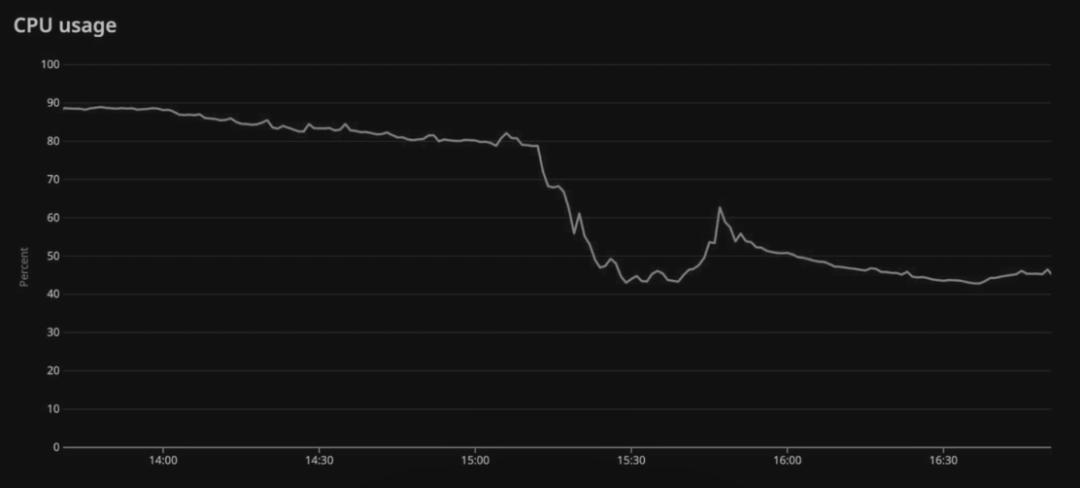
Akshay Nanavati, the project manager of OpenAI, said that in March 2025, when OpenAI officially released the image - generation function of GPT - 4o, OpenAI's servers were on the verge of collapse and the CPU usage of the system increased by 50%. The team quickly expanded the ClickHouse cluster and averted the crisis. The team only changed one line of code based on ClickHouse by replacing division with a combination of multiplication and bit operations, and the CPU usage of the system immediately dropped by 40%.
However, Katz revealed that ClickHouse is currently still operating at a loss and making forward - looking investments. On January 17, this...