The so - called "evil cultivators" like Landspace are going head - to - head with SpaceX
The Great Battle between China and the United States over Space Resources and Security.
The A-share market has completely exploded in recent days.
From December 17th to January 12th, the Shanghai Composite Index achieved a record 17 consecutive positive days. It wasn't until today that it finally saw a barely decent adjustment, leaving a group of experts and veteran stock investors looking at each other in bewilderment.
What triggered this capital frenzy is what everyone has been talking about recently - "commercial spaceflight." Since the end of November last year, among the 264 related companies in the A-share "commercial spaceflight" sector, and even those that only rode on the concept, basically all have doubled their stock prices. The corresponding index soared from 1,897 points to 3,118 points, a sharp increase of 64%. The trading volume in the secondary market even exceeded 8 trillion RMB!
All this madness started with an experiment in the northwestern Gobi Desert, but it ultimately landed at a crucial juncture in the battle between China and the United States for space resources and space security.
A
At 6 a.m. on December 3rd, 2025, in Jiuquan, Gansu Province.
The Dongfeng Space City, cold and sparsely populated, welcomed a large group of uninvited guests. These people all drove cars, carried mobile cameras, and wore thick down jackets. They were neither professional journalists nor relevant industry insiders, but investors and self-media bloggers from all over the country. They stood on the wasteland outside the space city, staring intently at the rocket in the launch site that was clearly a bit thicker.
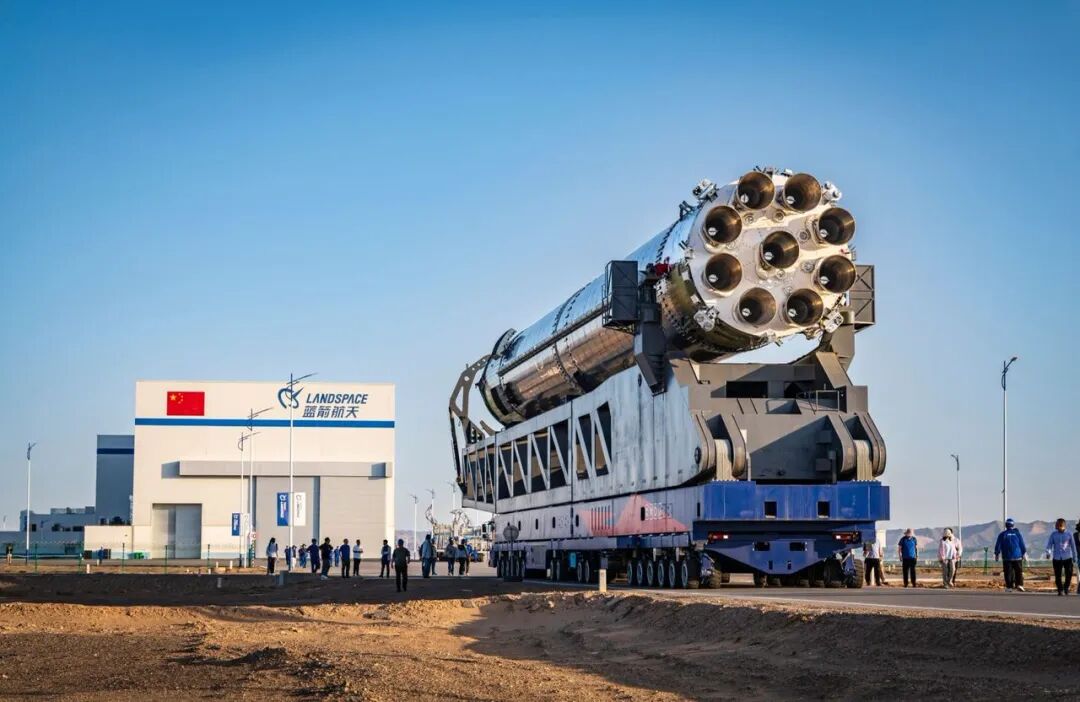
This was the "Zhuque-3," which had been postponed twice and finally made its appearance. This launch, originally in the scope of scientific research and verification, had been forcibly given new meaning. Along with it, Landspace, the company behind the "Zhuque-3," also stepped into the public eye for the first time.
There was no way around it. This was the first domestically launched rocket to conduct a vertical landing experiment. It was directly compared with the Falcon 9 under Elon Musk's SpaceX, which had successfully completed its maiden flight fifteen years ago and was now highly commercially mature.
In other words, this was an excellent opportunity to verify the technological gap between China and the United States in the field of reusable rockets.
At 11:52 a.m., the tail flame of the Zhuque-3 cut through the Gobi Desert, but ultimately, the unstable landing attitude caused the rocket to topple, announcing the failure of the experiment. However, the capital market didn't cool down because of the failure. The next day, related concept stocks all hit the daily limit, and funds poured in crazily.
B
The market speculates on expectations. The expectation that "commercial spaceflight" can gain momentum is that it is the only means for China and the United States to seize space resources and safeguard their fundamental interests.
One fact that must be emphasized is that, except for a very few satellites performing special tasks, satellites usually orbit the Earth in low Earth orbit along fixed routes. These low-orbit satellites are about 200 to 2,000 kilometers above the Earth's surface, and there are more than 12,000 of them, accounting for 80% of all satellites in space.
However, the resources in low Earth orbit are extremely limited, while the number of satellites and space debris is infinite. If you occupy more, others will inevitably occupy less. Moreover, there are currently no international laws and regulations regarding the allocation of orbital resources, so the principle of "first come, first served" has become the consensus among all countries.
But there is a serious situation. Currently, we have only about 1,000 satellites in total, including those in high, medium, and low orbits, accounting for 6% of the global total. In contrast, the United States has about 10,000 to 11,000 satellites, accounting for 68% of the global total, far leaving us behind.
Among these more than 10,000 satellites, as many as 9,200 were contributed by Elon Musk's SpaceX Starlink. Among low-orbit satellites, Starlink already accounts for 89.6% of the global total, becoming a notorious nuisance in low Earth orbit.
Especially in the past two years, as low Earth orbit has become more and more crowded, China's space station has been frequently harassed by Starlink satellites, seriously threatening the normal operation of the space station, mission plans, and the safety of astronauts. Strangely enough, Starlink often orders some satellites to change orbits under the pretext of providing services, just like a car changing lanes recklessly on the highway, showing a hooligan-like behavior.
So, it's needless to say what kind of people blindly praise Starlink.
However, a question arises: How can Elon Musk launch 9,200 satellites at once? Considering the revenue from Starlink services, can he afford such a huge cost?
C
Surprisingly, he can actually afford it. The key lies in rocket reusability.
Take our very mature Long March series of rockets as an example. According to public data, the average cost per kilogram of the Long March 3B carrier rocket in 2023 was 70,900 RMB, and the procurement price of the more affordable Long March 2D carrier rocket in 2022 was about 28,200 RMB per kilogram. This is the level we can reach with the support of our full industrial chain advantages.
However, when calculated under the condition of full reusability, the launch cost of the Falcon 9 is only between 14,000 and 18,000 RMB per kilogram. If the recovery of the booster is not considered, the cost will increase significantly but still be lower than the 28,200 RMB per kilogram of our Long March 2D.
What's more serious is that the Falcon 9 was launched a total of 165 times in 2025, and it is claimed that there will be more than 170 launches in 2026. In contrast, due to limited demand and other practical situations, our Long March series only carried out 69 launch missions in 2025.
As an industrial country with a full industrial chain, no one understands better than us the power of low cost and high frequency. This means that after the Falcon 9 gained the first-mover advantage, it is building an absolute price moat by continuously reducing costs. Once the scale accumulates to a certain extent, unless there is a disruptive technological breakthrough, it will monopolize this industry forever.
Introducing more commercial spaceflight companies, first expanding the scale, and then relying on their more cutting-edge and radical technological applications to achieve cost reduction and efficiency improvement is the best way for us to break the current situation.
D
Is the technical route of rocket recovery radical? Yes, it is very radical. In fact, Elon Musk and SpaceX even have a more radical and terrifying Starship series.
If we want to overtake on a curve, we have to be more radical than them. This is why Landspace and the Zhuque-3 have attracted so much attention.
First, they made a change in the rocket's material. The body of the Falcon 9 is made of aluminum-lithium alloy, which is already very inexpensive, costing about 280 RMB per kilogram. This material is strong enough, but its only drawback is that it is sensitive to temperature, and the thermal protection layer needs to be manually repaired after each recovery.
Do you know what material the Zhuque-3 uses to cut costs?
It's stainless steel!
Based on our current industrial capabilities and various stainless steel production capacities, just this one measure reduces the cost of the rocket body material to one-tenth of that of the Falcon 9, with a price of only 28 RMB per kilogram. Moreover, stainless steel is well-known for its high-temperature resistance, which can also significantly reduce the use of heat insulation layers and the labor cost of repairing them.
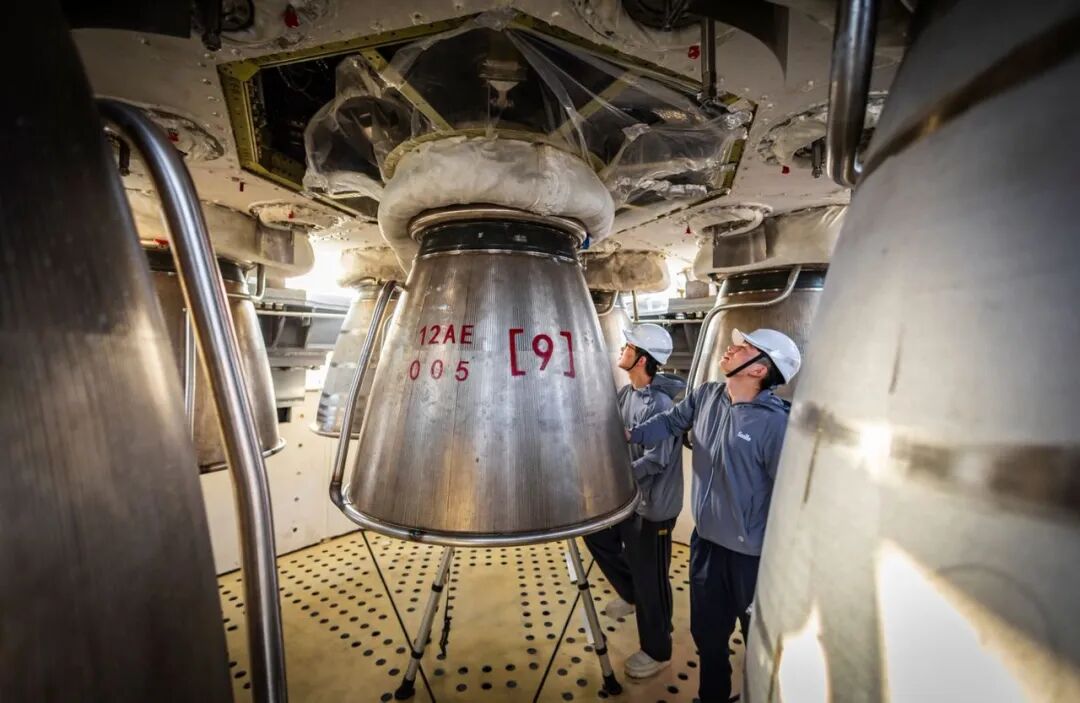
In terms of another major cost, the propellant, the Falcon 9 uses liquid oxygen and kerosene. The advantage is low cost, but the disadvantage is that kerosene combustion produces carbon deposits. After recovery, a large amount of time and manpower are needed to clean the engine, and the current turnaround time is about 7 to 14 days.
The Zhuque-3 chooses to use methane instead. Methane burns very cleanly and hardly produces any carbon deposits. This means that there is no need for large-scale cleaning inside the engine after recovery, and in theory, it can achieve "24-hour rapid reflight."
Moreover, China's bio-methane technology and production capacity are currently making rapid breakthroughs and expansions. In 2024, its market share accounted for about 24% of the global total, and it is expected that the production capacity share will increase to 35.5% by 2030. With the combination of these two factors, it is easier to reduce costs.
Finally, in terms of the number of rocket reuses, the Falcon 9 has currently achieved more than 10 and even up to 20 reuses of a single booster, and its cost has been spread to a very low level.
According to Landspace's calculations, after the Zhuque-3 is reused 5 times, the single launch cost will be reduced by about 45%. If it can reach the designed goal of 20 reuses, the Zhuque-3 will mainly incur costs for propellants and simple maintenance, ultimately reducing the launch cost per kilogram to about 10,000 RMB and completely achieving an overtaking.
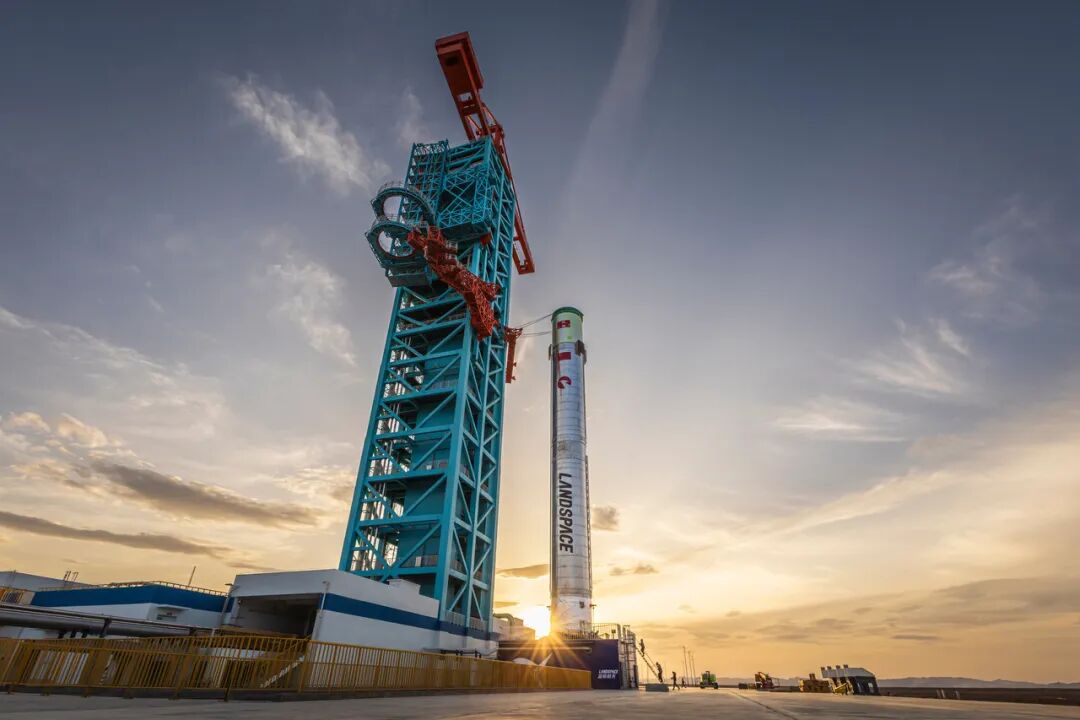
Landspace and the Zhuque-3 are just a typical example among many domestic commercial spaceflight companies. Others, such as the Lijian series of CAS Space, the Pallas series of GalaxySpace, and the SQX series of i-Space, are all intensively verifying or planning experiments on reusable rockets. 2026 will be a crucial year for recovery technology to move from testing to implementation.
Coincidentally, on January 11th, the official website of the International Telecommunication Union showed that within the last five days of 2025, we officially submitted an application to the ITU for frequency and orbital resources for an additional 203,000 satellites, covering 14 satellite constellations, including medium and low-orbit satellites. This is our largest international frequency and orbit application campaign to date.
Putting all this information together, it's clear that the first battle is the decisive one. The competition between China and the United States for space resources has entered a highly intense stage.
This article is from the WeChat official account "Needle Probe STI," written by Yue Qing and published by 36Kr with permission.