Im Jahr 2026, von diesen "Nachfolgern der Gründergeneration", wer wird sich erfolgreich durchsetzen und wer ist der unaufrichtige Lump?
The year 2025 has passed, and an encouraging and successful story has unfolded in the electric vehicle industry.
Leapmotor, Hongmeng Auto, XPeng, and Xiaomi Auto firmly established their positions in the first league of new automakers in 2025, forming a clear leading group in the competition.
In contrast, brands such as Shenlan, IM Motors, Avita, Voyah, and Zeekr, which originate from traditional automotive groups and are referred to as the so - called “Second - generation Pioneers,” despite having strong parent companies and abundant available resources, still remain in the second league and have not achieved outstanding results.
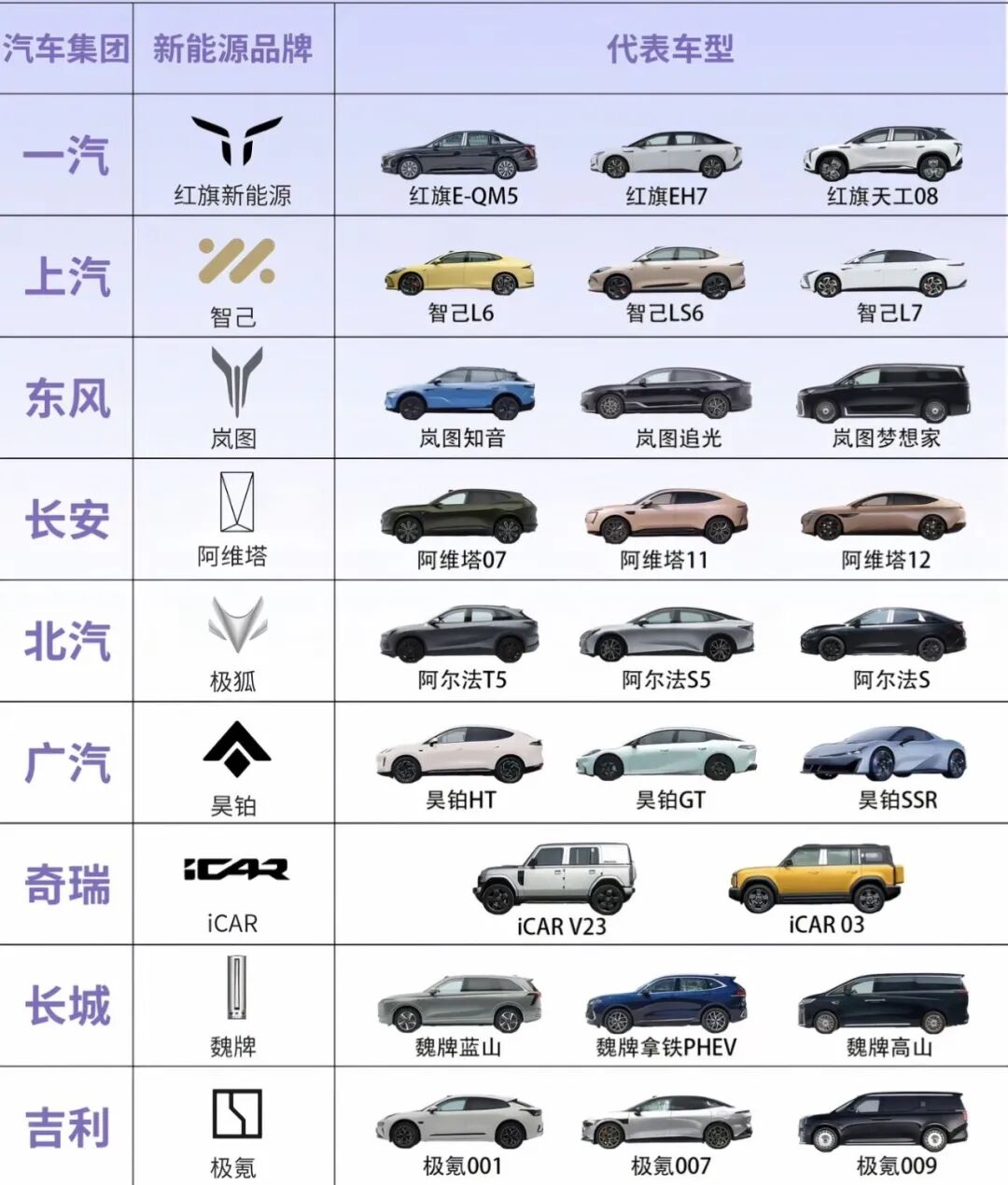
Picture/ Origin of parent companies and representative models of the “Second - generation Pioneers” / Screenshot from Internet and New Energy Outlook
In 2026, the electric vehicle market will enter a new phase with slower growth and more intense competition for the existing market share. In particular, BMW cut the prices of 31 models by up to 301,000 yuan at the beginning of the year, and Tesla offered low - interest financing offers for seven years and zero - interest offers for five years. The “price war” has begun again.
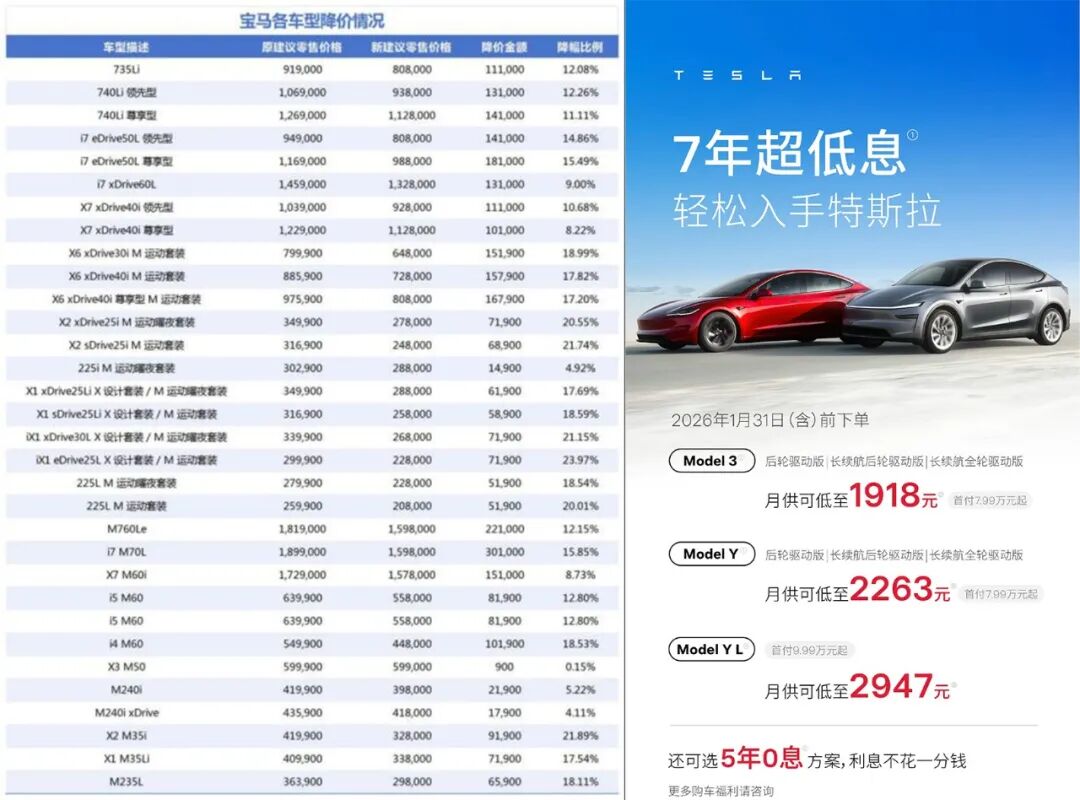
Picture/ Special offers from BMW and Tesla / Screenshot from Internet and New Energy Outlook
A more intense elimination round has begun, and even the automakers in the first league cannot sit back and relax.
However, for the “Second - generation Pioneers,” this could be a chance to reverse the story and tell a kind of “underdog's revenge story.” Who will manage to improve, and who will continue to lag behind?
Conclusion 2025: The “Weak Ones” in Sales Statistics
The electric vehicle market continued to grow overall in 2025, but the differentiation between brands became more obvious, and the effect of the leading group increased significantly. The annual sales data shows that the new automakers have shown a pattern of “the first league leads, and the second league has difficulty catching up.”
The data shows that in the whole year of 2025, the top three new automakers were Leapmotor, Hongmeng Auto, and XPeng, with sales volumes of 596,600, 589,100, and 429,400 vehicles respectively, representing an increase of 103%, 32%, and 126% respectively compared to the previous year.
They were followed by Xiaomi Auto (over 410,000 vehicles), Li Auto (406,300 vehicles), Shenlan (333,100 vehicles), and NIO (326,000 vehicles).
And Voyah, Avita, and IM Motors were the automakers that ranked at the bottom of the list of major new automakers in 2025, with annual sales volumes of 150,200, 128,800, and 81,000 vehicles respectively.
It is noteworthy that IM Motors, with annual sales of 81,000 vehicles, was the only company among the major new automakers whose sales volume was less than 100,000 vehicles, and the gap with the leading brands has widened to over 500,000 vehicles.
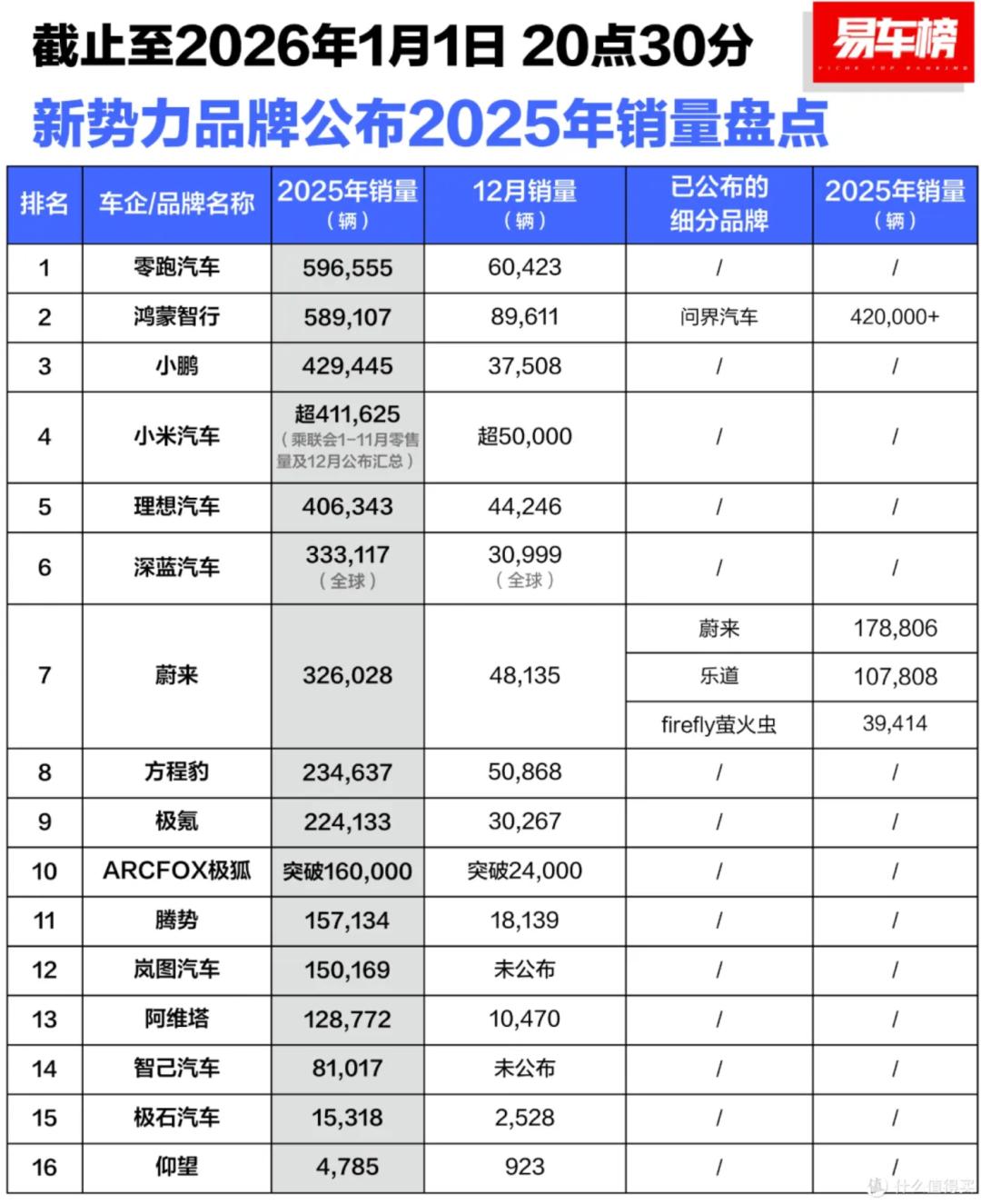
Picture/ Summary of the sales volumes of new automakers in 2025 / Screenshot from Yiche and New Energy Outlook
At the same time, from the distribution of the above sales data, it is easy to see that a rather obvious feature has emerged in the competitive pattern of new automakers in 2025: Most automakers in the first league are pure new automakers, while the brands in the second league, although falling into the category of new automakers, upon closer examination of their backgrounds, it can be found that most of them are “Second - generation Pioneers” brands of traditional automotive groups - that is, electric vehicle brands developed on the basis of the technology, capital, and supply - chain resources of traditional automakers.
Although the “Second - generation Pioneers” brands still have a considerable gap with the pure new automakers in the first league in terms of overall sales volume, they have shown remarkable growth in their own development in 2025.
Specifically, among the “Second - generation Pioneers” brands, Shenlan, Voyah, and IM Motors had an annual growth rate of over 30%, with Voyah Auto even recording an 87% increase.
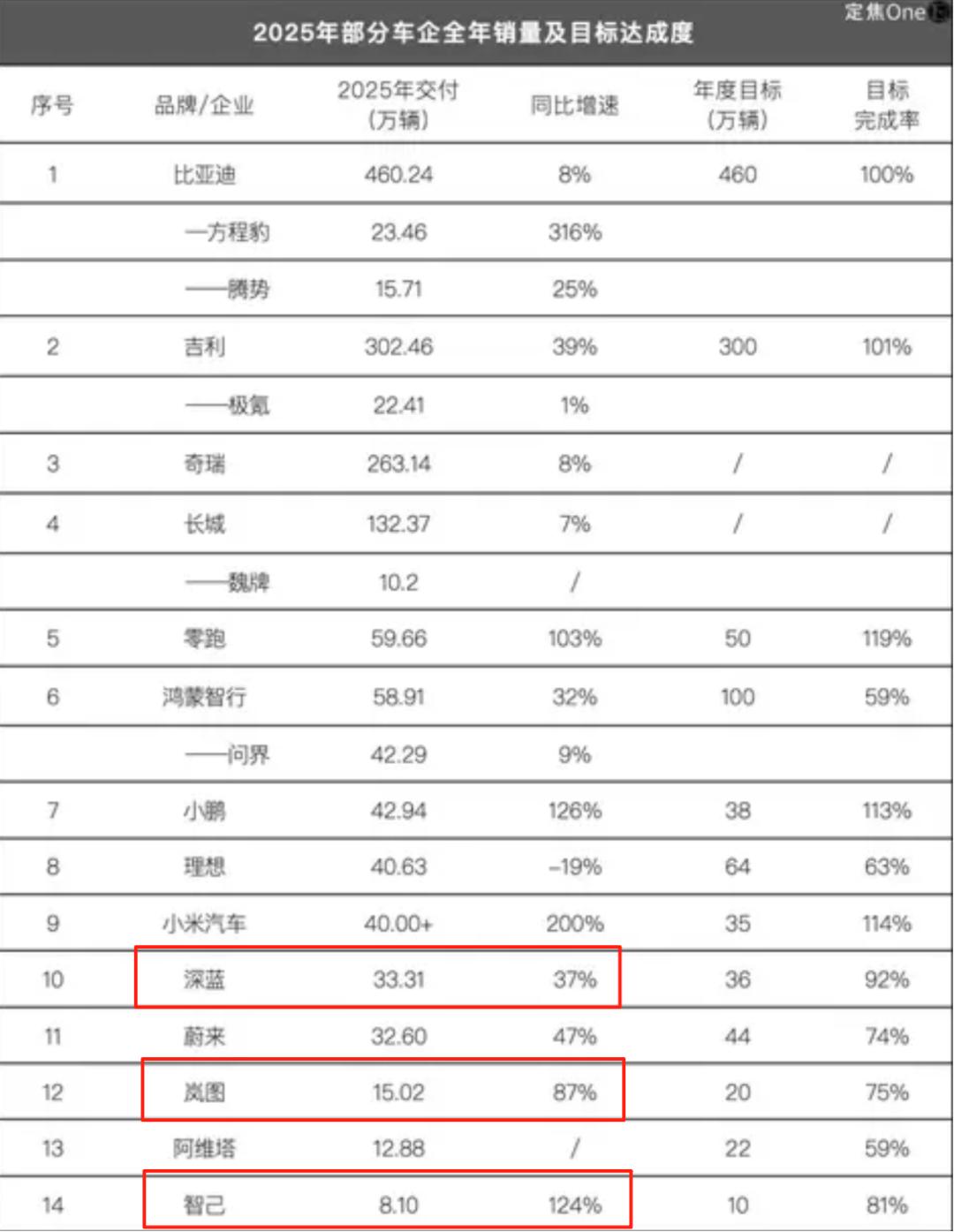
Picture/ Sales volumes and target achievement rates of some automakers in 2025 / Screenshot from Dingjiao One and New Energy Outlook
On November 10, 2025, Voyah Auto completed its 300,000th vehicle. Thus, Voyah has become the first premium electric vehicle company of state - owned and central government - owned enterprises to achieve this goal, and it has become one of the most active brands of Dongfeng Motor in 2025.
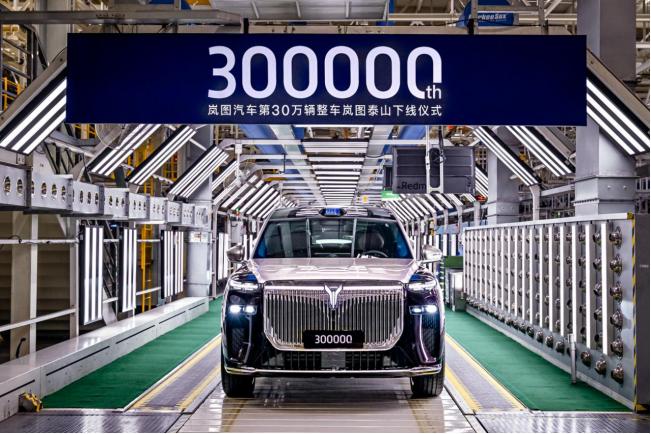
Picture/ Completion of the 300,000th vehicle of Voyah Auto / Screenshot from Internet and New Energy Outlook
The “Hope” in the Eyes of the “Parents”
Although there is a clear gap in sales volume and popularity compared to the first league, the “Second - generation Pioneers” are still the core hope for the transformation of their “parents” - the traditional automotive groups - into the electric vehicle industry.
Most obviously, brands such as Zeekr, which was once an independent brand of Geely and is now integrated back into the “unified Geely” concept, IM Motors, developed by SAIC, Avita, resulting from the cooperation between Changan and Huawei, and Voyah, strongly supported by Dongfeng Motor, all carry the important mission of penetrating the premium electric vehicle market and form a differentiated complement to the electric vehicles offered by their parent companies.
Precisely because they are entrusted with the tasks of transformation and penetration into the premium market, the traditional automotive groups provide these “Second - generation Pioneers” brands with everything they need. From technology and capital to sales channels, comprehensive and unconditional support is provided.
Technologically, Zeekr was initially equipped with the SEA architecture independently developed by Geely when it was launched as a representative of Geely's attempt to penetrate the premium electric vehicle market. Later, Geely invested 7 billion yuan in the development of the Haohan - M architecture, and the first product equipped with this architecture is the Zeekr MIX.
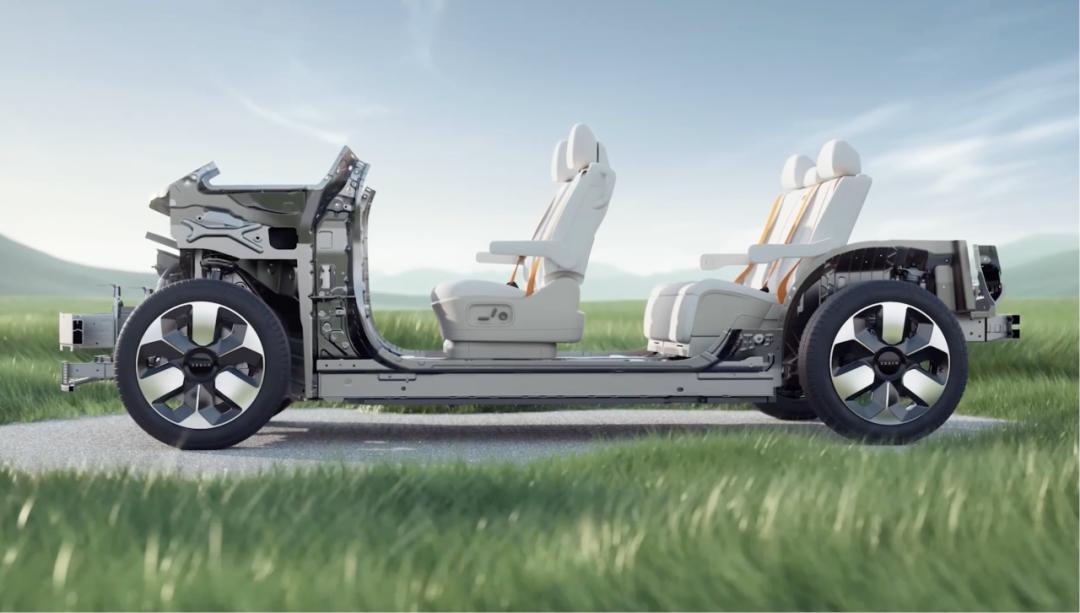
Picture/ Zeekr MIX with the Haohan - M architecture / Screenshot from the official website of Zeekr and New Energy Outlook
Avita has benefited from Huawei's assisted - driving technology and Changan's intelligent manufacturing technology from the start, making it the first choice for many “geek” consumers.
In addition to technology, the traditional groups are also generous in terms of capital and sales channels.
In August 2025, Dongfeng Motor Group Co., Ltd. announced that it would delist from the stock market through privatization and apply for the listing of Voyah's H - shares. In September 2025, the company registration of Voyah Auto was changed, and its capital was increased to 3.68 billion yuan. Thus, the plan for listing approval was accelerated.

Picture/ Increase of Voyah Auto's capital to 3.68 billion yuan / Screenshot from Qichacha and New Energy Outlook
Lu Fang, the chairman and CEO of Voyah Auto Technology Co., Ltd., previously publicly stated that the listing - approval plan shows Dongfeng Group's determination to promote the reform of state - owned enterprises. “Our company will contribute to Dongfeng Group achieving its transformation goals and development prospects with the best operating results.”
It is also thanks to the strong financial strength of their “parents” that the “Second - generation Pioneers” are able to build independent sales channels and at the same time achieve the rapid expansion of their branches to build a network of sales and service points across the country and reduce the time and capital costs for channel development.
This comprehensive resource support is also the core advantage of the “Second - generation Pioneers” over new automakers.
2026: Who will rise, and who will still be under pressure?
However, the growth of the electric vehicle industry has already slowed down, and the market has shifted from competition for growth to competition for the existing market share.
Zhang Yongwei, the chairman of the China Electric Vehicle 100 - Committee, predicts that the Chinese automotive market may only see a slight growth of about 2% in 2026, and the sales volume is estimated to be 28.2 million vehicles, far behind the annual growth rate of 9.7% in the first 11 months of 2025.
In this general background, among the “Second - generation Pioneers,” there is also differentiation due to factors such as financial strength, technological reserves, and product competitiveness. Some will rise, some will fall, and others will become insignificant.
Who will be the surprise success in 2026?
Voyah Auto, a premium electric vehicle company of state - owned and central government - owned enterprises, which has recorded a continuous increase in delivery volume for over 10 months and reached a production and sales scale of 300,000 vehicles for the first time in November 2025, is one. In 2026, Voyah will continue to launch new models based on its product portfolio in the three categories of SUVs, MPVs, and sedans. It is estimated that it will have 6 - 9 models by the end of 2026.

Picture/ Voyah Auto is expected to have 6 - 9 models by the end of 2026 / Screenshot from Internet and New Energy Outlook
In addition to stable growth on the product side, Voyah Auto will also enter the practical phase of listing approval on the Hong Kong Stock Exchange in 2026. With the support of capital, Voyah will naturally become even stronger.
Shenlan Auto can also withstand the competition. In 2025, Shenlan Auto delivered nearly 340,000 vehicles, and the achievement