Der Gründer gründete im Jahr 1997 und führte den Markt für industrielle Computertomographen an. Drei staatliche Kapitalgeber setzten mehrere Hundert Millionen Yuan ein.
For a long time, Chinese industrial CT technology has had to struggle with the difficult reality that international giants dominate most of the high - end market. Ultimately, the reason is that it is difficult for Chinese manufacturers to break through the high - end barriers.
In recent years, however, this seemingly insurmountable barrier seems to have been somewhat shaken.
In the field of lithium - ion batteries, due to the constantly increasing safety standards for traction batteries, traditional offline sampling inspections can no longer meet the increasingly strict quality control requirements. Therefore, the industry must shift from "sampling inspection" to "100% online full inspection".
How can one achieve a perfect balance between the efficiency and accuracy of CT inspection in the scenario of high - speed full inspection?
Gongyuan Sanqian, founded in 2021, has precisely targeted this core problem.
Take the field of new - energy lithium - ion batteries as an example. Through independently developed algorithms for the entire CT scanning, calibration, correction, and reconstruction processes, Gongyuan Sanqian has not only broken the technological monopoly of imported devices but also achieved overtaking in performance indicators. Its independently developed online device ACT - 3600 and offline device ACT - 1900 can effectively detect critical defects such as the alignment of anodes and cathodes, wrinkles in electrode foils, and foreign objects. Data shows that the maximum efficiency of CT inspection for lithium - ion batteries is up to 2 - 3 seconds, which is more than ten times that of imported devices.
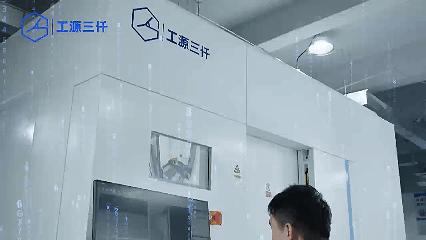
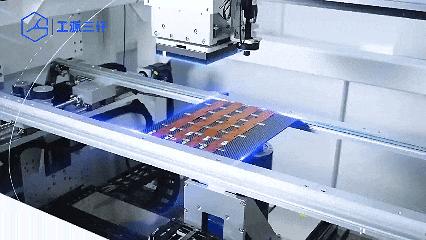
While Gongyuan Sanqian stabilizes its market share in the field of lithium - ion batteries, it is also targeting the field of precision semiconductor inspection. The ACT - 3100 series of devices it released can perform rapid CT inspections with an accuracy of 1 - 2 micrometers in scenarios such as multilayer PCBs, PCBA, IGBT, and advanced packaging.
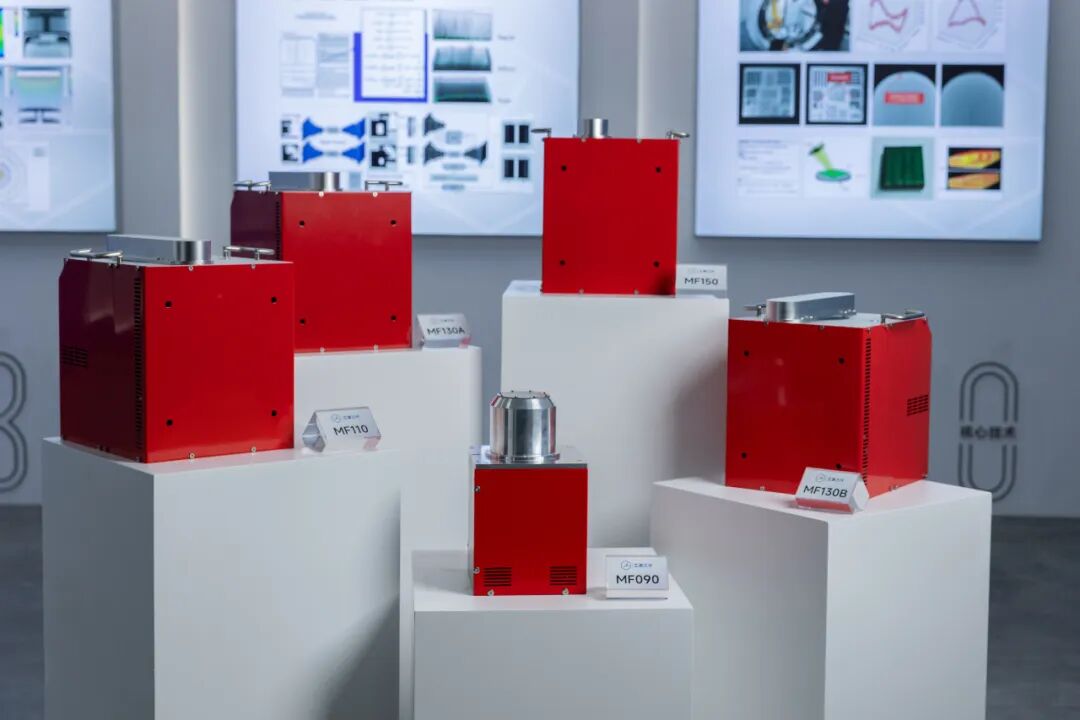
Notably, it has made a breakthrough at the lowest level of the supply chain. The core component of industrial CT, the X - ray source, has long been dependent on imports, which was a typical "bottleneck" problem. Gongyuan Sanqian has not limited itself to the role of an integrator but has advanced into the high - value - added chain and successfully developed an X - ray source with a voltage ranging from 90 KV to 450 KV and a focal spot smaller than 5 micrometers. Thus, 100% local production of the core component has been achieved.
It has been four years since the founding of Gongyuan Sanqian. In the past year, 2025, this young high - tech company has reached the top of the industry in the niche market of new - energy lithium - ion batteries, its sales have increased tenfold, and its customer list also includes many industry giants.
Zuo Jiaming, the founder of Gongyuan Sanqian, is a bit different from the stereotypical "post - 95 young entrepreneur".
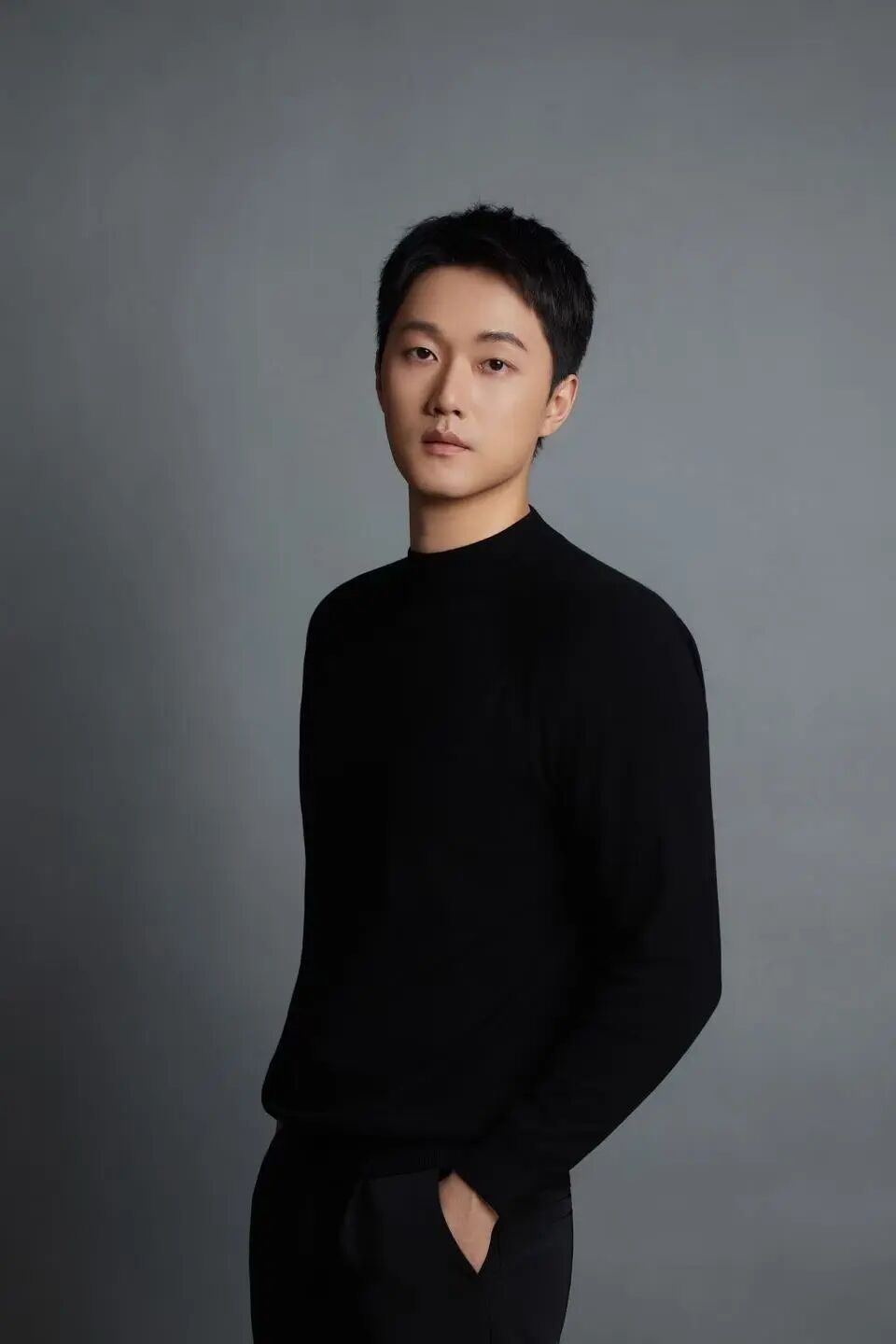
Zuo Jiaming, founder and chairman of Gongyuan Sanqian
In 2021, when the then 24 - year - old Zuo entered the not - very - crowded but highly demanding field of industrial CT, he directly hit a wall of established giants such as Zeiss and Yxlon.
However, age is not a disadvantage. As he says: "Before you enter the system, you are questioned because of your youth. But once you make it, youth becomes your strength."
At the beginning, Gongyuan Sanqian did not take the easier and more traditional path of pure algorithms but chose the more difficult and complex direction of whole devices. This meant that it had to carve out a place under the watchful eyes of the giants.
Later, it turned out that this decision was its entry point and the beginning of its competitive advantages.
One weekday afternoon, we met Zuo Jiaming. This young founder did not show typical geek characteristics but a business sense beyond his age. His speech was calm, logical, and at the same time direct, as is typical of young people. He talked about his mental transformation from "wild growth" to "respect for the cycle", about how to eat from the tables of the giants, and about his determination to continue this entrepreneurship.
Here is our conversation:
Use the lithium - ion battery field as a basis and expand into the semiconductor field
Yingke: Could you first explain the main businesses of Gongyuan Sanqian in the field of industrial X - ray inspection?
Zuo Jiaming: Simply put, we do the "inspection that is absolutely necessary for battery safety". This inspection is not an option but a mandatory requirement of end - vehicle manufacturers. From the early BBA to new vehicle manufacturers such as NIO, XPeng, and Li Auto, it is stipulated that batteries that have not undergone this inspection are not allowed to be installed in vehicles.
Today, the national safety standards for batteries have become even stricter. The new national standard released in August this year has increased the requirements from "5 - minute warning before thermal runaway" directly to "zero - tolerance, no risk of fire or explosion".
After the introduction of the new standard, the application scope of warning solutions has been greatly restricted. However, since we have always conducted result - oriented inspections where problems are detected and defective products are directly rejected, our technical approach has greater security in industry development.
In the technical field, the manufacturing process of lithium - ion batteries is very long and involves many steps. We are mainly responsible for inspections in the middle and later stages and use CT and X - rays to detect internal problems in battery cells. These include the alignment of anodes and cathodes, the presence of foreign objects, and the bending of pole tabs.
Yingke: In the field of the lithium - ion battery industry, high - speed full inspection and precision inspection are often in conflict. One often has to make a compromise. How has Gongyuan Sanqian solved this problem?
Zuo Jiaming: We increase efficiency by shortening the scanning time. The core is to reconstruct high - resolution CT slice images with sparse projection data and design the overall system to match the production rhythm of customers. For example, the scanning time for a group of laminated batteries can be shortened to up to 2 seconds, which corresponds to an inspection efficiency of 12 units per minute per station. For cylindrical batteries, an online CT inspection efficiency of 30 - 60 units per minute can be achieved, making CT inspection as fast as X - ray inspection.
Yingke: There are many fields in industrial X - ray inspection. Why did you choose the field of new - energy lithium - ion batteries as an entry point?
Zuo Jiaming: At the beginning, we investigated many fields. For example, take foundry projects such as automobile chassis, die - cast parts, and engine pistons. We found that these projects are very fragmented, the product SKUs of customers are very diverse, and it is difficult to achieve mass production. A factory usually only buys a few devices, and the customization is very high. The delivery is very cumbersome.
When I started the business in 2021, I was convinced that I had to choose a field with high growth potential. The capacity of the new - energy industry has increased 25 - fold in the past 10 years, and the capacity of lithium - ion batteries is expected to triple in the next 5 years. This market is large enough. Today, we are leading in the niche market of new - energy lithium - ion batteries and now plan to expand into the semiconductor field.
Yingke: Why do you want to expand into the semiconductor field?
Zuo Jiaming: The rapid increase in computing power for large AI models and Embodied AI has given a great boost to the semiconductor market. For example, some of the core PCB suppliers of NVIDIA are our target customers.
A special feature of the semiconductor industry is that it is relatively cautious about Chinese devices. To this day, most of the inspection devices in our field still rely on imports. However, this also means a clear opportunity for Chinese substitution. Although the validation cycle is longer, we have already made sales in this field.
Yingke: How does your capacity planning look in more complex scenarios such as the electronics and semiconductor industries?
Zuo Jiaming: We have already developed the ACT - 3100 series of devices, which are mainly suitable for scenarios such as multilayer PCBs, PCBA, IGBT, and advanced packaging. Together with our self - developed planar scanning and reconstruction algorithms, they support offline, on - site, and online applications and enable rapid CT inspection of the entire board. For PCBs, we can precisely reconstruct the drill hole layers and effectively measure the remaining copper in the holes. For advanced packaging, we can detect all important defects in TGV, TSV, wafer - and board - level packages and perform rapid CT inspections with an accuracy of 1 - 2 micrometers.
Yingke: When you first entered the market, large companies already had established suppliers, which were usually foreign brands. How did you win?
Zuo Jiaming: At the beginning, we relied on intensive customer service and the organizational form of a start - up.
Initially, customers mainly preferred imports such as Zeiss products. However, Zeiss devices are mostly standard devices and cannot adapt well to the rapid capacity expansion and rapid iteration of Chinese customers. For example, if you want to change a software function, you have to send the request to the German headquarters, which requires a long cycle. However, we can respond to customer requests at any time. Our fully self - developed software and hardware system enables us to quickly find solutions for different requirements. It was also through continuous cooperation with top customers that we could improve ourselves more quickly. At the beginning, our business with a top vehicle manufacturer might have been only a few hundred thousand yuan, but later we won all of its orders. At that time, we only had 50 - 60 employees in the whole company, but we dedicated several dozen employees specifically to handling this order.
After this success, we also won several million - level order contracts from other top customers.
Yingke: What advantages do you have over Chinese suppliers?
Zuo Jiaming: I can illustrate it with two product lines: X - ray and CT. X - ray is like an X - ray image in a hospital, which is a two - dimensional photo. CT is three - dimensional, and the scanning and reconstruction time is very long, which affects efficiency. However, CT is the future.
All Chinese suppliers initially started with X - ray inspection and later tried to switch to CT inspection. However, they found that they are completely different technical dimensions and finally failed. Some have retreated back to X - ray inspection, but their sales usually remain in the range of a few million yuan per year.
Our team has been working on CT technology from the beginning. CT technology has a high threshold, and the industry is very closed. To this day, there are only a few companies that can manufacture CT for industrial applications.
In comparison with them, our core advantage is that we focus on specific application fields. After selecting a product segment, we work with top customers to improve our product. Long - term in - depth development has brought us a good reputation in the industry. In addition, CT is a more software - controlled device. Compared with traditional device manufacturers, we currently have a technological advantage, especially in the field of algorithms. We are one of the few device suppliers in the industry that can publish top - conference papers every year.
100% commitment
Yingke: What is the financing money mainly used for?
Zuo Jiaming: Firstly, it is used for continuous research and development, similar to what has been done in the field of lithium - ion batteries in recent years. Secondly, it is used for capacity expansion and cost control. We plan to have our own... (The sentence seems incomplete in the original text)