Kann Apple die kleinen Klappsmartphones retten?
As one of the few growth markets in the mobile phone sector, the foldable smartphone has advanced tirelessly for years and finally heard the footsteps of Apple.
Apple has taken strict precautions to keep information about its foldable smartphone secret, but still, it has become as leaky as a sieve. In March this year, the expert on the Apple supply chain, Guo Mingji, revealed new information and specified the screen size and the thickness of the device with an accuracy to one decimal place, thus for the first time creating a clear picture of a foldable iPhone.
According to reports from The Information and Bloomberg, Apple's foldable smartphone has a "clamshell design" with a smaller format, where the aspect ratio is closer to a square and it is very similar in shape to Huawei's "large foldable" smartphone Pura X.
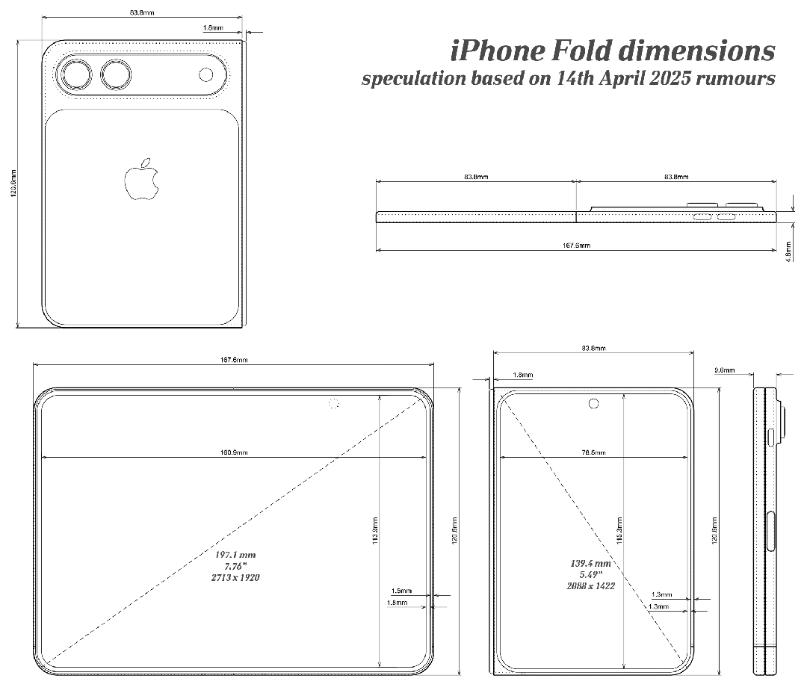
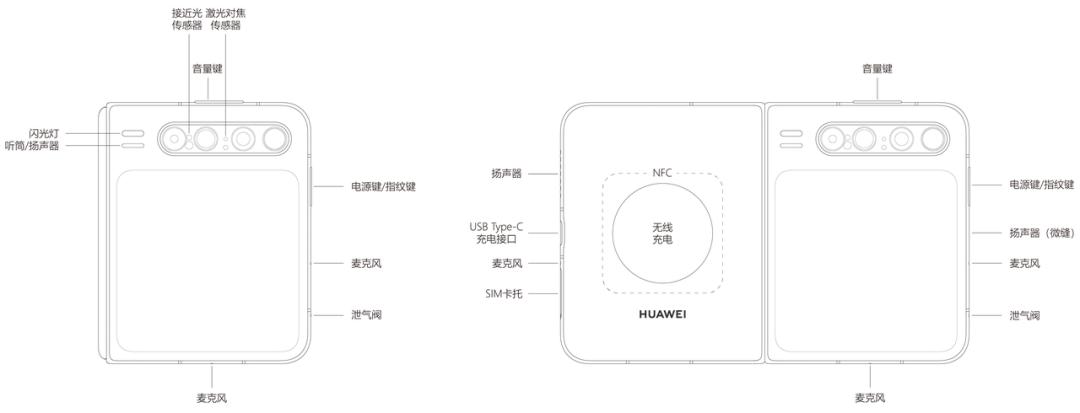
Presumed design concept for Apple's foldable smartphone (top) and the structure of Huawei's Pura X (bottom)
In recent years, providers on the Android platform have successively entered the market of foldable smartphones and developed both large and small foldable models. Apple has only watched so far. The disadvantage is that it has missed the phase of rapid growth of foldable smartphones. The advantage is that all potential problems of competitors have already been tried out, and Apple thus has a rich mine of reference materials.
According to the latest reports, Apple's first foldable product surprisingly resembles Huawei's Pura X very much, but in terms of size and product definition, it is more similar to a "small foldable" smartphone.
The question is: Can Apple, as powerful as it is, save the "small foldable" smartphone from the fate of being praised but not bought, especially considering that the market for "small foldable" smartphones is more difficult to position compared to that for "large foldable" smartphones?
The trap of wrinkle - free folding
Apple's planning for the foldable iPhone started early. The first related patents date back to 2011. However, for over a decade, the biggest problem with foldable smartphones, namely the wrinkles, has prevented Apple from bringing out a successful product.
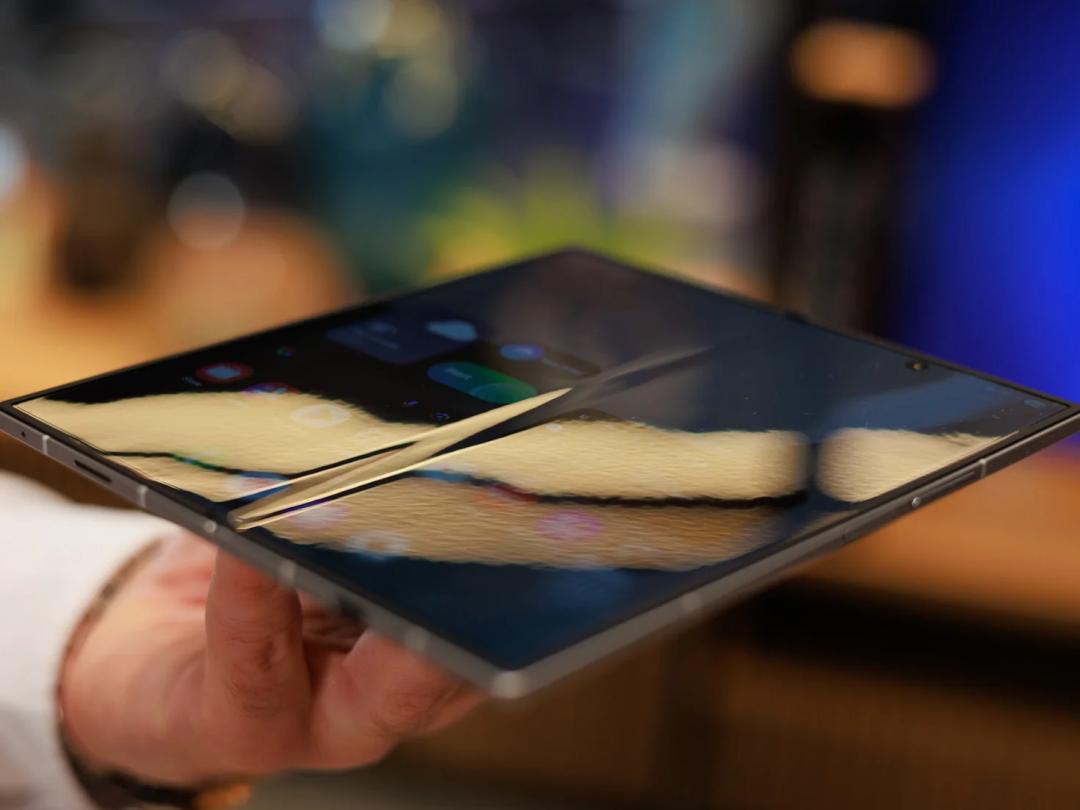
The wrinkle in the middle of the screen of a foldable smartphone
Although the technology for foldable screens has developed over the years, the elimination of wrinkles is still an important research area. Regarding the solution to this problem, one can say that Apple is the teacher of its competitors. The first patent for a foldable smartphone, filed in 2011, already refers to the wrinkles [1].
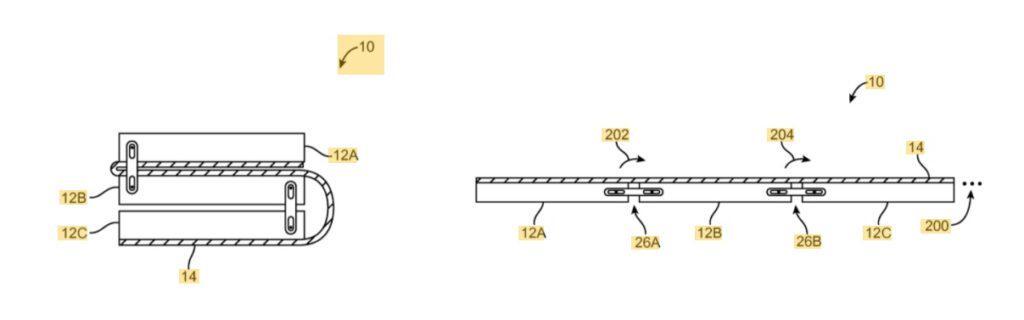
Apple's first patent for a foldable smartphone
The highlight of the patent is the introduction of up to four different types of hinges, each with different functions. For example, a four - joint hinge can simulate a more natural bend and make the screen smoother when folding.
But the complicated design and the precise structure do not seem to achieve the result Apple desires, and the foldable iPhone has been at a standstill for years. On the contrary, Apple's research has inspired the ideas of its competitors. According to statistics, by 2021, these patents were cited 372 times by Samsung, LG and others [1].
Since 2016, almost every time there are new rumors about the release date of the foldable iPhone, it is also associated with the release of a new Apple patent for wrinkle elimination. Apple's approaches can be roughly divided into two directions:
One direction is continuous expansion. This ranges from adding materials to the outer glass layer of the screen to increase "elasticity" (2016), through the pre - planning and production of a "specific folding zone" on the glass layer (2018), to the embedding of heating elements to prevent the screen from becoming "brittle" in winter (2019) [2].
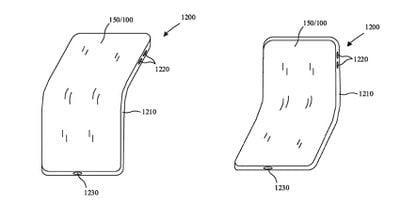
The design concept for preventing cracks by adding a "protective layer" (2020)
The other direction is "chaining instead of folding". For example, in 2020, two patents became known, one of which provides for the installation of a retractable shutter between the upper and lower screens, which is extended when the smartphone is opened to cover the gap. The other is about communication and tries to connect two independent screens "into one".
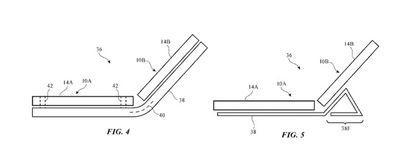
The design concept of "chaining instead of folding" (2020)
These attempts also do not seem to meet Apple's requirements. Instead, the appearance of the foldable iPhone has been postponed year after year, which has also misled well - known insiders such as Mark Gurman from Bloomberg and Guo Mingji when it comes to predicting the release date of the foldable iPhone.
Given the fact that the foldable iPhone is about to appear soon, one can assume that the problem of wrinkles is already in a state that satisfies Apple. According to the latest reports, Apple has secretly developed the structure, the material and the manufacturing process for five years and they could be presented at the last press conference before Cook's resignation.
However, Apple still has to address a realistic problem: The poor sales performance of "small foldable" smartphones is probably not closely related to the wrinkles.
The beautiful but useless thing
In contrast to the attention on social platforms, the actual sales of "small foldable" smartphones have stagnated. In China, the largest market for foldable smartphones, the shipment of "small foldable" smartphones in 2024 was still less than half of that of "large foldable" [3]. If one says that foldable smartphones are a niche product group, then "small foldable" smartphones are the niche within the niche.
For years, manufacturers of "small foldable" smartphones have not been able to solve two key problems:
Firstly, they cannot offer a differentiated user experience compared to conventional smartphones; secondly, they cannot achieve higher profit margins for the manufacturers.
Firstly, this concerns the functions. A "small foldable" smartphone is actually a "foldable conventional smartphone". Compared to a real conventional smartphone, it has an additional external screen, but for that, many functions have to be sacrificed.
The internal space of a smartphone is limited. Compared to conventional smartphones, the hinge of a "small foldable" smartphone takes up a lot of space and displaces at least 10% of the internal space. Since the battery is not foldable, most "small foldable" smartphones have two battery modules, which usually leads to a shorter battery life.
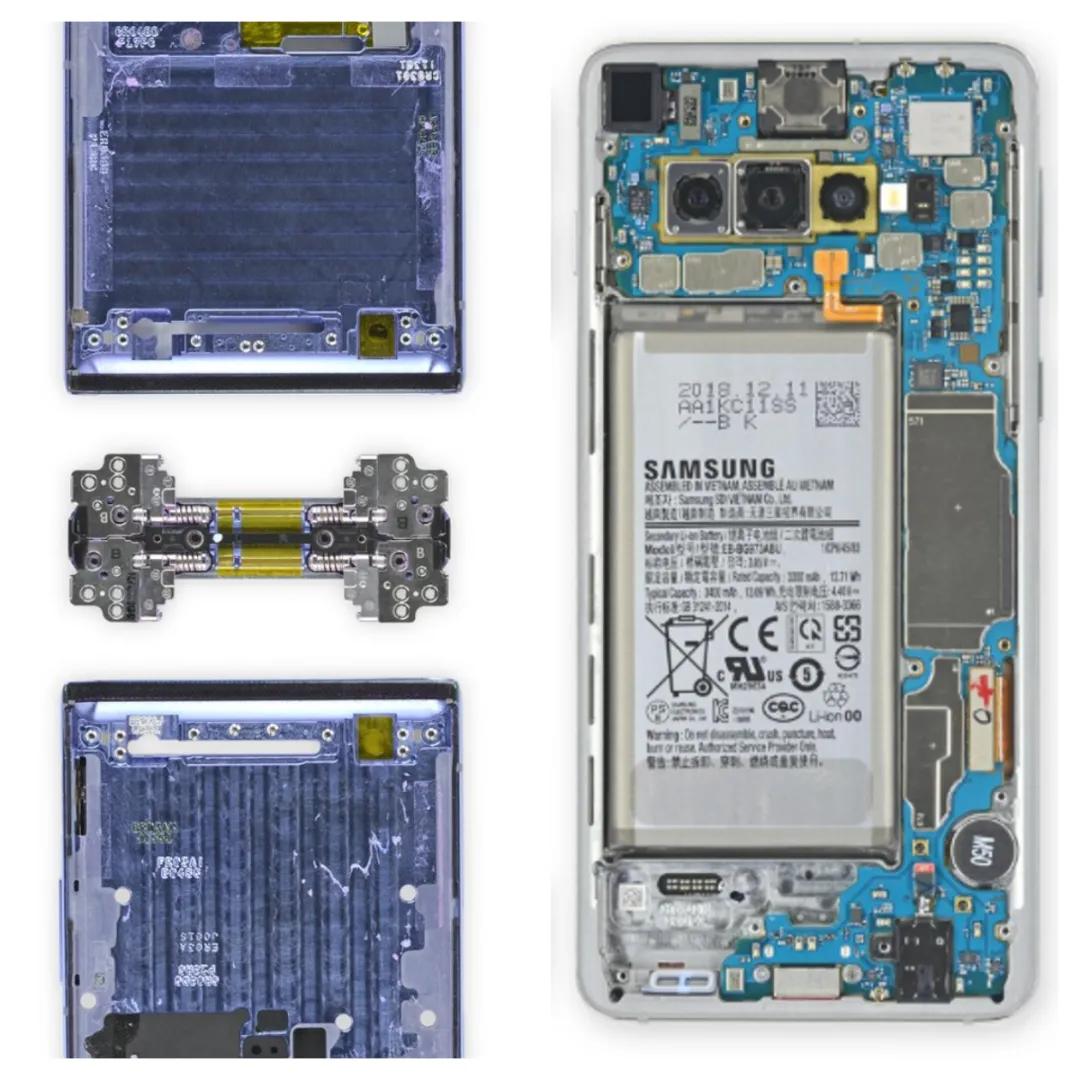
Samsung's "small foldable" smartphone (left) and a conventional Samsung smartphone (right)
Also for reasons of integration and heat dissipation, the camera modules and the processors of "small foldable" smartphones are often restricted. Compared to the "standard triple - cameras" and "quad - cameras of high - end models" of conventional smartphones, most "small foldable" smartphones only have dual - cameras.
The OPPO Find X6 Pro, released in 2023, includes a wide - angle camera with a one - inch sensor and a telephoto camera. In the same year, the "small foldable" OPPO N3 Flip could only accommodate three relatively simple cameras due to the limited space.
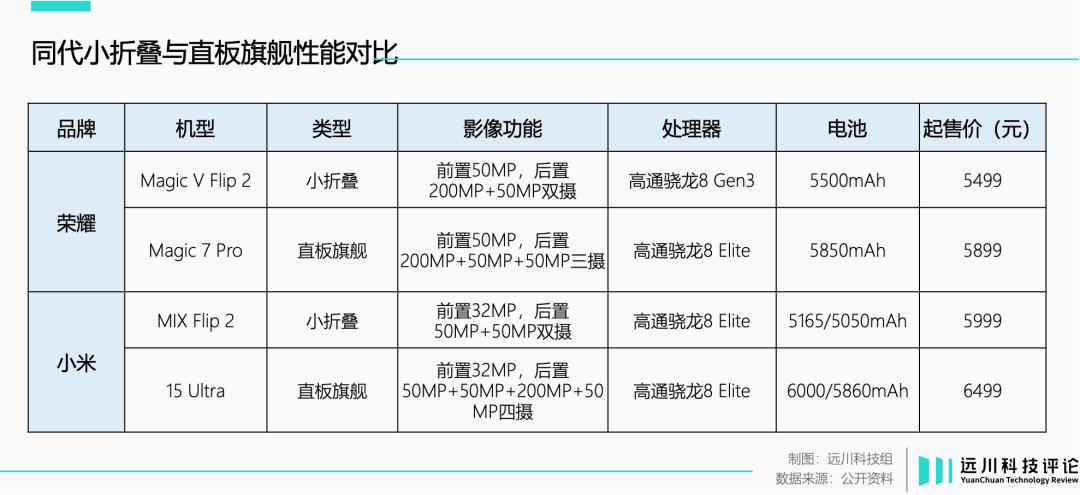
The battery, the camera and the processor are the most important components for the user experience of a smartphone. Can the additional external screen of a "small foldable" smartphone compensate for the deficiencies in these core areas? The market reaction makes one doubt it.
Huawei was one of the first providers to recognize the potential of the external screen. The Huawei P50 Pocket offers functions such as notifications, music playback and payment options in the form of swipeable cards and has also added fun functions like "smile - shot". OPPO has enlarged the external screen to over three inches and optimized several applications on it. Xiaomi has even sold a selfie set.
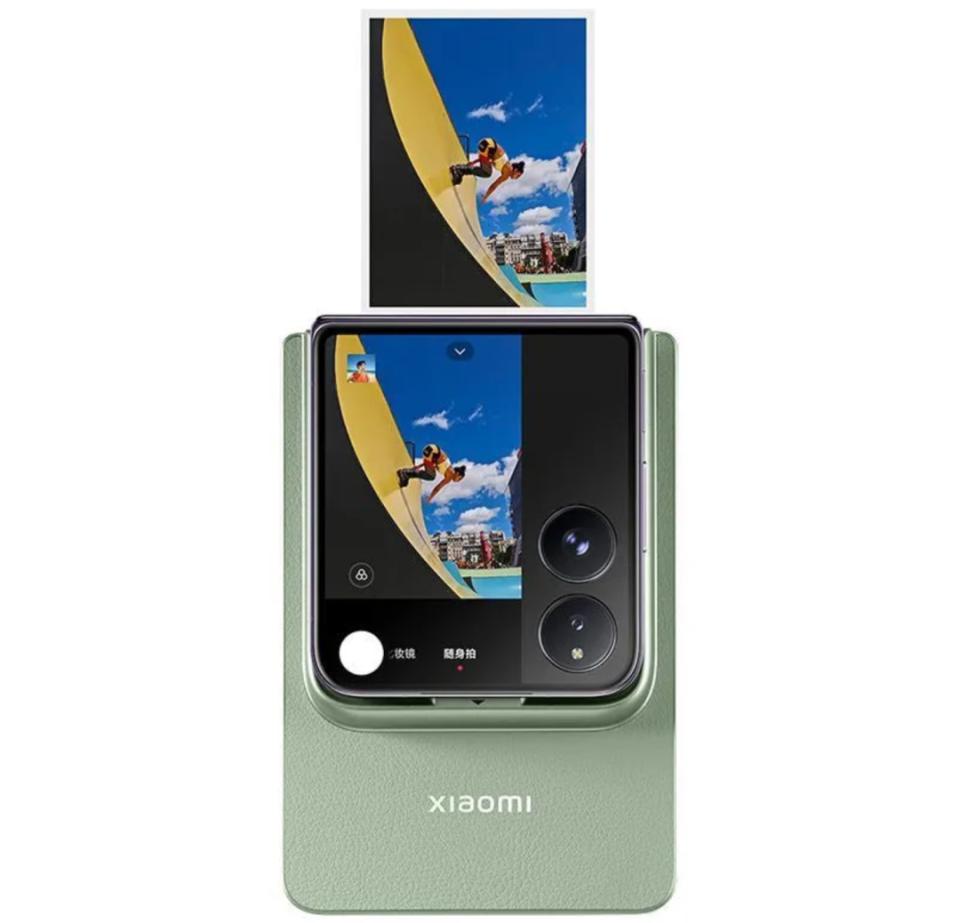
The Polaroid set for the Xiaomi MIX Flip
But the market reaction shows that the substitution effect of "small foldable" smartphones compared to conventional smartphones remains limited.
For manufacturers, the extremely limited profit margin of "small foldable" smartphones is an even more difficult problem.
Since most consumers judge the pricing of smartphones according to the principle of "price - performance", there is an invisible upper limit for the pricing of "small foldable" smartphones: The price of conventional smartphones of the same generation.
From the pricing of different manufacturers, it seems that there is an unspoken rule in the industry that the price of "small foldable" smartphones should not be higher than that of high - end conventional smartphones of the same generation.
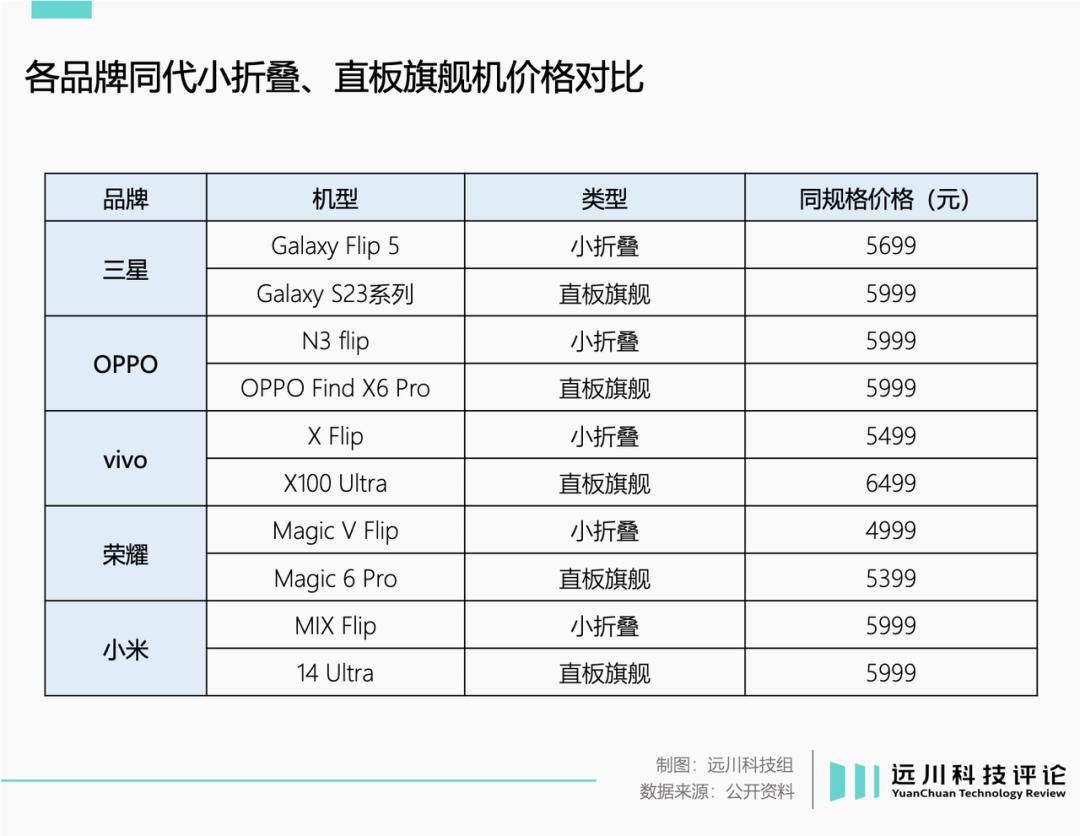
For most consumer electronics products, the price and the profit margin are first determined, and then the components and sensors are selected according to the costs. When the upper price limit is set, engineers have to make compromises.
Compared to conventional smartphones, "small foldable" smartphones increase the costs by adding hinges, flexible screens, external screens, special batteries and stacked circuit boards. For example, the hinge component of the OPPO Find N3 Flip costs over 100 US dollars [4], and the foldable screens are even more expensive. In comparison, the screen of an iPhone costs less than 90 US dollars.
If the other components were the same as those of conventional smartphones of the same generation, the manufacturer would earn less for each "small foldable" smartphone he sells. However, if he restricts the other components to achieve more profit, he puts consumers in a dilemma:
The additional costs for the foldable screen have not created new functions, but the compromises in performance, image quality...