Rasanten Wandel 2025: Embodied Intelligence auf dem Höhepunkt der Mode
It's once again the time of the year-end transition. In the not-too-distant future, the new year 2026 will begin.
I remember that during this period last year, the whole world was paying attention to humanoid robots. Even some investors who previously didn't think this sector was promising became interested in and inquired about the developments in this area.
At that time, it was clearly noticeable that research, entrepreneurship, and the capital market were on everyone's lips. Even many universities began to offer courses and degree programs in the field of Embodied Intelligence or Robotics.
However, there are always bubbles when it comes to a trendy phenomenon.
In 2025, different voices began to emerge repeatedly in this highly sought-after sector. Recently, the National Development and Reform Commission issued a clear warning:
It is necessary to work on avoiding risks such as the "bulk" market entry of Embodied Intelligence products with a high repetition rate and the restriction of the research scope.
Undoubtedly, Embodied Intelligence has become the keyword of the year 2025, and humanoid robots are still an extremely attractive sector.
If we look at the whole year, this sector undergoes three tests: financing, mass production, and listing on the stock exchange.
Financing determines whether a startup team can continue to work, mass production determines who can stay in the game, and listing on the stock exchange becomes the new wealth dream.
In this article, we will analyze these three key problems and summarize the Embodied Robotics sector in 2025.
01 Financing: Billion-dollar financings are more frequent
Robots are not new. In China, there are also established listed robotics companies such as Ecovacs and Roborock. These companies have already sold hundreds of thousands of robotic vacuum cleaners.
But this wave of robots brings two intertwined concepts: Humanoid Robots and Embodied Intelligence.
The first concerns the hardware form, which is also regarded as the ultimate form of robots. The second concerns the software technology, which is the fuel ignition behind this robot industry revolution.
Today's robots cannot be sold at good prices without the support of Embodied Intelligence or without the label "Embodied Intelligence".
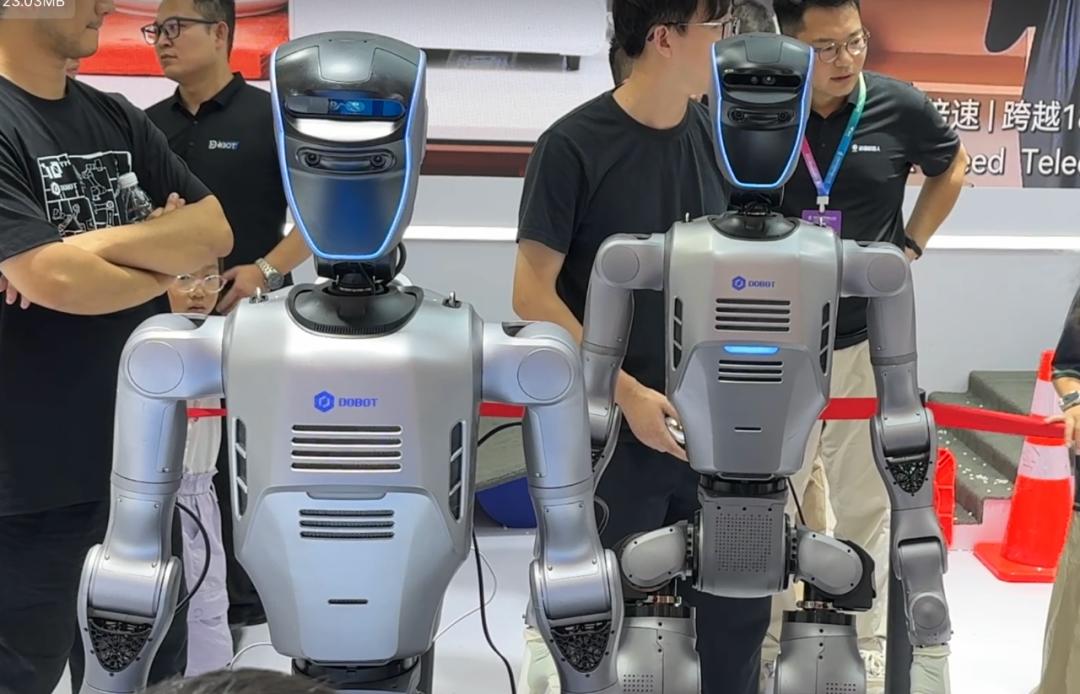
However, as the ultimate form of robots, humanoid robots face many difficulties in commercialization.
Therefore, realistic investors this year are more convinced by the combination of robots and Embodied Intelligence. I call it Embodied Robots (including the two-armed wheeled robots mentioned later). They don't necessarily have to be in the form of humanoid robots with arms and legs, but they are the real winners of this Embodied Intelligence wave.
In the field of Embodied Robots, the year 2025 has brought an unprecedented opportunity on the financing side. Billion-dollar financings have become the norm in the field of Embodied Robots this year, and there are also unicorn companies with a billion-dollar valuation.
Here, we have summarized the financing situation of Embodied Robot teams that we have been observing for a long time this year:
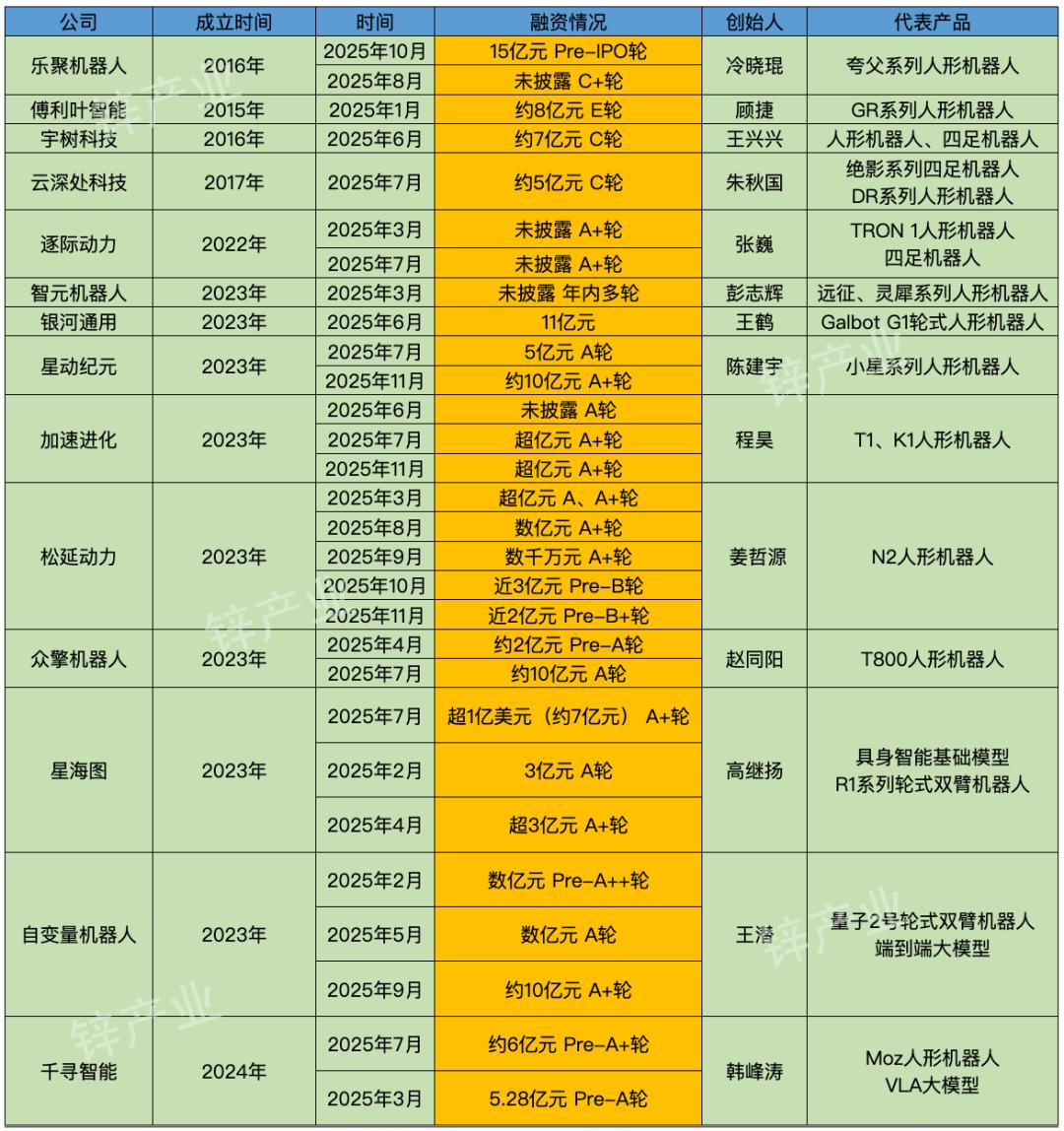
During this year, we have found that there are three well-defined schools in this sector:
The academic startup school, represented by startup teams from Tsinghua and Peking University (such as Galaxy Universal and Star Era); the technological startup school, represented by Unitree and Ubtech; and the automobile manufacturer school, represented by XPeng and GAC.
The top players of all schools received billion-dollar financings last year, and many teams even got multiple billion-dollar financings.
According to our observations, these funds do not only come from Chinese venture capital firms. In addition to these well-known Chinese venture capital firms, there are three other important sources: international venture capital firms, state-owned industrial funds, and leading technology companies.
Chinese venture capital firms don't need to be explained in detail. Companies like Source Code Capital, Innoangel Fund, China Renaissance, and Qingliu Capital have participated in this investment wave. International venture capital firms such as Sequoia, SoftBank, IDG, and Prosperity7 are also very active and have participated in the financings of many Chinese star Embodied Robot teams.
There are also two unique phenomena in this wave:
First, state-owned industrial funds enter the game. For example, the Beijing Robot Industry Development Investment Fund and Yizhuang State-owned Assets Investment in Beijing, Pufa Venture Capital and Lingang Science & Technology Innovation Investment in Shanghai, and Shenzhen Capital Group in Shenzhen. These state-owned funds have significantly promoted the development of the Chinese robotics industry and are an important policy guidance.
Second, technology giants invest large sums. Currently, Internet giants such as Baidu, Alibaba, Tencent, Huawei, JD.com, and Ant Group have invested in this sector. At the same time, household appliance giants such as Haier and automobile manufacturers such as Geely have also invested in the field of Embodied Robots.
Alibaba, JD.com, and Geely have invested the largest sums in a year and participated in multiple financings of Embodied Robot teams.
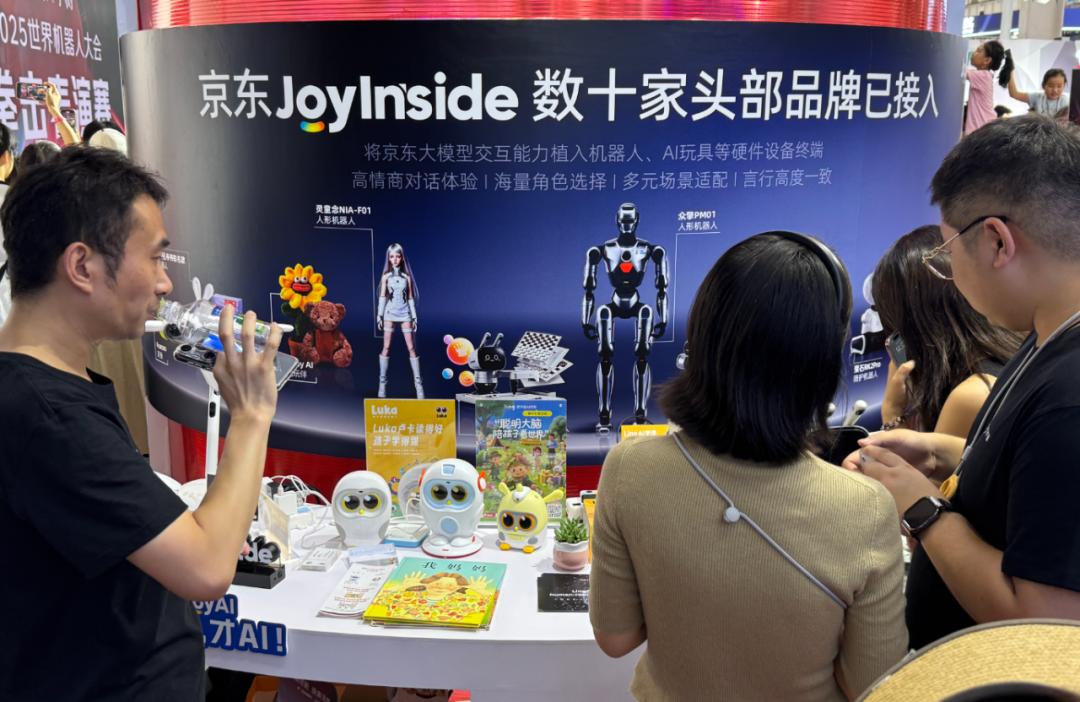
Behind this phenomenal financing in a phenomenal sector lies a simple technical logic:
Until recently, there was no hope that robots would develop generalization abilities. Previous robots could only perform certain functions through special programs. After the introduction of Reinforcement Learning and Large Language Models, robots now have the ability to understand things and improve themselves.
The universality of robots is now achievable in the foreseeable future. Even humanoid robots, the ultimate form of robots, have the chance to be commercially successful. Therefore, capital is flowing into this sector.
If you doubt whether there are bubbles in the Embodied Robot market?
If we look at the history of technological development, no technology has been able to go through its maturation process without bubbles. We hope that these bubbles will accelerate the process of the Embodied Robot industry and that some technologies in this sector will be able to create value in commercial scenarios.
Naturally, investors in this sector are most looking forward to the commercial success of the Embodied Robot industry.
In 2025, Embodied Robot teams must account to their investors, especially in terms of mass production.
02 Mass production: Million-dollar orders are everywhere
When we look at a technology cycle, we always look for a reference point for the technological breakthrough. In the case of Embodied Robots, there is an interesting reference point:
In 2021, Elon Musk had a man in a tight suit step onto the stage at the Tesla AI Day to imitate a humanoid robot designed by Tesla.

The technology man Musk always has the desire to do things that others can't. In 2021, he set his sights on humanoid robots.
In the following four years, there was a concentrated breakthrough in the establishment of teams, technological validation, and financing in the field of humanoid robots.
In 2025, global humanoid robot teams have made the transition from technological research to technological validation. At this time, as the first five-year period is almost over, these Embodied Robot startup teams must present a report to their investors.
During our investigations in the Embodied Robot industry and our conversations with industry insiders this year, we have found two profound changes:
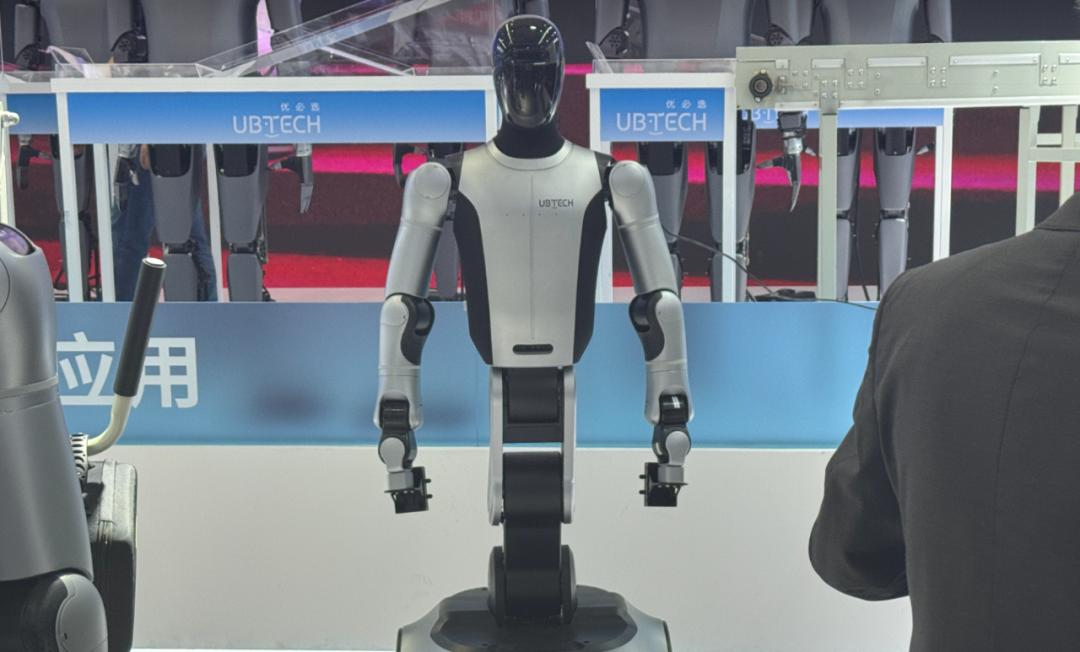
First: When humanoid robots enter the industrial scenarios, which are regarded as the first application fields, two-armed wheeled robots are becoming more and more popular.
The reason is that two-armed wheeled robots are more efficient and better meet the requirements of today's industrial scenarios. As a result, hand-eye coordination has become a key technology area in the Embodied Robot industry.
Second: The mass production of Embodied Robots has become the main theme of the industry in 2025.
I have heard many industry insiders say this year that they must put their Embodied Robot products into mass production this year in order to account to their investors.
Here, we have summarized the mass production situations announced by robot teams that we have been observing for a long time:
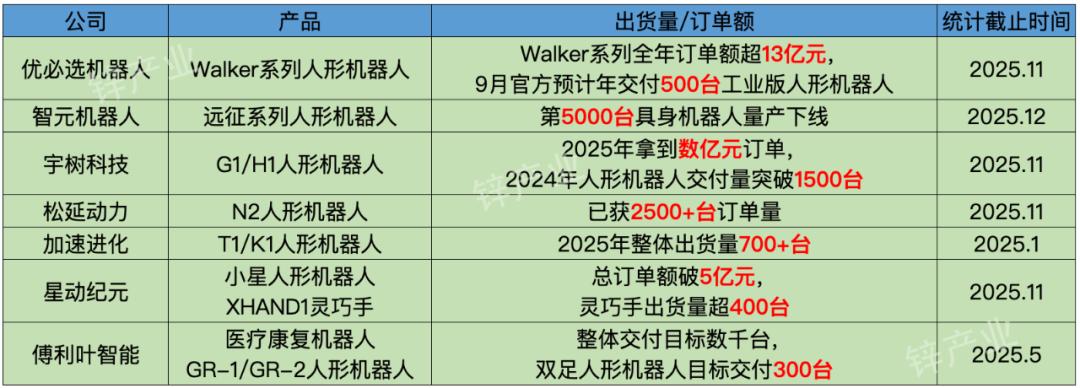
It should be noted that many teams have not released accurate official data.
For example, the High-Tech Research Institute found that Unitree delivered 1,500 humanoid robots in 2024. However, Unitree itself has not released detailed mass production data for this year so far.
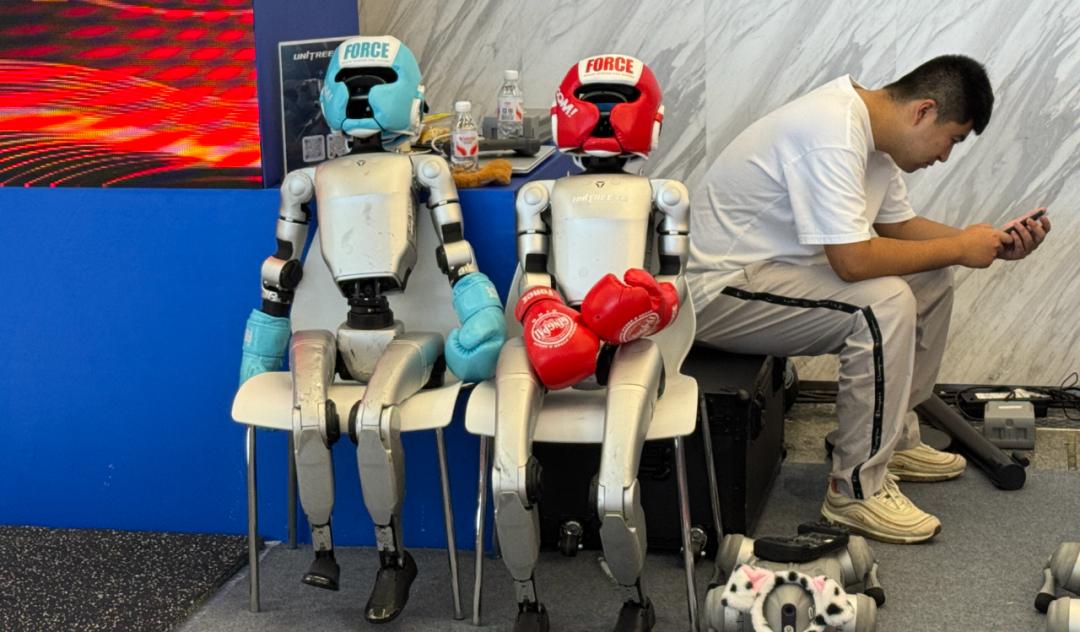
Nevertheless, we can identify two key values:
First: There are many million-dollar orders. In 2025, many teams in this sector received orders in the millions or even billions. For example, China Mobile issued an order worth over 120 million yuan for the procurement of humanoid robots in July, and the contracts went to Zhipu and Unitree.
Second: Thousand-unit orders become the trademark. In 2025, the delivery/fulfillment of a thousand units is a prominent feature. We assume that the top 5 companies in terms of delivery have already received a thousand orders.
While Chinese Embodied Robot teams are focusing on mass production, we have also observed a price war in this area. The prices of humanoid robots, which used to cost millions of yuan, are constantly falling:
In July, Unitree introduced the Unitree R1, whose price has dropped to 39,900 yuan.
In October, Accelerated Evolution introduced the Booster K1. The first 100 units cost 29,900 yuan.
In the same month, Songyan Power introduced the Bumi, whose price has dropped to 9,998 yuan.
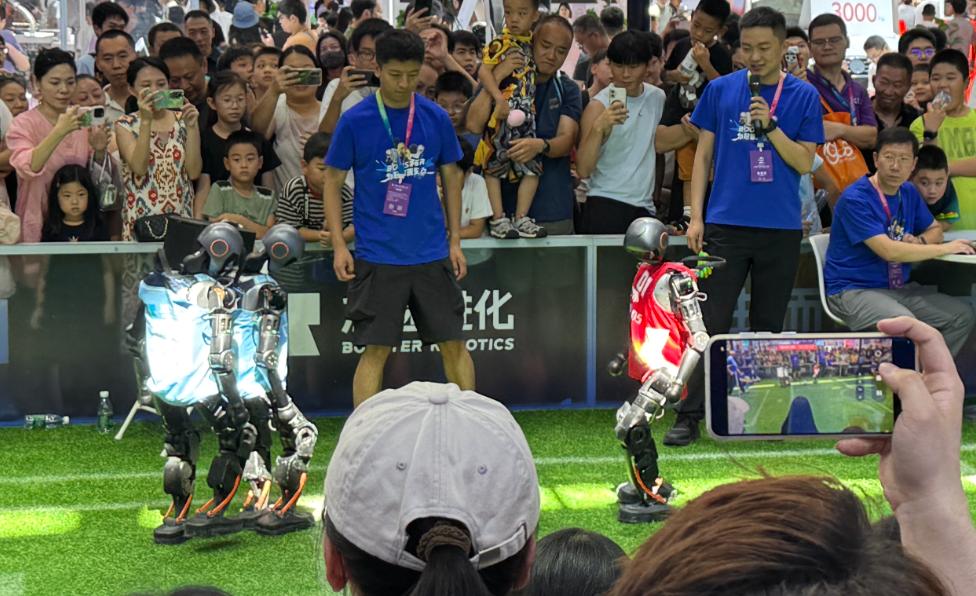
Naturally, these humanoid robots are more products for tech enthusiasts on the consumer side. Industrial humanoid robots still cost tens of thousands or even hundreds of thousands of yuan.
Therefore, we must ask ourselves: What is the meaning of humanoid robots in the price range of tens of thousands of yuan?